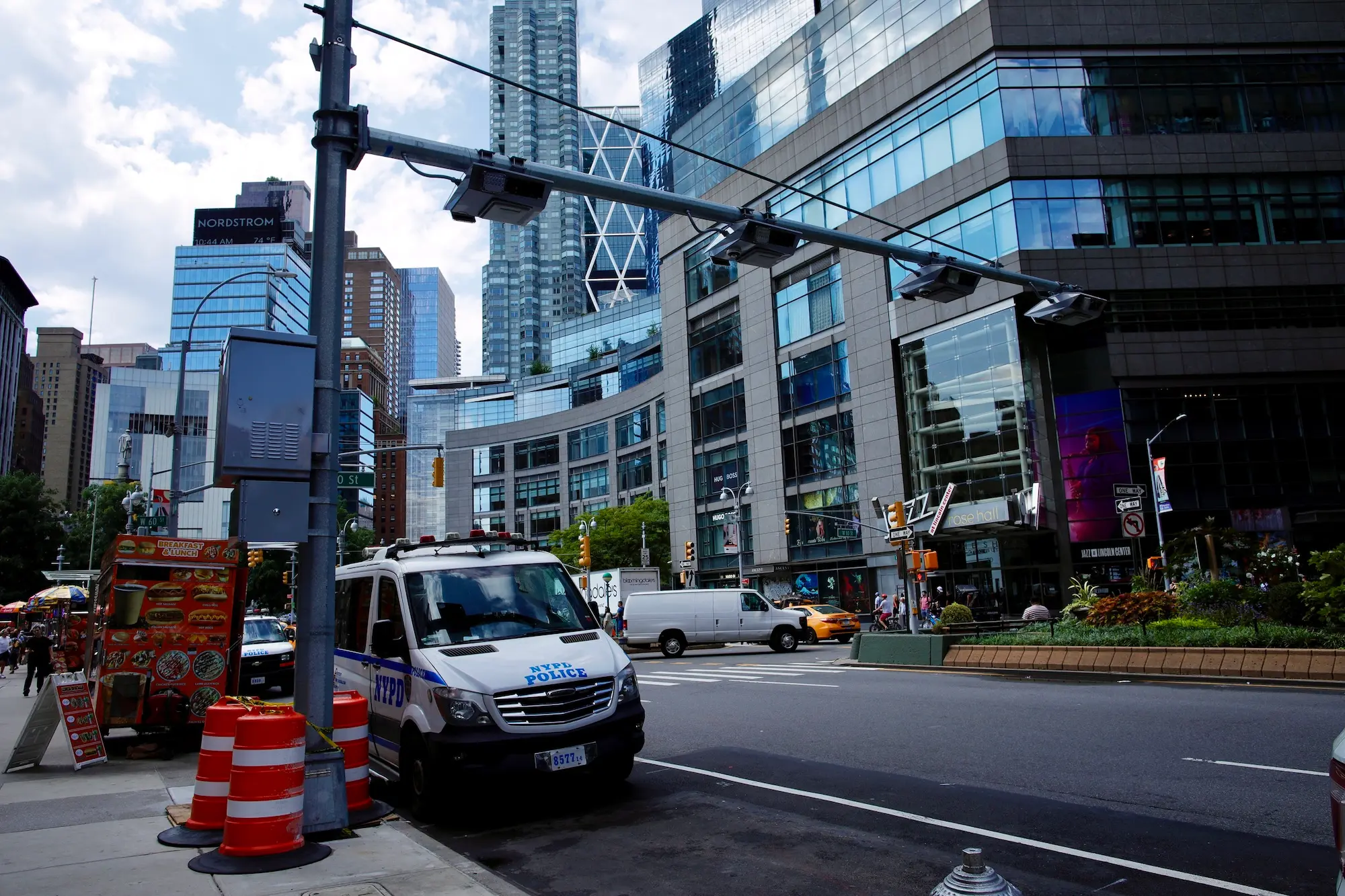
Drivers entering downtown Manhattan will soon have to pay a minimum of $15, New York City's Metropolitan Transit Authority announced Thursday.
Final recommendations for the United States' first congestion pricing zone for the area of Manhattan below 60th St. were announced, with the base toll rate of $15 coming in lower than some predictions.
While some public-transit advocates in NYC celebrated the move as a "win-win-win," the Governor of New Jersey described the plan as "unfair and ill-conceived."
The MTA, meanwhile, argued that most people who currently drive into Manhattan's Central Business District (CBD) have access to public transit that could get them where they want to go.
How much will drivers pay to enter Manhattan?
According to the report by the Traffic Mobility Review Board (TMRB) released Thursday, drivers will pay "the lowest base toll possible in order to achieve the goals of the Program."
The base E-ZPass toll rate will be $15 for automobiles, including sedans, minivans, SUVs, pick-up trucks and small vans. This will be charged once per-day.
- New Manhattan Research Facility Will Save Lives — No, Not That Manhattan
- Expensive Beef and Avocados Are Driving Chipotle’s Costs Up and Shares Down
- New Jersey Sues Over Plan to Charge Congestion Pricing for Cars in Manhattan
- Beyond Inflation, Blame Bad Driving for Higher Car Insurance Costs
- You’ll Need This $29 Adapter To Charge the New iPhone 15 With Cables You Already Have
- Train Collision in India Leaves At Least 15 Dead, Dozens Injured
- Small trucks will pay $24
- Large trucks will pay $36
- Intercity and charter buses will pay $24
- Tour buses will pay $36
- Yellow, green and black cabs will pay $1.25 per-trip
- App-based taxis, such as Uber and Lyft, will pay $2.50 per-trip
The TMRB said that taxi passengers should be charged those extra fees on top of their fares, for choosing to take a vehicle into the CBD.
What is New York's Central Business District?
Drivers entering Manhattan's Central Business District, or CBD, will be charged a toll.
The MTA designated the area below 60th St. as the CBD, meaning anyone driving into that area from uptown Manhattan, from across the Brooklyn, Manhattan, Williamsburg or Queensboro bridges, or via one of the tunnels from Brooklyn, Queens or New Jersey.
The TMRB said as many as 900,000 vehicles enter this area every weekday, with very similar levels on weekends.
When will NYC's congestion pricing be enforced?
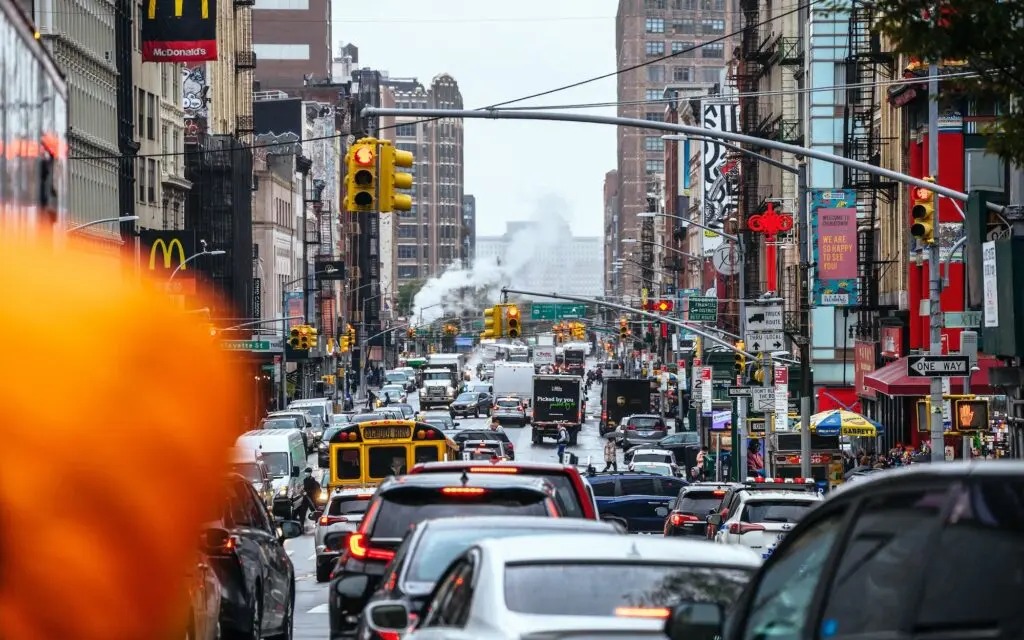
Standard daytime toll rates will apply between 5 a.m. and 9 p.m. on weekdays and 9 a.m. and 9 p.m. on weekends.
During night hours, tolls will be 75% less. The MTA is hoping this will shift some traffic, especially trucks, to switch to entering the district during these hours.
"A longer nighttime period and steeper discount also helps those who must drive at night when there might be more limited transit options in some areas," the report added.
What about drivers from New Jersey?
Drivers coming from New Jersey already pay a toll to pass through the Holland and Lincoln Tunnels into the CBD. Round-trips currently cost around $14, paid on entry to NYC to the Port Authority of New York and New Jersey, not the MTA.
The TMRB recommended a daytime discount for those already paying the toll: $5 for standard vehicles, $2.50 for motorcycles, $12 for small trucks and intercity/charter buses and $20 for large trucks and tour buses.
Anything higher, the report said, would mean New Jersey drivers getting a greater financial benefit while also adding to the congestion in Manhattan. Nighttime discounts already in place mean there is no need for adjustments during those hours, the report said.
Governor Phil Murphy, who has long-opposed the congestion pricing scheme, said the scheme was "unfair and ill-conceived," following a leak of the report Wednesday night.
“Despite our interconnected and interdependent regional economy and transportation system, New York officials did not meaningfully consult with us from the outset and instead treated New Jerseyans as a convenient way to fill an MTA budget hole," Gov. Murphy said.
“As a conceptual matter, I support congestion pricing, as long as it is structured in a way that is fair to all sides. This plan is neither fair nor equitable."
Any discounts for cops, teachers, low-income drivers?
Low-income drivers will benefit from a 25% discount on the daytime toll rates after their first 10 trips in a calendar month, the report said. That could be doubled for low-income workers who have no choice but to drive into the CBD for their job.
Government-owned vehicles used to perform public works - for example, a NYC Parks truck or snow plow - would be exempt from the toll.
However, the TMRB said granting discounts was a "slippery slope" and it could not please everyone.
Schoolteachers, police officers, judges, transit workers, firefighters and other public-sector employees will not be exempt and will have to pay the tolls.
Employees who have no choice but to drive to work will also not be exempt, but the report said employers had the right to reimburse drivers per their own policies.
What about those living within the CBD?
Some responding to consultations on the plans had suggested that residents within lower Manhattan should receive a 90% discount on tolls, as is the case in London.
However, with vehicles only being charged upon entering the CBD, the final recommendation is that residents should not be offered a discount. If their trips occur within the CBD, they will not be charged.
Where will the congestion pricing money go?
While the main driver for the scheme is to reduce congestion, the report said, the program will also "generate enough net annual revenue to fund $15 billion for capital projects."
That includes improvements to public transit, such as the NYC Subway, as well as commuter rail. The MTA hopes to invest the cash into accessibility improvements, all-electric buses and modernized signals.
When will NYC's congestion charges begin?
Even though these final recommendations have been announced, it still isn't completely clear when charging will begin.
The MTA said it will discuss the report next week, on December 6, with more public hearings due in February 2024, lasting at least 60 days. Once that process is completed, the tolling program start date will be announced.
“I am so grateful that this all-star panel has produced an incredibly thoughtful, detailed and balanced report that points the way forward for effective implementation of congestion pricing,” MTA Chair and CEO Janno Lieber said. “Congestion pricing will mean less traffic, cleaner air, safer streets and better transit.”
Sixty percent of the cameras and other equipment needed to collect the tolls are already in-place and the MTA said work would continue on this while final consultations are underway.