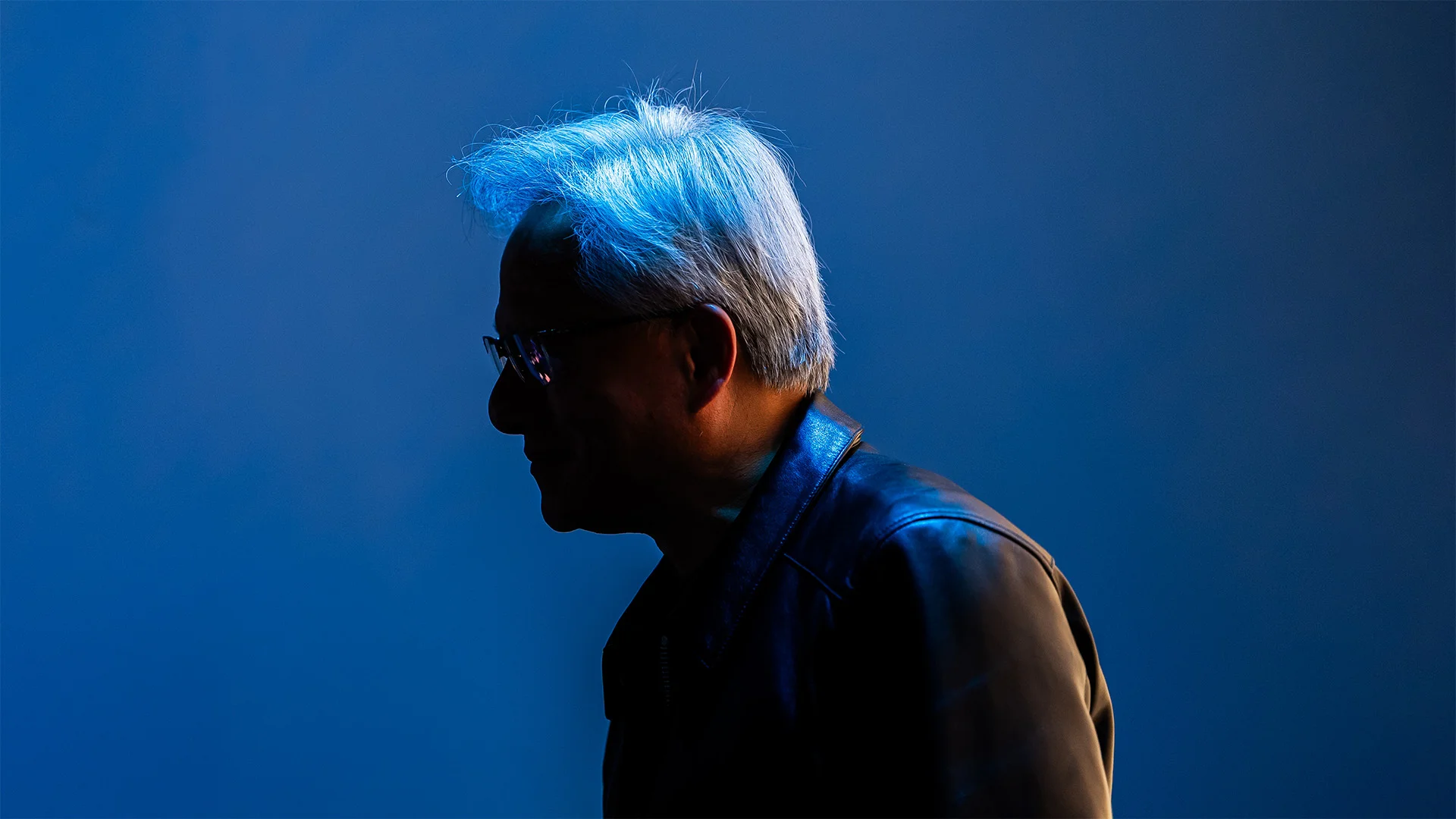
As Nvidia conducts an investigation into CEO and founder Jensen Huang’s relationship with a business executive that U.S. intelligence officials say is a Chinese spy, questions of succession at the tech giant are beginning to bubble.
Huang will remain as CEO of Nvidia during the investigation. He does not, however, have a supermajority of voting power at the company, such as Elon Musk does at SpaceX, meaning he cannot force the company to keep him if the board calls for his dismissal.
Unlike many large companies, there’s no formal succession plan in place at Nvidia (Nasdaq: NVDA), whose stock was down some 5 percent in midday trading Monday. So if the board were to move to dismiss Huang, it could create a power vacuum at the company that sits at the center of the artificial intelligence industry. While some investors dismiss the possibility Nvidia’s board will push Huang out, some analysts have said it’s possible. "I doubt Jensen Huang will be able to remain as [Nvidia’s] CEO," wrote Gary Black, managing partner of The Future Fund in a post on social media.
Huang has talked about this unique situation in the past year. He has run Nvidia since 1993 and, in a Q&A session with the media at CES in January, which was attended by Inc., Huang said he had no plans to go anywhere.
"The secret for being CEO for this long is 1) don’t get fired and 2) don’t get bored," he said. "I don’t know which one comes first. How long [will I remain CEO]? For as long as I deserve it."
Huang said there was a “great responsibility” in being CEO of Nvidia, an acknowledgement that the company’s performance has ripple effects not only on the tech sector, but the market as a whole.
“We are the captain of this industry and we have supply chain partners and collaboration partners all over the world who are counting on us to do our part,” he said. “So there is a great responsibility that comes with our company.”
Huang is hands-on CEO, who has led many of the key decisions that brought the company to its current levels of success. Whoever follows him will need to have those same visionary qualities. Right now, there isn’t a clearly defined number two who seems positioned to become Nvidia’s next CEO. There are, however, some unofficial candidates. Here’s who Wall Street sees as a possible successor for Huang down the road.
Madison Huang
Jensen Huang’s daughter is the most frequent name mentioned as a possible successor. She currently serves as senior director of product marketing at Nvidia and has worked at the company for the last six years after a three-year stint with Louis Vuitton-Moët Hennessy (LVMH). She is a graduate of the London Business School and is a certified Cicerone, the beer equivalent of a wine sommelier. She was scheduled to visit South Korea this week for a high-profile event that would have seen her meeting with two of the country's top AI players, including Science & ICT Minister Bae Kyung-hoon. That trip was canceled shortly before her father admitted to having an affair with Alice Huang. Her husband, Nico Caprez, also works at Nvidia as vice president of global AI infrastructure growth.
Spencer Huang
Jensen Huang’s son has been with Nvidia for the past four years and serves currently as director of product management in the company’s robotics division. He’s involved in Newton, an open-source physics engine developed by Nvidia, Google DeepMind, and Disney Research that is designed to simulate physical interactions and train robots in virtual environments. He earned his MBA from New York University’s Stern School of Business
Jensen Huang has addressed the possibility of one of his children taking his spot at the company, saying they would not get the job simply because of their name. "If that’s their aspiration, Spencer and Madison’s, they have to go earn it," he told Bloomberg in October. "And it’s really, really hard work. It takes a lot of sacrifice."
Colette Kress
After CEO Huang, Kress is the most high-profile executive at Nvidia. As chief financial officer, she regularly speaks on the company’s earning calls. She also helped manage Nvidia’s finances as it has shown explosive growth. She knows the financial side of the company better than virtually anyone and has worked with Huang on business strategy. The question is whether she could parlay that into continuing to lead it forward at the pace Huang has set.
Ian Buck
A long-time Nvidia employee, Buck was key to the development of CUDA, the software platform that is at the center of the company’s computing business. He currently serves as vice president of hyperscale and high performance computing and has a high-level knowledge of the company’s ecosystem and artificial intelligence position.
Bryan Catanzaro
Like Buck, Catanzaro is a key part of the tech team, holding the position of vice president of applied deep learning research. He has been a major architect of the company’s AI work and has extensive time in the R&D operations. He speaks the language of AI companies, which could make him a viable candidate.
Jay Puri
Puri, as head of Nvidia’s worldwide sales and partnerships, developed relationships with all of the company’s biggest and most important customers. That could smooth a possible executive transition. One possible hurdle is that he retired from the company in July after more than 20 years. He was one of Huang’s direct reports. Prior to joining Nvidia, Puri spent 22 years at Sun Microsystems. He is described as being quiet, but a very calm leader.