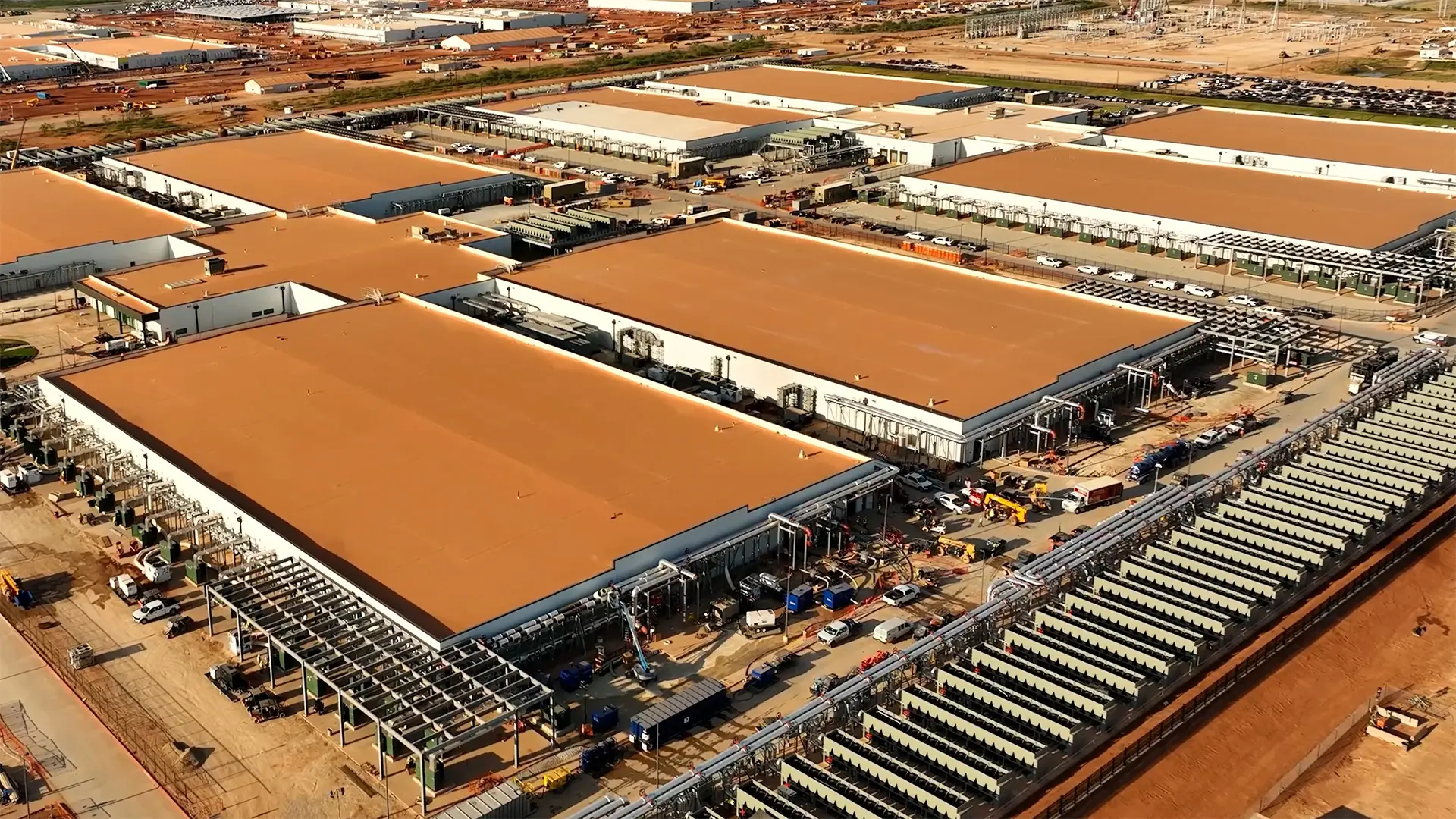
Stargate data centers in in Abilene, Texas. Photo: Courtesy OpenAI
When it came to investments, mergers and acquisitions, 2025 was a particularly busy year. More importantly, perhaps, it was also a year with some very interesting deals.
In the first nine months of 2025, global M&A activity was up 10 percent over what it was in the same period in 2024, despite the headwinds of geopolitical tensions and tariff policies that seemed to change every few weeks. The tech sector was especially busy with deal-making this year as companies looked to find a way to leverage the AI boom.
But some activity stood out from the rest. Here’s a look at the deals that made this year so unique.
Intel and the U.S. government
The Trump Administration surprised both the tech world and Wall Street in August, announcing that the federal government was taking a 10 percent stake in the chipmaker. (That was especially astonishing, as Trump had, just weeks before, strongly criticized Intel’s CEO on social media, saying he was “highly CONFLICTED and must resign.”)
The government picked up 433.3 million shares of non-voting stock priced at $20.47 apiece, making it one of the company’s largest shareholders. The deal has already paid off, with the government’s stake now worth nearly $9 billion more than it paid for the stock.
Stargate
OpenAI, SoftBank and Oracle, in January, jointly announced a massive AI data center project called “Stargate,” in which the companies plan to invest up to $500 billion over the coming years to develop AI infrastructure in the U.S.
Stargate, the companies said, will create 100,000 jobs. Plans were announced in September for five new AI data centers. Stargate will be set up as a separate company, which OpenAI said in a social media post “will not only support the re-industrialization of the United States but also provide a strategic capability to protect the national security of America and its allies.”
OpenAI and Oracle
In September, OpenAI signed a contract with Oracle to purchase $300 billion in computing power over the next five years, one of the largest cloud contracts ever. The contact will begin in 2027, but it did draw some concern from some analysts, who noted the value of the deal was much greater than OpenAI’s current revenue and Oracle will need to take on substantial debt to build out the hardware and infrastructure for the project. News of the agreement sent Oracle stock up 43 percent when it was announced. (It has since lost all of those gains.)
Pepsi and Poppi
Founded in 2020, Poppi started as an experiment in Allison Ellsworth’s kitchen, an attempt to make gut-healthy drinks that tasted good. The probiotic soda quickly grew into a popular, nationally recognized brand during the pandemic, landing Poppi at No. 148 on this year’s Inc. 5000 list, with a three-year growth rate of 2,638 percent. In May, Ellsworth and her husband Stephen, who is also a co-founder, sold the company to Pepsi for $1.95 billion.
Prada and Versace
The news in April that Prada would buy Versace for $1.51 billion was the ending to a very long story. Prada began chasing the luxury fashion house during the pandemic, but the parties couldn’t make the deal work. When Versace parent Capri’s sale to Tapestry was scuttled due to antitrust concerns, Prada tried again and was able to negotiate a price that was lower than the $2 billion Capri paid for the brand in 2018. The acquisition closed earlier this month.
Dick’s Sporting Goods and Foot Locker
Dick’s Sporting Goods had a strong 2025, raising its full-year sales growth guidance last month to a range of 3.5 to 4 percent up from 2 to 3.5 percent previously. Its acquisition of struggling competitor Foot Locker in May for $2.4 billion gave it a competitive advantage in the Nike sneaker market as well as access to international markets and a wider customer base. Foot Locker will continue to operate as a standalone business, though Dick’s does plan to close an undisclosed number of stores to protect the company’s profits.
Sycamore Partners and Walgreens Boots Alliance
Private equity firm Sycamore’s $10 billion purchase of the pharmaceutical chain in March ended almost a century of Walgreens being a publicly traded company. Walgreens, at one point in time, boasted a market cap of nearly $100 billion, but changes to the healthcare industry, acquisitions of rivals and reduced margins on drug sales shrank that number precipitously. Sycamore has a history of buying distressed companies, with other holdings including Staples, Nine West and Talbots.
Keurig Dr Pepper and JDE Peets
Keurig Dr Pepper’s U.S. coffee business needed some help, so it made an $18 billion bet in August that the Dutch coffee and tea company could boost earnings. Keurig Dr Pepper owns Green Mountain Coffee (as well as Dr Pepper, 7Up and Snapple), which has seen sales decline in recent years. The deal is expected to close in the first half of 2026, after which Keurig Dr Pepper will split its coffee and other beverage units into two separate companies, both of which will remain listed on U.S. stock exchanges.
Go inside one interesting founder-led company each day to find out how its strategy works, and what risk factors it faces. Sign up for 1 Smart Business Story from Inc. on Beehiiv.