Join the 6,755 people who have received their free, no-obligation quote over the last month
Flat roofs or low-slope roofs pose a unique challenge. They require additional waterproof protection so rainwater and snowmelt don’t pool on top. One solution is torch down roofing.
Torch down (or torch on) roofing material is made primarily of asphalt, also known as modified bitumen, which is very similar to the material used for asphalt shingles. This type of roofing material comes in large rolls that can seamlessly cover hundreds of square feet.
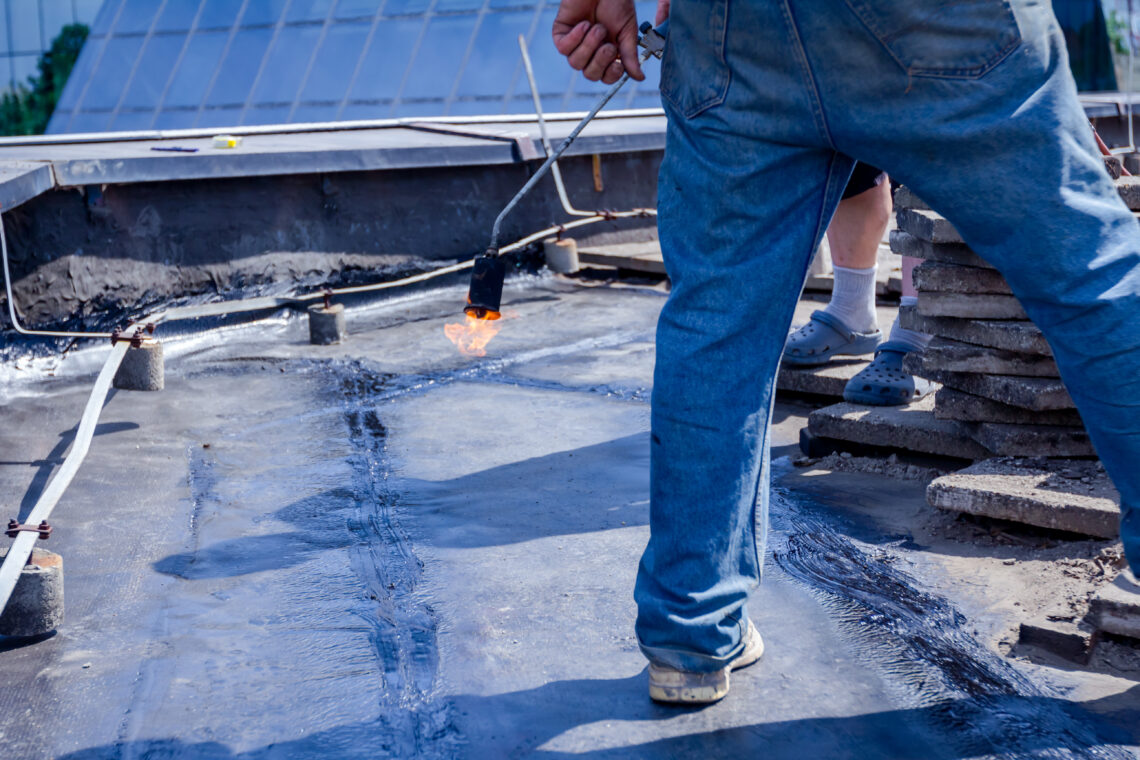
“An open flame heats up the asphalt in the roll,” explained Mike O’Brien, co-owner and general manager of Custom Exteriors in Berthoud, Colorado. “When it meets the temperature, roofers just roll roofing out slowly until the asphalt starts melting together.”
A new asphalt roof costs $5,435–$12,129 on average.
What are the types of torch down roofing?
There are two main types of torch down roofing. Two-layer torch down roofs consist of one base sheet and one smooth cap sheet, while three-layer torch down roofs add an additional granulated cap sheet on top of the other two layers.
The benefit of the third layer is enhanced fire resistance and increased energy efficiency. Both types are applied by heating the material with a torch and rolling it out onto the roof. This can be risky, especially if the building has a wood frame.
“It’s not really necessary anymore,” O’Brien said. Instead, many installers use other flat roofing solutions.
Alternatives to torch down roofing
Self-adhered modified bitumen roofs are made from a similar material to torch down roofs and are installed in two layers.
“It’s the same concept, but it’s expensive,” O’Brien said. “You have a base cap that you peel and stick to the roof and a cap sheet that you stick to the base sheet.” It can be difficult to tell the difference in appearance between peel-and-stick bitumen roofing and torch down products. These roofs are also highly resistant to foot traffic.
Another option is an ethylene propylene diene monomer (EPDM) membrane, otherwise called a rubber membrane roof.
“That’s what you’ll find on most commercial roofs,” O’Brien explained. Rubber membranes are lightweight and are even suitable for DIY roofing installation. However, they tend to be far more expensive than their bitumen counterparts and are easy to puncture with foot traffic or sharp objects.
What materials are used for torch down roofing?
Torch down roofing is made from modified bitumen, which is essentially asphalt mixed with a plastic or rubber polymer for added flexibility and temperature resistance. Torch down roofing manufacturers may also embed small granules in the top of the material to add fire resistance and protection from UV rays.
Layers of a torch down roofing system
Both types of torch down roofing are installed in multiple layers. The installation process for these layers is as follows:
- Insulation: The first layer is insulation, which is either adhered or screwed down and helps regulate the roof’s heat transfer.
- Vapor barrier: Next is a water-resistant layer to prevent moisture problems from rain and snow that collect on the roof.
- Overlay board: This underlayment supports the bitumen roofing material.
- Base sheet: The first layer of bitumen is rolled out and torched to melt it to the overlay board underneath.
- Cap sheet: The next layer of bitumen is a smooth cap sheet that fuses to the base sheet to form a watertight seal.
- Granulated cap sheet: Three-layer torch down roofs include a second cap sheet with a granulated surface.
What are the pros and cons of torch down roofing?
There are risks involved when installing torch down roofing, but it has enough benefits to make it a viable option in many cases.
Pros
Torch down roofing offers several advantages over other flat roofing materials.
Durable
Torch down roofing is highly flexible once installed, able to expand and contract with changes in temperature without cracking or splitting. This allows it to hold up in any climate. The average torch down roof life span is 20 years, according to the International Association of Certified Home Inspectors.
However, it’s important to remember that blunt force from heavy or sharp objects will damage the roof surface in torch down installations.
Waterproof
So-called flat roofs aren’t truly flat — they have at least a slight slope. However, they still drain water differently than sloped roofs and must be highly moisture-resistant to prevent leaks. Torch down roofs have heat-sealed seams and waterproof membranes to prevent water from ponding and promote drainage. This is key in regions that get a lot of snow.
Relatively inexpensive
Torch down roofing is more affordable than flat-roof alternatives such as self-adhered modified bitumen or EPDM membrane. Whether the cost of a new roof is a big factor in your budget for a new home build or you’re looking for a low-cost replacement material for an existing flat roof, torch down roofing is a solid option.
Cons
There are some distinct disadvantages of torch down roofing over other flat roof materials.
Installation poses a fire hazard
Operating with open flames poses an inherent risk. Mistakes can lead to the ignition of a building’s wooden frame.
“Some insurance companies, liability-wise, don’t let roofers touch torch down roofing because it’s so hazardous with open flames,” O’Brien said.
Cannot tolerate ponding water
Torch down roofing is waterproof and watertight, but that doesn’t make it impervious to water damage. Improper installation, compressions from foot traffic or fallen objects, drainage issues and structural problems can all result in ponding water on a flat roof.
Over time, ponding water can wear down a roof and may lead to other problems such as algae growth.
“You can’t use torch down roofing on anything with ponding water or a negative slope,” O’Brien advised. “Some membranes, like PVC, will tolerate some ponding because it’s water allergic. As long as the structure of the building will hold it, then it’s fine.”
What are maintenance tips for torch down roofing?
Torch down roofing is highly durable once installed and requires very little maintenance. Use the following tips for routine maintenance:
- Occasionally check on the roof and inside the attic for signs of damage
- Perform roof repair with a propane torch and sealing sheet
- Remove large debris such as branches or piled-up leaves
- Limit foot traffic and avoid carrying sharp or heavy objects on the roof
Who is torch down roofing best for?
Torch down roofing is referred to as a flat roofing material, but it’s for low-slope roofs — there’s no such thing as a completely flat roof. Most torch down roofs have a pitch of between 1/4 inch and 1 inch of vertical rise per foot of horizontal run.
The more flat a roof is, the more it might benefit from a water-allergic membrane such as EPDM. These membranes are less durable but can better tolerate ponding water. You would never want to use torch down roofing on a roof with a significant slope.
What’s next?
If you’re building a home or structure and need advice about the best type of roof, talk to a roofing contractor to learn more about your options. A relatively flat roof with a low slope may be a good candidate for torch down roofing, but be sure to weigh this option against other flat roofing materials to choose what’s best for you.
Homefront has an affiliate disclosure policy. The opinions, analyses, reviews or recommendations expressed in this article are those of the Homefront editorial staff alone (see About Homefront). Homefront adheres to strict editorial integrity standards. The information is believed to be accurate as of the publish date, but always check the provider’s website for the most current information.
Nick Cellucci is a contributing writer for USA TODAY Homefront. He specializes in educating fellow homeowners on home improvement topics including flooring, renovation, HVAC, home security, moving and solar. His work has been published on Angi, HomeAdvisor, Forbes Home, Mohawk Home and Yelp. Nick is based in South Central Pennsylvania and enjoys traveling in a DIY-renovated retro camper van with his wife.
Erika Skorstad is a senior editor for USA TODAY Homefront. She covers topics ranging from home warranties to lawn care. Previously, Erika edited content about venture capital, marketing and cloud computing. She has a BS in professional writing with a minor in interactive narrative. Her fiction has been published in Marathon Literary Review, Levitate Literary Magazine and the Burlington Writers Workshop Cold Lake Anthology. Outside of work, Erika enjoys reading psychological thrillers, doing yoga, going on nature walks and spending time with her sassy black cat, Cassie. She lives in Washington.