
Contractor service costs depend on your project and location. Check with a local pro for your specific job.
- Professional tongue and groove ceiling installation costs $2,000 to $8,250 for your project, with the wood species and room size determining your total.
- Your ceiling height and the complexity of your layout change how much labor the installation requires for your home.
- Account for ceiling repairs, paint or stain, and protective sealing products when you create your installation budget.
- Hiring a local ceiling company ensures your planks interlock correctly and saves you the risk of working overhead on ladders.
In 2026, the national average cost to install a tongue and groove ceiling is $2,000, with most projects ranging from $600 to $3,400 depending on room size, wood species, and layout complexity. Most homeowners spend $600 to $15 per square foot for this style of ceiling, which features planks that slide together along their edges for a clean, finished look.
Tongue and Groove Ceiling Costs by Location: What Changes the Total?
Tongue and groove ceiling installation typically costs $4 to $10 per square foot, though projects with premium wood or high local labor rates can exceed $15 per square foot. Room size is the primary cost driver, since larger spaces require more materials and more installation time. See how the location in your home affects your total cost in the breakdown below:
| Location in Home | Size (Square Feet) | Average Cost Range in 2026 |
|---|---|---|
| Bedroom | 132 | $528–$1,980 |
| Kitchen | 161 | $644–$2,415 |
| Primary bedroom | 184 | $736–$2,760 |
| Small living room | 216 | $864–$3,240 |
| Dining room | 224 | $896–$3,360 |
| Large living room | 320 | $1,280–$4,800 |
| Patio or porch | 550 | $2,200–$8,250 |
Tongue and Groove Ceiling Materials: Which Wood Fits Your Budget?
Tongue and groove wood planks cost $1 to $8 per square foot for most species, but premium hardwoods can run more than $11 per square foot. Softwoods like pine and cedar are the most popular choice because they are affordable and widely available, while hardwoods like walnut, oak, and cherry cost more but offer greater durability. Costs vary meaningfully by species, as the table below shows:
| Wood Type | Average Cost Per Sq. Ft. in 2026 |
|---|---|
| Pine | $1–$8 |
| Cypress | $1–$9 |
| Poplar | $2–$5 |
| MDF | $4–$6 |
| Oak | $3–$8 |
| Cedar | $2–$10 |
| Cherry | $4–$10 |
| Walnut | $4–$11 |
| Mahogany | $4–$11 |
Tongue and Groove Ceiling Pro Costs: What Labor Typically Runs?
Most ceiling contractors charge $50 to $100 per hour, or $2 to $5 per square foot, for tongue and groove ceiling installation. Complex builds in high cost-of-living areas can push labor to $10 per square foot. Because working overhead leaves significant room for costly mistakes, most homeowners hire a local ceiling contractor to ensure a polished, professional result.
Tongue and Groove Ceiling Costs by Location: Where Do Prices Vary?
Where you live affects both labor and material costs for a tongue and groove ceiling installation. Labor rates can rise to $10 per square foot in high cost-of-living areas, and sourcing specialty woods like redwood, cherry, or walnut can be difficult in certain regions, which may increase both delivery costs and the price of the wood itself.
Tongue and Groove Ceiling Additional Costs: What to Budget For
Beyond the base installation price, several additional costs can affect your total budget for a tongue and groove ceiling project. Common extras include upgraded wood finishes, painting or staining, and add-ons like lighting and ceiling fans.
Vaulted or Raised Ceiling
Vaulted and raised ceilings increase installation costs because greater height makes the work less accessible and more labor-intensive. If you want to create a vaulted look by raising a standard-height ceiling, expect to spend around $9,000, or $50 to $75 per square foot, on top of the cost of the tongue and groove planks themselves.
Removal of Old Ceiling
Tongue and groove planks are typically installed directly over an existing drywall ceiling, but if your ceiling is in poor condition and needs to come down first, budget around $1 per square foot for demolition.
Ceiling Repairs
If your ceiling needs work before installation, most ceiling repairs cost $450 to $1,800, depending on the type and extent of damage. Removing drywall eliminates the need to patch holes or cracks, but water damage and structural issues will still require attention regardless. Costs vary by repair type, as the table below shows:
| Ceiling Repair | Average Cost in 2026 |
|---|---|
| Water damage | $45–$55 per sq. ft. |
| Sagging | $250–$1,000 |
| Ceiling joists | $150–$750 |
| Main home support beam | $1,500–$10,000 |
| Holes | $180–$370 |
| Cracks | $400–$1,350 |
Staining and Finishing
The cost to paint or stain a ceiling runs $200 to $500, and choosing unfinished planks lowers your upfront material cost since you apply the finish yourself before installation. Popular color choices include whites and soft grays for a modern farmhouse feel, though darker tones can create a bold, dramatic effect.
Sealing and Coating
Sealing or coating your tongue and groove ceiling preserves the natural wood grain while protecting against moisture, mold, and dirt, and it is especially important for outdoor installations like a porch or patio ceiling. Expect to spend $25 to $80 per gallon on the sealing product and around $40 per hour for professional labor. If you plan to DIY the sealing, make sure to select a product rated for outdoor use when applicable.
Ceiling Add-Ons
While installing your tongue and groove ceiling, you may want to add features that improve comfort and style, such as ceiling fans, lighting fixtures, and crown molding or trim. Here is a breakdown of common add-on costs.
- Crown molding installation costs: $650 to $2,200
- Ceiling fan installation costs: $150 to $375
- Light fixture installation cost: $160 to $1,100
- Recessed lighting cost: $100 to $300
Why You Should Hire a Tongue and Groove Ceiling Pro
Hiring a ceiling contractor near you to install your tongue and groove ceiling can ensure a high-quality finished product while saving you time and energy. You'll spend more due to the cost of labor, which can be $50 to $100 per hour or $2 to $10 per square foot. However, this cost can be worth it for those who lack experience, face a complex design, or need a quick completion.
Here’s why it’s ideal to hire a Tongue and Groove Ceiling pro
The process of installing a tongue and groove ceiling is accessible for DIYers, but is best left to the pros for the following reasons:
- This project can take a full weekend, so pros save you a significant amount of time.
- Pros have all the necessary equipment, including scaffolding and power saws.
- Lumber is costly, and DIY mistakes while measuring or cutting can add to material costs.
- Installing planks while on a ladder or scaffolding can be dangerous and difficult.
- Professionals know local building codes and can ensure a ceiling meets requirements.
- Ceiling experts can complete the job safely, efficiently, and without mistakes.
If you want to DIY a Tongue and Groove Ceiling
To save money on your professional tongue and groove ceiling installation, you can complete certain tasks on your own:
- Patching any small holes or cracks in the existing drywall ceiling
- Painting or staining unfinished ceiling planks before installation
Tongue and Groove vs. Shiplap vs. Drywall Ceilings
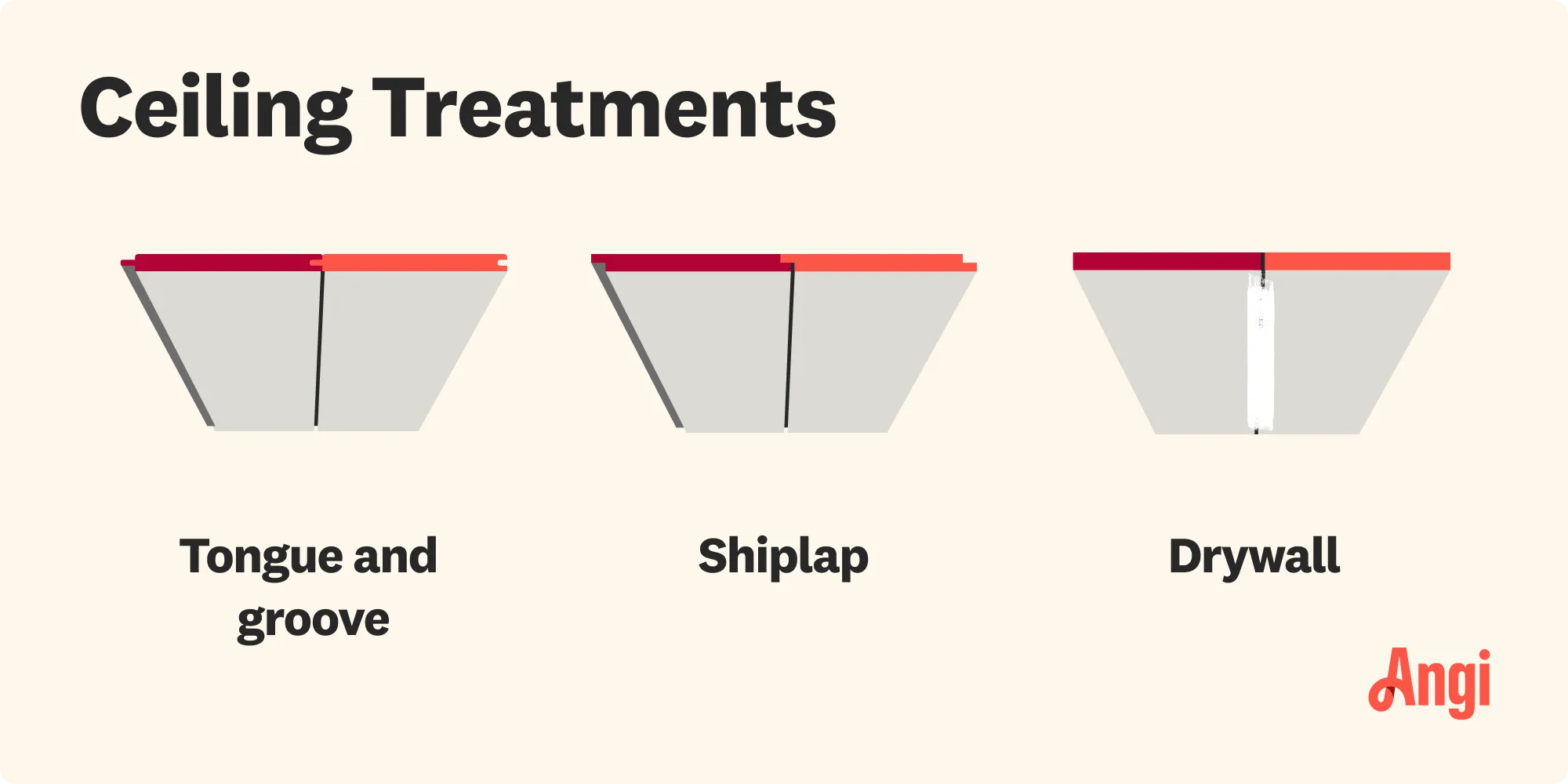
When you think of the standard ceiling, you’re probably thinking of drywall. Drywall, used in most standard construction in the U.S., has a smooth and seamless look. It’s composed of gypsum sandwiched between two pieces of thick paper, creating a large board (4 feet wide by 8 feet long).
Tongue and groove planks, on the other hand, are a drywall alternative. The planked look is similar to the ever-popular shiplap. They both have a rustic vibe, but the construction is the main difference between shiplap and tongue and groove. Shiplap has ends that overlap, while tongue and groove panels interlock. The interlocking construction makes them more durable but slightly more expensive.
| Tongue and Groove | Shiplap | Drywall |
|---|---|---|
| Protruding and indented pieces interlock | Boards overlap with L-shaped notch called a rabbet | Gypsum plaster pressed between two sheets of paper |
| Planked look | Planked look | Smooth finish |
| Highest cost | Moderate cost | Low cost |
| Easy to replace | Easy to replace | More difficult repairs |
| Limited sound insulation | Limited sound insulation | Excellent sound insulation |
| Easier to DIY | Easier to DIY | Tougher to DIY |
How to Save on Tongue and Groove Ceiling Installation
The cost of tongue and groove ceilings can vary dramatically with the specific build. In other words, there are some surefire ways you can tighten your budget if necessary. It’s all about choosing your materials wisely and carefully planning the job. Here are some tips:
- Choose less expensive planks: Avoid high-end hardwoods like walnut and cherry. Instead, reach for a common softwood like pine.
- Go for lower-quality wood: If you want a rustic look, you don’t need to use perfect wood for your tongue and groove ceiling. You can opt for planks with knots and holes instead of pristine wood grain.
- Paint the boards yourself: While you might not be able to DIY the entire installation, you can opt for wallet-friendly unfinished boards and paint or stain them yourself. This is a relatively easy way to save on labor costs—just make sure you finish painting or staining before the installation.
- Search for a deal: Different hardware stores will have their own deals on wood. Compare prices among brands and search for seasonal sales. Always ask your installer if they can get a discount because they can get better prices than what’s available at your average big box store.
Does a Tongue and Groove Ceiling Increase Home Value?
This remodel probably won’t hurt your home’s value, but it won’t necessarily add to it. It’s a hyper-specific look that lends itself to certain design styles (think: modern farmhouse or coastal design). It won’t appeal to the majority of buyers, even if you enjoy sipping your tea under a breezy tongue and groove porch ceiling.
That said, there’s no reason not to switch up your ceiling if you’re bored of regular old drywall. To make the most out of your remodel, ensure the ceiling matches your home's style. Tongue and groove ceilings work great in traditional homes, farmhouses, and mid-century modern homes. However, they could stick out like a sore thumb in an Art Deco or brutalist apartment.
How Angi Gets Its Cost Data
Home is the most important place on earth, which is why Angi has helped more than 150 million homeowners transform their houses into homes they adore. To help homeowners with their next project, Angi provides readers with the most accurate cost data and upholds strict editorial standards. We extensively research project costs to develop the pricing data you see, so you can make the best decisions for you and your home. We rely on reputable sources, including the U.S. Bureau of Labor Statistics, academic journals, market studies, and interviews with industry experts—all to ensure our prices reflect real-world projects.
Want to help us improve our cost data? Send us a recent project quote to costquotes@angi.com. Quotes and personal information will not be shared publicly.