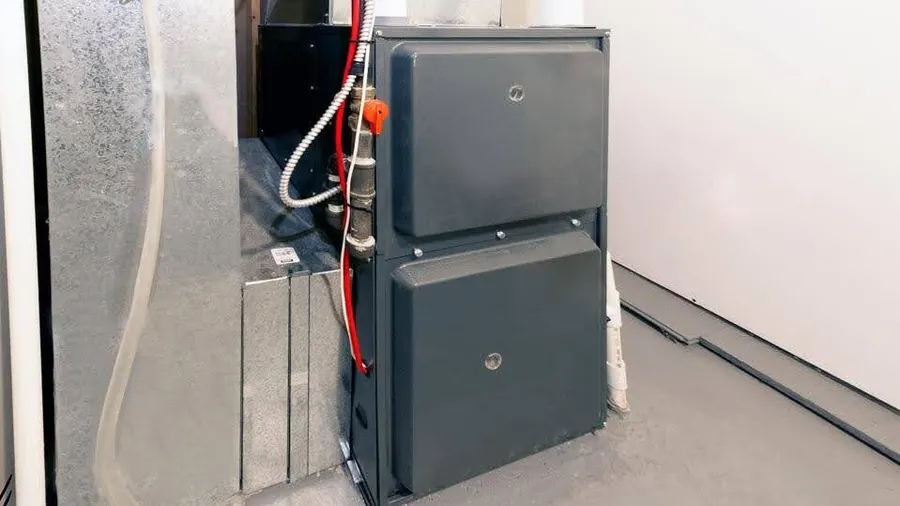
The average cost of an oil furnace is $5,700, including the furnace itself and professional installation labor. Costs vary based on factors like furnace model and home size. For instance, costs can be as low as $3,200 for a smaller oil furnace replacement, but totals can reach $9,100 for a larger high-efficiency furnace installation involving other costs such as old furnace removal and the addition of new lines, vents, drains and ducts.
Featured Partners
- The average cost of an oil furnace is $5,700, with professional installation labor included, but varies based on factors like furnace model and home size.
- The cost to install an oil furnace for the first time is about the same as replacing an existing oil furnace with a new one.
- Additional costs may include permits and inspections, ductwork, HEPA filter, humidifier, thermostat, variable speed blower and insulation.
Average Oil Furnace Cost
New oil furnace costs can be relatively high, but you may want to upgrade or replace an aging or inefficient heating system. In this article, we explore oil furnace replacement costs and the factors that affect them. We also look at when to replace an oil furnace, oil heater prices compared to other furnace types and how to save on the cost of a new oil furnace.
Oil Furnace Cost Breakdown
Two of the most important cost factors for a new oil furnace are unit type and size.
By Oil Furnace Type
Oil furnaces come in two types: Standard oil furnaces with an annual fuel utilization efficiency (AFUE) of 80 to 89%, and high-efficiency oil furnaces with an AFUE of 90 to 97%. AFUE percentages measure how efficient the furnace will be over time. Higher-efficiency furnaces condense their exhaust to extract heat before venting. This function requires a condenser and drain pan that add to installation costs, but it also provides greater energy savings over time.
A standard oil furnace is sufficient in many climates. However, a more efficient furnace is a better investment in northern states that see frequent heavy snow and freezing temperatures. The table below shows the costs to expect for each type.
The larger your home, the larger the furnace you’ll need to heat each room and maintain a consistent temperature. The energy needed to heat a home is measured in British Thermal Units (BTUs). The table below shows how many BTUs a furnace roughly needs to produce to heat homes of various sizes, as well as the typical cost for each furnace size.
In most cases, the cost to install an oil furnace for the first time is roughly the same as replacing an existing oil furnace with a new one. Even though a replacement furnace can reuse the same tank and oil pipe for reduced installation time, the amount of cleanup required to remove soot from the old furnace evens out labor costs.
Aside from home size and heating system efficiency, there are a few other key factors to consider when calculating the cost of an oil furnace.
Where you live impacts the furnace size you’ll need. The colder your climate, the harder your furnace needs to work to keep your home warm, and the more BTUs it needs. Your installer should know your climate zone and what size unit your home needs.
Local HVAC labor costs vary throughout the country. Different companies also work with different furnace brands, and unit prices can differ by thousands depending on the brand. To get a sense of costs near you, ask for quotes from multiple HVAC installers in your area.
If you’re installing an oil furnace to replace a furnace that uses a different fuel source, your labor and equipment costs will vary by type. For example, electric furnaces are easy to remove and replace with an oil furnace for an average of $3,000 to $6,000. Propane systems have more equipment to remove, so average costs are higher at $5,000 to $11,000.
From installation & maintenance to repair, the top-rated local pros on Angi offers a wide range of HVAC services. Request an estimate now!
- Permits and inspections: Some states require these when installing a new furnace. Expect a cost of $50 to $300.
- Ductwork: Sealing or replacing ducts costs $15 to $40 per linear foot.
- HEPA filter: An air purifier can improve indoor air quality for $450 to $2,500 on average.
- Humidifier: For $700 to $1,050, this device makes air more comfortable in the winter.
- Thermostat: An upgraded thermostat costs anywhere from $50 to $300.
- Variable-speed blower: These cost $5,000 and adjust to increase furnace efficiency.
- Insulation: Insulate a home for $3,000 to $7000 to help a furnace run more efficiently.
Many HVAC companies and contractors will remove and dispose of an old furnace at no additional cost, or they’ll lump their fee into the cost of labor. However, some charge separately for this service, usually at $150 to $450 depending on furnace size.
Electric heaters are the least expensive upfront at just $1,600 to $6,200. However, they have high operating costs due to their low efficiency and the high cost of electricity. They are best suited to very small homes.
If you have a natural gas line running to your home, this may be your best heating option. The cost to install a natural gas furnace is $1,700 to $9,700, and they have the lowest fuel costs.
Propane furnaces cost $3,000 to $6,000 to install. They heat more efficiently and cost less to run than oil furnaces. On the flipside, propane fuel tends to cost more than oil.
Heat pumps are a highly efficient alternative to furnaces. Rather than heating indoor air, they extract heat from outside. While heat pump installation costs $5,000 to $30,000 and the pumps themselves require costly electricity to run, heat pumps don’t require ducts. So, if your home isn’t already outfitted with ducts, a heat pump may be a viable option.
Free, No-commitment Estimates
How to Know If You Need a New Oil Furnace
A good oil furnace has a lifespan of 15 to 20 years. However, improper maintenance and wear over the years can shorten this lifespan. Look for the following signs that it’s time to replace your oil furnace:
- Steadily increasing heating bills and oil consumption
- A yellow oil burner flame instead of an orange one
- Banging or rattling noises coming from the furnace
- A lack of hot air when the blower is running
- Rust on or around the furnace
- Persistent flu-like symptoms among family members, which could be a sign of carbon monoxide poisoning (Note: If you suspect this, immediately leave your home to get fresh air and seek out medical attention).
Even if your furnace is still working without these problem signs, any oil furnace that’s more than 10 years old could be running with as much as 30% less efficiency than a new furnace. Upgrading could significantly cut your oil consumption costs.
Oil furnaces are a niche type of furnace. Safe installation is complex and requires specific knowledge of HVAC systems, oil tanks, heat exchangers and electrical systems. We don’t recommend attempting installation yourself due to the danger that can result from an improper installation. The benefits of hiring an HVAC company for your oil furnace installation include:
- Lower energy costs due to the system running at its highest efficiency
- Qualification for everything under your system manufacturer’s warranty
- A workmanship warranty to cover any potential problems
- A relationship with a company that can do repairs and annual maintenance
- Avoiding the cost of furnace repairs due to faulty installation
To save on the cost of a new oil furnace installation, wait until the fall or spring if it’s not an emergency. Demand for HVAC services is lower during these off-season months, and you may see local companies running promotions and discounts. Always get multiple quotes from different companies before making a decision. You may also save by replacing multiple HVAC systems at once.
If you’re installing a high-efficiency furnace, you may also qualify for a tax credit. Credit amounts change yearly, but your HVAC contractor should be able to provide information about your options.
To arrive at the average costs in this article, editorial team members surveyed a range of five providers on national and local levels. All averaged figures were correct at the time of publication and may be subject to change.
Nick has seven years of experience in the home improvement industry. He started his career marketing for dozens of flooring providers and related home services across North America. Today, he is a freelance writer and regular contributor to several publications specializing in home topics. Nick’s work includes DIY guides, informational articles and financial content, all of which aim to demystify unfamiliar subjects for homeowners and build their confidence.
Kristin is a deputy editor at Forbes Home and has nearly a decade of professional experience as a writer and editor. She's previously worked at sites like Talking Points Memo, Insider, Delish, Angi and HomeAdvisor. She has a passion for lifestyle topics and has extensive experience researching and reporting on topics that will help make your house a home.