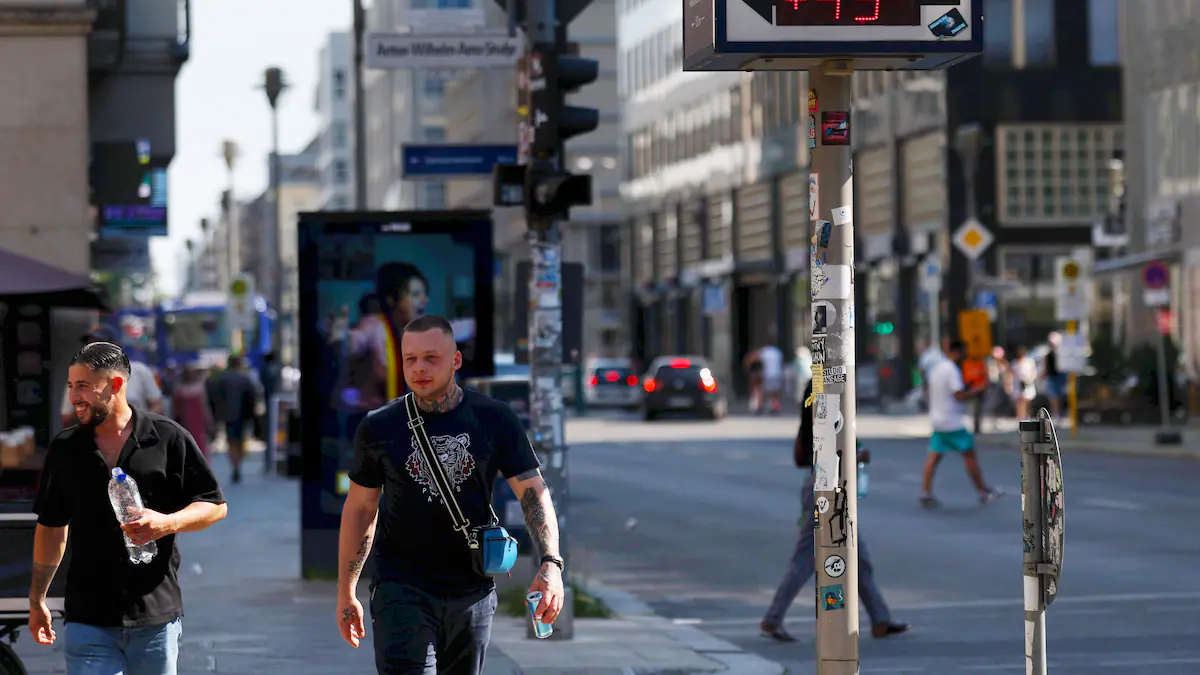
There’s a big difference between Europeans and Americans that’s recently been getting attention. And it comes down to two words: Air. Conditioning.
Europe has had two heatwaves this year and we’re not yet at peak summer. During the most recent one in late June, governments issued heat alerts for almost 200 million people.
In Germany, trains and trams stopped running as tracks melted and roads cracked. Public pools closed due to overcrowding, schools cancelled classes, supermarkets sold out of ice cream and the Berlin police even set up water cannons, typically used for crowd control, to cool people off.
The German meteorological service sounded like a broken record with all the broken records: two heat records over two days, the hottest night ever, the most nights classified as “tropical”, the longest period of time the country’s heat warning system had been on alert.
Human-made climate change is causing this, various experts said. But humankind’s idiocy was not what most people in Germany were debating during this heat wave. Instead, they argued about air conditioning.
“Why don’t Germans do air conditioning?” hot, angry people from other countries asked. About 90% of US households have air conditioning, compared with only 20% of European homes.
One German-Brazilian journalist wrote a poetic op-ed in local newspaper Die Zeit, about how the Germans’ miserable attitude towards air con made him long for Brazil, where “the facades of the buildings along congested avenues are adorned with thousands of white boxes”.
In an indication of how emotional the locals can get about the evils of air conditioning, more than 150 reader comments followed. Some argued it was bad for the environment and makes you sick. Others wanted air conditioning, but only if powered by renewable energies. The more empathetic pointed out hospitals and old folks’ homes were overheating.
“Air conditioning is considered a sign of American vulgarity,” one savvy reader said, summing it up. “In Germany, they close the curtains and declare it a cultural achievement.”
Elsewhere, amateur climate control technicians debated negative air pressure and how many outflow pipes one needs, while politicians on left and right came out for or against, leading observers to declare hitzepolitik – the politics of heat – a new subject for parliamentarians everywhere.
Berliners who live in upper floor apartments that get a lot of sun (great in winter!) but never any air conditioning got a tiny, albeit still-privileged taste of what it might feel like to be a climate refugee.
“German apartment buildings were built for a climate that no longer exists,” somebody quipped, as we all fled to a nearby lakeside. There, it turned out, you can get away from the urban heat dome but not the air conditioner debate.
It’s only two or three days every summer, a German friend scoffs. All this discussion is just because they want to sell stuff.
It’s not even that hot, an Italian agrees, compared with her hometown. “I think the culture here will just have to change,” she states. “Back home, all through August, everybody basically stays inside and doesn’t come out until after dark.”
Doubtless the air conditioning dispute will go on. But some small cultural change may already be happening, due in part to that other big summer topic, the football World Cup. The games are usually on late at night, so there’s been a lot of sitting outdoors in front of neighbourhood convenience stores that erect large screens for public viewings.
“It’s lovely, isn’t it?” a fellow fan sighed, one balmy midnight after a recent Germany game. “It’s almost like living in a different country.”