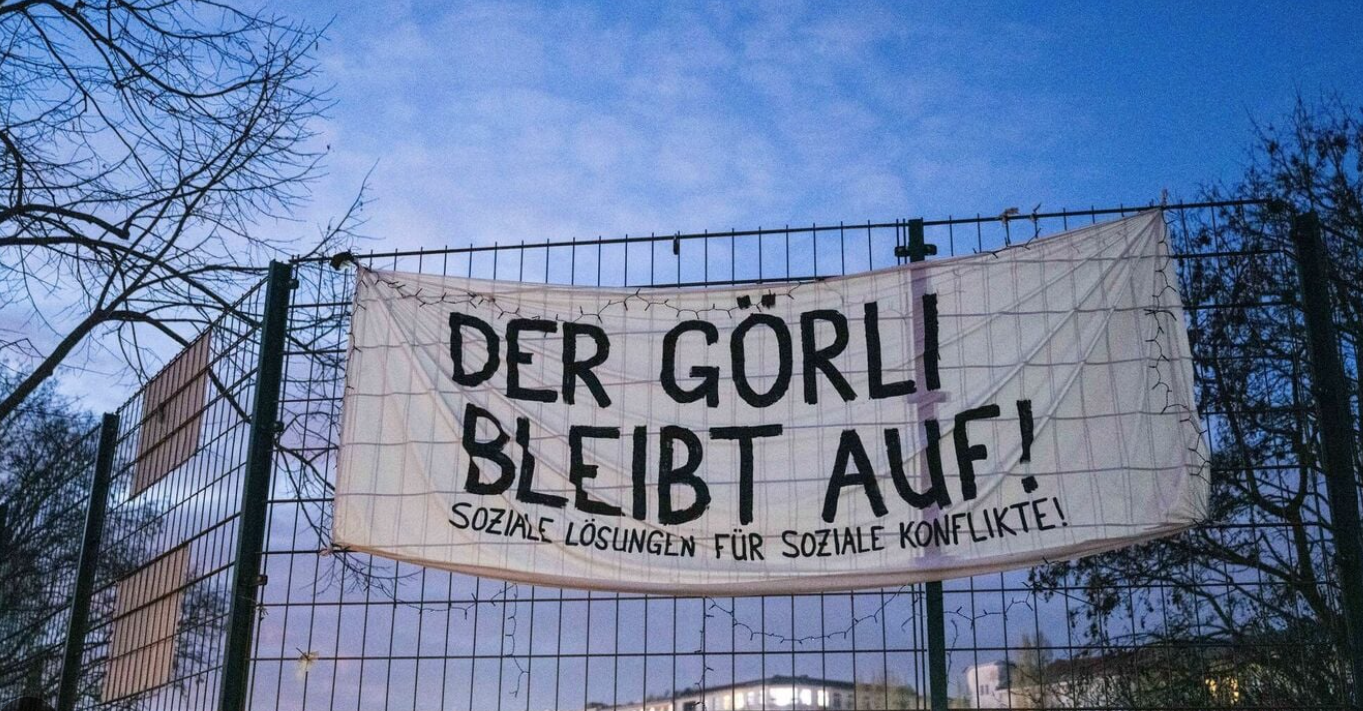
Democracy is dead, or maybe dying – that’s what experts who monitor the rise of autocracy will tell you. Then again, they haven’t been to Görlitzer Park in Berlin lately.
The park, in the arty central neighbourhood of Kreuzberg, is often described as “Germany’s worst drug park”. For years, it has been notorious for drug dealers, addicts and the homeless.
Go through certain entrances any time, day or night, and young men will offer you everything from party drugs to opioids. Many of them are African refugees and they’re regularly harassed by the police.
It’s not all crack pipes and syringes in Görlitzer Park, though. Walk further and it’s just your average, leafy urban park in a diverse district. You’ll see folks sunbathing, drinking beer, kicking a football around; old ladies walking tiny dogs, little kids merrily bicycling, wildly competitive frisbee players.
But it is crime that has made these 14ha into the focal point of a culture war between the city’s left and right wings.
Berlin’s conservative mayor, Kai Wegner, promised to crack down on crime. Part of his plan was to erect a €2 million (NZ$3.9m) metal fence right around Görlitzer Park and lock it up at night, supposedly solving all the problems posed by the down and out and disadvantaged.
Locals living around the park were not amused, nor was the Kreuzberg municipality, which vehemently opposed the idea. Wegner went ahead anyway, earning himself the nickname “fence king”.
“Whether poverty, exclusion or surveillance, the flaws in our system are reflected in Görlitzer Park,” a statement from one anti-fence community initiative called Görli-Fence-Free explained. “Instead of addressing the root causes … people deemed disruptive are further marginalised.”
The money could have gone to rehabilitating addicts, sheltering the homeless or offering perspectives to out-of-work migrants, they argued. The conservatives had cut budgets for these kinds of projects earlier, when they got into power.
As it was, the fence never really stood a chance against the egalitarian horde. Even as it was being built the sabotage began. Glue was poured into locks, turnstiles taken off their hinges or stolen (then later returned) and holes were cut.
“Police reported a 2.5m-long section of the fence missing,” local media reported earlier this year. “Officers searched for it but were unable to locate it.”
At Easter, two humans dressed as rabbits handed out chocolate eggs to park visitors, along with duplicates of a master key to the park’s new gates. It would work, the furry activists noted wryly, on any lock not glued shut.
Community groups also organised late-night walks and barbecues, stargazing events and raves against the fence.
“Hardly a day goes by without some new sabotage,” another of the anti-fence groups, Görli 24/7, wrote on social media. The park “is transforming from a testing ground for state control into an experimental field for creative disobedience,” the group said.
In the end, while the pranks were entertaining, it wasn’t civil disobedience that kept the gates open longer. It was that other pillar of democracy – the law. One of the community groups filed a complaint and in early June, the court agreed the city council had locked the park illegally. So now it’s open again.
The legal fight probably isn’t over quite yet: more cases are pending, and anti-fence initiatives are ongoing.
This month, a part of the fence was turned into a site where locals can donate clothing, bedding or shoes. There are also workshops being organised to come up with creative new uses for “obsolete” fencing materials.