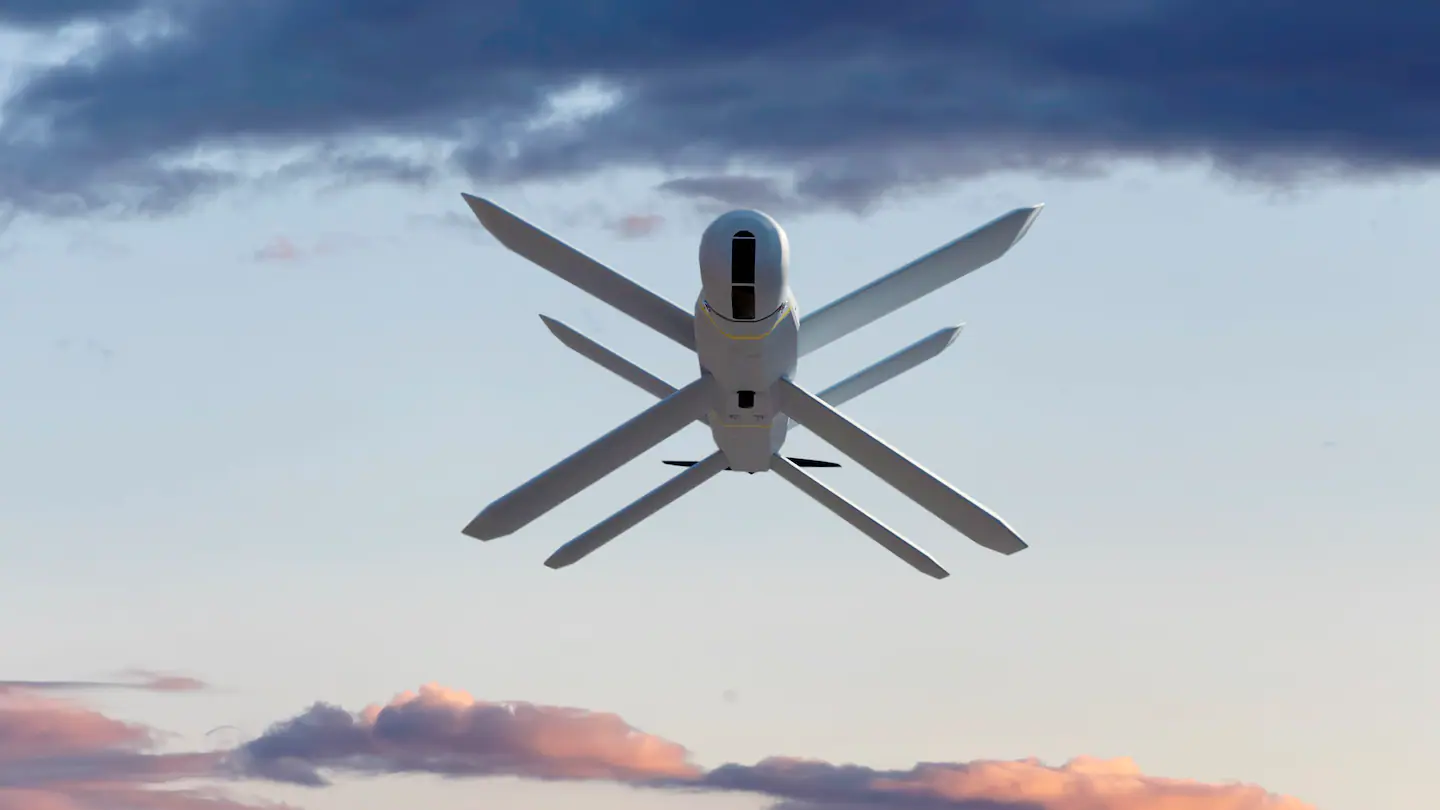
Over the past month or so Europe has been plagued by a rash of mysterious drone sightings. They've been spotted over military bases, critical infrastructure and airports in Germany, Denmark, Norway, Finland, Belgium, Poland and Romania, among others.
But it's still unclear exactly where they may be coming from.
Drones shot down over Poland in early September were definitely Russian. But others seen over Munich airport in early October just disappeared, despite German federal police tracking them with helicopters.
Danish authorities haven't been able to trace aerial invaders spotted over their military bases either. But earlier this month Danish Prime Minister Mette Frederiksen said she believed they were from Russia. She also thinks they'll be back again to further probe European defences.
"When I look at Europe today, I think we are in the most difficult and dangerous situation since the end of the Second World War," Frederiksen told reporters at a Copenhagen summit in early October, where European leaders met to discuss errant unmanned aerial vehicles.
No matter where the drones come from, it's definitely making ordinary Europeans nervous. In Denmark, the New York Times reports, sales of emergency rations have shot up and locals keep calling the police with drone reports (apparently most are false alarms).
In Germany, recent surveys indicate that around 62% of people fear Russia will invade a neighbour like Poland or Lithuania.
True, it's not something we think about a lot — the Ukraine war has faded from headlines a little — but every time there's news about another cheeky drone, you do check the price of a plane ticket to New Zealand again.
This kind of scaremongering may well be part of the point of what's known as "hybrid war", military analysts say — that is, sabotage, surveillance, cyber-attacks and other sneaky business that can't be easily attributed and therefore doesn't lead to direct fighting.
Russia's "shadow war" tactics in Europe almost tripled between 2023 and 2024, US-based thinktank, the Centre for Strategic and International Studies, reported earlier this year. They have included everything from cutting undersea communications cables to planting explosive packages on cargo planes to, more recently, rampaging drones.
"We are not at war but we are no longer at peace either,” is how Germany's Chancellor Friedrich Merz put it last month.
"Mr Putin does not need to frighten politicians or generals with his grey-zone manoeuvres," the UK's Economist magazine explained. "He can advance his aims simply by alarming the public in the countries he targets, so undermining confidence in their governments."
Less confidence could lead to less popular support for Ukraine from European governments and it could also divide European allies, the Economist argued. The EU might "squabble among themselves" especially if the US refuses to take the lead in a military response to Russia.
Unfortunately for those of us who can't afford a plane ticket to New Zealand, the squabbling is already a thing.
At the Copenhagen summit in early October, European leaders also discussed building a "drone wall" on Europe's eastern flank. Not an actual wall but a set of technologies to help detect bad drones.
But — surprise! — EU leaders squabbled. They were divided over what such a thing might look like and argued about more pressing priorities. They also fought over funding, with Italy and Greece angry they'd be paying for a drone wall but not getting anything for that. EU leaders even quibbled about the name — should it be called a "drone wall", some asked, or should we manage expectations better?
If Putin is conducting hybrid war against Europe, he's probably laughing all the way to the nuclear bunker.
