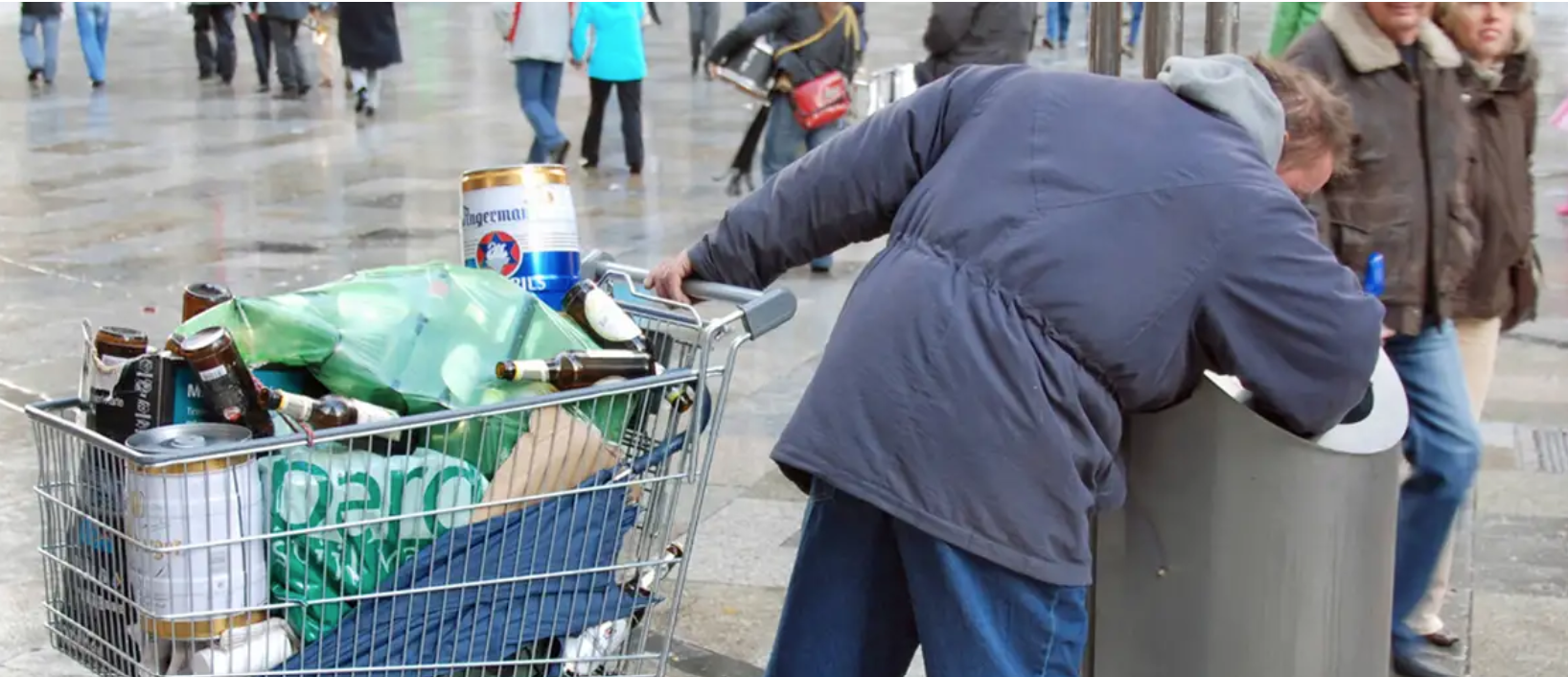
Once you start looking for them in Berlin, you realise how many there actually are: older people who rummage around in public trash looking for plastic or glass bottles. If the bottle has a recycling symbol printed on it, you can get anything from 5-25 eurocents when you return it
Some of those older folk look miserable, dirty, possibly homeless, and they mumble weird nothings as they stretch a horrifyingly bare hand into the dark, smelly maw of a city council bin. God only knows what’s in there.
Others are more organised and you often won’t even notice them. They wear gloves, carry a flashlight and look like somebody’s suburban grandparent out on a walk. They work methodically, pointing their flashlights into each of the bins on, say, a railway platform before moving on to the next receptacles.
This variety of aged bottle collector often seems to have timed their mission carefully. They’re frequently out in the early morning, presumably to get bottles discarded by young drinkers overnight.
It seems so awful and so unfair that someone in their 70s should be doing this. It takes a lot of recycled bottles to make €5 (NZ$10) and you often wonder what has led to the situation where a few coins can drive retirees outdoors on a freezing winter morning.
It’s not just sad though, it’s frightening. Berlin’s bottle collectors could be harbingers of our own poverty as seniors, a sign of what might happen if Europe doesn’t sort out its slow-moving pension crisis.
The right to a state pension is one of the tenets of European social welfare, and most pension regimes here used to work with some form of a pay-as-you-go system. That is, those citizens currently working paid for those currently retired.
Because of this, Germany and many other European governments are using tax revenue to top-up pension funds to support retirees. But because of ageing populations, the amount that must come from elsewhere keeps growing, taking an ever-growing percentage of national income.
Countries where governments are not topping up pension funds, such as Lithuania, Latvia and Estonia, have reported some of the highest levels of old age poverty in the EU.
There have been a variety of suggestions on what to do about it, mostly coming down to three things: younger Europeans should pay more into pension systems, work longer and then get less when they do retire.
“There is a high probability that the next generation of Europeans will retire significantly poorer and later,” a spokesperson for the European Federation of Investors and Financial Services Users said recently.
Last month, the EU suggested that although state pensions must continue, member states should become more like Denmark and invest their pension funds in “strategic priorities” such as defence and sustainability.
The EU also wants governments to be more transparent about the state of pensions. This might make younger people take the topic seriously and make contingency plans, such as saving privately for retirement income, officials suggest.
Then again, gloves and a flashlight shouldn’t cost more than a few euros, something the younger generation can still afford while we’re all working.
