'The best training for hillwalking is hillwalking,' mountain guide Andy Rowe told me on the rocky footpath heading up Ben Nevis. And what training had I done? A twice-daily dog walk through an urban park. Oops. I'm going to suffer here, I thought. I was on the first mountain of the national Three Peaks Challenge and just minutes into what was shaping up to be a painful attempt to bag a sub-24-hour time for the climbs of Ben Nevis in Scotland, Scafell Pike in England's Lake District, and Mount Snowdon (Yr Wyddfa) in Wales.
Only forty percent of those who attempt this tough hiking challenge manage to do it within the magical 24 hours. And that's understandable: 'This is a hard challenge,' stressed Rowe.
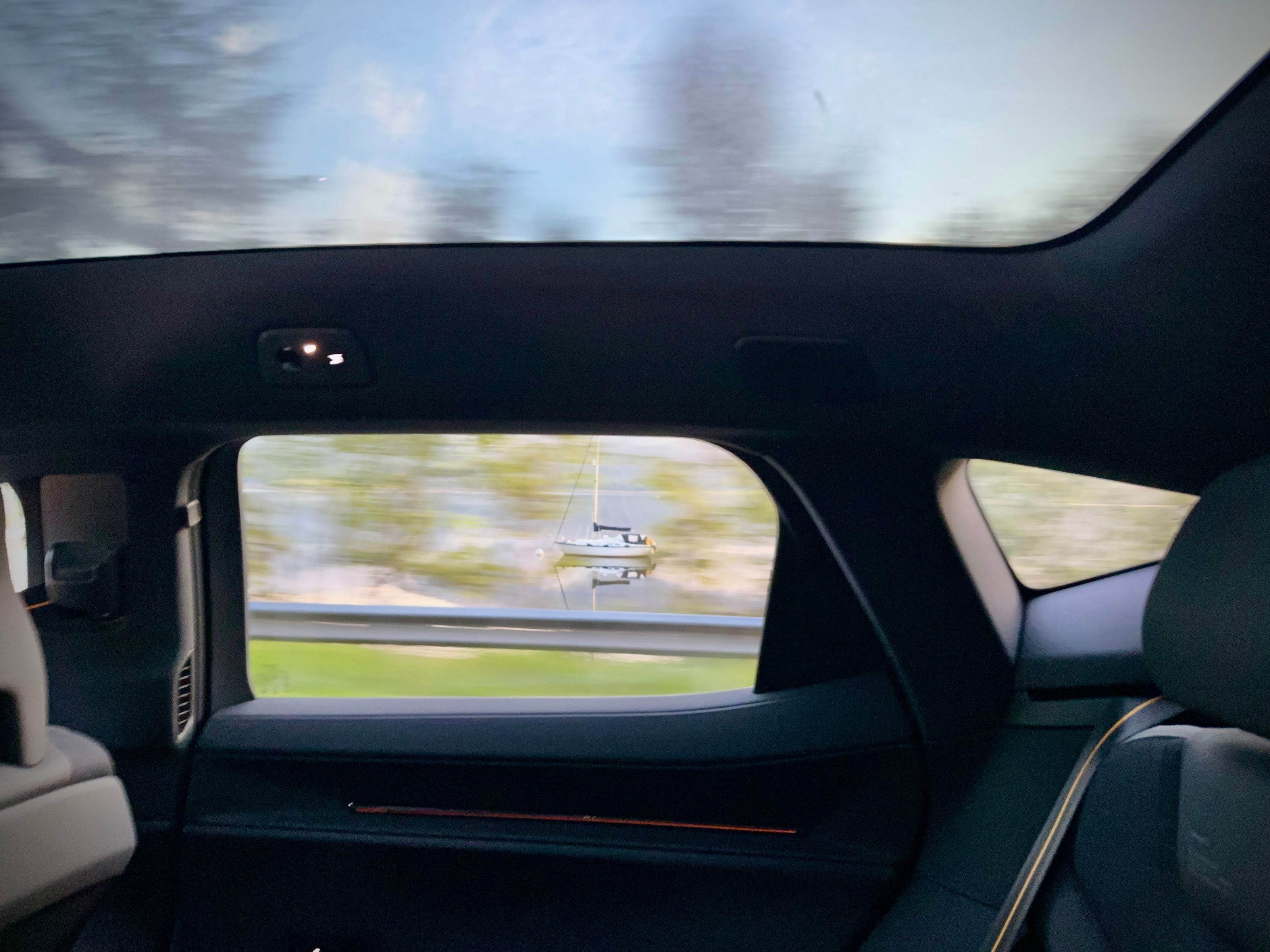
Just the 23-mile walking part of the challenge is timed. The driving part is sensibly capped at ten hours, whether you do the 462 miles in a minibus with ten or so others on one of the many organised trips or, like us, on a private trip in a five-seat electric car.
I was with my mountain-fit daughter, Ellie, a hospital doctor, and I imagined I might need her medical skills by the end of the challenge.
There's no set starting mountain or time: you choose which peak to tackle first and which one you'll be clambering up in the dark. Most people start with Ben Nevis. We went with the hive mind and, blissfully, the Friday we chose for our attempt turned out to be hot and dry.
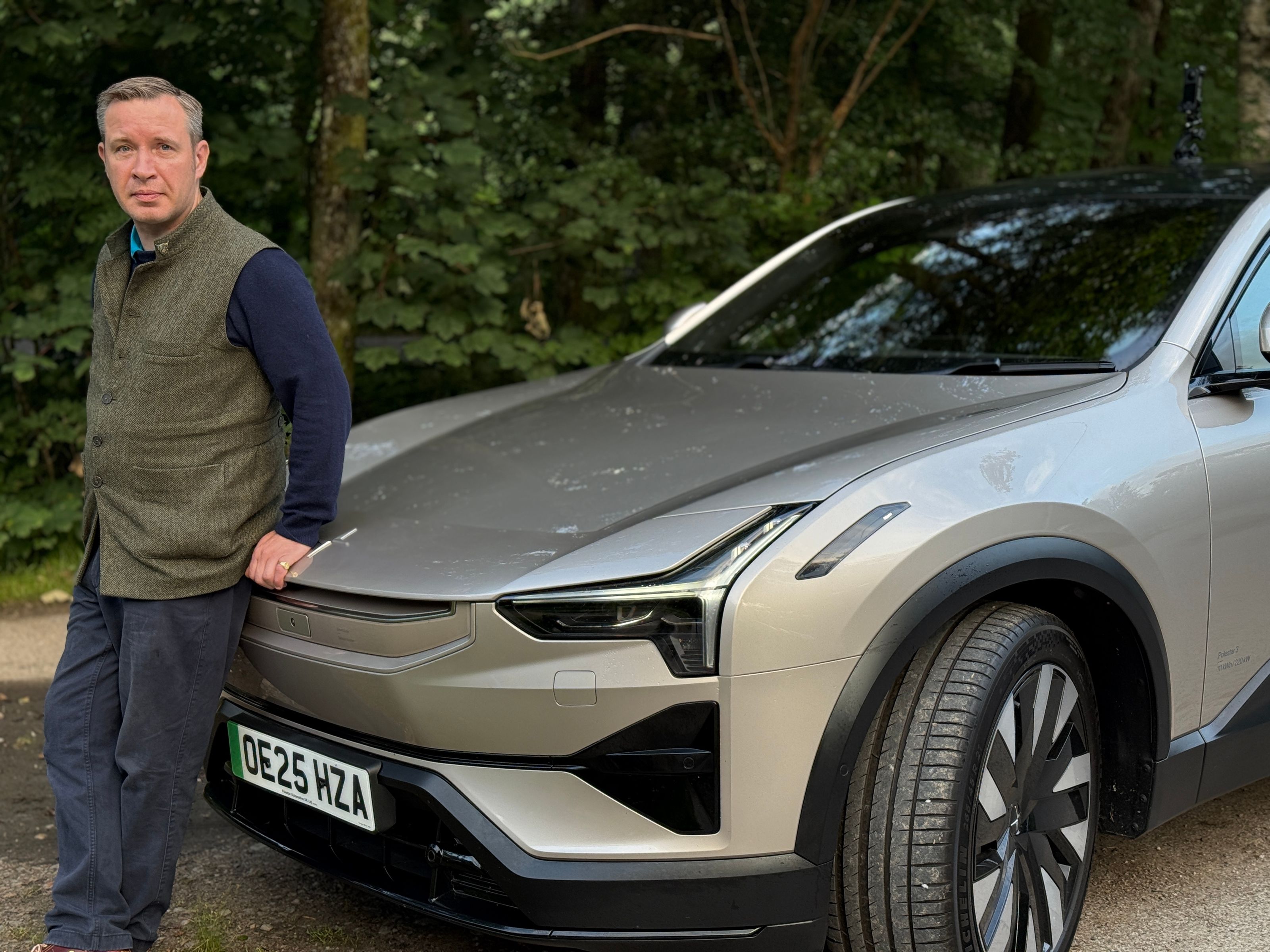
We were shepherded to the base of our first mountain by chauffeur James Nixon, who'd picked us up the day before in Glasgow before driving us to Glencoe in a Polestar SUV, a luxury electric vehicle with ample snuggle room, useful for the snoozes we'd be aiming for later. Too early for breakfast at the hotel, we met Rowe just before 6 am. He was the first of our three guides: one per mountain.
Guiding the 30,000 annual participants in the Three Peaks Challenge is now somewhat of an industry. 'Ben Nevis is my office,' said Rowe. Out of choice, he'd prefer to hike on a quieter peak. 'I only walk on this hill if I'm getting paid,' he revealed with a smile.
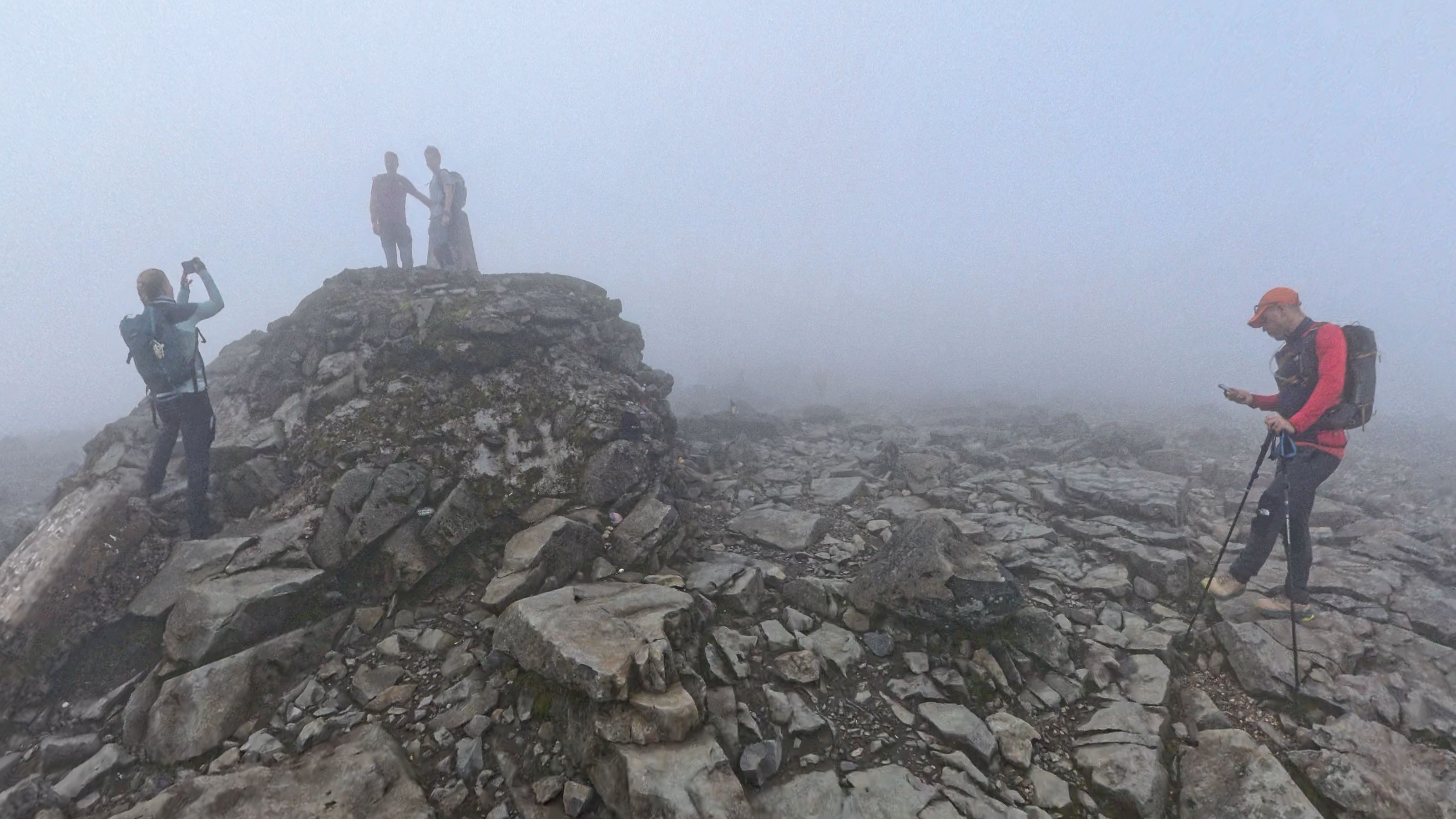
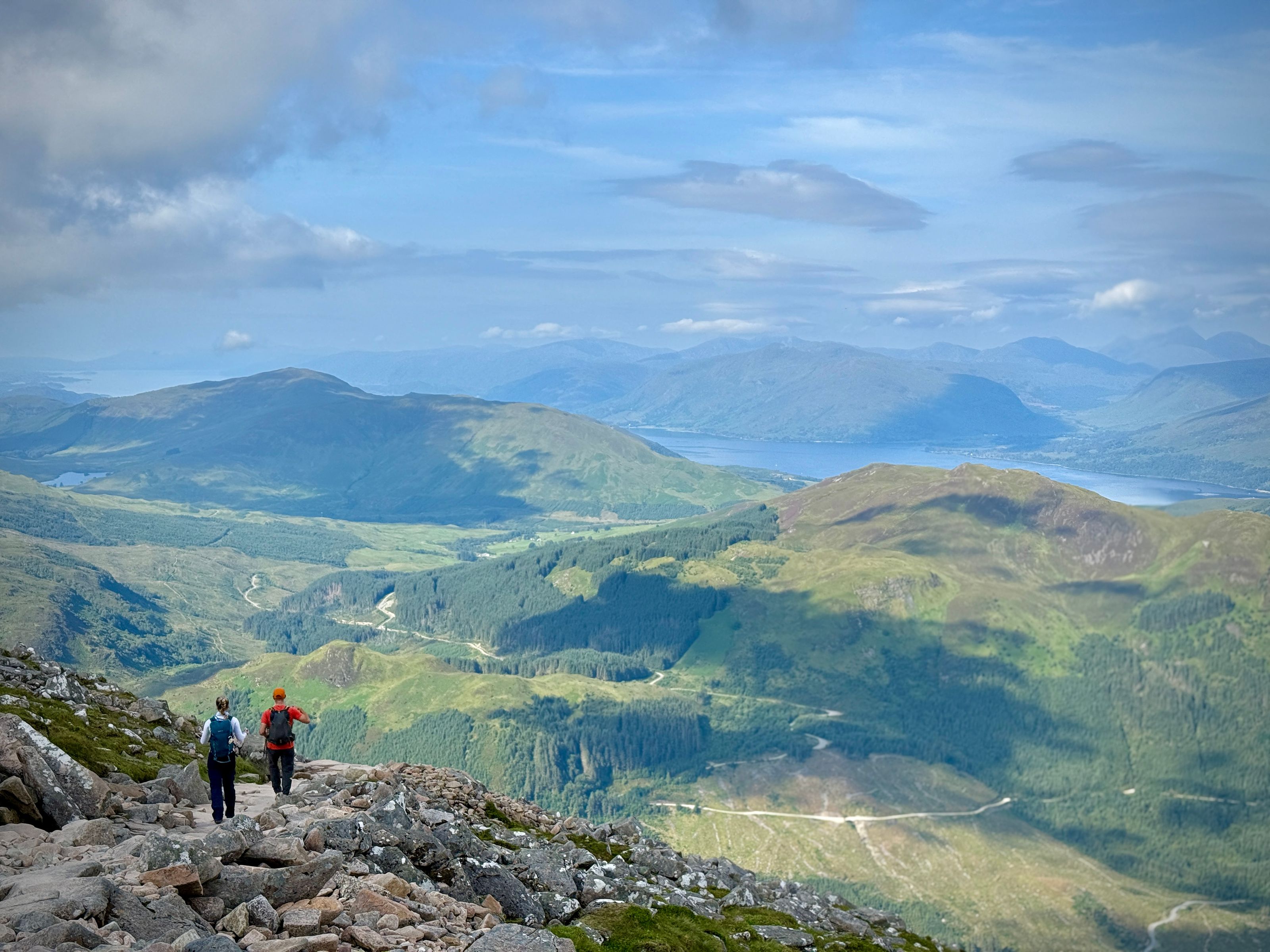
In truth, we likely didn't need guiding up Ben Nevis: the route is obvious. But we were seeing it in literally the best light. In foul weather or the dark, it would be helpful to be with someone who has intimate mountain knowledge. This became clear as we approached the summit and were told of the drop-aways to avoid. The peak was cloud-covered and there was no chance of a scenic vista from the top. The uppermost cairn and the sky were both grey. It was cold. We didn't linger.
We didn't linger on any of the mountains. To complete the walk from the base of Ben Nevis to the peak of Snowdon within the requisite walking time of 14 hours requires almost constant forward motion.
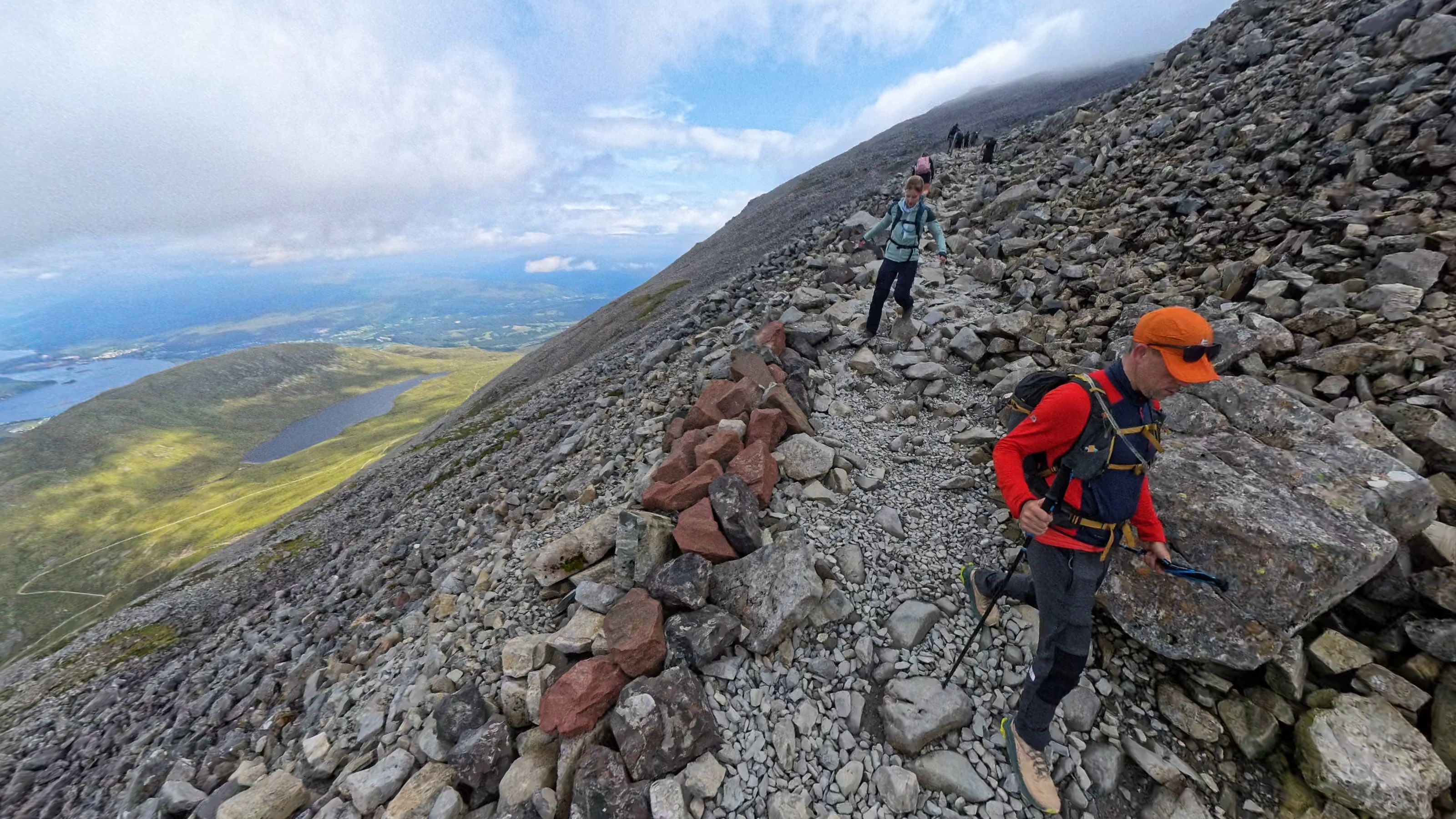
'It's faff that kills the challenge,' said Rowe. 'If you're spending 10 minutes faffing about in the car park before starting the walk, that's 10 minutes you've not got on the hill.'
And, he added, that's 'significant' because three lots of such faff would lose you a full half an hour, possibly bumping you over the 14 hours of walking time. There was no stopping for snacks: food had to be eaten on the go. Likewise, drinking was from a tube inserted into water pouches in Camelbak rucksacks, which meant no halting to take out bottles, a key time-saver.
Photography was also rushed but I'd already thought of that: grabshots were taken on my iPhone rather than a bulky SLR, and the five minute film that accompanies this article was shot on an Insta360 camera that required no time-hungry framing on the hill — the multiple angles were achieved in post-production rather than being shot and reshot in situ, which, as any videographer will know, is a massive faff.
While we snacked gingerly on the hoof, our primary calorific input occurred on the two long car journeys — six hours from Ben Nevis to the Lake District and four hours from Scafell Pike to the Pen-y-Pas car park at Snowdon's base — and on the 30-minute stopovers at service stations to recharge the car. We were in a Polestar 3 with a stated range of 438 miles, so, for a trip at least 30 miles longer than that, it was best to top up the battery at fast chargers when on the motorway network rather than risk slow-speed chargers on rural roads.
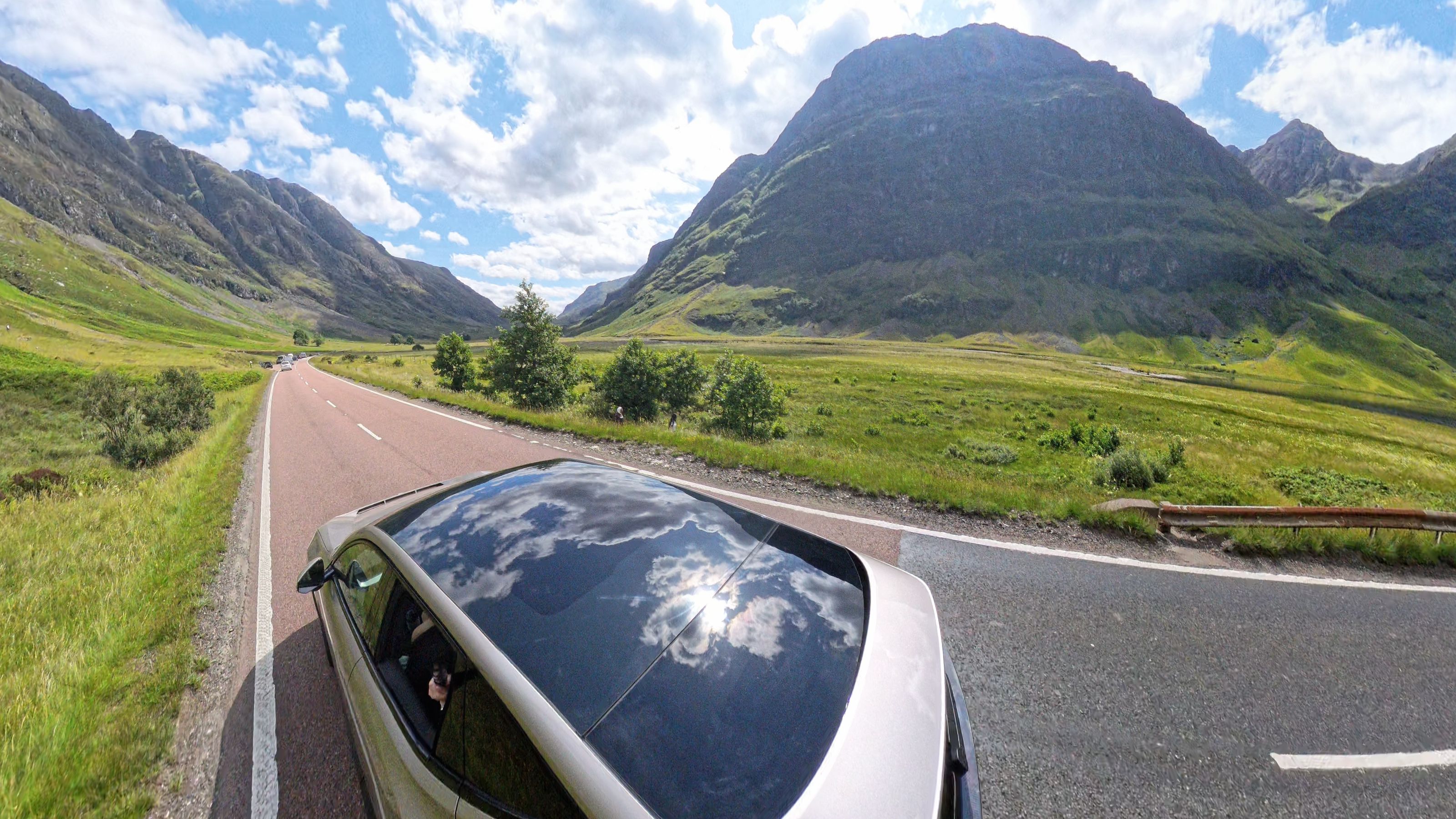
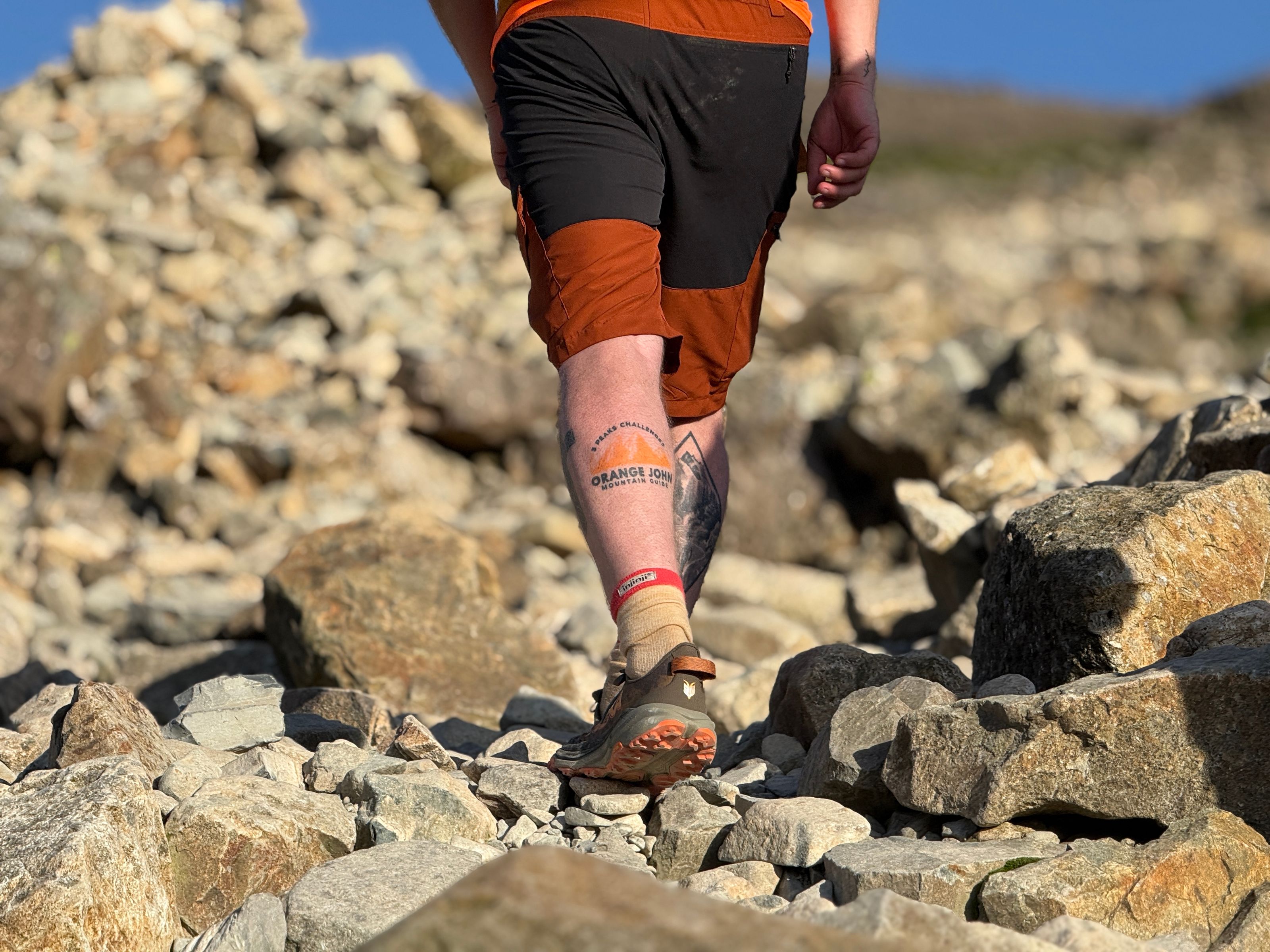
A key benefit of being ferried in a luxury SUV was the arctic-like air conditioning. We were off Ben Nevis when the day was still cool, and drove, in chilled comfort, through the hottest part of the day. We were glad of this reprieve from the sun because it was still baking hot when we started the climb up Scafell Pike. Even our professional guide, Orange John, laboured up the hill and, for his benefit as much as ours, he pointed out plenty of shady spots for us all to rest. As we climbed higher, the Isle of Man came into full view in the distance. Bizarrely, EE sent a text welcoming me to the island and welcomed me back to the UK when we descended.
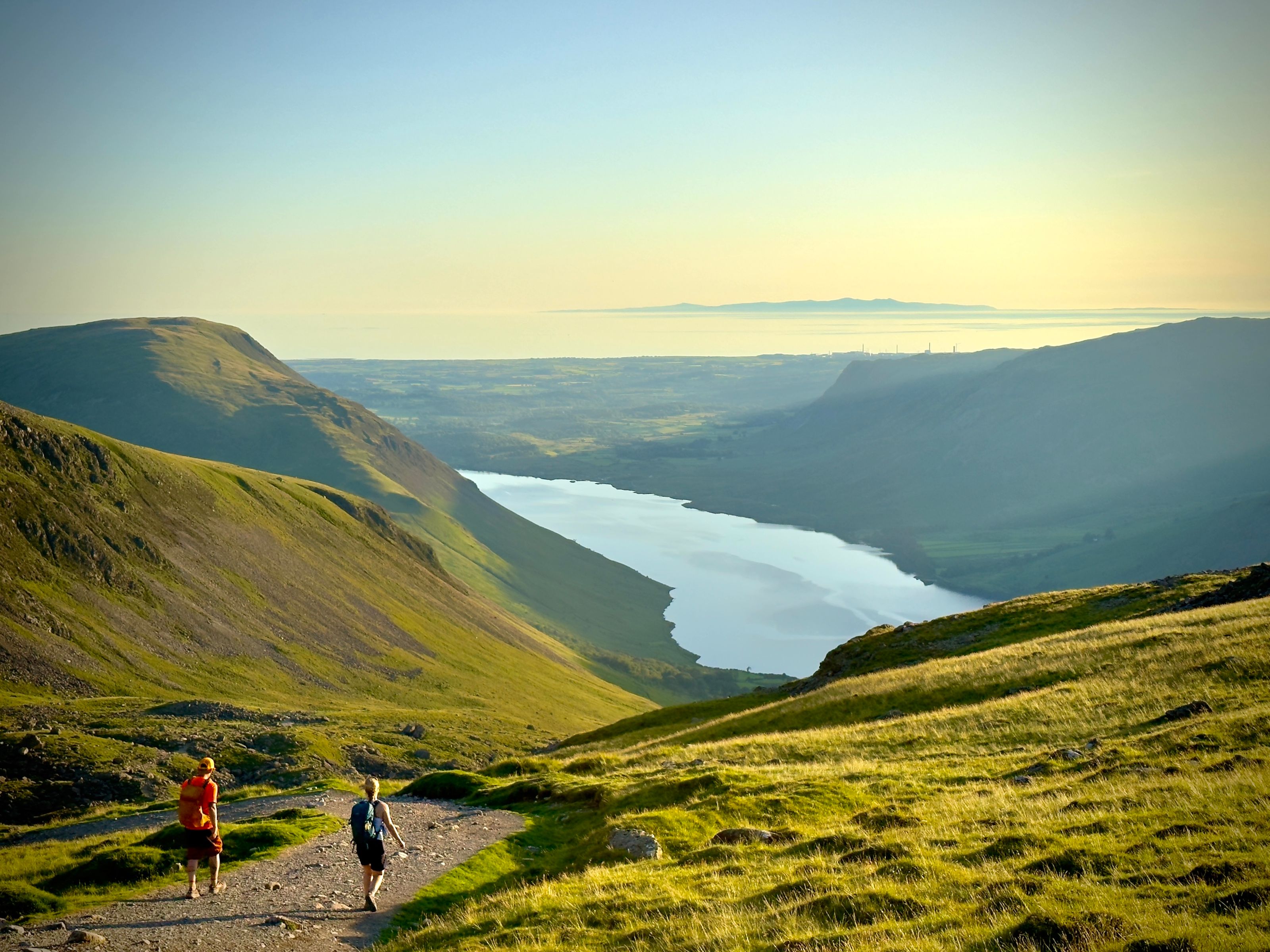
Unlike on Ben Nevis, we had a glorious view from the top of the Pike. I've not climbed this peak previously, and I don't imagine it's always quite so desert-like. It wouldn't have seemed out of place to see lizards flitting from dusty rock to dusty rock, although the only actual wildlife we saw was an altitude-loving sheep, slow-roasting in its fleece near the peak.
Again, we likely didn't need a guide for Scafell Pike, but Orange John's heavy pack held items that would be doubtless useful after a client's fall, and when we came off the hill, we happened upon an active mountain rescue operation, a reminder that even in perfect conditions, bad things can still happen.
None of these three climbs is a walk in the park — the steep trails are rocky and tackling Britain's three highest peaks is not for the faint-hearted. Or those in flip-flops.
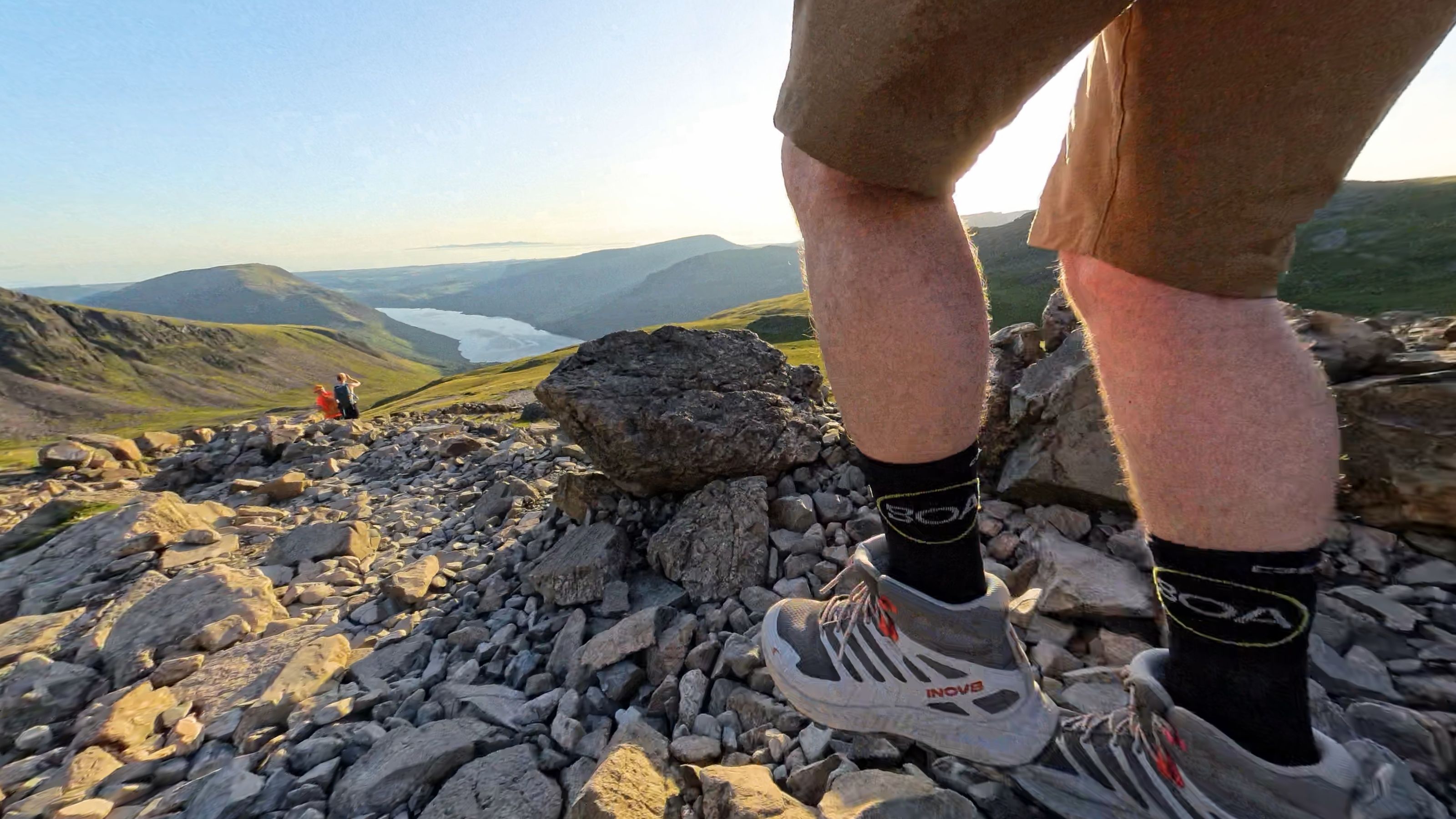
On the footwear front I was conducting a little test. I wanted to see which would be more comfortable on these rocky climbs, a boot with a high cuff to prevent ankle rolling, or the same boot without the cuff. I wore the cuffed version on Ben Nevis and Scafell, and the cuffless version on Snowdon. Pre-walk documentation from Orange John stressed that clients should wear cuffed boots, but I noted that John and Andy were cuffless, the scamps. On the three climbs, I felt no protective difference between the Inov-8 Roclite walking boots, with the cuffless pair being slightly lighter, making them better suited for long-distance hikes.

I was glad of the boot's trainer-like bouncy cushioning. Yet even with this sprung protection, my knees, halfway down Scafell, were shot to pieces. I could cope with the ascending, but the relenteless descending proved painful. I'd not felt overly stressed on Ben Nevis but, despite the comfy drive, I'd stiffened by Scafell, and by Snowdon at 3 am I had to borrow our guide's walking poles to keep my old bones going. The first part of the climb was done in the dark, our steps lit by headtorches.
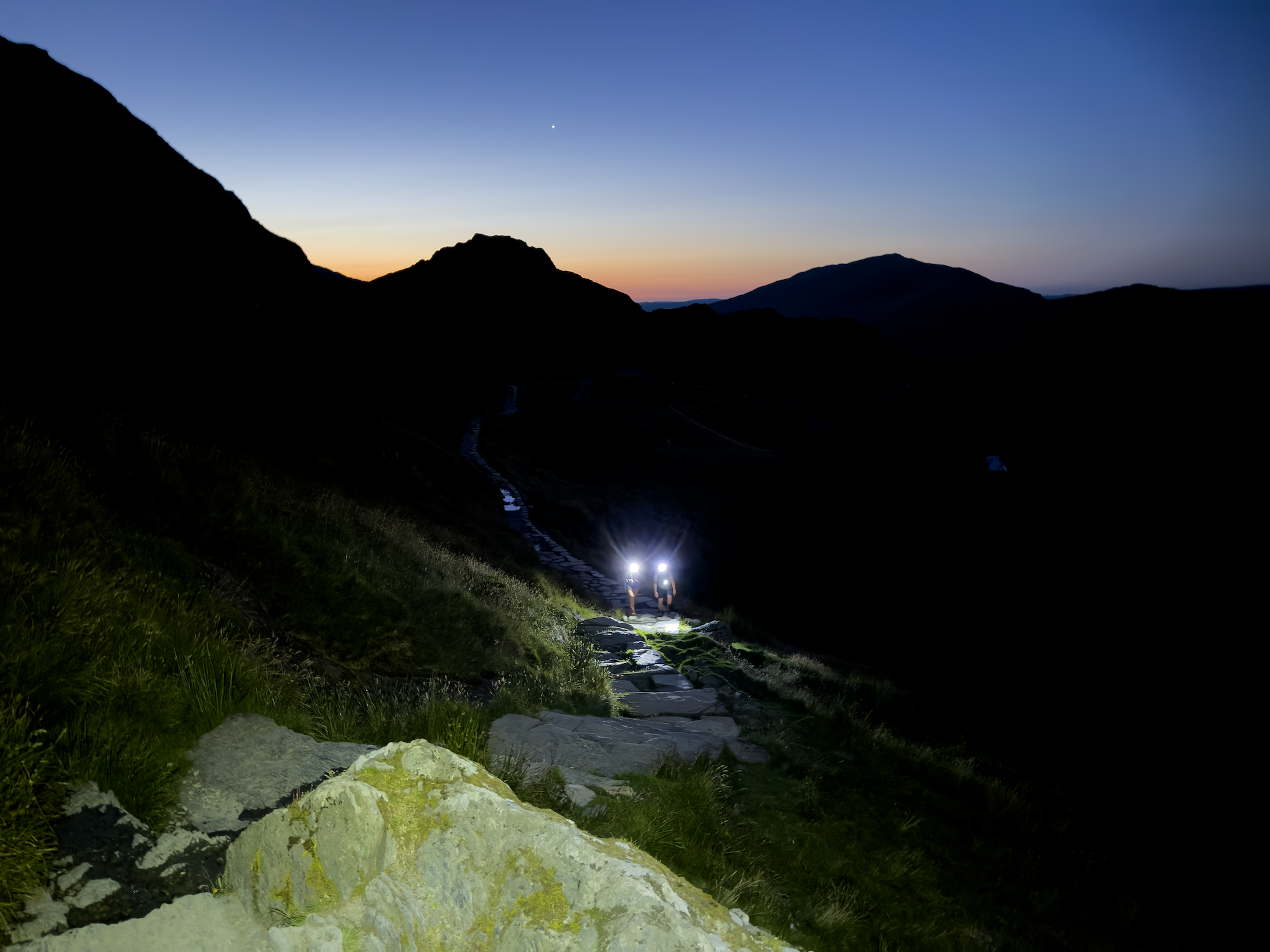
'It's a 24-hour mountain now,' said our guide, the appropriately named Dawn Stanworth. 'There's always someone walking up or walking down.' Indeed, ahead and behind us, we could see pinpricks of light as other hikers were on the same steep trail as us, the Pyg track, one of six routes up the mountain and usually regarded as one of the toughest, but also the shortest, hence our use of it.
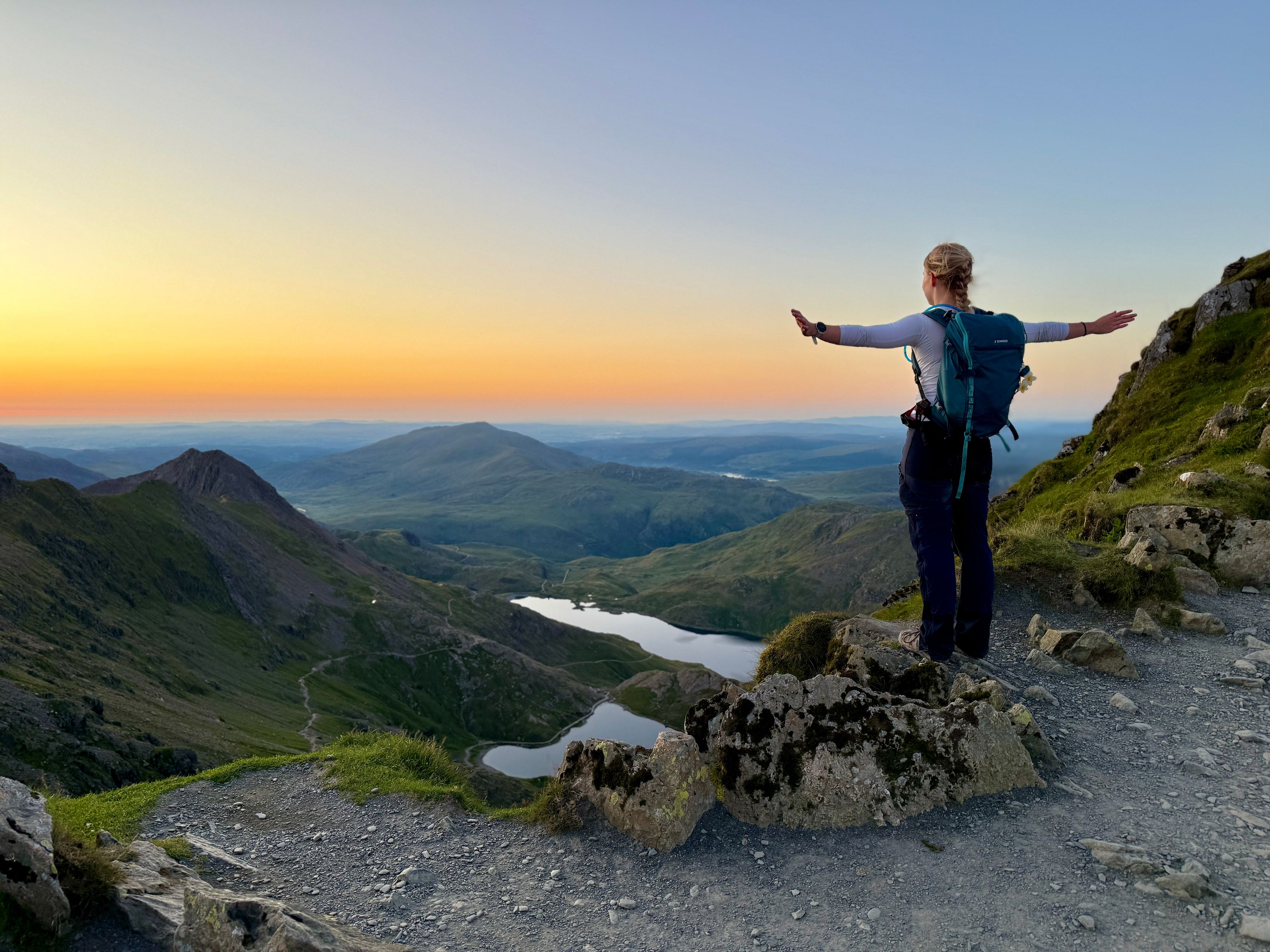
We summited just after 5 am, basking in a glorious sunrise. We weren't alone. Many people were dotted on and around Snowdon's peak.
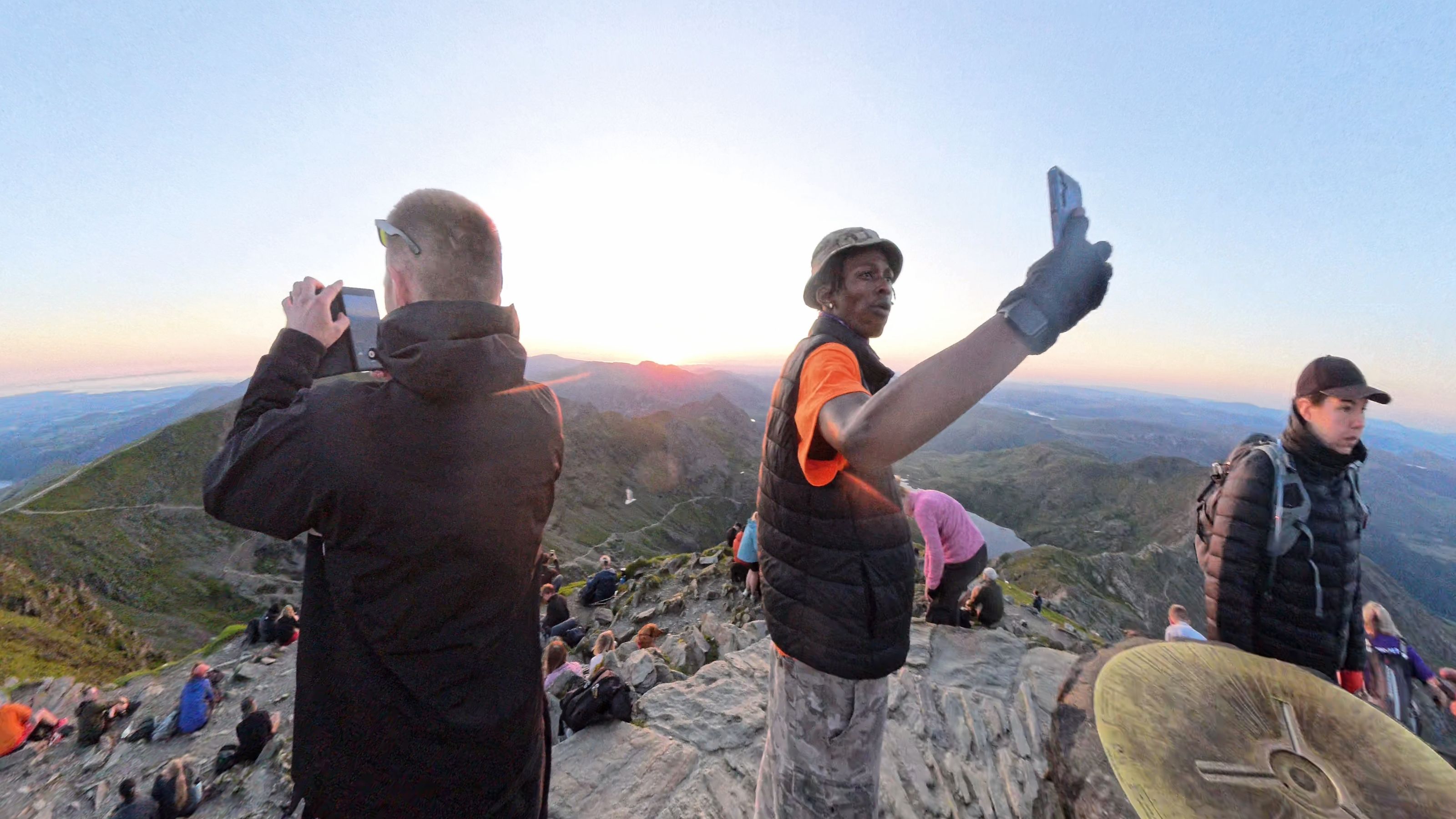
Yes, it had been worth the struggle, and the jolts to my janky knees, to complete the challenge within 24 hours – and many people laudably aim to do the same while raising money for charity – but for my next trips into the mountains, I'll choose locations away from honeypot routes and stop more to savour the views.
DETAILS
Organised Three Peaks Challenge trips with Orange John, walking in groups of 10 with a minibus as transport, cost £449 per person. These trips are open to all and may not attract walkers of similar fitness. Private trips with like-minded, known-to-each-other participants cost £475 per person, with a minimum group size of eight.
We stayed at the Glencoe Inn in Glencoe. Ellie's £350 junior suite had an ornate standalone bathtub with a stunning window outlook over Loch Leven. My £250 classic room had no view. Despite paying for bed-and-breakfast, the hotel wouldn't provide a simple breakfast before our 4.30 am check-out. We bought food for the three climbs at the Morrison's in Fort William the night before the challenge, and — out of necessity — ate fast food in motorway service stations. If you've time after the Snowdon climb for a hearty breakfast, our guide, Dawn, recommends Pete's Eats in Llanberis, which is currently undergoing renovation after being closed for several years. 'It's the heart and soul of the outdoor world,' she said.