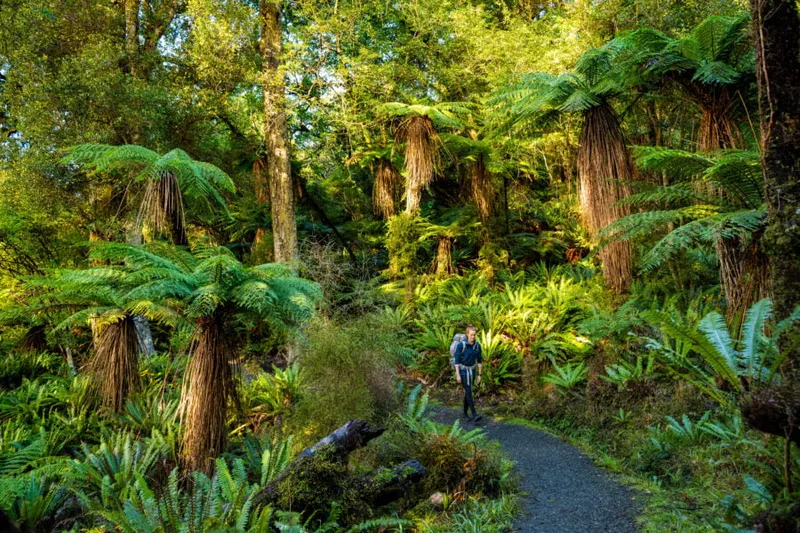
Living like mammals in a land without them, Aotearoa New Zealand’s flightless birds are an evolutionary enigma.
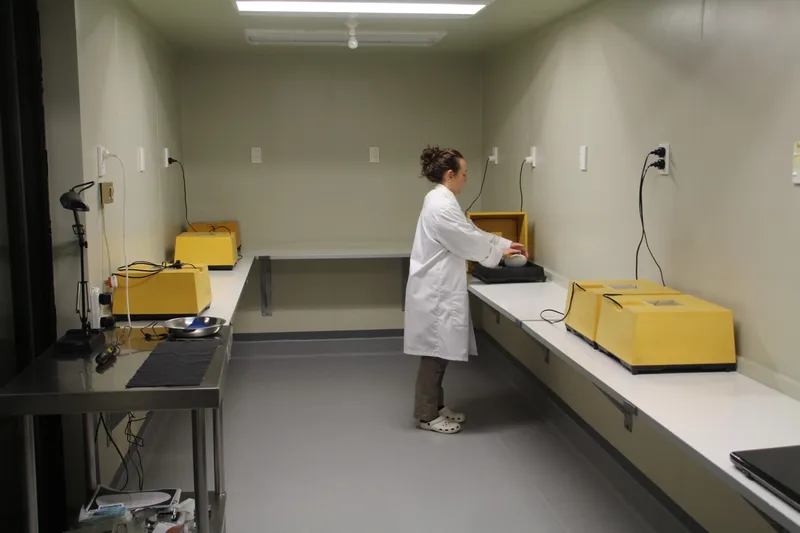
I’m more excited than I’m letting on as we approach a large yellow box towards the back of the room. Within it lies one of New Zealand’s greatest treasures: a kiwi egg.
We’re behind the scenes at Christchurch’s Willowbank Wildlife Reserve where this egg – laid in the wild – has been brought to be incubated. Native species keeper Emma Kelman very gently removes it for a routine check. I’m taken aback by just how big it is. Emma explains that the kiwi has a remarkably large egg-to-body ratio. Its eggs can weigh up to 450g each, or up to 25 per cent of the mother’s body weight.
With the lights switched off, Emma holds the egg in one hand, a torch in the other, and shines the torchlight through the shell. This technique – called ‘egg candling’ – reveals the developing kiwi within. “So, we can see the membranes, the veins. These tell us how well the embryo is progressing,” she says. There’s a clear delineation between the embryo and an adjacent air pocket. Emma says the chick will soon ‘pip’, breaking into this air cell, where it can be heard calling from within the egg. It’ll take the chick a further 4–5 days to fully hatch.
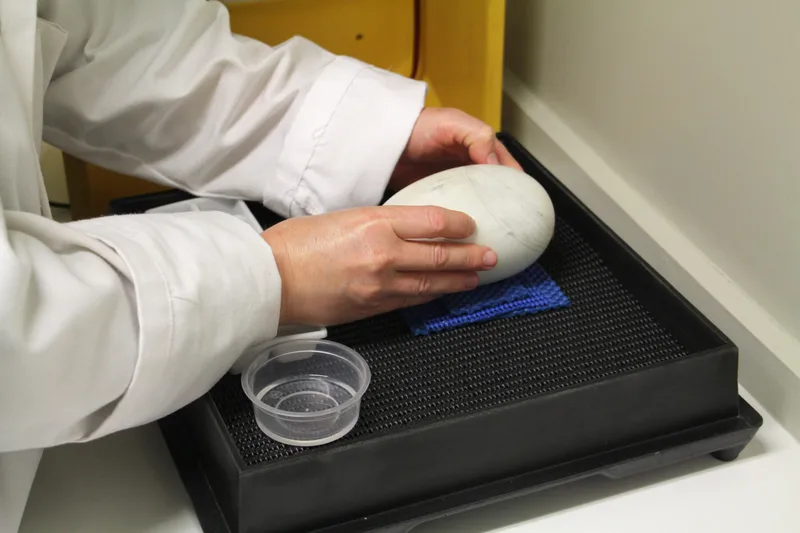
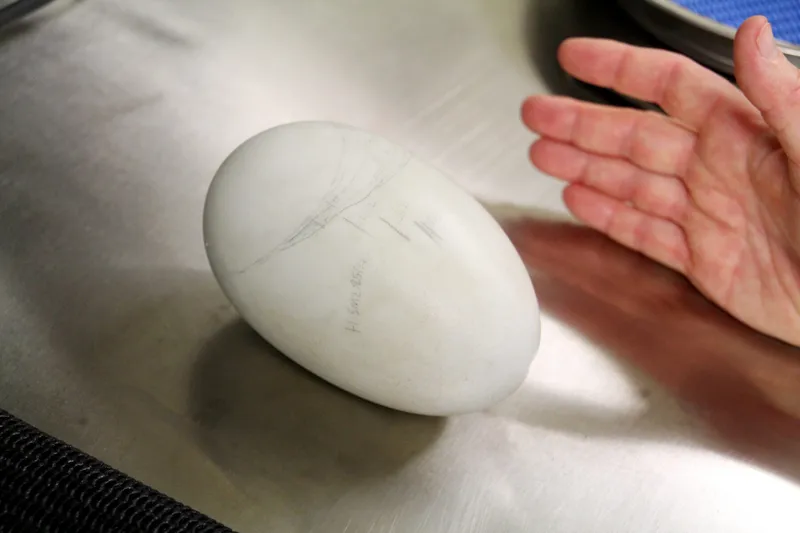
For now, with the health check complete, Emma returns the egg to its incubator, rotating it 45° from the position she found it, just as the kiwi father would do in a wild nest.
Part of the Operation Nest Egg project (more on this later), once hatched, this chick will be hand-reared here for around six months until it’s large enough to fend off introduced predators, at which point it’ll be released back into the wild. At first it may seem cruel to take eggs from the wild, out of the burrows of their kiwi parents. But Emma explains that the kiwi doesn’t ‘imprint’ like some other bird species. “When a kiwi egg hatches in the wild, it’s already fully feathered and independent. The parents provide no feeding and little care, and a chick’s behaviour is mostly instinctive.”
While the kiwi is world-famous, known as NZ’s ‘honorary mammal’ due to its many mammal-like (and unbirdlike) traits, there are also three other birds endemic to NZ that fit this description: the takahe, kakapo and weka.
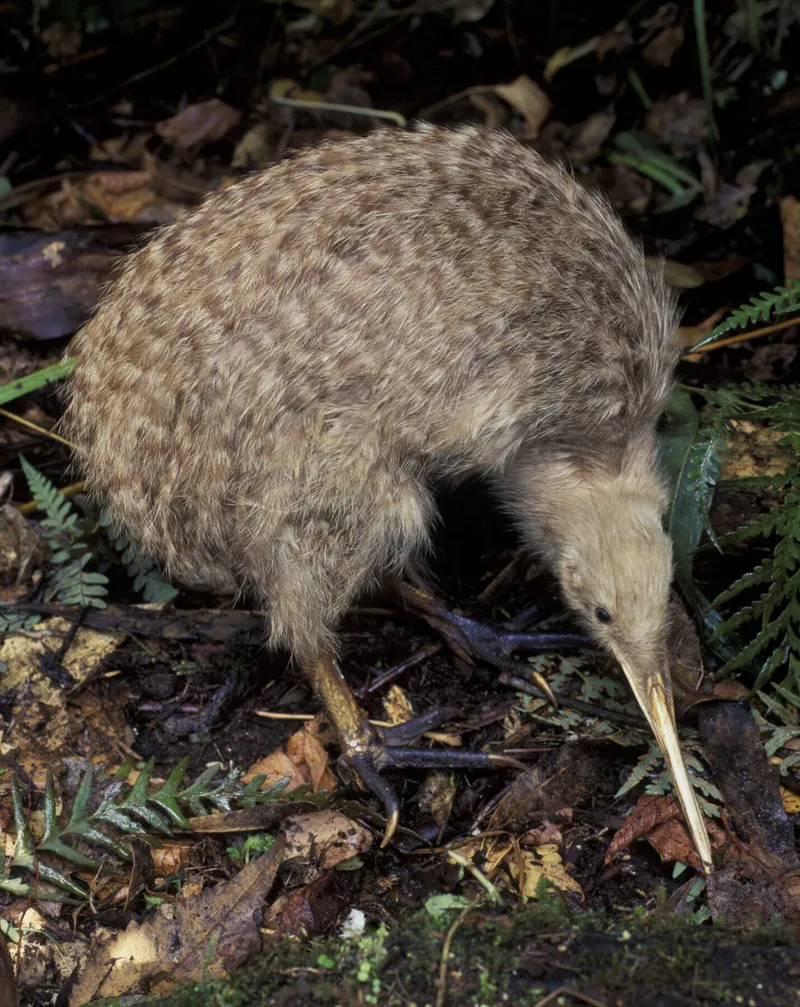
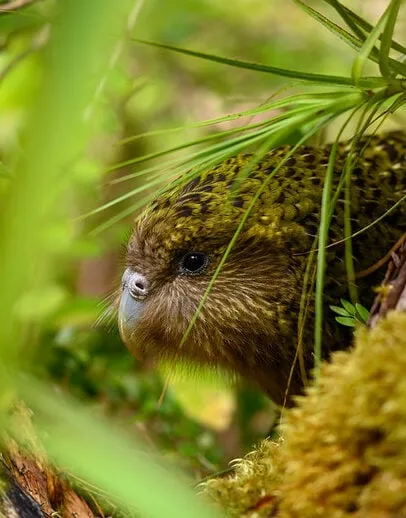
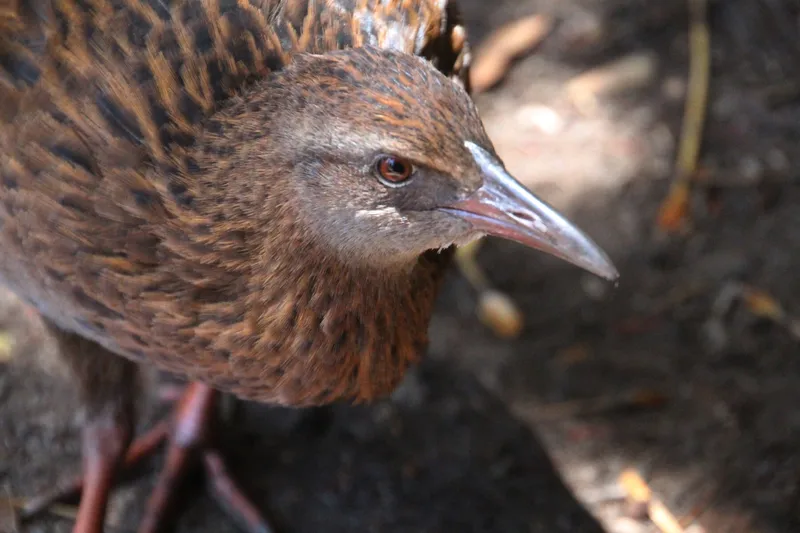
“They’ve all got a lot of features in common with mammals,” says Andrew Digby, a science adviser with the country’s Department of Conservation (DOC) and all-round expert on these fascinatingly peculiar creatures. He offers some examples: “The kiwi and kakapo are nocturnal, which is a common trait of mammals, not of birds. And birds normally use their sight quite a lot, not their sense of smell and hearing. But both kiwi and kakapo also have a really good sense of smell, and really good hearing.”
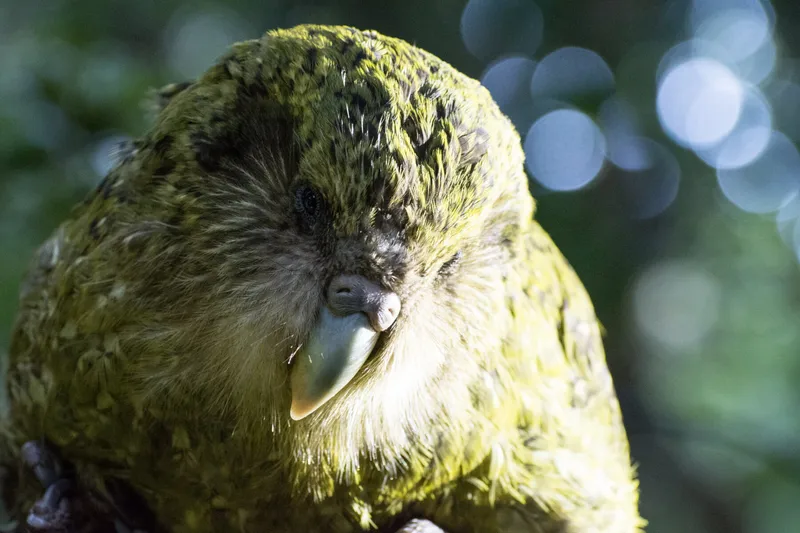
“The kiwi and kakapo also have whiskers, which is quite a mammal thing,” he continues. Like mammals, kiwi and kakapo use these whiskers to sense their surroundings in the dark and inspect the size of small spaces. “And they’re all obviously flightless,” Andrew adds, “which they’ve got in common with mammals – and [which is] pretty unusual for most birds!”
The list goes on. A female kiwi has two functioning ovaries, just like a mammal. The kiwi, kakapo and takahe have solid bones filled with marrow, instead of the pneumatic (hollow) bones of flight-capable birds. Not needing to be lightweight for flight, these solid bones provide the flightless birds with stability and mobility for walking across uneven forest floors. As ground-dwelling birds they’re also ‘bottom heavy’, as is the case with many mammals, their bulky lower bodies and powerful leg muscles different to the breast-heavy shape of most birds, which need large pectoral muscles to support their wings during flight.
There’s so much to love about these four birds.
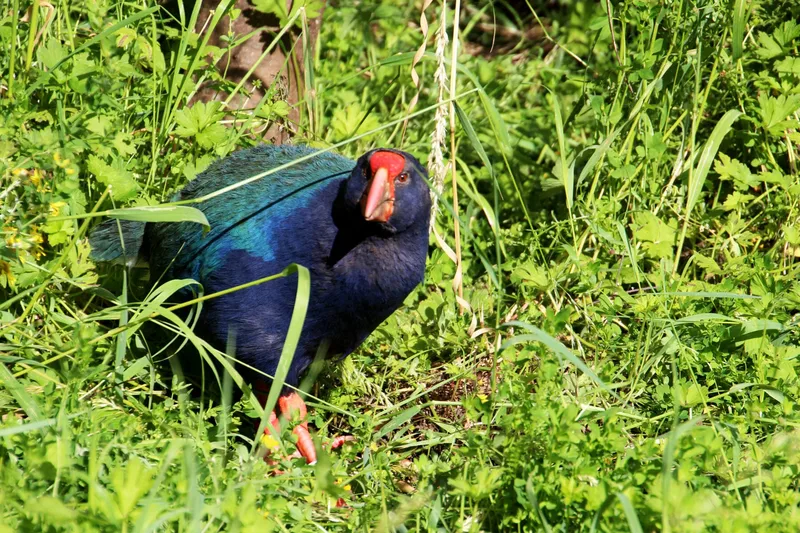
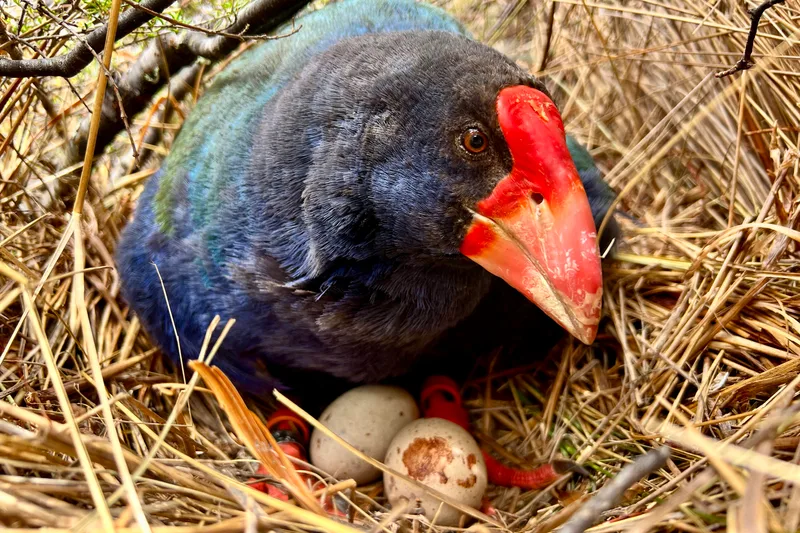
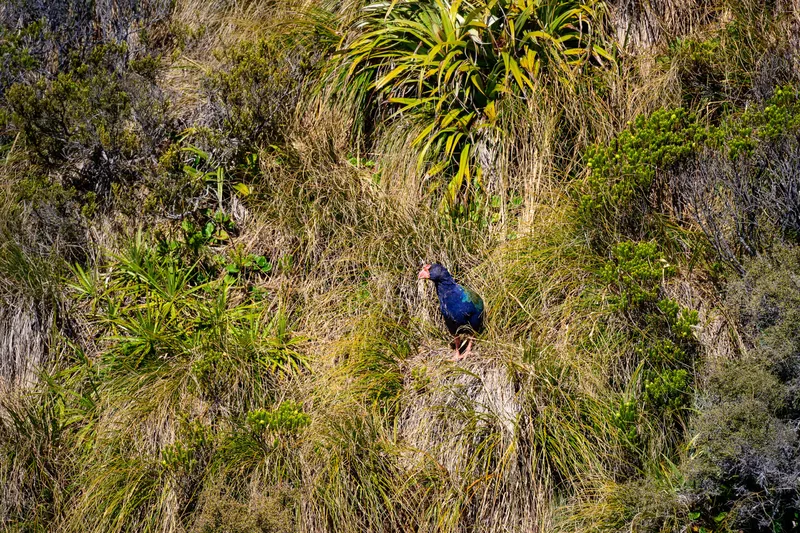
The prehistoric-looking South Island takahe – the only takahe species still in existence due to the extinction of its North Island counterpart – is closely related to the pukeko (Porphyrio melanotus), common in both Australia and NZ and known as the Australasian swamphen here. It sports the same stunning blue hues (albeit much more iridescent) and bright red frontal shield but is larger and stockier. In fact, the South Island takahe is the largest living ‘rail’ – member of the avian family Rallidae – in the world.
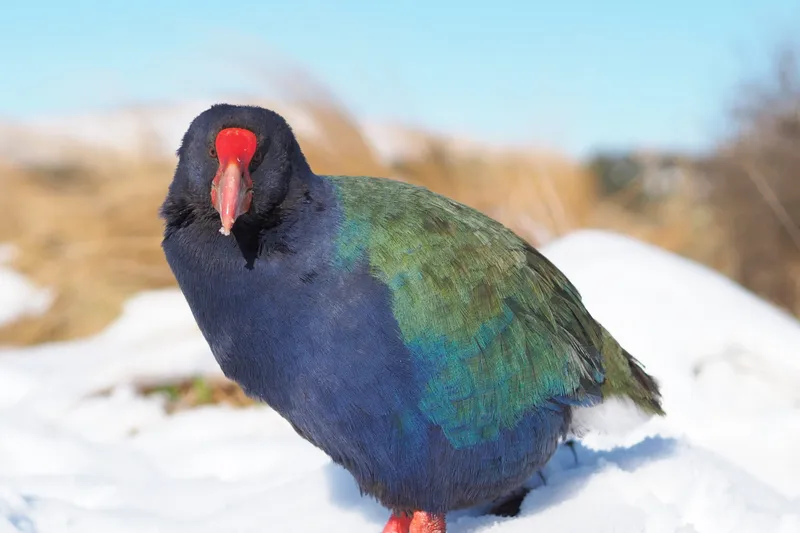
A true comeback champion, the takahe has been declared extinct twice – on one occasion for more than 50 years before famously being rediscovered in 1948 in the Murchison Mountains of Fiordland on NZ’s South Island. “I love the takahe. I love their story,” Emma says. “I love that they were presumed extinct, but they were just hiding up in the mountains.
“Then there’s the fun fact about their poo,” she adds, explaining that due to their incredibly high-fibre diet, takahe don’t produce standard bird droppings. Instead, their poo is green and sausage shaped. “They do between seven to nine metres of poo a day… which is just a ridiculous amount.”
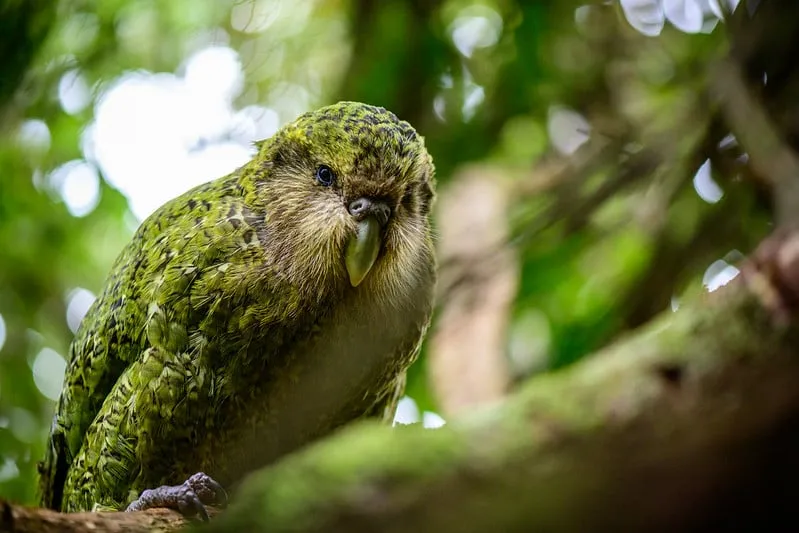
The kakapo, meanwhile, is an enigma very few humans alive today have ever seen in the flesh. Only 236 individuals remain at last count, all living on offshore islands strictly managed by DOC staff – all, that is, bar three. This special trio live on the mainland – protected and cared for within Sanctuary Mountain Maungatautari, near Hamilton – but are away from public view.
With no close relatives, there’s nothing in the world quite like a kakapo. They look like living caricatures, have their own signature musty-sweet scent, and are also extremely bulky, possessing a trademark low stance and waddling gait. “They’re pretty chunky,” says Andrew, who’s a member of DOC’s Kakapo Recovery team. “They weigh up to 4kg, but they’re pretty agile too. They climb trees very well. You regularly see them 30m up a tree. And they’re very capable of climbing in the canopy.”
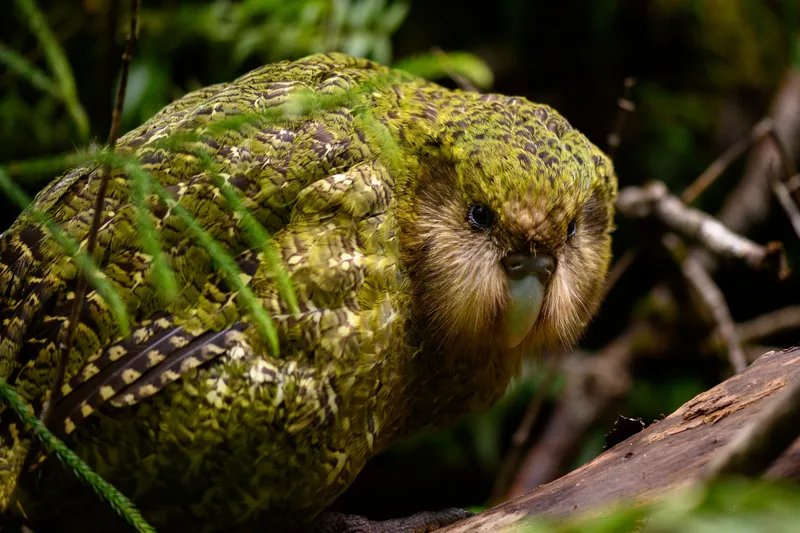
Then there’s its bizarre suite of mating and territorial calls – the most idiosyncratic of which is the male’s ‘boom’. First, the male digs a bowl-like, shallow depression in the ground on the side of a hillside or ridge. This acts as an amplifier when he sits in it, helping to create a series of deep, low-frequency ‘boom’ noises that sound almost like a synth bass drum. The kakapo ‘booms’ for around eight hours a night during breeding season, the sound travelling up to 5km through the forest.
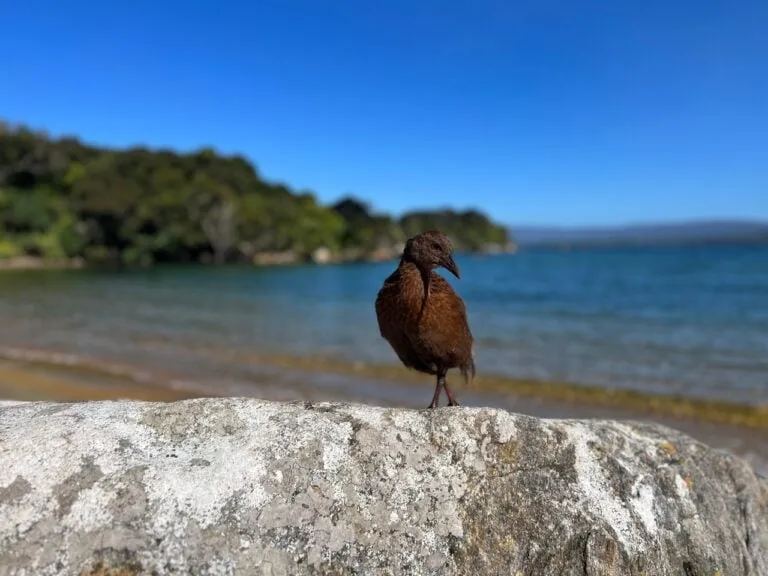
Moving on to the weka, the smallest of these four birds. What it lacks in stature, it more than makes up for in personality. It has a famed reputation for boldly stealing food, and anything shiny, from picnics or campsites. But rather than being considered a nuisance, the weka has worked itself into the hearts of locals and visitors alike with its cheeky charm – a loveable rogue. It’s also extremely intelligent and plays a key ecological role: by foraging on the forest floor, the weka disperses seeds and aerates soil. Its mostly invertebrate diet also helps to control insect populations.
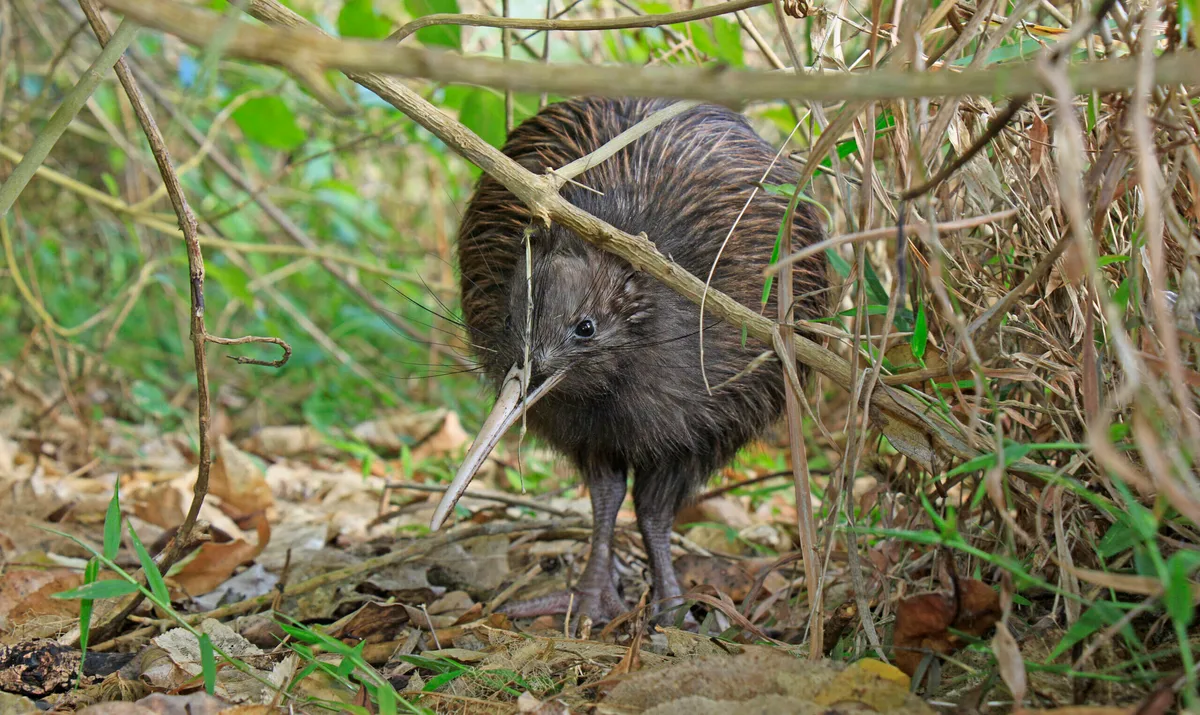
And, of course, there’s the kiwi. For all its reputation, there’s much people don’t know about NZ’s national icon. Firstly, there are five species of living kiwi, as well as multiple subspecies. The kiwi has vestigial wings, hidden from plain sight, and even vestigial claws – remnants from its ancient ancestors. Its feathers are, structurally, more like hair than feathers. And don’t forget, as mentioned earlier, it has whiskers, and that mind-boggling egg-to-body ratio. What’s more, it’s the only bird in the world to have nostrils at the end of its bill (for sniffing underground).
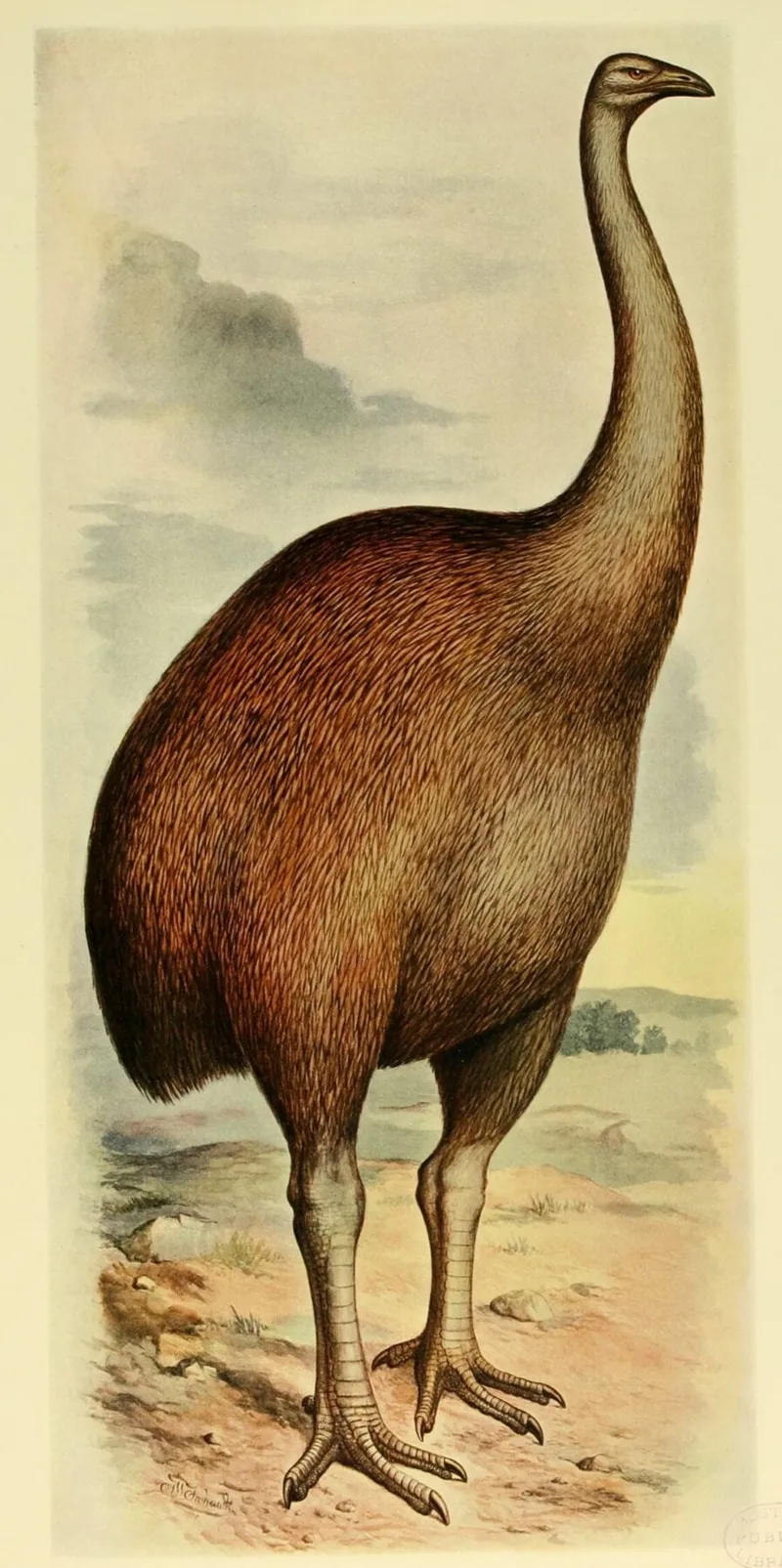
While these four mammal-like endemic flightless birds remain, NZ was once home to many more, including other species of takahe, weka and kiwi. Most famous, though, was the giant moa (Dinornis spp.). Reaching almost 4m in height and weighing over 250kg, the moa is one of the largest birds to have ever existed.
The reason NZ has produced so many of these birds is due to the absence of actual mammal species. “More specifically, the lack of predatory mammals,” Andrew explains. “New Zealand – the whole continent of Zealandia – split away from Gondwanaland before mammals evolved. So, mammals never made it here, apart from some bats. Because of this, these birds evolved to fill the niche left behind. They’ve basically become mammals over time.”
It’s no surprise, then, that when real mammals arrived, these flightless birds didn’t stand a chance. They lacked any developed defences against these new predators.
The first mammals were introduced with the arrival of Māori people in 1200–1300 CE. “They brought rats with them,” Andrew says. “Specifically, the kiore – the Pacific rat. Maybe accidentally, maybe for a food source.” These rats raided the birds’ ground nests, eating not only the eggs but also small chicks. Māori also brought small dogs (kuri) that preyed on both chicks and adult birds. And they hunted the birds, too. “They first took the easy ones, the big ones. So, species like moa, for example, were hunted to extinction very quickly, probably in as little as maybe 100 years,” Andrew says.
Smaller species, including the North Island takahe (Porphyrio mantelli) – otherwise known as the moho – are believed to have been hunted to extinction by Māori before the arrival of Europeans.
“There was a lot of habitat lost due to forest clearance, too; and lots of fires, which helped wipe more species out,” Andrew adds. “[But] it was nothing like the scale of devastation that happened once Europeans arrived and brought lots of nasties with them.”
When the first European settlers began to colonise NZ in the early to mid 1800s, everything was accelerated, Andrew says. “There was more forest clearance to accommodate a lot more people, which meant more habitat loss, and also, more predators were introduced.”
But it wasn’t only the volume of these imported predators that devastated NZ’s endemic flightless bird populations but also the different types of predators. They arrived in waves. The common black rat (Rattus rattus) and brown rat (Rattus norvegicus) raided nests. Hedgehogs competed for the same food as the kiwi and weka. Rabbits, deer and goats overbrowsed native plants, caused erosion and destroyed forests. “Then there were possums, introduced for their fur and pelts, that did all of the above,” Andrew says.
“But the cats and mustelids were the big ones. The mustelids are the stoats, the weasels, the ferrets. For example, stoats were introduced on the eastern edge of Fiordland, and they were at the western edge within 10–20 years (a distance of around 100km). So, there would have been a massive drop in flightless bird numbers at that stage.”
Efforts to protect these species began in the late 1800s when early nature enthusiasts started to notice their decline. Since then, population numbers have ebbed and flowed, as has the scale of conservation initiatives. Current efforts fall under two overarching strategies: pest eradication/control and species support.
“So, firstly, we need to stop the thing that’s causing the damage and that’s causing populations to decline, and that’s pretty much the pests,” Andrew explains. “There’s the predators that kill the eggs and birds – rats, cats, dogs, mustelids, and then there’s also the browsers, like deer, which compete for food and basically destroy the forests.” Then there’s possums, introduced for their fur and pelts, that do all of the above.
To control deer numbers, ground and aerial shooting is deployed. For the others, trapping is the main technique. “The trapping is great, and it has wiped out some of those species locally. But the issue with trapping is that you just can’t do it on huge scales,” Andrew says. “On those big scales, you really need another tool, and that’s where the toxins come in. So, things like 1080, or Brodifacoum, which is used on the islands.
“It’s obviously pretty controversial in some circles, but it’s pretty much the only tool that we have to control those pests in large landscapes. And if we hadn’t used those, then a lot more species would be extinct than they are now.”
One of the biggest points of contention lies in the fact that some birds, including endemic and native species, also ingest these toxins. “They mostly don’t, but some species do,” Andrew says. “But the increase in productivity we get from better nesting success afterwards massively outweighs that. It’s not ideal, but it’s better than doing nothing.”
The good news is that research is currently underway to develop new toxins that would target the pests much more directly. “This [research] has been going on a long time. There’s some which are quite close to registration now,” Andrew says. “Some are more carnivore-specific, so only affect certain species, and are much more humane as well. It’s ongoing research. It takes a long time to register a new toxin.”
In the wild, the takahe and weka can be found in several locations on New Zealand’s South Island, including Stewart Island (Rakiura).
The kiwi can be seen on both the North and South islands, again including Stewart Island.
The takahe, weka and kiwi can also be seen in mainland predator-free sanctuaries on both the North and South islands.
The kakapo can’t be seen in any public-access wild or sanctuary environments.
When encountering any native species in the wild, NZ’s Department of Conservation (DOC) advises to give them space – zoom with your camera, not your feet – and don’t feed or touch them.
These pest eradication strategies align with a much larger ambition for Aotearoa New Zealand: ‘Predator Free by 2050’. The program’s mission is to rid the country of its four most destructive introduced predators – rats, mustelids, feral cats and possums – to prevent further extinctions and ensure endemic and native species can thrive in the wild.
Led by DOC, the work is in partnership with iwi and hapū (different Māori groups), NGOs, businesses, government, scientists and communities.
“It’s an aspirational goal, really. I don’t know many people who actually think we literally will have no rats and stoats on the mainland by 2050,” Andrew admits. “But it’s inspiring, and it has created a whole lot of good work.”
This good work, generated by the program’s funding and publicity, includes extensive new research and the development of new tools from within the science community, as well as grassroots community efforts. “There’s growing public momentum. People are doing lots of trappings in their backyards, their neighbourhoods, their parks,” Andrew says. “So that has been pretty amazing.”
Communities are also starting to see the results. Andrew uses the nation’s capital, Wellington, as an example. After four years of intense trapping, enough pests had been eradicated that in 2021, the city was deemed safe enough to release kiwi back into their historical home ranges. “People in Wellington are now starting to have kiwi turning up in their suburbs. That’s a pretty cool story,” Andrew says. “And when people see kiwis in their own neighbourhoods, they care about them. So, it [Predator Free by 2050] has provided a lot of that impetus and momentum for people to try and do something about this problem.”
But achieving such results on a national scale may be an impossible task. “Personally, I don’t think we’ll get there, but I do think we’ll probably have large areas of New Zealand with very low densities of those predators. We actually have some of that already, and that might be enough to turn the tide for a lot of these endangered native species.”
The second overarching strategy is species support. While imported pests (including plants) remain a problem, “You also have to support the native species that are left,” Andrew says. This support helps the remaining birds thrive, and includes captive breeding, wild releases, and translocations; researching new conservation techniques and implementing new tools; the protection and restoration of habitats; species recovery programmes; population and health monitoring, and medical interventions; protection of natural – and management of artificial – nesting sites; responding to disease outbreaks; working with iwi, communities, and volunteers; enforcing wildlife protection laws; and creating and managing protected areas.
When it comes to protected areas, Aotearoa New Zealand has had incredible success with its offshore island reserves. Managed by DOC staff, these sanctuaries offer predator-free environments for populations of threatened species to succeed in natural, wild habitat. DOC staff also monitor these populations intensively, intervening when needed with measures such as supplementary feeding, regular health checks and medical intervention.
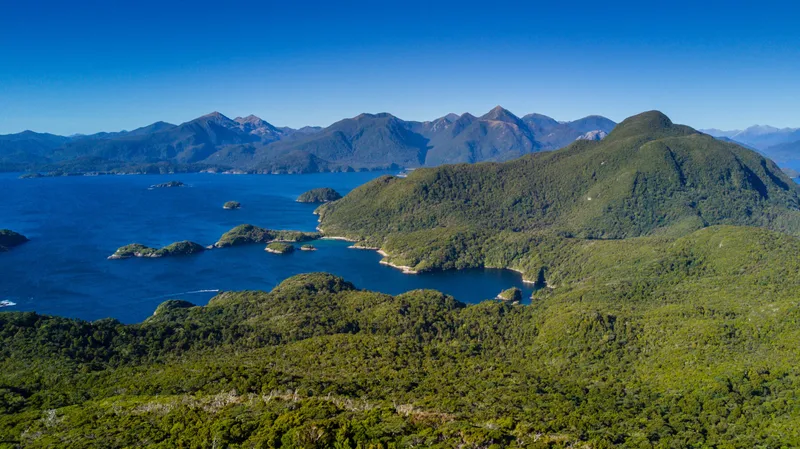
“But these islands are getting pretty full,” Andrew says. While this is indeed a good problem to have, it’s still a problem, making it one of DOC’s next great challenges. “We need new habitat, but we won’t introduce any populations to the mainland because the mainland is just not ready, there’s too many predators still.”
This makes predator-proof ring-fenced sanctuaries the most obvious solution, at least in the interim. With six established across the mainland, and plans for more, these sanctuaries are not only free of mammalian predators, but the environments and ecosystems within have also been restored to their natural, pre-human states. “They play a really important role,” \ Andrew says. “If we get large areas of unfenced forest without predators, that would be great, but we’re not there yet. So, we need protection in these next few decades.”
“[The sanctuaries] provide a core protected area where the birds can breed really, really well, and then when they do well enough, they spread out into the surrounding area, creating a halo effect,” Andrew explains. This obviously applies to flying birds – flightless birds would be strategically manually moved out into the surrounding area. “Then, if you provide some protection in that surrounding area through trapping, for example, then they can actually do okay there as well. So, it’s a fantastic model.”
However, there is no one-size-fits-all set of conservation strategies – even for these four flightless birds, with all their similarities. While the two-pronged strategy does greatly help to protect all four, there are also more specific methods in play catering to each species’ unique needs.
For example, takahe have benefited from strategically planned translocations to ensure genetic diversity. And in the 1980s, after mass deer culls throughout the 70s failed to curb plummeting population declines, takahe eggs were taken from nests to be artificially incubated, and young chicks were hand-reared before being returned to the wild. Deer pose a massive threat to takahe as they browse on the same tussock species, destroying the takahe’s food source as well as its habitat.
For kiwi, Operation Nest Egg (mentioned earlier) is a dedicated program that has been running nationally since 1995. Its main purpose is to counteract an extremely sobering statistic: the survival rate of kiwi in the wild under 6 months old is just 5 per cent. The kiwi’s biggest killer is the stoat. Introduced in 1886 to control rabbits (mirroring Australia’s own failed cane toad/cane beetle disaster), stoats kill for both food and for ‘sport’ (the scientific term being ‘surplus killing’).
“In the Operation Nest Egg program, eggs are removed from the wild, hatched in incubators [in captivity], and the chicks are kept in safe places until they’re big enough to take themselves from a stoat,” Andrew says. “Then they get put back into the wild again.”
Operation Nest Egg doesn’t just take place at Willowbank Wildlife Reserve; it currently operates out of several sanctuaries, zoos and wildlife hospitals around the country. The program has proven incredibly successful. According to conservation charity Save The Kiwi, an egg from Operation Nest Egg has a 65 per cent chance of surviving to adulthood.
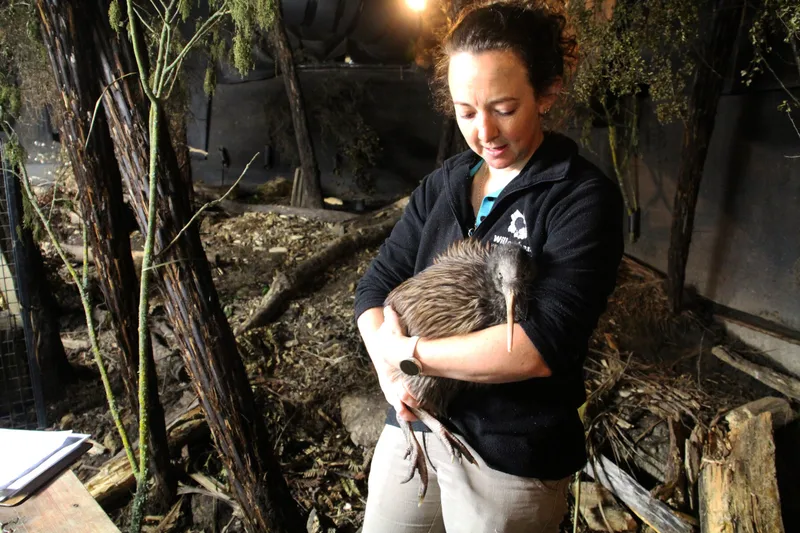
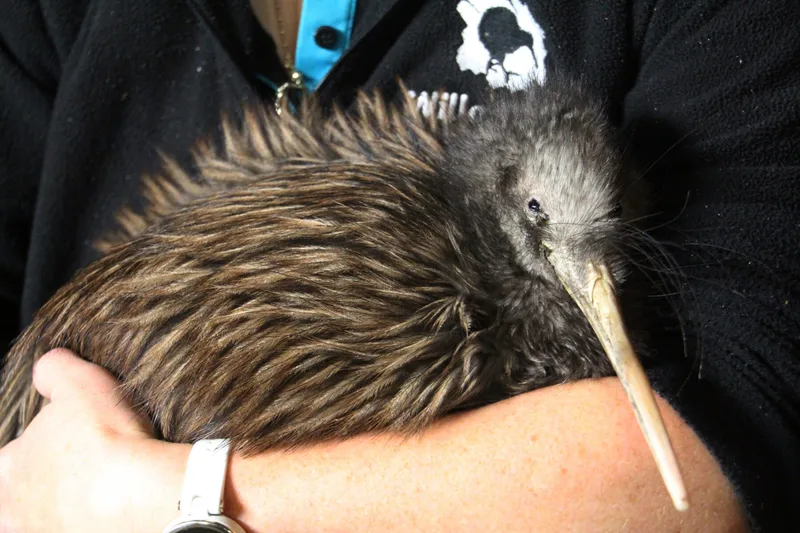
Domestic pets are also a big problem for kiwi. Cats can roam several kilometres per night, hunting kiwi. And because kiwi do not have sternums, “they can easily be killed by just one bite,” Emma says. Dogs can also kill many in a short period. Shockingly, in a 1987 incident confirmed in a DOC scientific report, one lone dog killed around 500 North Island brown kiwi over a six-week period within Waitangi State Forest on the tip of the North Island. Because of this, national laws dictate dog owners must keep their dogs under control at all times within kiwi habitat, including via methods such as muzzling. Many forests and reserves also have outright dog bans. For domestic animals such as working dogs that must enter kiwi territory, Kiwi Avoidance Training is jointly coordinated by DOC and Save the Kiwi.
Weka are a unique dilemma for conservationists. While they’re a threatened species (in varying degrees depending on the subspecies), they’re also the natural predators of other threatened species, including the kakapo and kiwi.
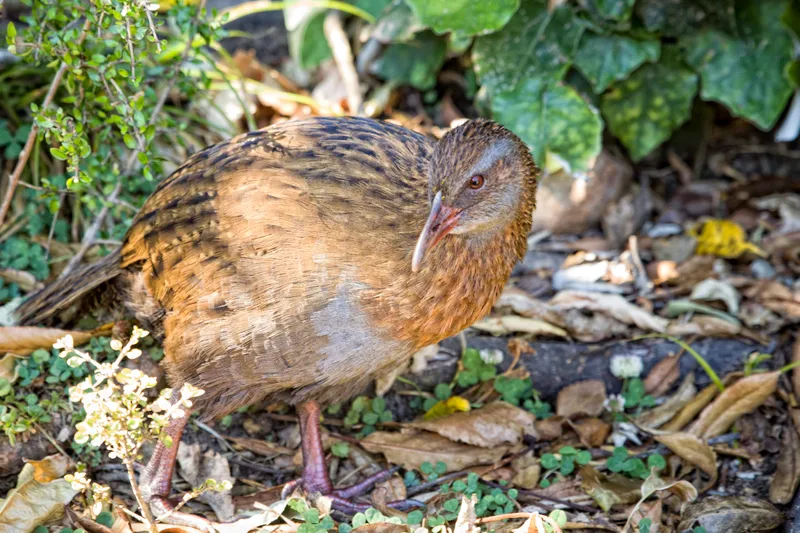
“Weka will eat the eggs of kiwi and kakapo, and the chicks as well,” Andrew says. “It’s a natural thing that has always happened and those species survived for a long time in the presence of weka, but there was a natural balance. When things like stoats and rats and cats are added, that has tipped them over the edge.”
Because of this, weka cannot be moved to the same pest-free offshore sanctuaries as takahe, kakapo and kiwi – hence the dilemma. Instead, conservation efforts have focused on creating legal protections for weka. Legal harvesting of weka (including for traditional cultural practices) has also been completely banned on the mainland, and on the very few select islands where it’s still allowed, permits must be obtained from DOC, who also oversee the activity.
Then, there’s the critically endangered kakapo. It’s not only the rarest of these four species, but one of the rarest animals on the planet. In the 1970s the species was thought to be functionally extinct, with only the odd male found in the wild despite numerous intensive expeditions. But a breakthrough came in 1977 when a population of around 200 individuals was found on Rakiura Stewart Island. Soon, it was confirmed the population included females. What followed throughout the 1980s and 90s was the mammoth conservation effort that saved the species – the translocation of all individuals off the mainland and onto the offshore islands, where they remain today.
Today, the Kakapo Recovery team (led by DOC, but in collaboration with iwi, volunteers, scientists and other supporters) protect this precious population. One of the team’s main focuses is doing everything they possibly can to ensure breeding and hatching success. Unfortunately, kakapo are notoriously naturally inefficient at reproducing. Individuals don’t start breeding until they’re at least five years old, and even then, they only breed when NZ’s native rimu trees fruit – which only happens once every 2–4 years.
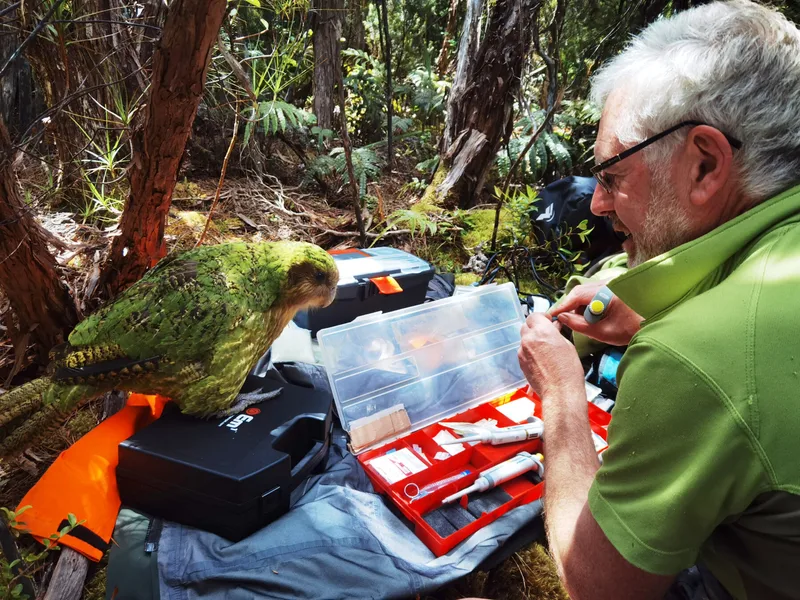
“We do supplementary feeding, regular health checks, and medical interventions if needed,” Andrew says. “Basically, we do a lot of stuff like that to try and make sure we get as many chicks as possible at the end of a breeding season.”
“With kakapo, we also use a lot of technology. It’s really important,” Andrew says, explaining that every single kakapo wears a radio transmitter. “I can look on my computer right now and know what every kakapo is doing. We can monitor if their activity levels drop – so they might be sick, or they might be nesting. We can tell who has mated and when they’ve mated and who they’ve mated with – so it’s very intensive.”
And, of course, there’s one constant: dedicated New Zealanders like Emma and Andrew, and an army of others from different groups across the country, who continue the hard work to save the kiwi, the kakapo, the takahe and the weka. “They were doing perfectly fine in New Zealand before humans arrived,” Emma says. “So I think it’s up to us to ensure they survive for the next generations to see.”