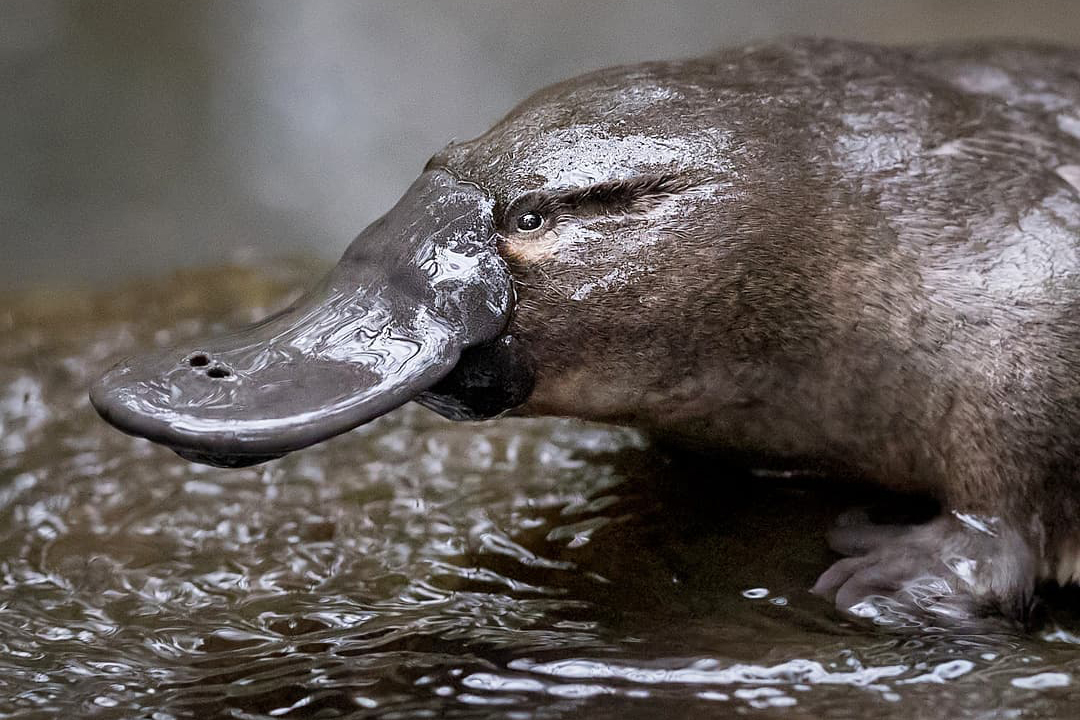
Image credit: Pete Walsh/Hobart Rivulet Platypus
A grassroots movement in Tasmania’s capital is bringing much-needed attention to the vulnerable Hobart Rivulet platypus population.
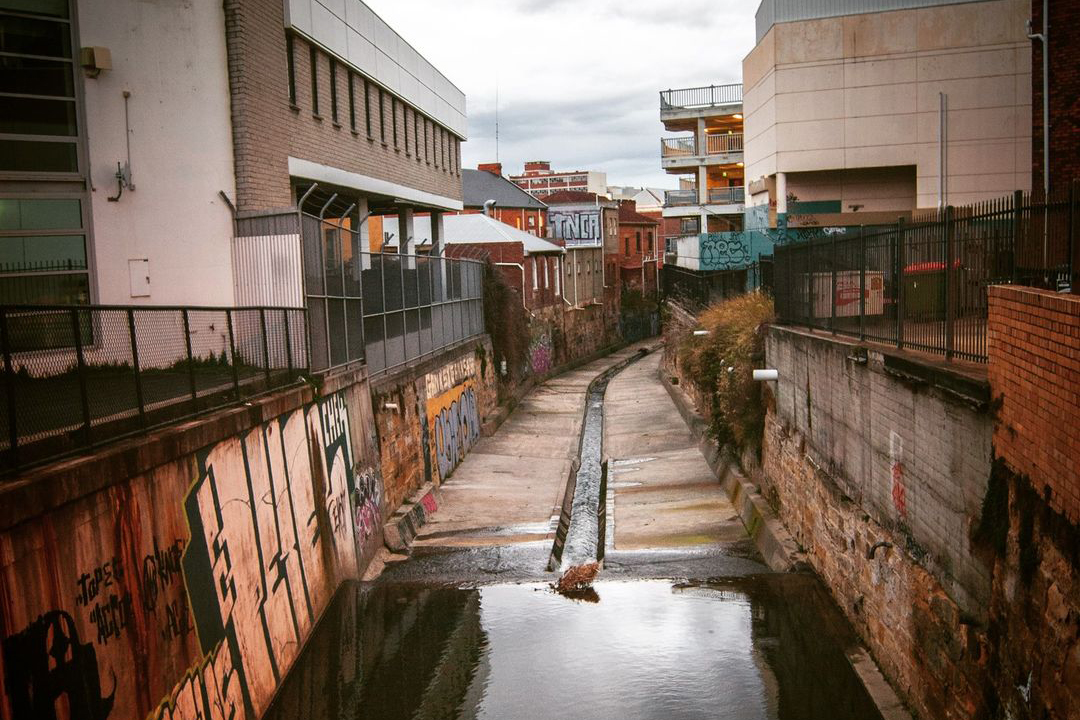
Flowing from the foot of Mount Wellington, down to the River Derwent, the Hobart Rivulet once coursed through vegetation and open-air landscapes. But when Hobart city was built, the waterway went underground.
When the stream hits the edge of the city, it now flows behind rows of residential housing, before trickling through a series of cement tunnels beneath the CBD.
Locked by gates with access only granted by city council, visitors to Tasmania’s capital – or even locals – could be forgiven for not even knowing the rivulet exists. But entrances to the tunnel are scattered throughout the city – if you know where to look.
The problem
The environmental consequences of the Hobart Rivulet being encased by infrastructure and further downstream moved underground through tunnels, is that for decades the rivulet has been managed by local councils as a stormwater drain, rather than as a natural resource and wildlife habitat.
“Going back, the waterway was managed by the roads department so it was treated just as a roads asset,” says Pete Walsh. “The waterway was later managed by the stormwater department, and that’s exactly how it was being managed.
“It caused habitat to be destroyed, for example, the platypus can’t burrow into the banks with all of the rock armouring that’s been done to make it a better drain.”
Pete is the founder of community organisation ‘Hobart Rivulet Platypus’ – a group advocating for the protection of the platypus.
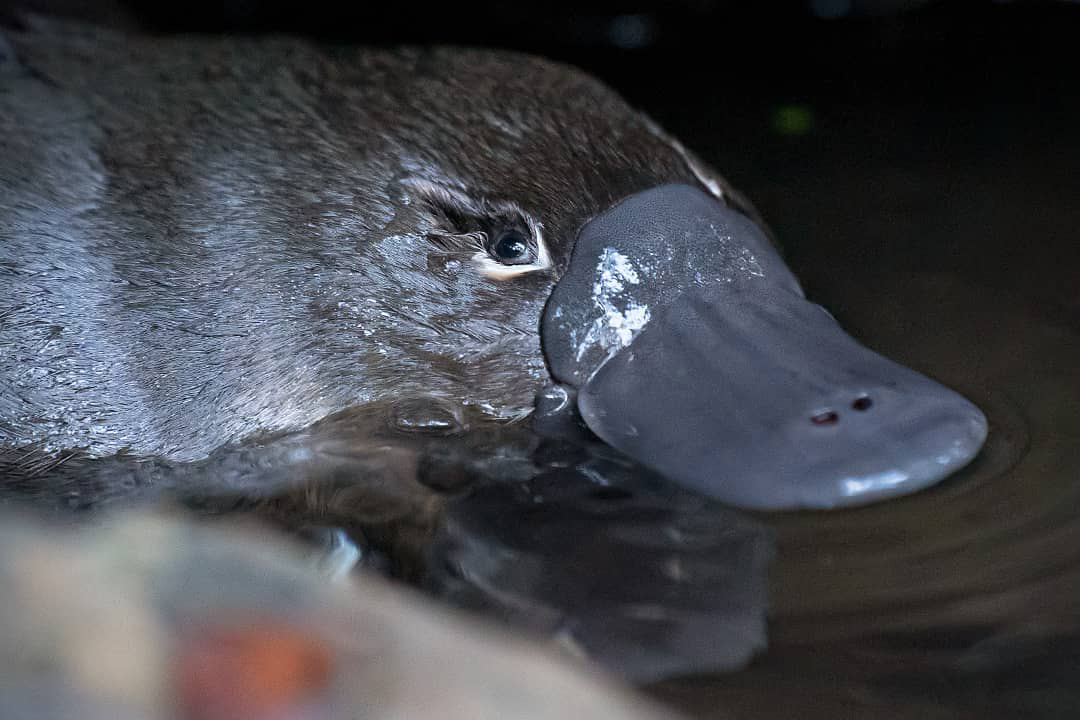
Pete says the further downstream, the worse the water quality of the rivulet becomes.
“We’ve done water testing along the length of the lower part of the waterway and the closer you get to the city the more the water is approaching sewer levels.”
This lower section of the rivulet would once have been home to a thriving platypus population but now the monetromes can only inhabit parts of the waterway upstream. But even there, human development has taken its toll on these iconic Australian animals.
“The city tip has a large stormwater outfall directly into the rivulet just below Cascade Gardens,” explains Pete.
“So in any rain event a lot of the rubbish – that bypasses the measures they have in place at the tip – ends up in the waterway.”
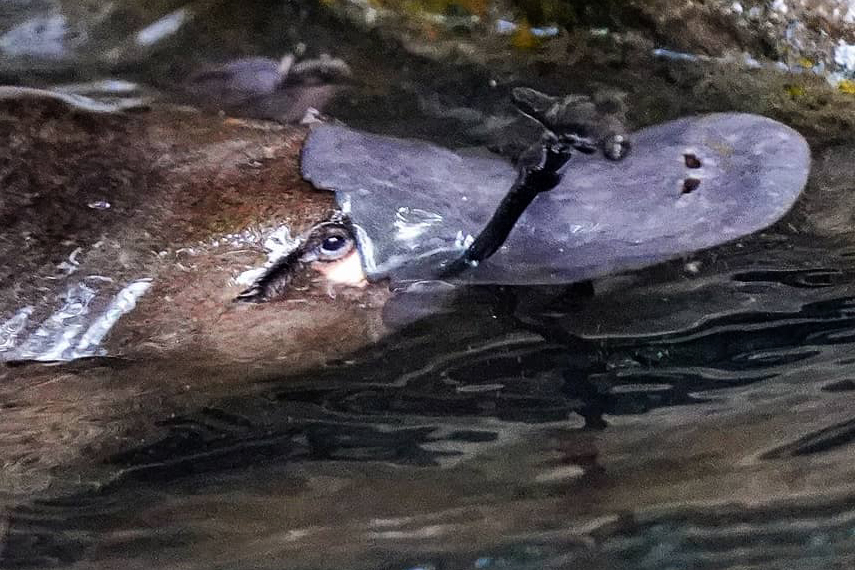
Witnessing his local platypus entangled in some of this rubbish was the catalyst for Pete to transform himself from nature lover to nature activist.
“Towards the end of 2021 I came across two of them just below Cascade Gardens – one with a piece of plastic wrapped around its bill and one caught up in a lot of rubbish – netting and stuff like that – on the side of the waterway,” he says.
“I realised that all those years I’d spent enjoying the natural world – exploring and hiking – that didn’t equate to caring for it.”
The campaign
And so, Pete decided to raise awareness of the Hobart Rivulet platypus and the issues facing its survival.
He put his skills as a photographer and videographer to use, posting images of the platypus to the Hobart Rivulet Platypus social media pages.
It wasn‘t long before these incredible photos and videos earned a cult-like following.
All of a sudden not only were more and more people becoming aware of this platypus population right on their doorstep, but they fell in love with the quirky creatures.
And how could you not fall for characters like this one working its way upstream:
Or this group playing rough and tumble together:
Or this one having a good scratch:
The wins
The popularity of these images and consequent greater awareness of the platypus has given rise to a burgeoning local community now rallying behind the cause.
It’s because of this greater interest in the conservation of the platypus’ habitat that there’s been some recent wins for the future of the rivulet.
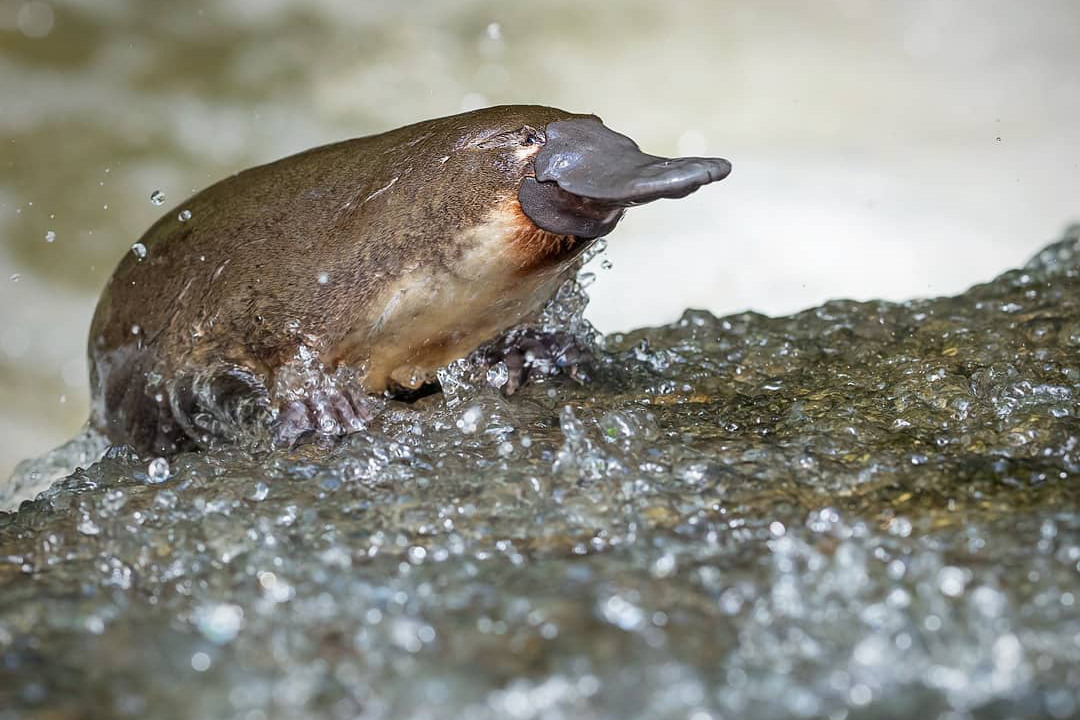
Firstly, Pete is noticing less litter ending up in the stream.
“The city tip is doing a better job of keeping the tip clean and picking up all the wind-blown litter that otherwise would end up in the waterway when it floods, so that’s a win.”
And the most significant change?
“At the start of this year, in a huge step forward, there was a council restructure and the waterways are actually being managed as living waterways now,” says Pete.
“It’s awesome, it’s a big shift.”
The mural
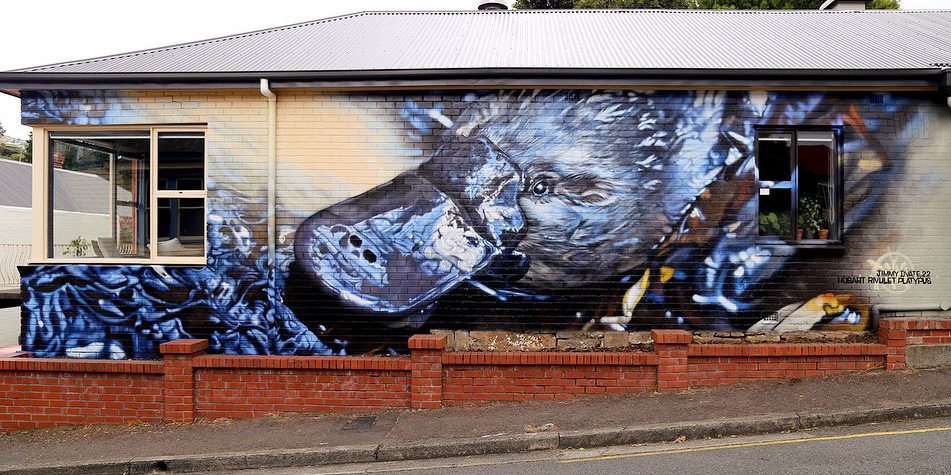
The Hobart Rivulet platypus is so loved by the community that South Hobart locals recently raised funds for a mural to be painted, celebrating the local celebrity.
Adorning the exterior of a neighbourhood cafe, in the middle of the catchment area, the 10m x 3m mural was painted by contemporary artist, Jimmy Dvate.
Read Next
Fragments of a dying comet might put on a spectacular show next week – or pass by without a trace
As Earth orbits the Sun, it ploughs through dust and debris left behind by comets and asteroids. That debris gives birth to meteor showers – which can be one of nature’s most amazing spectacles.
Talking about an evolution: wild animals are changing faster than anybody thought