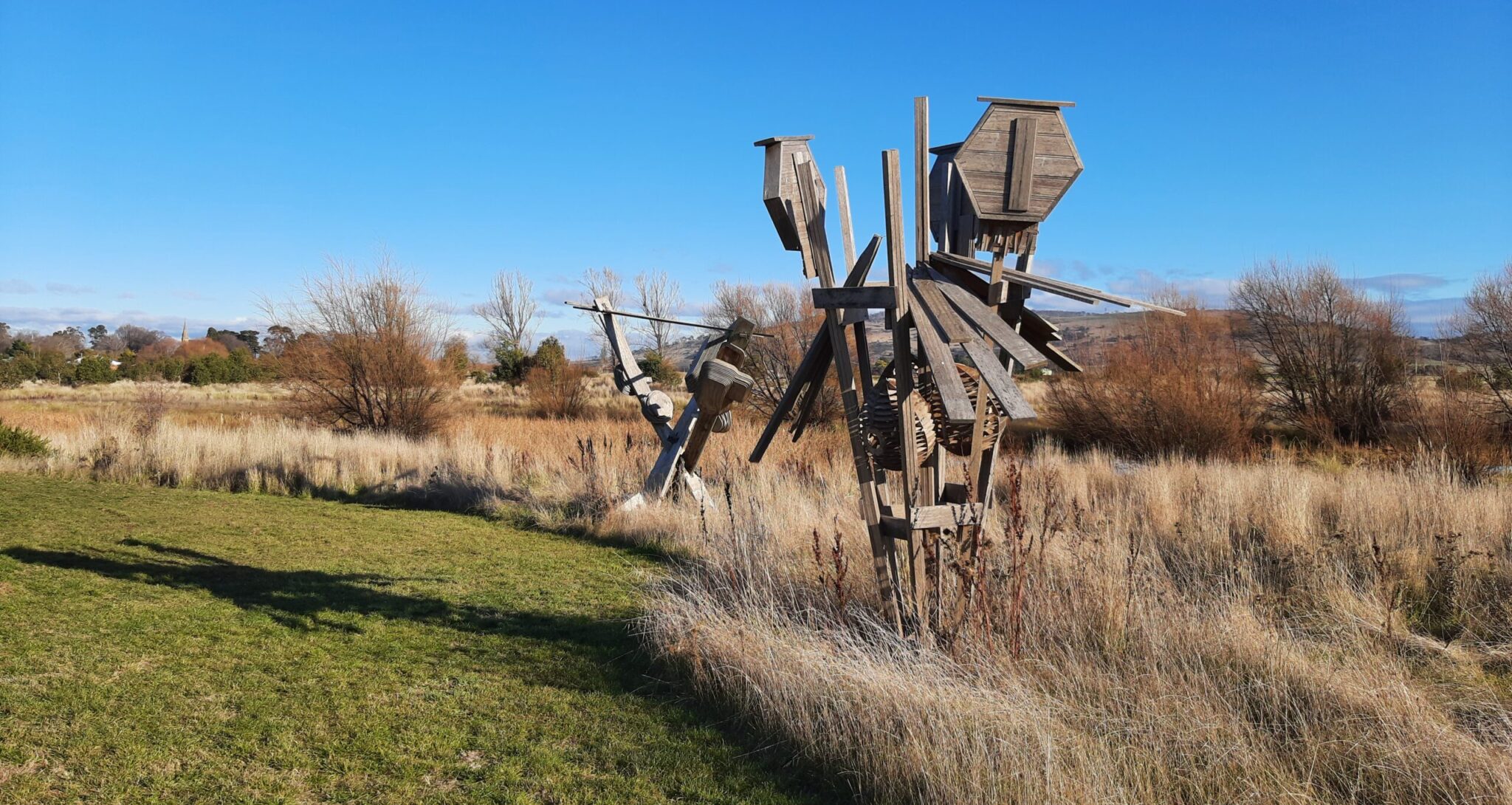
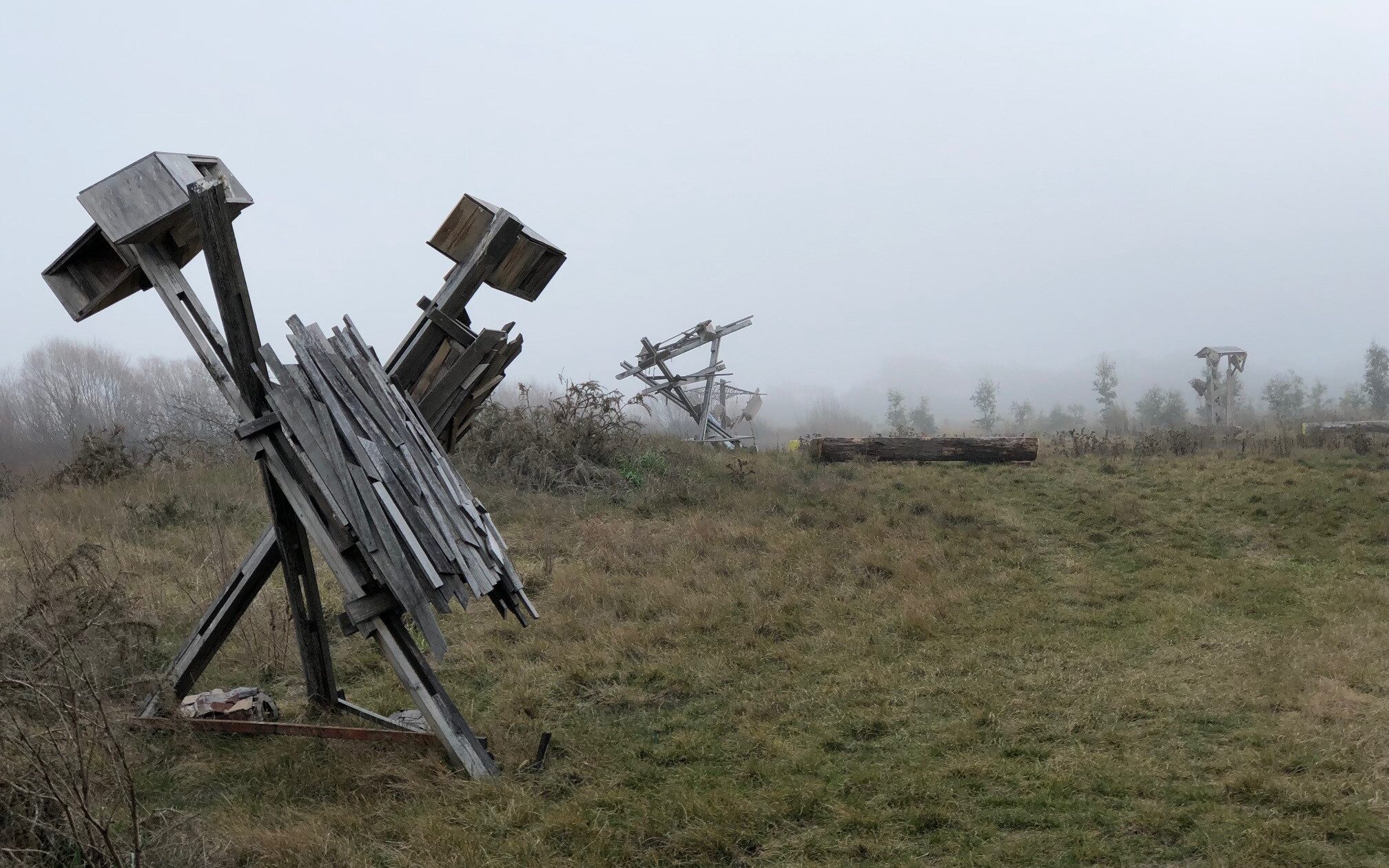
On the banks of Tasmania’s Macquarie River, at the edge of the historical village of Ross, some very odd-looking structures are dotted along the water’s edge.
They form the Species Hotel Sculpture Walk. More than just public art, they play a crucial role in the local environment.
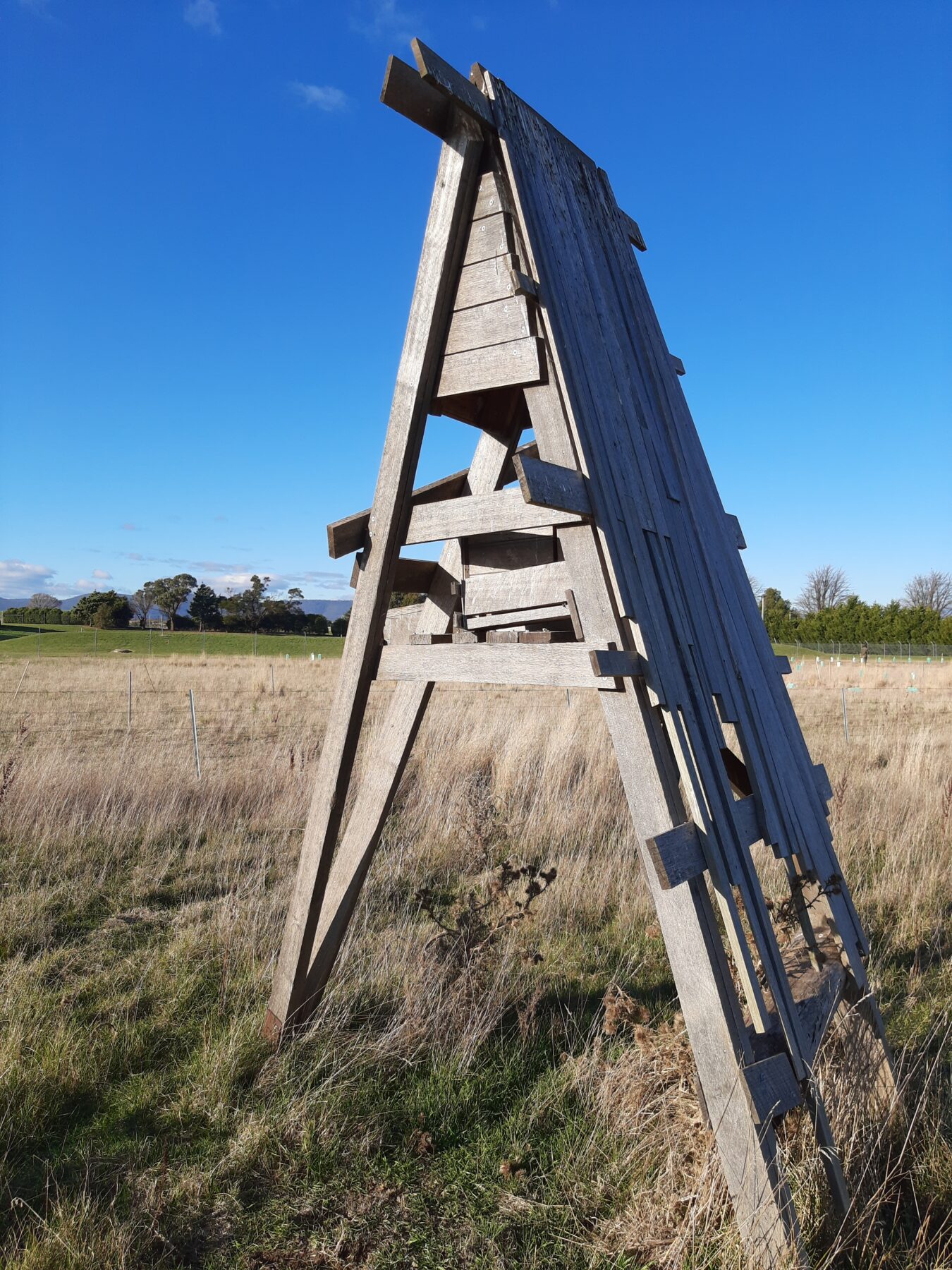
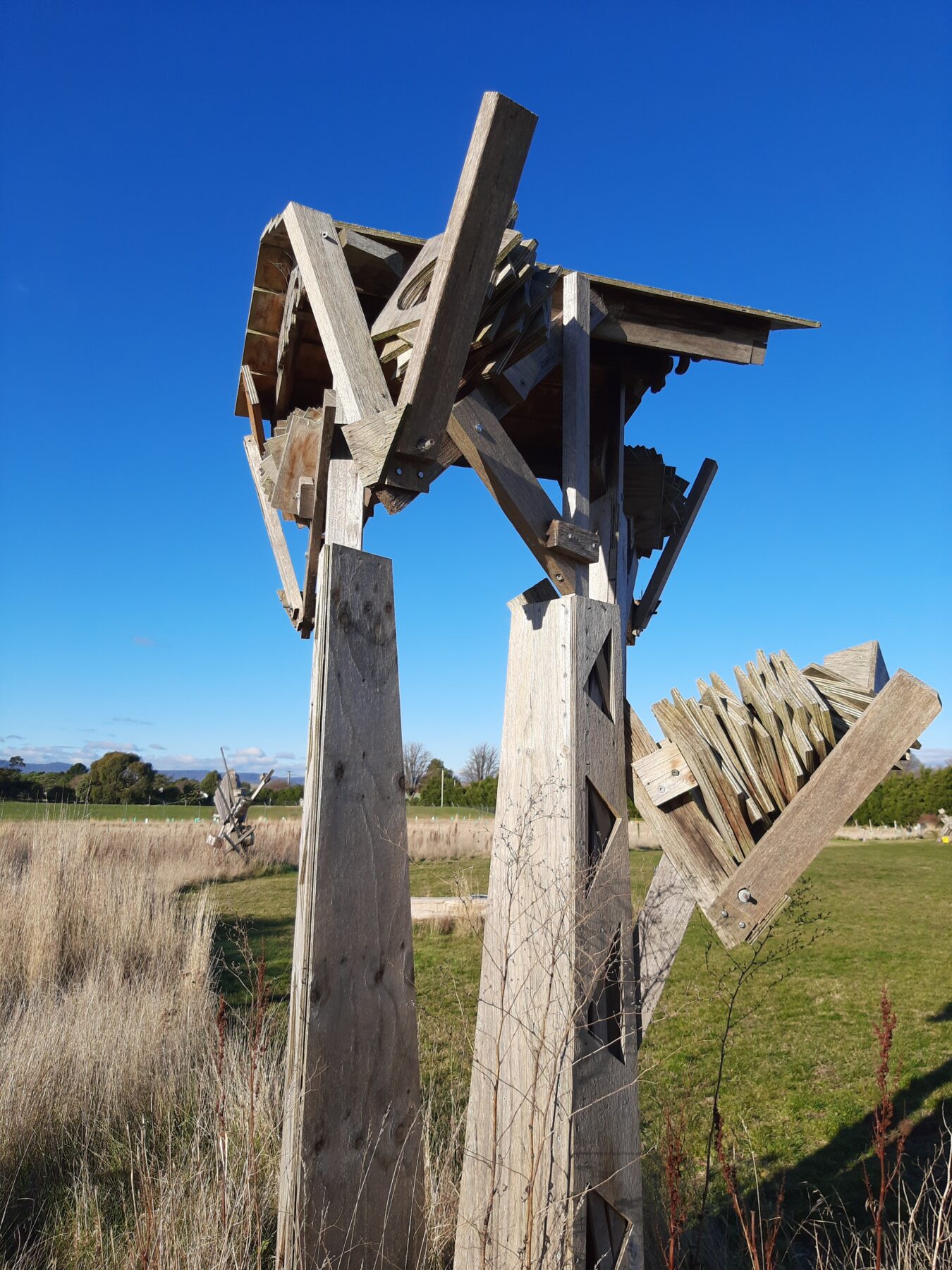
These ‘Species Hotels’ provide habitat for small wildlife, and are designed and constructed by Architecture and Design students from the University of Tasmania (UTAS).
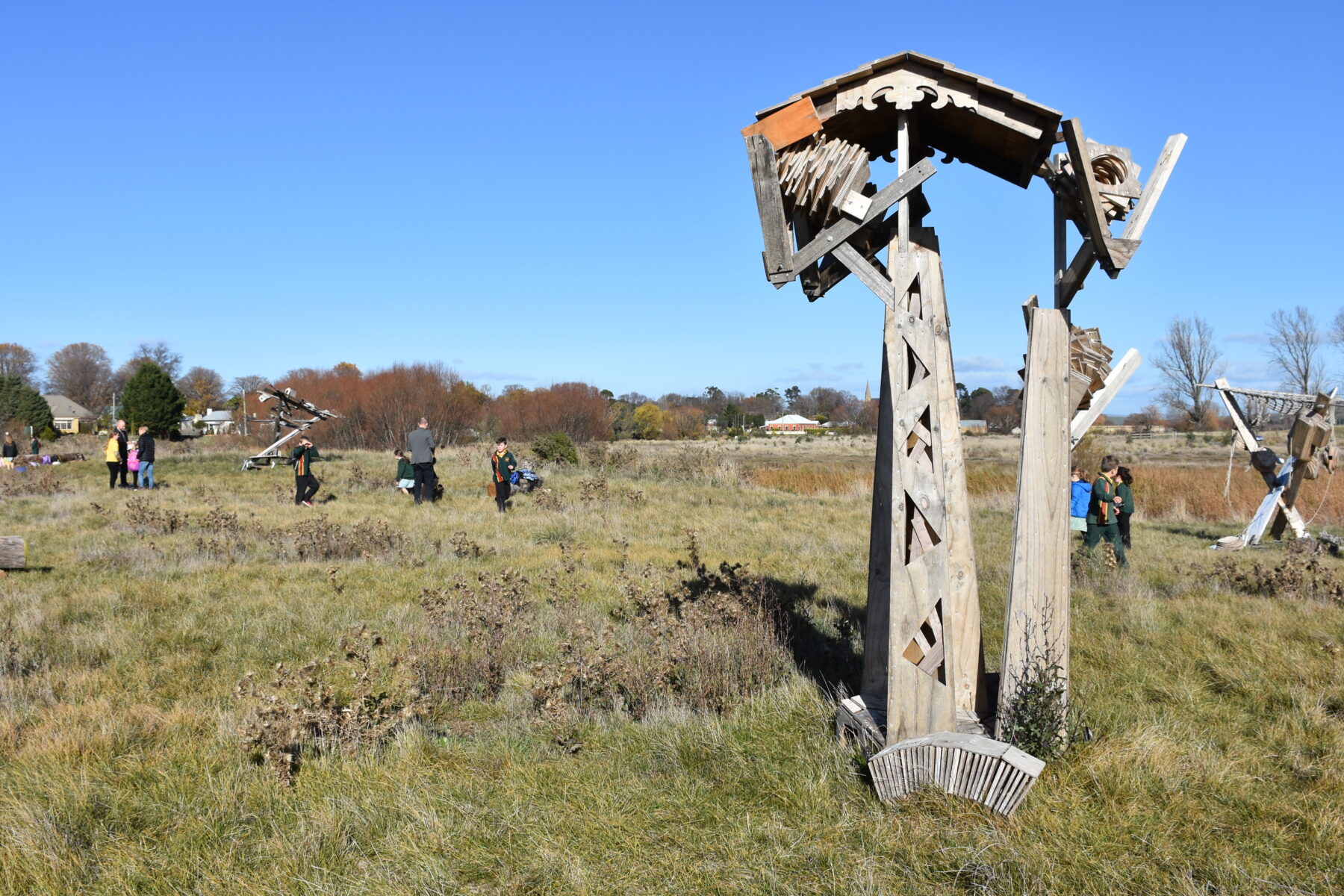
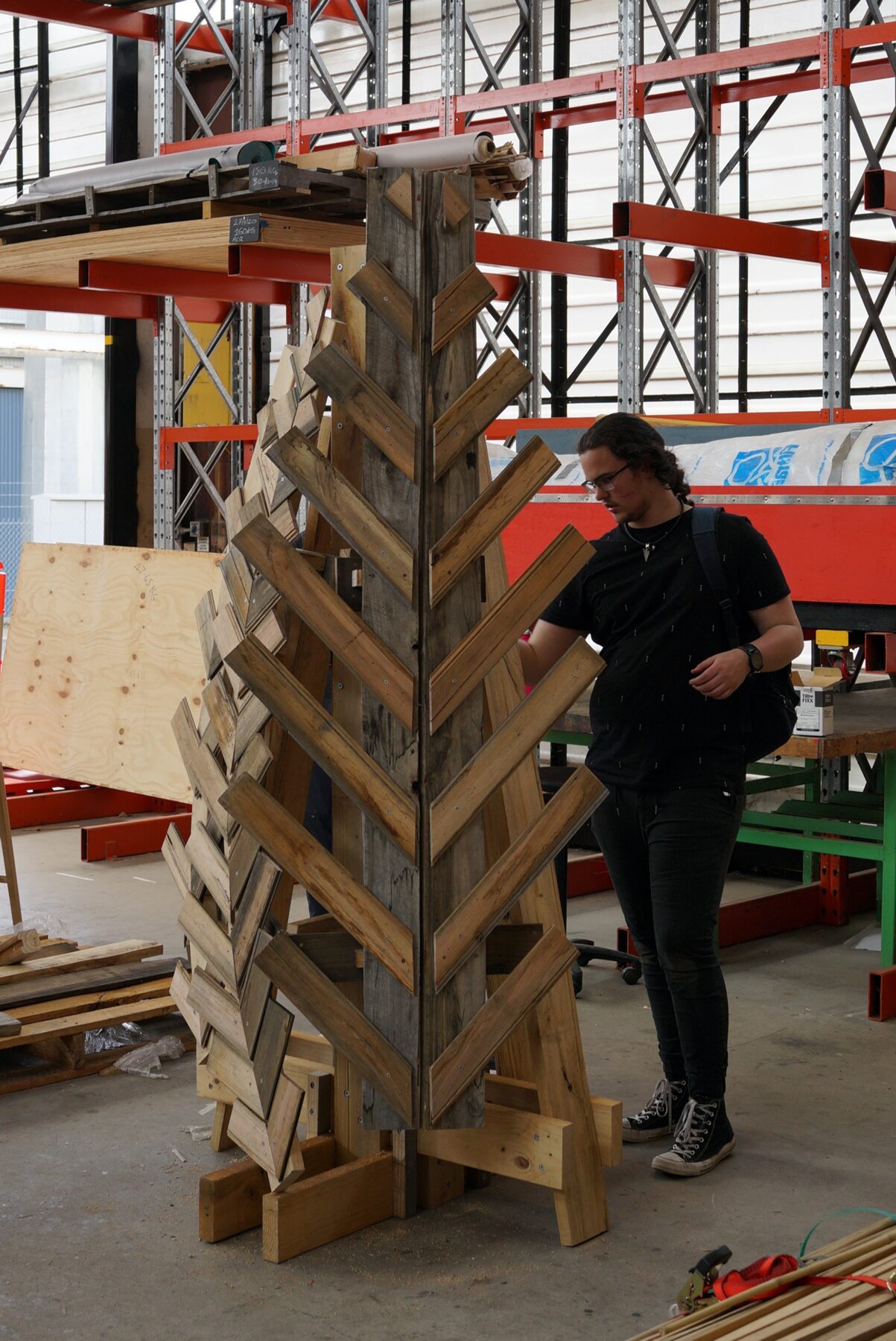
“One of my favourites is the Gothic Treehouse,” says UTAS Architecture and Design lecturer Louise Wallis, who leads the project.
“It is designed for small birds – striated pardalotes, welcome swallows and scarlet robins – with nest boxes and rafters. There’s also space for micro bats in the columns, and a cavity at the base for a Tasmanian devil den.
“I like it because it’s a collage of a tree, but then it has a gable roof, like the sweet little houses in Ross. I think that mix between a tree and a house is quite sweet.”
Originally, Louise planned for the project to be a one-off activity for her students. That was in 2016. Now it’s an integral part of UTAS’s five-year Architecture and Design course.**
“Every student going through first year has done this for the last six years or so, it’s pretty fantastic,” she says. “They are so motivated. Every year they have this amazing enthusiasm. They take it very seriously. I adore the commitment and interest they have.
“And every year we get completely new ideas. They’re essentially working to the same brief but we still haven’t managed to end up with any repetition. They always seem to find a new way to approach it.”
The Midlands
The Species Hotel project is a part of a larger initiative by Greening Australia, which has been working in the area for over a decade.
The Macquarie River runs through the Midlands region, a vast expanse of land that has been used for agriculture for more than 200 years.
“It’s an area that’s been grazed and farmed since white settlement,” says Greening Australia’s Tasmania Operations Lead, Dr Elizabeth Pietrzykowski, explaining: “Back in those days large land grants were given and they just started mass land clearing. It was very old English-style farming where you basically just take out all the trees, logs, rocks, everything, put in straight fences, and start farming.”
Once a landscape of grasslands, woodlands and wetlands, maintained with traditional burning by its Aboriginal custodians, 32 nationally threatened native species (and another 180 native species threatened at the state level) once thrived here.
“There’s a significant number of threatened species that are no longer even present on the mainland that we still have in Tassie but are only just surviving in the Midlands,” says Elizabeth. “They used to be really prevalent. Now you just don’t see them.”
These species include the eastern barred bandicoot (Perameles gunnii), eastern bettong (Bettongia gaimardi), Tasmanian devil (Sarcophilus harrisii) and eastern quoll (Dasyurus viverrinus).
The situation is so dire that the Tasmanian Midlands have been classified as a ‘biodiversity hotspot’ – one in a list of ‘places on Earth that are both biologically rich – and deeply threatened’.
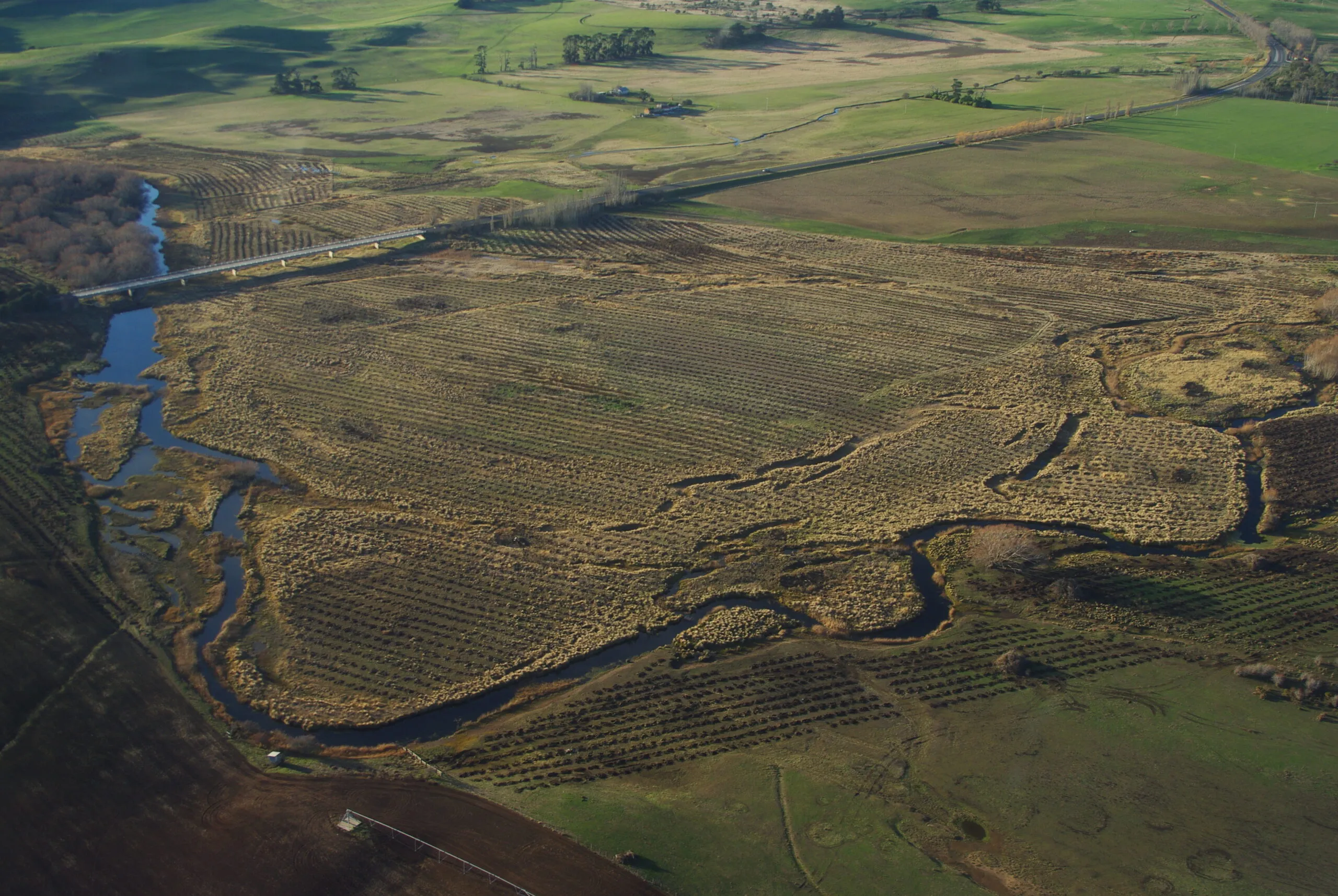
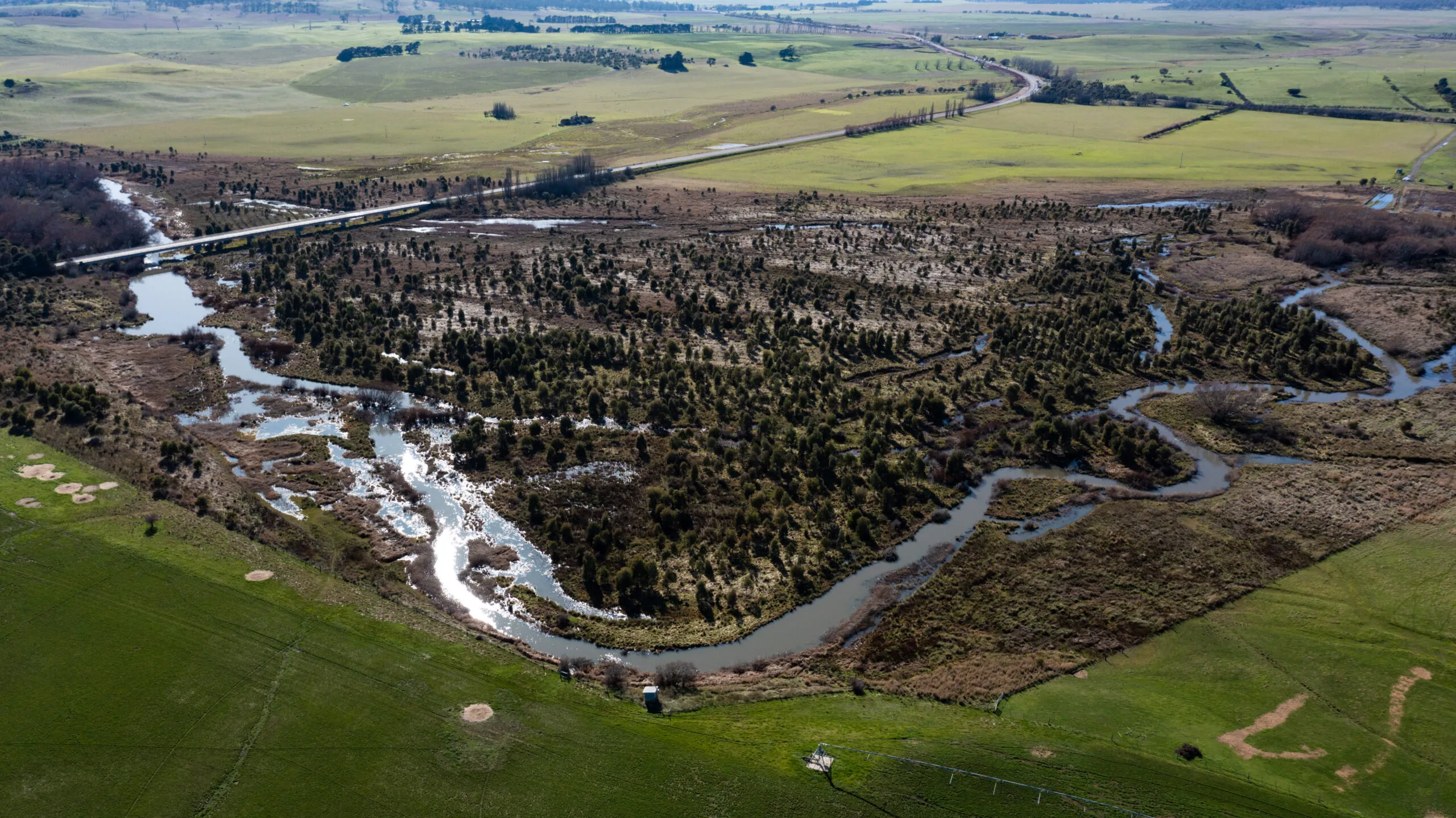
Image credit: courtesy Greening Australia
The small** site on the riverbank at Ross – now home to the Species Hotel Sculpture Walk – is just one small patch of land that has been handed over by farmers to the Greening Australia team, as part of the Tasmania Island Ark program, a collaboration with Bush Heritage, Tasmanian Land Conservancy, UTAS and landowners, all working together to landscape the barren land, recreate habitat and relink wildlife corridors.
Work began at this site 12 years ago when all livestock was removed and the team brought in rocks, boulders, logs, ground cover, native grasses and planted shrub and tree seedlings.
“By reinstating this structure – by us putting in ground species and canopy mid-storey – there’s a shelter belt effect,” explains Elizabeth. “Wind stops aggressively going at the ground, these structures accumulate residues and debris around them, and water is trapped when it rains, so it leeches into the ground.
“As soon as you add that bit of structure, we find that Country can then start using its own environmental processes to regenerate itself. We are not going in and reinstating a complete forest, we’re giving it a kick start by adding that critical initial structure.”
This structure not only kicks starts the restoration of the land, but provides protection for wildlife to return.
And this is where the Species Hotels fit in, providing crucial habitat for these returning animals until the plantings are established enough to accommodate them.
“We work at the smaller end of the food chain, as it will take time for the necessary complex midstory to grow in these paddocks,” says Louise.
“We design the Species Hotels for small biota – invertebrates, small vertebrates, micro bats and small woodland birds.”
“In future, when the surrounding vegetation has matured, we will also design for larger biota such as eastern barred bandicoots and Tasmanian devils.”
The Brief
Students first meet with their ‘clients’. Of course, it is impossible to meet with the actual animals that will inhabit the structures, so information on what these animals need is gathered from meetings with experts in the field.
The designs must incorporate the two essential things an animal needs to live and thrive – shelter and access to food, but should cater to other individual needs too.
“For birds, that could mean there needs to be somewhere to roost, or social spaces like perches,” says Louise.
“More recently, students have been creating places for insects to nest, basically creating ‘room service’ for birds and microbats.”
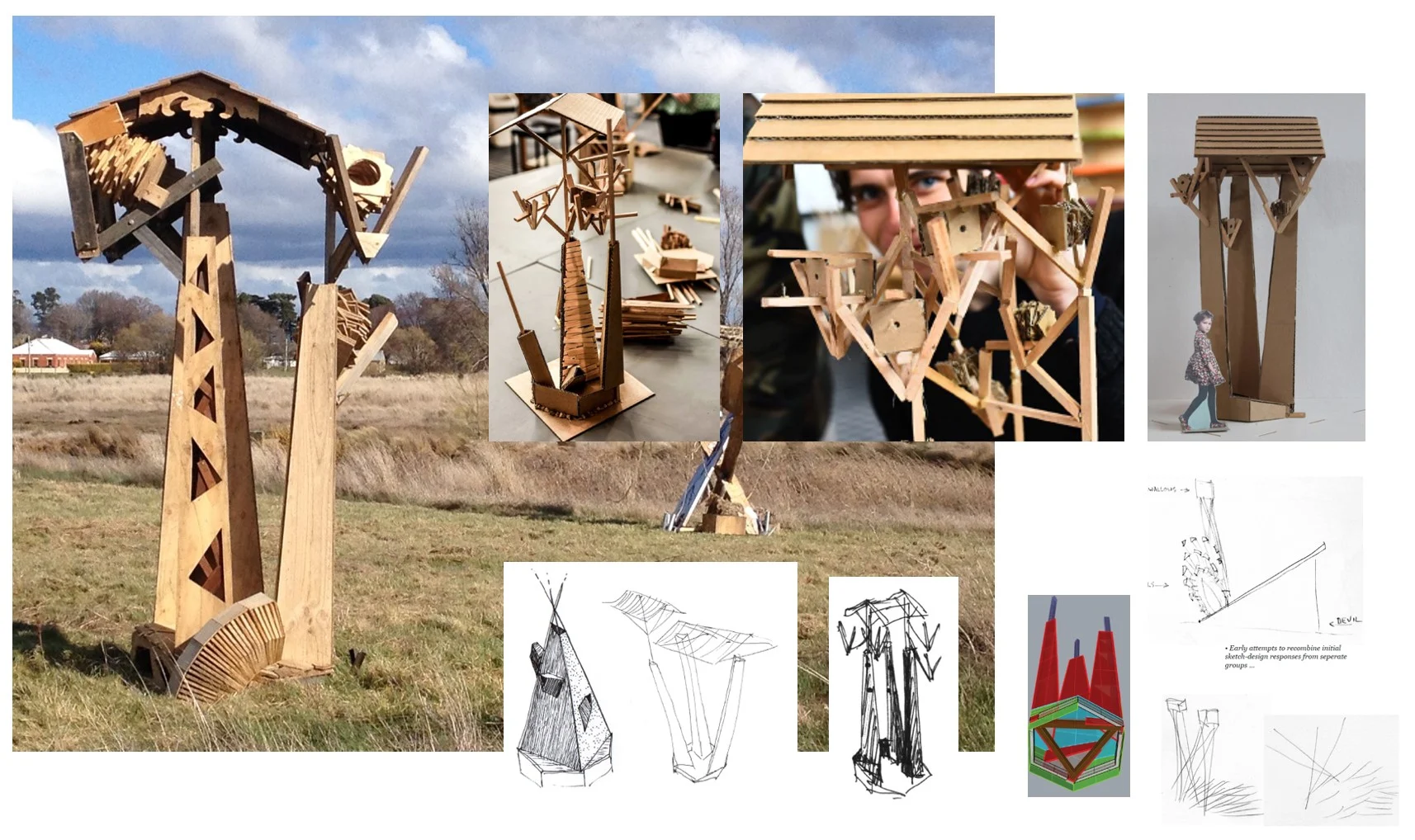
Sculptures must be 1 x 1 x 2m in size and made using materials that will not harm the environment.
“It’s on a flood plain so everything needs to be able to be washed down the river and not have an adverse impact,” says Louise.
“Most are made from salvaged timber, simple fastenings and a lot of joy.”
“The idea is that it gracefully disintegrates over time and becomes part of the the understorey, or understructure, to support more biodiversity. And as they die we’ll put new ones in.
“It’s fabulous because, as an educator, I want my students to understand the lifecycle of a material.”
Master of Architecture student Brad Reynolds created his Species Hotel in 2020.
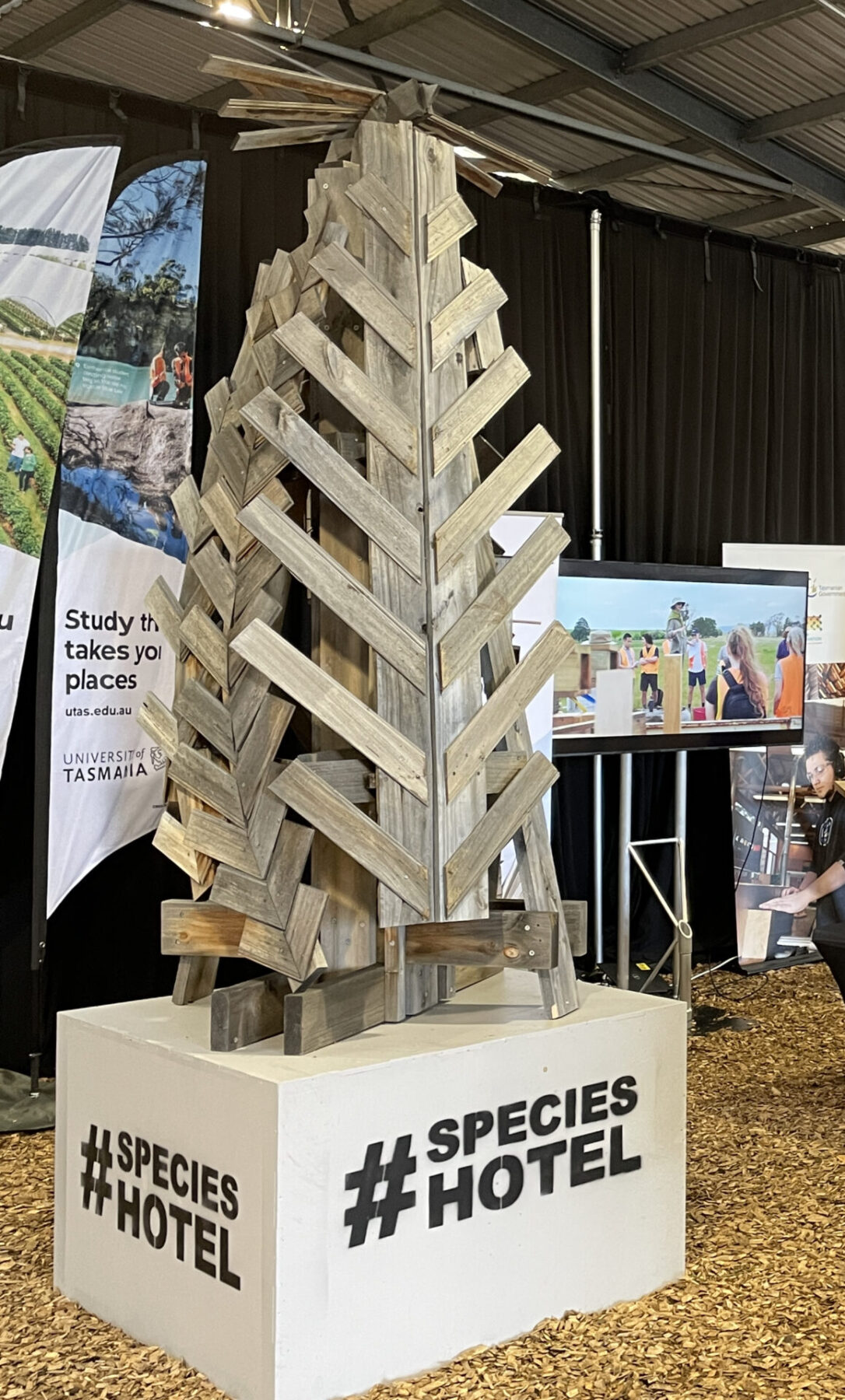
“My team designed a structure for small birds,” he says. “We wrapped it in a windshield so when the birds were using it they weren’t having the wind blown on them too much. And we made that windshield look like leaves and ferns.”
“We also drilled some holes into the structure so that insects could burrow into them so that the birds had something to feed on.”
Brad says the project provides a great opportunity for students to create something from start to finish.
“It was great to get the opportunity to be hands-on, to actually build something from a scale model. A lot of what we do is designing and not actually building anything.”
Success
Not only have the species hotels been a hit with the humans who frequent the now public-access sculpture walk, native wildlife have also taken up residence within the structures.
“I haven’t seen one that hasn’t had some inhabitation,” says Louise.
“And the best way to tell which ones are the most popular is by the amount of bird poo on them!”
“A habitat has been created,” adds Elizabeth. “It was just farmland right up to the river. Now, there’s already invertebrates and little vertebrates that are moving back into the area, and birds hanging sound.
“If the species hotels hadn’t been there, there would have been nothing for all these little creatures to inhabit safely. They’ve created an artificial habitat while we now wait for Country to heal.”
Read Next
Meet 'The Codfather'
Who is the man behind The Codfather and why?
Who is the man in Maccullochella?
Allan McCulloch was a pioneering scientist and talented illustrator who played a crucial role in developing the Australian Museum. History may have forgotten him, but his name lives on – in our rivers.
Science glitterati share their Eureka moments at Australian Museum
Book a ticket today for your next Eureka moment at the Australian Museum!
Watch Latest Web Stories