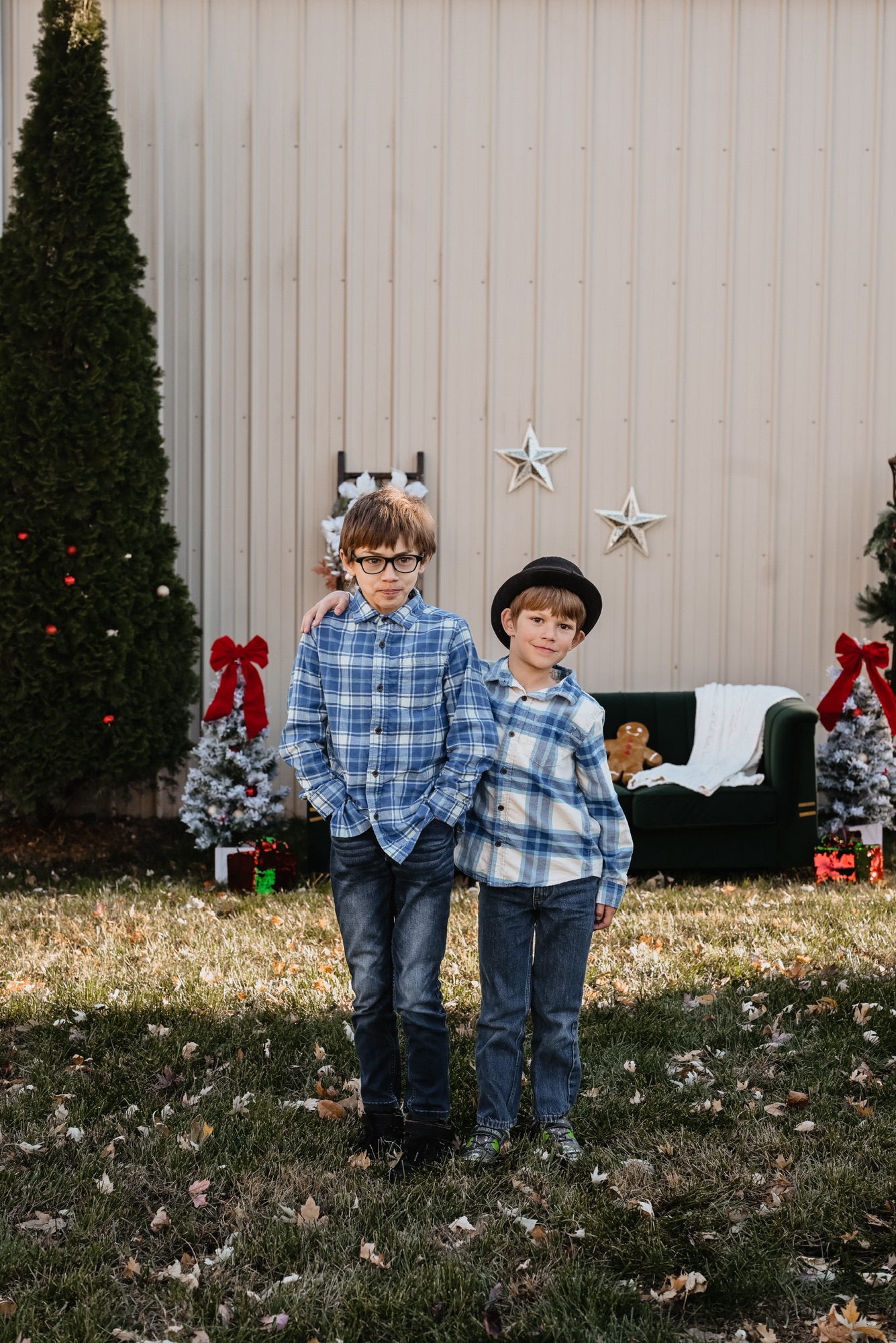
Snow flurries outside my window this January morning as I curl up with a hot mug of coffee and my laptop and start perusing summer programs for my kids. Like most parents, I’m already planning our summer, and it kicks off with registering both my boys for a variety of camps and activities.
For me, I’m not just contending with loads of ads and information, coordinating schedules and figuring out which program my children will enjoy. I also have to deal with accessibility issues.
As a blind parent, accessibility barriers are common when it comes to registering my boys for activities. Theoretically, online forms are ideal, but when digital accessibility is not considered, it leaves me frustrated. I use a screenreading software called JAWS to navigate websites and programs on my computer, and Voiceover on my iPhone. When forms and sites and apps are not compatible with these screenreaders, it means I can’t independently register my kids for activities.
I’m left to rely on sighted assistance, which is not an accommodation, and a big assumption that I just happen to have sighted people around whenever I need a pair of eyes.
Another big obstacle for my family is transportation. I live in a city, but it’s in the car-centric Midwest, where the thought of public transportation is foreign. Taking the bus is not usually an option for us to get from activity to activity, especially if we want to do it quickly and efficiently.
This leaves us two options: Rideshare, like Uber or Lyft, or find a friendly neighbor who has the time. In most cases, we have to use rideshare.
Rideshare is not cost effective when using it on a daily basis. Last year, one of my kids took a single week-long camp that cost $250. We paid another $150 that week to use Uber to drop-off and pick-up. And this was a single week for one child.
Transportation barriers are a huge accessibility factor for us. If an activity is too far away, we usually can’t attend. It’s not just a matter of coordinating schedules, but factoring in extra transportation costs and determining if it’s worth it.
I apply for grants and scholarships, when available. Since we have the additional transportation cost, it helps if the program fees are less. More often than not, despite this extra cost for transportation, we do not qualify for scholarships. It’s not common to find people and organizations that have thought how parents will transport their kids around. It’s assumed everyone drives and has access to a car. Many blind and low vision people refer to these added costs as the “blind tax.”
If disabled concerns were considered more, and attention was given to a variety of access needs, summer registration would be less frustrating for many of us. Coordinating schedules, figuring out who is getting who where and when, making sure all supplies are packed and waiting for the next activity to start is a nightmare for any parent. But when you start the process with accessibility obstacles, it creates a negative mindset from the get-go. Ensuring digital platforms are accessible is typically an easy fix. And broadening scholarship guidelines can assist in creating a more inclusive and welcoming atmosphere for summer registration.
By Imperfection
Bridgit Kuenning-Pollpeter is a mom and writer from Omaha, Nebraska but recently relocated to Urbandale, IA. When she’s not chasing children, picking up messes or reorganizing the house, she enjoys yoga or reading to relax. In her spare time (A.K.A. her dreams) she’s a Broadway star. Kuenning-Pollpeter is a freelance marketer during the day, a creative writer at night. Her work has appeared in the Brevity blog, The Omaha World Herald, 13th Floor, Misbehaving Nebraskans, Hippocampus, Emerging Nebraska Writers and Random Sample Review. She has her BFA and MFA in writing from the University of Nebraska Omaha. Her essay “The Body” was a McKenna Fellowship finalist, and her essay “Imperfection” was a 2020 Best of the Net Nominee. She is blind and writes frequently about disability. She’s working on a memoir about the disabled feminine experience. With the kids though, expect it in stores in about a decade.