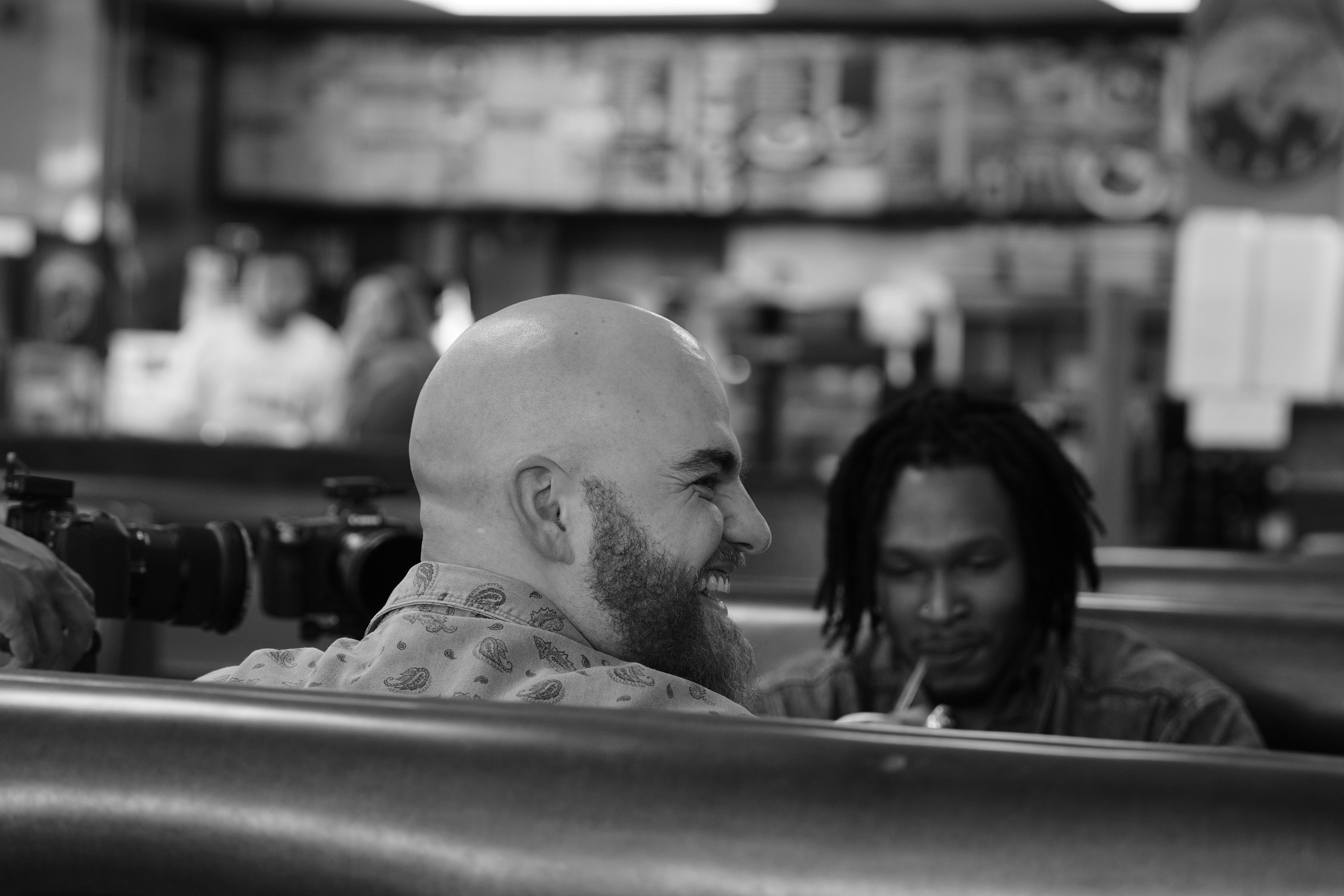
As his sister describes their grandmother’s “Pinton Burger,” you can see Asha Imuno’s eyes flood with memory. It’s a similar sparkle behind his sister’s smile as Imuno reminisces on car rides home from church that gradually shifted from gospel to Michael Jackson. Food and music paint pictures of family and friends and no landscape is more vivid than the local “spot.”
Between zucchini fries and memories, Miki Hellerbach’s nostalgia-tinted The Spot brings artists to parts known.
A marriage of classic food travel shows and hip-hop interview media, in its pilot episode, Imuno and Hellerbach share a meal at Harry’s Cafe in Moreno Valley, California, where Imuno tells the owner about days past spent skipping class for a meal at Harry’s. Hellerbach, a music journalist with bylines for publications like Complex and Okayplayer and a newsletter that explores the deep cuts of music production credits, asked Imuno to choose a meaningful location with the kind of history that can only be created in one’s hometown.
“We ask very specifically, ‘What is your order at ‘the spot?’,’” Hellerbach said over a video interview. “It does sort of even the playing field in a way, that they are actually initiating the sharing of the thing.”
The “spot” is just the launching point for the interview, which spans Harry’s Cafe and a beautiful afternoon spent driving around an old stomping ground and lounging in a nearby park discussing food, music and memories. Imuno’s passion in sharing those sensory experiences is matched by Hellerbach's appreciation for his music. A multi-talented musician, producer and singer, Imuno has skated from the soul-laced hip-hop and R&B offerings of his debut album, PINS & NEEDLES, right into the hearts of indie hip-hop media.
The album is unique, bouncy, and self-exploratory. On “Clementine,” Immuno sings about “the sound of distant memory,” with the same sunshine-warmed feeling present throughout his episode of The Spot. Memory is such a consistent through line for the episode that Hellerbach says it has fine-tuned future plans for the show — if fundraising efforts are successful.
“The idea is to take food and use that as the lens to get directly to the artist, rather than these two entities being separate from one another,” he said. “There’s a lot of talk about separating art from artist, but that is not the reality for artists. They exist as both parts of that entity in all parts of their lives.”
Food is an incredibly strong anchor point for that feeling. Food is art, but everybody eats and you’re not always thinking of it as art. You’re just thinking of it as it is. It is both art and living, in the same way that being an artist and making music is both art and living.
'The Spot' is undergoing crowdfunding efforts to green-light future episodes! If you can, consider donating what you're able to help fund independent journalism that shines a spotlight on independent artists. Fundraising efforts will be used to pay production crew for future episodes.
In a transcript lightly edited for length and clarity, I spoke with my good friend and colleague, Miki, about the debut episode of his passion project, our shared love for and history with food and music, and his plans for the future.
Brandon Hill: Why is the combination of food and music the perfect marriage for a show hosted by you?
Miki Hellerbach: This show was about exploring if these things that I felt equally passionate about in my head, did naturally make sense together.
I've been a music head. I'm a product of the blog era. One of the things I love to do the most is reported features and I'm also an avid music interview reader, listener and watcher. I study all of the different people in their different styles.
Then on the food side, the marketplace for visual content is missing something, the depth of more traditional TV travel food shows. In the most simple terms, there's a real reason why people miss Anthony Bourdain so much. I have watched every single episode of anything he ever did. I had an obsession with the way that he would storytell.
Music and food have always been these entities that always evoke the most visceral reaction for me, and not just me when I taste a great piece of food or have a great meal or listen to an excellent piece of music, but when I'm talking about them with other people, we can share in the visceral reaction.
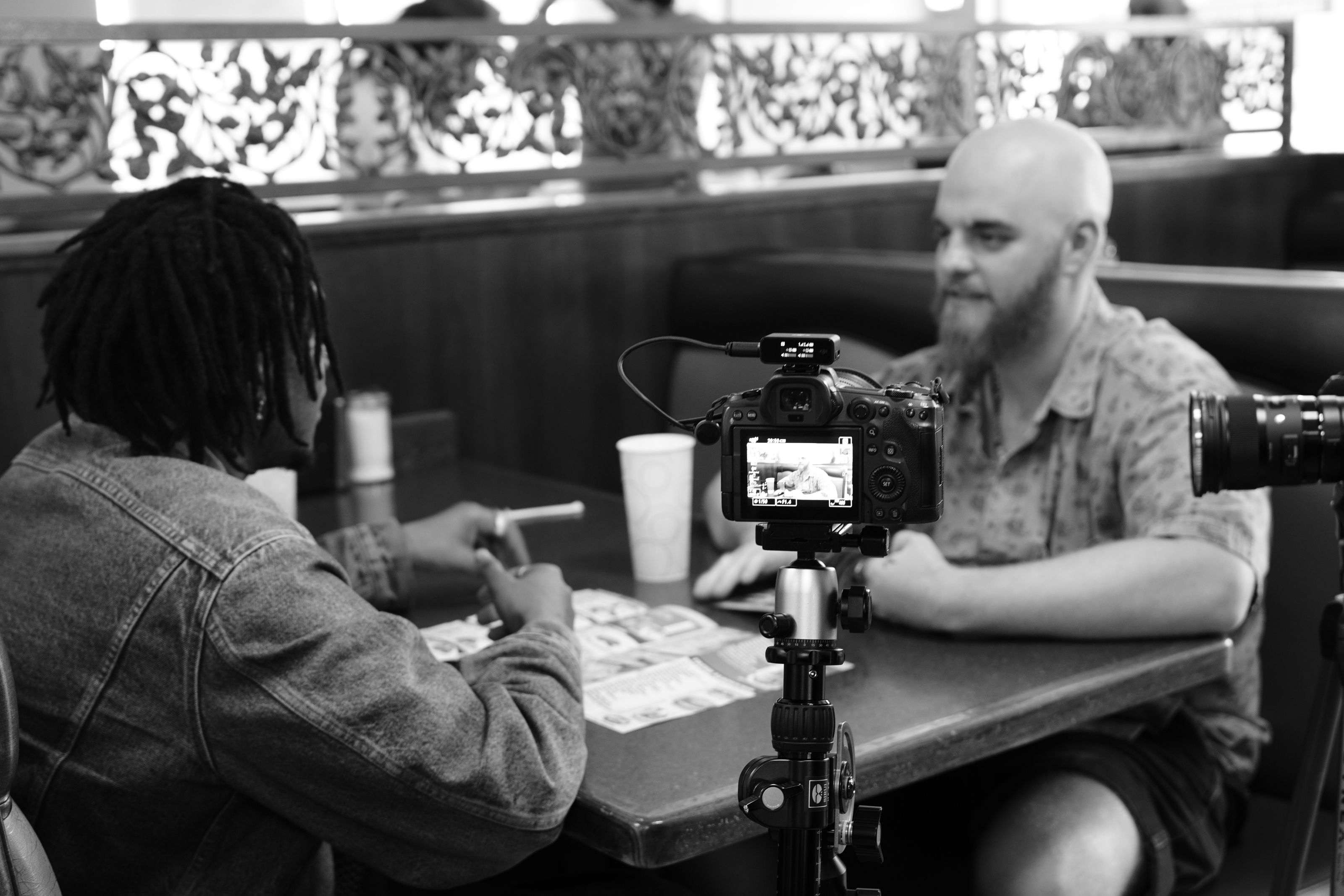
That’s a dynamic that’s facilitated by the act of eating, right? There are interviews where you sit down and you have your questions and you’re trying to get to someone’s essence, but do you think that in sharing a meal, talking about the food, you more naturally get there?
I’ve never thought of it like that before, but it brings to me the immediate moment of, on the show, we ask very specifically, ‘What is your order at the spot?’
On the traditional side of the music interview process, as the interviewer, we are bringing our perspective to their art. It is initiated a little bit by the interviewer. So the meal does even the playing field in a way that they are actually initiating the sharing of the thing. They see the value of the flavor that they’re going to share with you.
I know you have a deep history with food, in the sense that, like me, working in restaurants has been your primary source of income for most of your life. What has been your experience working with food?
I actually started out in what I would view as a very legitimate restaurant. I worked at this place that no longer exists, unfortunately, called Clementine. Which, if you watch the pilot, comes up within the first episode. I was just a busboy there, but it was a sort of newer restaurant and the only one of its kind in my neighborhood in Baltimore that was a real deal, farm-to-table sit-down restaurant.
Two things are sort of essential about that existence. The immediate understanding and empathy of food service, and understanding the thought process and the artistic process in food that was delivered by a chef.
I would be served different dishes and plates of food and be like, ‘Oh, this is the other level. This is you putting your craft on the plate. I get it.’
But I’ve been all over the map. Subway in college, being on an assembly line and actually preparing food for customers. Catering for Clementine in between coming back from college. In New York, I did a few cater waiter gigs too, but for most of my time there, I worked in a two-story Mexican restaurant in downtown Brooklyn as a food runner and eventually server.
I remember this sous chef there who would always do these ceviche specials, which were way too fancy for the restaurant, but he would always bring them to me to try first because we were really interested in food. We would talk about the best restaurants in the world and what they were doing. And now in LA, I work at, like, a banana bread stand, I sling samples at Costco.
That encompasses my broad appreciation for food and why The Spot matters. The food that we deem as ‘legit’ is still entirely too focused on a certain ‘chefly’ level. As much as I saw a difference in intention and craft in Clementine, in the range of experience that I’ve had, I’ve had some of the best meals ever at the corner take-out spot, too.
There is no definitive perspective on what’s good and what’s not good. People like what they like and that’s why food is an art form and a craft. It is just as subjective as any other art form.
In the episode with Asha, you talked about this duck liver pate on a baguette as a moment that opened your eyes to what food could do. As I’ve gotten older, I’ve found that the stuff that compels me, whether or not I ultimately like it, is stuff that is bold, daring, experimental. Have you found that some of your favorite musicians and favorite chefs have certain traits in common?
With great food and with great music, there has to be something that I sort of deeply appreciate. There does have to be something about it that is somewhat familiar, that I can hook into and then expand my understanding of. There could be something that's viewed as a delicacy in a food culture that I eat, and because there's nothing that I can hook into about it whatsoever, it's hard for me to appreciate. But if it uses similar elements to give me some type of gateway towards it, now you’ve expanded my palette to these other things.
A great example, in 2025 my favorite album is still by this kid 2hollis. I’ve written about it in my Substack. There’s this general post-Playboi Carti rage music that has existed in all these different types of pockets throughout, generally, the East and West Coast and everyone has their different iterations of that feeling. 2hollis brings in this early 2010s big tent EDM and 2010s rap-R&B and fuses it directly. That makes me way more interested in listening to a range of different post-Carti rage stuff. Because 2holis is fusing it with these things I have an attachment to, it makes my ears a little more open to the other stuff.
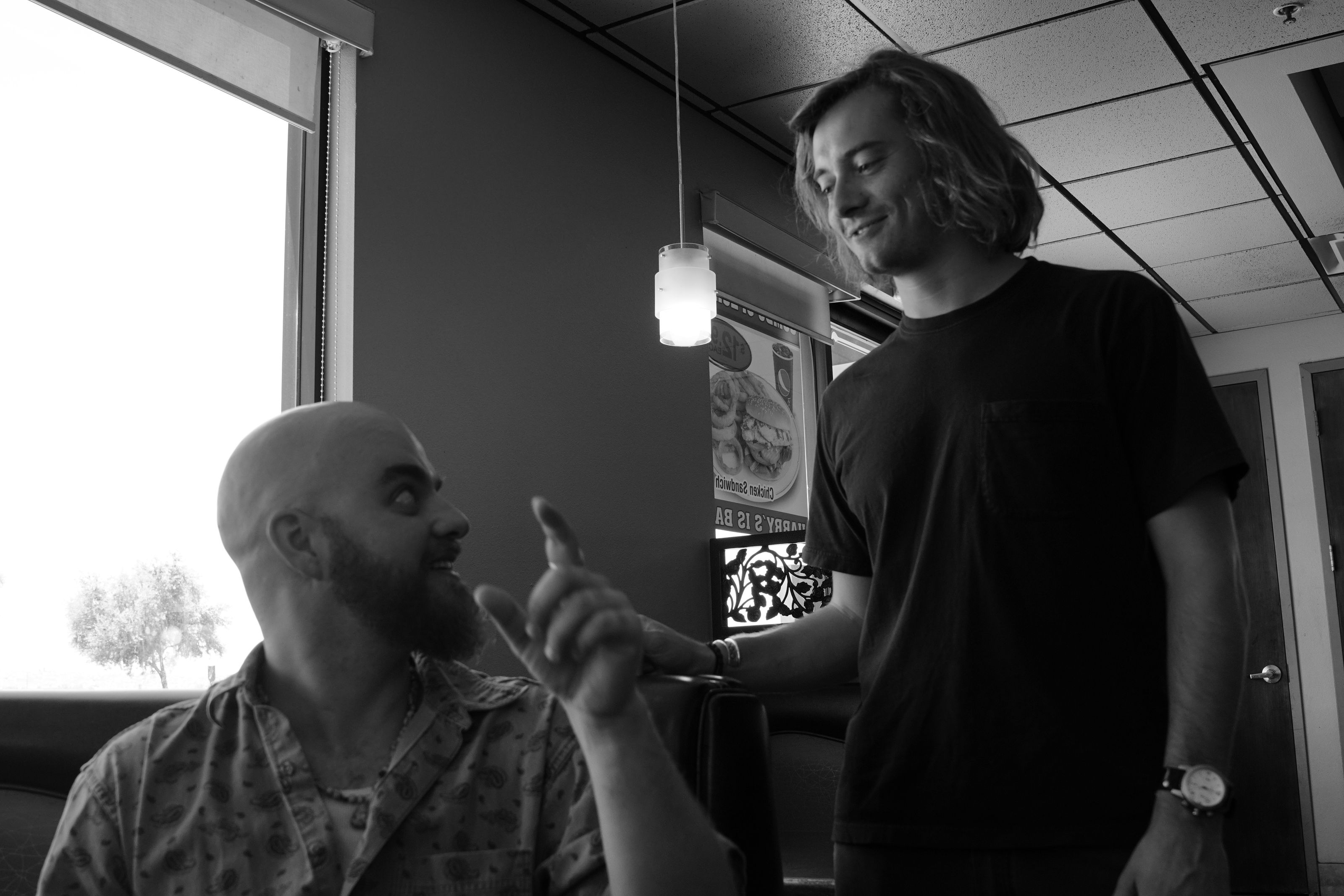
Memory being a through line between food and music is a big theme of the pilot. Is that something you went at with intentionality, or did it come up naturally?
Wow, did it become a clear through line of the episode once we shot it and started talking with Asha. Because obviously I was bringing my own food memories to the table, as was he, and it again goes into the alignment of the power of both food and music, because they are equally triggering in such ways.
If I hear a certain Lauryn Hill song, I'll think of my mom playing it on the CD player in our attic. If I taste a piece of catfish with grits, it will bring me right back there when I was sitting at the bar at Clementine and they had me eat it for the first time. I was peripherally aware of it, but it really was a cementing thing, how much Asha understood that memory was at the core of it and emphasized that naturally throughout our conversation.
When we are able to shoot any more episodes of The Spot, there's no way that won't be at the forefront of our minds.
“Feel the Vibe” by BJ the Chicago Kid and Anderson .Paak is that feeling to me. The music has those nostalgic tones, .Paak is rapping about collard greens, double-fried wings, BJ singing, “Come on in, close the door and feel the vibe.”
You know, in the interview, I was pointing out all the little memories that Asha had strung throughout his music. And he had this moment of, ‘Oh I didn’t even realize I was doing that.’
That also makes me think of Anthony Hamilton’s “Cornbread, Fish & Collard Greens,” which is a song that has food in the title but is all about memory. There are so many artists that, naturally, when they’re reminiscing, they include food. It’s really prevalent in rap and R&B even more than in other genres.
You wrote a story for Okayplayer about a culinary organization in Baltimore that served a hip-hop-themed six-course meal that was all about storytelling with food and hip-hop. Was that a moment where you were like, ‘Wow this is something that I really need focus on?’
Funny enough, I found the chef who I profiled for their dinner while watching Chopped. He’s like a Chopped grand champion.
Being at that event and the process of writing that piece, I felt like I was in a position that was expertly qualified to talk about the interplay. It wasn’t even just because I’m food-interested and I’m such a music head. I grew up in Baltimore, thus inherently hip-hop was all around me and I was raised by the sounds of the Neptunes. I was able to tell the story and tie-in the parallels between the back-of-the-house existence of those chefs — which I talked to them about — to the inherent music parallels that everyone was seeing from just the audience or guest perspective at the dinner.
My favorite section of that piece was assigning sort of positions of the back-of-the-house and paralleling them to music. There was definitely an inherent feeling of like, this is my wheelhouse. This is a thing that I know I have a perspective on.
Can you describe one of those dishes and its parallel to hip-hop storytelling?
One was a sort of elevated version of an oxtail dish. It was served in a brudo, which is, to my understanding, an Italian broth stew. It was a real exercise in high and low, elevating something while keeping that core punch to it. I’m trying to think of a song that feels that way.
It’s like one artist who was more on a semi-underground level, but like elevated. “Overnight Celebrity” by Twista, which was produced by Kanye. Twista was sort of having this thing, but Kanye had expanded to this big overarching sound. Putting that with Twista’s fast rap extravagance… it still had the core element of where Twista was derived from and the street tones, but with Kanye’s big speaker elegance. It reminds me of that.
What do you think The Spot can do for hip-hop media storytelling?
Firstly, it’s filling a desire for people to get something that makes them feel like the Anthony Bourdain shows did.
Then on the music side, it’s sort of one or the other most of the time. Media is going for the human behind the art or going for the art, instead of the artist. So the idea is to take food and use that as the lens to get directly to the artist, rather than these two entities being separate from one another. I didn’t even know how to word it until shooting the pilot.
There’s a lot of talk about separating art from artist, but that is not the reality for artists. They exist as both parts of that entity in all parts of their lives.
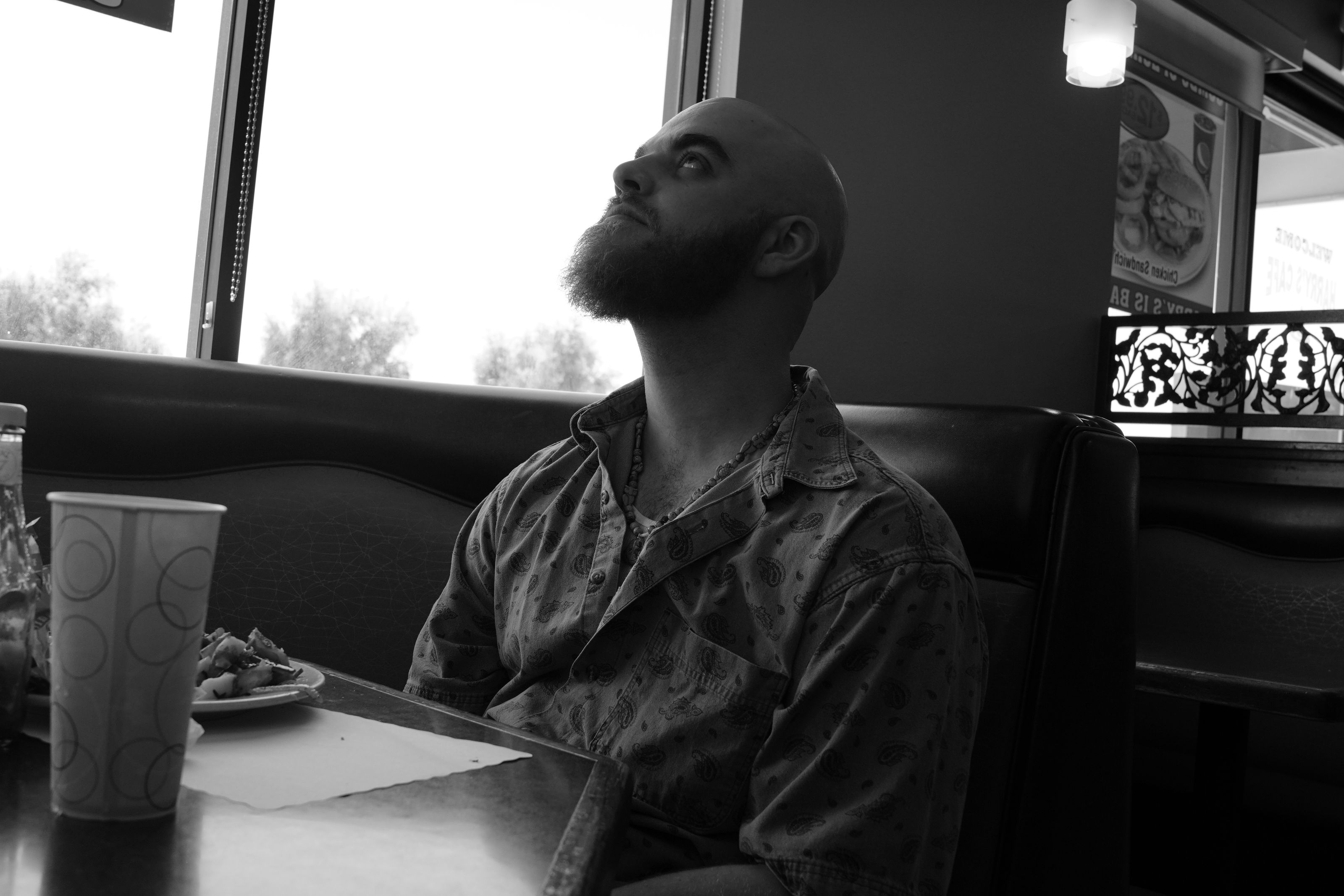
What made Asha the right person for the debut episode?
I hope it reads in the episode, but I was just super inspired by the music. Any guest that comes on the show, it has to be driven by someone whose music excites me. “Clementine” [from Asha’s PINS & NEEDLES] is my favorite song. I’m not making that up just because that was the restaurant that I worked at in high school. It has layers of interest to it, the idea of PINS & NEEDLES being a back and forth of the different sides of anticipation, the excitement, and the anxiety that comes with that. I thought it was an incredible idea and I really was interested in exploring what that meant.
What do you learn about a person by experiencing their “spot” with them?
The first thing that comes to mind is their value system. That goes back to what you learn about people from working in a restaurant. How you interact with people gives you a clear insight into the value that they give to others, and what holds value to them. This is a place that they’ve brought you to. You also get a sense of, because this is obviously a spot with history, once you leave the spot, a more childlike essence of a human and childlike excitement of an artist when you bring it back to something that is so potent from that part of their life.
'The Spot' is undergoing crowdfunding efforts to green-light future episodes! If you can, consider donating what you're able to help fund independent journalism that shines a spotlight on independent artists. Fundraising efforts will be used to pay production crew for future episodes.