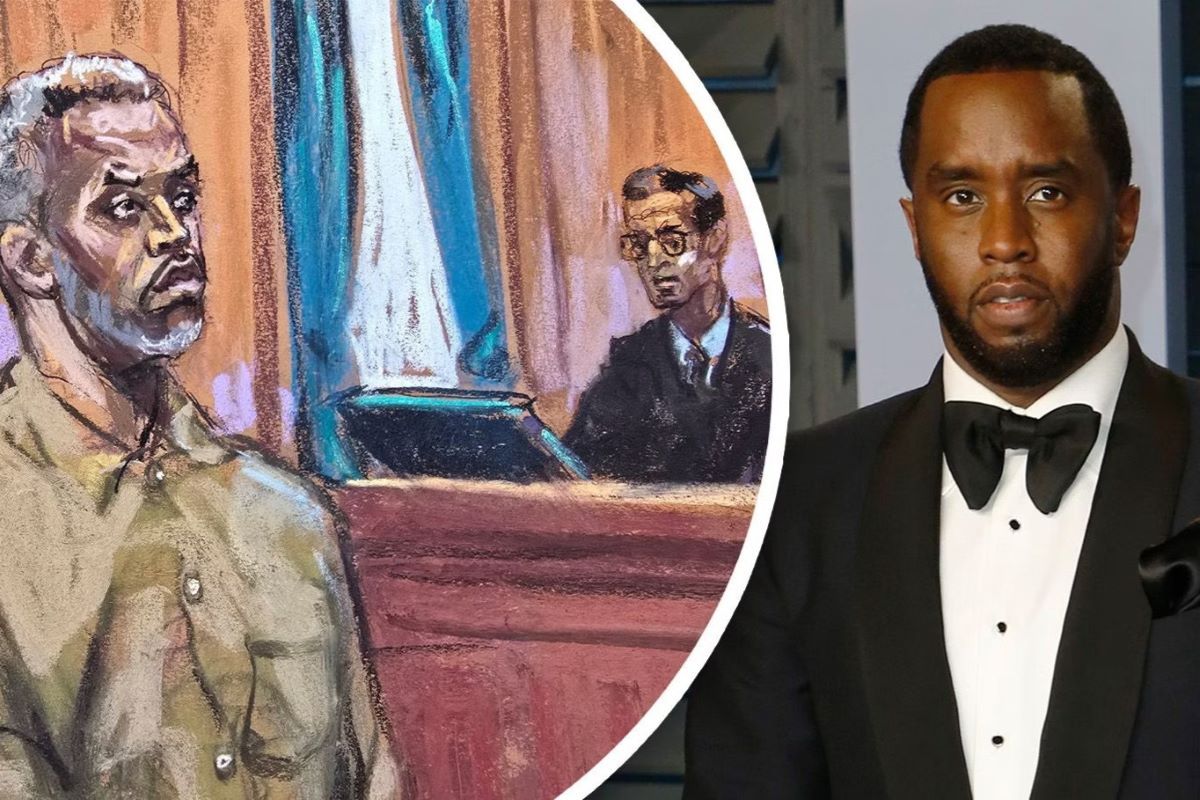
Sean "Diddy" Combs' high-profile federal criminal case began with opening statements on Monday.
R&B singer and child rapist Robert Kelly’s downfall didn’t come from his late ‘90s and early ‘00s civil lawsuits for child sexual abuse that he settled out of court. It wasn’t until a 2017 Buzzfeed article accused him of trapping six women in a sex cult that the dominoes began to fall in an ongoing legal circus that’s so far landed him 31 years in prison. Political socialite and child sex trafficker Jeffrey Epstein’s downfall didn’t come until a decade after reports of a molested 14-year-old girl in 2005 became a federal indictment-dodging slap on the wrist. But something has shifted for the United States’ high-profile predators.
Hollywood mogul and serial rapist Harvey Weinstein’s downfall began when The New York Times published a 2017 report detailing decades of sexual harassment. Criminal charges followed only 8 months later, and the space between was flooded with civil suits and social media allegations that fanned the flames of the #MeToo movement. The downfall of music mogul and accused sex trafficker Sean “P. Diddy” Combs began with the passing of New York’s Adult Survivors’ Act and California’s Sexual Abuse Accountability and Cover-Up Act.
Both laws temporarily extended the statute of limitations for adult victims of sexual assault to seek civil damages from their abusers. In California, the window remains open until Dec. 31, 2026 for victims of assaults that occurred after Jan. 1, 2009. In New York, the window closed on Nov. 24, 2023. The New York law resulted in the filing of over 3,000 civil suits, including against those of high-profile figures such as former Gov. Andrew Cuomo, disgraced Mayor Eric Adams and the since-jailed Combs.
On Nov. 16, 2023, pop star and ex-girlfriend of Combs, Cassie Ventura, filed a civil lawsuit against Combs alleging that the mogul lured her into a relationship, used his position as the head of Bad Boy Records to exert control of her personal life, and used violence, narcotics and coercion to force her into sex trafficking. Combs denied all allegations and the lawsuit was settled out of court the next day for an undisclosed amount.
On May 19, Combs walked that denial back, 48 hours after the release of InterContinental Hotel surveillance footage corroborated a claim in the lawsuit — showing him chasing after Ventura in a towel, slamming her into the ground by her hair and kicking her repeatedly.
Following Ventura’s lawsuit, 10 more civil cases were filed against Combs by September 10 and remain unresolved — two as rapidly as eight days later to meet the deadline of the New York Survivor’s Act — containing accusations ranging from drug-fueled sexual abuses to the gang rape of an anonymous 17-year-old girl. By the time of the May 12 opening statements for his federal trial, Combs has 63 pending cases and counting.
The federal indictment quickly followed the surge of civil lawsuits, on September 12 in the Southern District of New York. Under the indictment, Combs is being charged with racketeering conspiracy, sex trafficking by force, and transportation to engage in prostitution. He was arrested on September 16 and remains in custody at the Metropolitan Detention Center in Brooklyn.
I spoke about the federal case with Lauren Hersh, former chief prosecutor of the Brooklyn Sex Trafficking Unit at the Kings County District Attorney's Office. She is also the founder and director of World Without Exploitation — a national coalition that works with trafficked survivors to change laws and policies around exploitation.
“I had two kids at home, and I would find myself feeding them, bathing them, getting them to bed and then running out to a crime scene and pulling a 12-year-old out of a brothel or out of the arms of a pimp. At some point, it became too much… I felt that while prosecution was important, prevention was everything,” Hersh said.
“When Cassie’s case was filed, the first wave of response was, ‘What took her so long?’ But what we know is that's really common,” Hersh said. “It takes lots of time, lots of therapy, lots of ability to get out and exit and get comprehensive services in order to move forward, both with their lives and with legal recourse. That's why the New York and the California laws are so important.”
What is he being charged with?
Count One: Racketeering Conspiracy
The long list of crimes included under this count can be summarized as Combs’ use of physical violence, narcotics and coercion to force women to engage in unwanted sexual acts — sometimes transporting victims and people in prostitution across state and national borders. The racketeering (RICO) bit comes from allegations that Combs used the resources and associates available to his businesses to carry out the crimes and cover them up.
This count makes up 11 pages of the 14-page indictment, while the following two contain a single paragraph each.
What’s unusual is that Combs is the only defendant named in the RICO indictment. RICO laws were enacted by President Richard Nixon in the ‘70s to combat organized crime by charging low-level participants in a criminal organization with more serious crimes carried out by the organization. Prosecutors have historically used this as leverage to convince the low-level offenders to flip on higher-ups in the organization.
That Combs is the only defendant named in the racketeering charge likely indicates that the prosecution feels the evidence they have collected from witness testimony and search warrants is enough to prove to a jury that Combs, through his businesses, was the orchestrating figure in the alleged crimes.
The racketeering charge alleges that when victims managed to escape Combs’ influence, his associates would track them down and pressure them to return using leverage related to his businesses, such as financial and career boons.
Ventura’s civil lawsuit alleged that after being attacked at the InterContinental Hotel, she was pressured to call Combs by the President of Bad Boy Records, an employee of Sony Music and Combs’ lawyer, who all suggested that the release of her upcoming single depended on the call.
“Ms. Ventura began to fully realize that Mr. Combs’s tremendously loyal network not only knew about and witnessed his assault, but also that these witnesses were not willing to do anything meaningful to stop Mr. Combs’s behavior,” reads Ventura’s lawsuit. “By Mr. Combs’s own admission, his relationship with Ms. Ventura was like ‘Bobby and Whitney,’ a clear acknowledgment of the unequal power dynamic and excessive domestic violence that permeated their relationship. From the outside looking in, Ms. Ventura had heard others refer to her relationship with Mr. Combs as akin to ‘Ike and Tina.’”
She alleged that the status of the abuse as well-known insider knowledge, the complicity of Combs’ business partners and the normalization of abusive relationships in the music industry worked to convince her that Combs’ power and influence left no route for her to escape the abuse, thus prolonging it.
“I don't necessarily know that we're going to see a long list of accomplices, but I think we're going to know who intersected with this world and who was sort of privy to it, if not part of it,” Hersh said.
Count Two: Sex Trafficking by Force, Fraud or Coercion
The indictment lists at least one anonymous witness whom they allege Combs transported across state and national borders and forced to engage in sex for which there was some form of compensation. Ventura has since been named as a witness in the federal trial but, prosecutors have said that four of Combs’ accusers will be testifying.
Ventura’s lawsuit mentions that Combs would pay people in prostitution a few thousand dollars and that “he even would present [Ventura] with lavish gifts prior to or in the middle of the [Freak Offs], seemingly acknowledging the ways in which these forced sexual encounters constituted ‘work’ for Ms. Ventura and that he needed to compensate her for this work.”
Count Three: Transportation to Engage in Prostitution
This charge could refer to the money paid to the people in prostitution, but could also serve as a lesser charge if the federal government is unable to convince a jury that victims were forced into sex and were instead participating for compensation. The extended time window for the charge alleges that the government has some knowledge of Combs continuing this behavior beyond his relationship with Ventura.
“When you have a situation where somebody is being forced to perform sex acts, being plied with drugs, being physically and sexually assaulted, there’s no consent there." Hersh said.
Why are people talking about “Freak Off” parties?
The term “Freak Off” or “FO” first appeared in Ventura’s civil lawsuit, where she alleged that was how Combs referred to events during which she would be drugged and forced to participate in sex acts involving others (most frequently Black male prostitutes) while Combs watched, masturbated and recorded. Ventura alleged she was often expected to find the hotels and prostitutes at Combs’ request.
“He treated the forced encounter as a personal art project, adjusting the candles he used for lighting to frame the videos he took,” reads the lawsuit.
The term reappears in the federal indictment as a damning component of the racketeering charge due to the elaborate production involving staff and associates of his businesses. Before a Freak Off, staff would stock hotel rooms with supplies like baby oil and narcotics.
“Freak Offs occurred regularly, sometimes lasted multiple days, and often involved multiple commercial sex workers,” the indictment reads. “Combs distributed a variety of controlled substances to victims, in part to keep the victims obedient and compliant.”
The indictment, however, does not paint Freak Offs as the large, public, celebrity-filled parties that rumors have alleged. The scope of the indictment only refers to the events as taking place at hotels with sex acts between Combs, victims and people in prostitution. Such expanded details have been taken from the many outstanding civil lawsuits, such as Rodney “Lil Rod” Jones’ pending lawsuit that alleges the participation of Meek Mill, Chris Brown, Usher and Yung Miami.
What kind of evidence do they have on him?
On March 25, 2024, the Department of Homeland Security raided Combs’ homes in Los Angeles and Miami as part of the federal investigation.
The indictment states law enforcement seized “various Freak Off supplies,” narcotics, more than 1,000 bottles of baby oil and lubricant, and firearms and ammunition, including three AR-15s with defaced serial numbers.”
Additionally, Combs’ bail package proposal acknowledged that the government has argued the existence of “detailed evidence of Freak Offs in the form of travel records, communications, hotel records, witnesses and videos,” and their “investigation has yielded evidence of numerous assaults against female victims and other individuals.”
The indictment also implies that the government has knowledge of at least two phone calls recorded by Combs where “Combs and others… provided these victims and witnesses with a false narrative of events in an effort to conceal Combs’ crimes.”
What has the defense said so far?
Combs and his defense have unequivocally denied all allegations of sexual misconduct. He has pleaded not guilty to all the charges in the indictment.
The central facts likely to be disputed by the defense have already begun to be outlined in the bail proposal. The defense has characterized the Freak Offs as unconventional sexual activities between consenting adults but not criminal, and others as “escorts” compensated for their time.
“You have to remember what the object of the defense attorney is, which is to sanitize, to minimize, to really sow doubt in the jury's mind,” Hersh said.
The bail proposal also characterized Ventura (without naming her) as a spiteful ex seeking a payout. The bail proposal reads:
“There is one alleged sex trafficking victim in the Indictment… We have countless written communications that tend to negate any lack of consent and any coercion. The evidence shows a long-term loving relationship that became strained by mutual infidelity and jealousy.”
The defense alleges that a lawyer representing the woman approached Combs with an offer to buy the exclusive rights to a “tell-all” book for $30 million to prevent it from being published. Only when Combs refused, was the civil complaint brought against him. Combs then settled the case, “not because he raped or sex trafficked anyone, but because of the disastrous consequences a lawsuit of this nature would have on him and his business interests.”
“The defense will have the opportunity to fully cross-examine her on those facts and then ultimately a jury will determine if that impacts her credibility or not,” Hersh said.
What are the stakes? When will this be over?
Over 95 percent of federal cases result in guilty pleas, but the stakes are incredibly high for Combs and the billionaire is among the select few with the financial means to take a not guilty plea all the way through trial.
Even the minimum sentence for a sex trafficking conviction would carry 15 years. This would leave the mogul behind bars until into his 70s. Under the racketeering charge, he faces a maximum sentence of life imprisonment.
Additionally, the racketeering charge carries a “Forfeiture Allegations” clause. If the prosecution proves the extent of their claims that the broadly defined Combs Business facilitated the alleged crimes, that’s millions of dollars of assets that could be seized to pay restitution to victims.
The trial began last week with jury selection, where Combs was present for the questioning of nearly 100 potential jurors. The judge asked jurors whether they had seen the hotel surveillance footage and whether they would be able to remain impartial given the highly publicized details of the case. The judge told jurors that the trial could last around eight weeks.
Robert Kelly’s trials began two-and-a-half years after his arrest. The trial lasted a little over a month and he was sentenced eight months after being found guilty. Harvey Weinstein’s trial began just under 2 years after his arrest, lasted a month-and-a-half and he was sentenced a few weeks later. Both Kelly and Weinstein also still have ongoing cases resulting from subsequent lawsuits that lead to subsequent criminal charges.
“There are laws now in place that weren't in place two decades ago. When I think about sex trafficking, we're just at the place where the domestic violence movement was when it was telling guys to, ‘Take a walk around the block,’ just at the place of taking this seriously,” Hersh said. “There's a real intolerance in this moment that didn't exist 10 years ago and maybe didn't even exist five years ago. There's another piece to this where we're also much more inclined to believe survivors. We've created a culture where survivors are now being believed. You see the impact of that, which is when one person speaks out, it causes a chain reaction of courage. It's really powerful.”