By Bliss Bowen
In 1941, America’s national mood was tense. The country was still staggering out of the Great Depression that had knocked it to its knees throughout the 1930s, World War II had commenced in Europe, and people were feeling nervously self-protective. Photographers like Ansel Adams and Edward Weston were festooned with praise for making iconic images of America — such as those captured in Weston’s Guggenheim grant-funded 1940 book “California and the West.” In this atmosphere, Limited Editions Club publisher George Macy commissioned Weston to “create a visual portrait of America” for a deluxe edition of Walt Whitman’s “Leaves of Grass.”
For complicated reasons, history has mostly forgotten Macy’s book, though many of the pictures Weston made for it are widely agreed to be among his best. They are the subject of a new exhibit at the Huntington Library, Art Collections, and Botanical Gardens in San Marino, “Real American Places: Edward Weston and Leaves of Grass,” co-curated by Curator of Photography Jennifer Watts and Bradford and Christine Mishler Assistant Curator of American Art James Glisson.
“Macy thought the time was right because Weston had just come off this big road trip commission [for ‘California and the West’],” Watts says of the book’s inception. “Whitman was being rediscovered by the American public as this great arbiter of democratic values, so [Macy thought] this would be a wonderful pairing of a real American photographer with a real American poet.”
No longer in his Glendale studio but now ensconced in Carmel’s artistic community, Weston commenced his expedition with wife and helpmate Charis in late May 1941, driving from Los Angeles through the Southwest and South en route to Maine. When Pearl Harbor was bombed on Dec. 7, they scrapped plans to travel through the middle of the country and hurried home along the southern route. Weston made 800 negatives during their eight-month-long, 24-state trip. He submitted 70 prints to Macy, who selected 49 for the book. Watts and Glisson mounted 25 on walls whose space and pale hue enhance the depth of Weston’s work.
“With Weston, you want to have an experience with the photos; you don’t want to be blasted with tons of images,” Watts says, explaining their selection process during a private walk through the intimate exhibit. Standing before photos of oil storage tanks in Port Arthur, Texas, she adds, “We realized there were places Weston became very energized by, [like] this kind of big machinery and the scale of these gigantic, monolithic structures.”
What’s interesting about the Port Arthur photos is how organic they feel, with metal stairs curling around huge spherical tanks like tendrils embracing an unopened flower. “That was Weston’s thing,” Watts says, “the form revealed directly to the artist.”
That fascination with form is evident in other exhibit photos made at Boulder Dam and the Armco Steel Mill in Middletown, Ohio. Subtle social statements are made in other photos taken across the Southwest and Jim Crow South; pictures of Yaqui Indians appear in the book, but Macy used none of the portraits Weston made of African-Americans.
Echoes of Weston’s classic Nudes and Dunes series from Oceano can be discerned in “White Sands, New Mexico 1941.” An eerie quality pervades shots of macabre devotionals at a New Orleans cemetery and the sharecropper-occupied Woodlawn Plantation House in Louisiana; in the latter, haystacks tumble out of one doorway as a dilapidated car juts out from another. “They’re very desolate places … he loved the aura of all that,” Watts says.
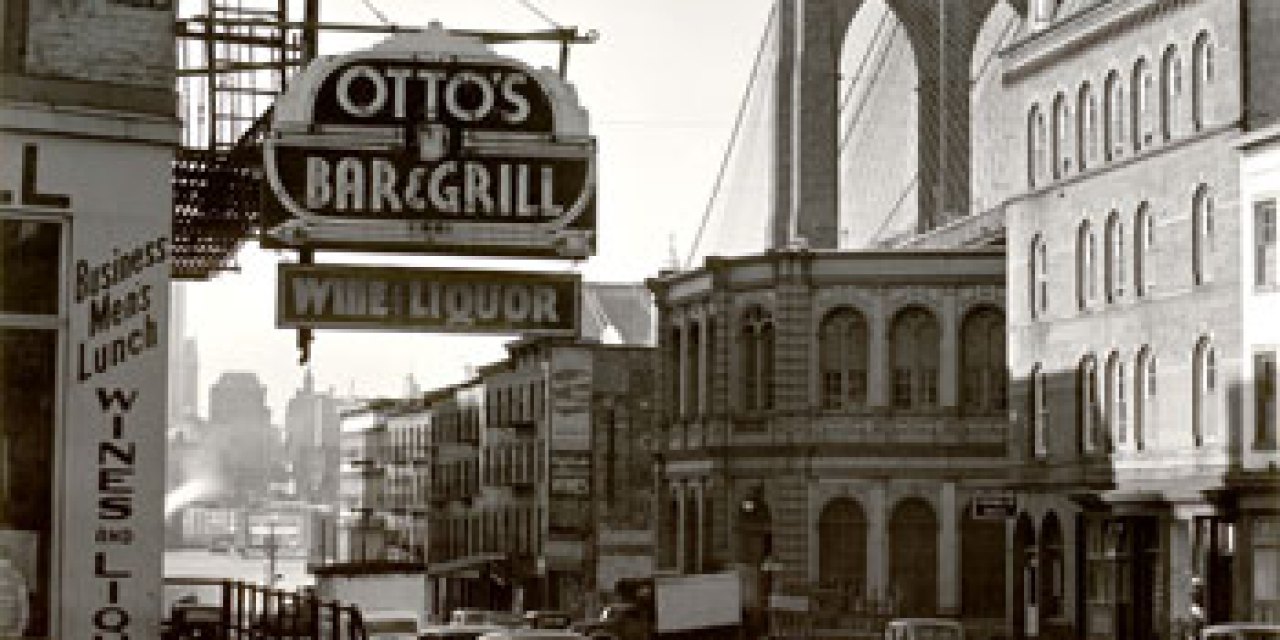
As with scenes from the East Coast — of the Brooklyn Bridge looming behind a neon bar sign, and a shot of “Mrs. Sangi’s Windows, New Jersey 1941” diagonally bisected by a clothesline’s shadow — the viewer is drawn in by the stories they hold. However, they aren’t Whitman’s stories.
Therein lies a knotty artistic conflict, and the seeds of the book’s ultimate commercial failure. Competitive and willfully independent, Weston took umbrage at being viewed as a mere illustrator. According to Watts, Weston interpreted “illustration” as metaphor, while Macy was quite literal in his use of the term.
After firing original designer Merle Armitage — the person Weston actually knew and trusted at Limited Editions — Macy designed the book’s layout himself. The result can charitably be described as cheesy; Glisson calls it “schmaltzy.”
There’s no denying the masterful composition or creamy textures of Weston’s black-and-white photos, but the pastel color in which Macy framed them is nauseating; it’s an Easter-egg green one can only assume he thought evoked “leaves of grass.” It matches neither the sophistication nor the complex hues and emotion of Weston’s stark photos, and the choice of glossy paper stock further cheapens the presentation. Worse, the pictures are captioned with snippets of Whitman’s poetry, suggesting they are subservient to the text.
“I was fascinated by the problem of how you tell the story of what amounts to a failed project that isn’t completely failed, because the photos are great,” Glisson says. “This isn’t a soundbite story. He’s engaging with Whitman, but not at the level of subject matter.” Weston wasn’t “channeling” Whitman but rather exploring similarly expansive themes.
“Weston’s seduced by this idea that he can put his name against and next to one of the great books and poets of American literature, and he can kind of ride with that. But at the same time, and maybe not unreasonably, he doesn’t want to be some kind of afterthought. In literary criticism, they call this the ‘anxiety of influence.’ You don’t want to just be repeating what someone else has done, because then you aren’t original, but you are in this vexed relationship with what comes before you.
“Weston’s fight with the publisher crystallizes that, in a way that isn’t abstract literary theory, but really concrete: ‘I don’t want to do this.’”
Macy never sent Weston final proofs of the two-volume edition of “Leaves of Grass” he published in 1942. Weston, who died of Parkinson’s disease in 1958, was proud of the photographs he made; in 1944, when he gifted the Huntington with 500 of his photos, 90 were from the Whitman project. But he loathed the book. He inscribed a copy to friends thusly: “No apologies for the illustrations, but for their presentation, my tears.”
“Real American Places: Edward Weston and Leaves of Grass” runs through March 20 at the Huntington Library, Art Collections, and Botanical Gardens, 1151 Oxford Road, San Marino; admission $23/$25 adults, $19/$21 seniors and students. Info: (626) 405-2100. Huntington.org, Edward-weston.com