Media representation is tied to cultural pride.

“Did you know he’s Filipino?”, my mom says, turning up the volume on our TV.
We’re watching the movie Crazy Rich Asians and she’s talking about actor Nico Santos’ character Oliver T’sien. He plays a sassy side character who helps the lead actress gain favour with her fiancé’s family in the film.
Santos is indeed Filipino, but his character in this movie is from Singapore. Asian face, exchangeable ethnicities, right?
Something about it doesn’t quite sit right with me, but I shrug it off and continue watching the movie.
A few years later, I start watching the show Superstore, where Nico Santos plays the hilarious and loveable character Mateo Liwanag. This time, Santos’ character Mateo is Filipino-American.
My mom doesn’t even watch the show with me. She only wants to see a specific scene: where Mateo engages in an argument in Tagalog with his white coworker, Marcus (played by Jon Barinholtz).
Her eyes light up just like mine did when she heard the Philippine national language on an American TV show. I don’t know why an exchange of exactly three sentences in Tagalog makes my heart swell with pride, but it does.
She asks me to play the scene over and over again.
In 2023, the conversation of Asian-American representation is not new.
With Malaysian Michelle Yeoh becoming the first Asian Best Actress winner at the Oscars and the inclusion of Asian characters in more than half of the most watched shows in the U.S., it seems like Asian faces are getting their time in the spotlight.
But ticking an Asian-American diversity box isn’t enough for me. I want Filipinos to be represented in media.
And I’m not the only one. Onscreen representation is deeply tied to Filipino cultural pride.
I was told my entire life to have Pinoy pride: to celebrate those who lift up my Filipino heritage and represent it to the world.
When a Filipino gains international recognition for their accomplishments, everyone in the Philippines swarms to support that person in droves. We are so starved for representation in Western media that when a Filipino steps into the spotlight, they’re shining it on all of us.
Pinoy pride is ingrained in our DNA. It as much a part of our culture as the thousands of dialects that pepper the tongues of our islands, or the mouthwatering food that gets shared at every Filipino party.
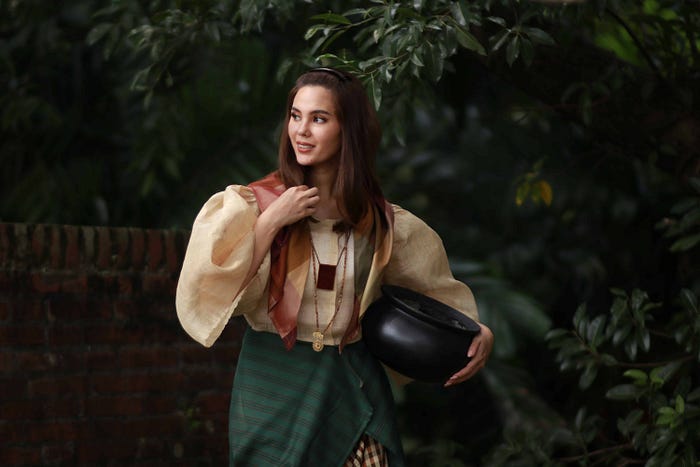
How many times have I seen my titas share Facebook posts about Miss Universe Philippines paegent winners Catriona Gray or Pia Wurtzbach?
How many times did my family get together with friends to watch Filipino boxer Manny Pacquiao engage in nail-biting fights with Floyd Mayweather?
Why did I love and relate to this interview with H.E.R., a Black and Filipino singer, so much?
Across all genres of U.S. TV programming, Southeast Asians were seen the least in 2021. And I don’t understand why.
There are so many American medical dramas that don’t have a single Filipino nurse working in their hospitals. How could that be, when over 150,000 Filipino nurses have immigrated to the U.S. since 1960?
That inaccuracy drives me absolutely bananas.
We want to share our Filipino pride with the world.
The demand is there. We want to be seen on screen for who we are. We want to see our food, our languages, our cultural customs and mannerisms, depicted in popular culture.
I recently watched one of Disney’s animated features, Raya and the Last Dragon.
The protagonist Raya looks Filipino. She wears a straw hat that resembles the Filipino traditional hat called a salakot.
But the movie is set in a fictional kingdom called Kumandra, which is created from a mishmash of Asian cultures. You see a Chinese dragon, Singaporean street food, green rice fields that resemble the landscape in Indonesia.
It was a good movie, but I found myself longing for more.
For a movie that was supposed to represent Asian cultures, there was not much there I could personally identify with.
And yeah, it was a fantasy movie where this protagonist fights a bunch of nations over pieces of a dragon stone— I didn’t expect to relate to Raya’s plight too much.
I wanted Raya to be Filipino, though. I wanted her to be Filipino so badly.
But she wasn’t. She was a fictional character whose Filipino elements only made up a slice of her personality.
When it comes to media representation though, Filipinos like me want the whole damn cake.
Culture and representation are deeply intertwined.
Hiring more Asian actors in U.S. movies and TV shows doesn’t satisfy the deep longing that so many of us have to see our culture onscreen. It’s not enough to cast an Asian face to meet a diversity quota.
I look forward to the day where I’ll get to say the sentence, “Did you know they’re Filipino?” much more often.
If representation feeds into a long history of Filipino culture and pride, it has to be done accurately. It has to be done right.
Want to read more from me? Become a Medium member and read as many articles as you like. When you join with my link, I earn a small fee at no additional cost to you.