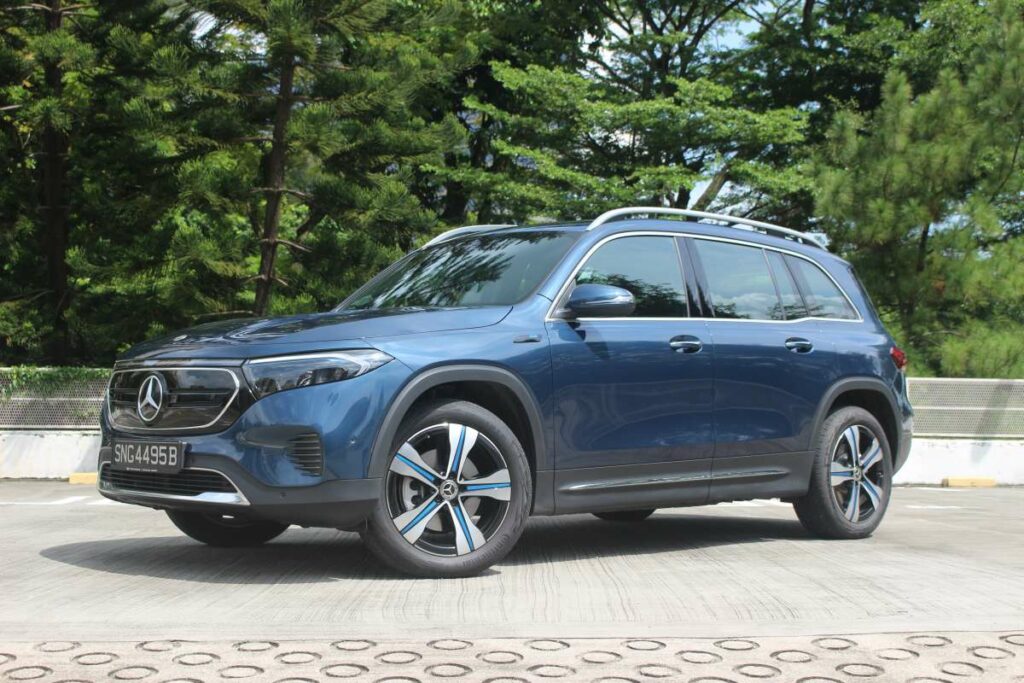
The single-motor version of Mercedes-Benz’s EQB seven-seater EV proves to be a more compelling package over its more expensive dual-motor sibling in Singapore
Photos: Ben Chia, Jay Tee, Mercedes-EQ
SINGAPORE
In the days of internal combustion engines (ICEs), many model lines typically get a top-of-the-range version with a larger engine and more power, while the rest of the range usually gets something more humdrum. But in the electric era, with no engines to speak of, the differentiator between the ‘haves’ and ‘have-nots’ seems to be how many electric motors you have.
Check out our video walkaround of the EQB 250!
The more expensive (and hence powerful) ones generally have two motors, while the ‘regular’ cars make do with just a single motor. Which makes sense, as that is really the main way electric vehicles (EVs) differentiate themselves in terms of power. We’ve seen this in brands like Tesla, Polestar, Volvo and so forth, and Mercedes-EQ, Mercedes-Benz’s electric offshoot, is no exception.
The EQB 250 tested here is the single-motor, less powerful version of the EQB 350 we tested previously, and while that car proved to be well capable as an electric seven-seater, for its intended purpose, two motors and almost 300hp seemed a bit of an overkill for what is essentially an SUV designed for family use.
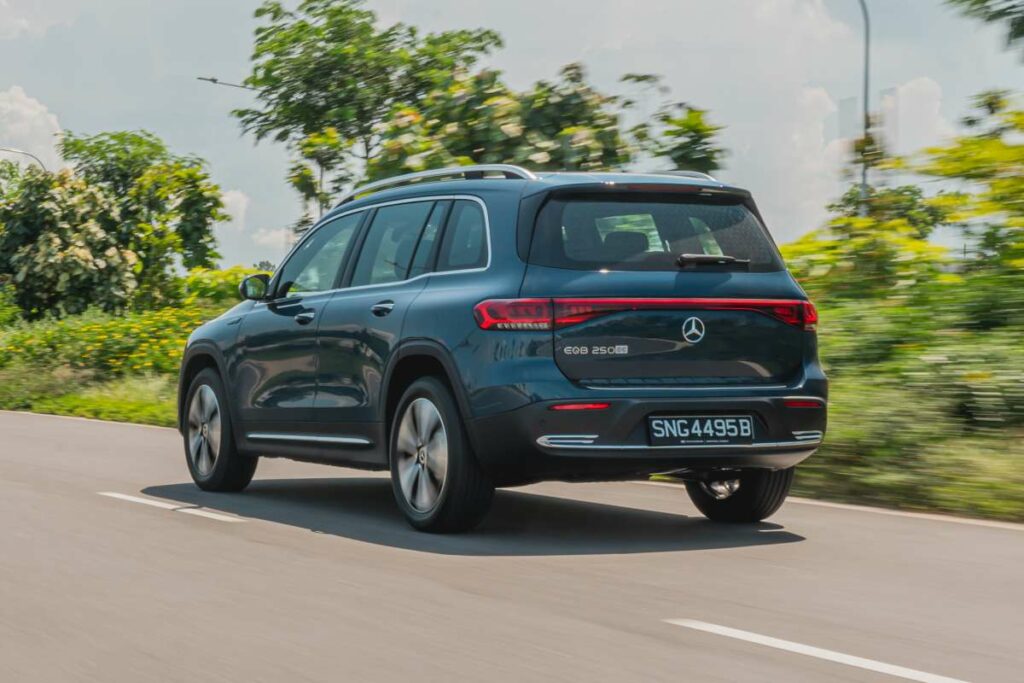
So then, does the EQB 250 make a better case for it? Certainly, yes. Instead of the dual-motor 288hp setup of the EQB 350, you get a single motor driving the front wheels, delivering 190hp and 385Nm of torque. In Singapore’s context, that’s already plenty to go around, and certainly its 0-100km/h sprint time of 8.9 seconds is also quick enough for you to make darting accelerating runs with ease in the city.
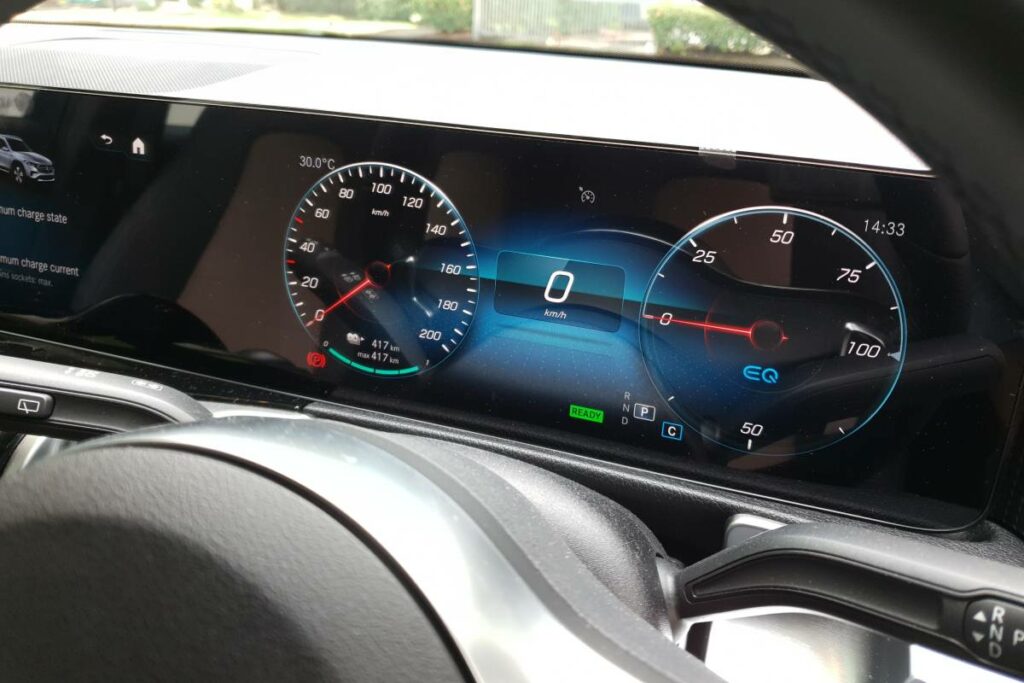
The other benefits of a single motor setup is range, and here the EQB 250 offers a claimed range of 474km on a full charge, which is a fair bit more than the EQB 350’s claimed 419km. In reality you’ll probably get somewhere closer to the low 400s, which is still pretty impressive in its own right. Efficiency is rated at 16.5kWh/100km, which is decent, although as always, your mileage may vary depending on your driving style.
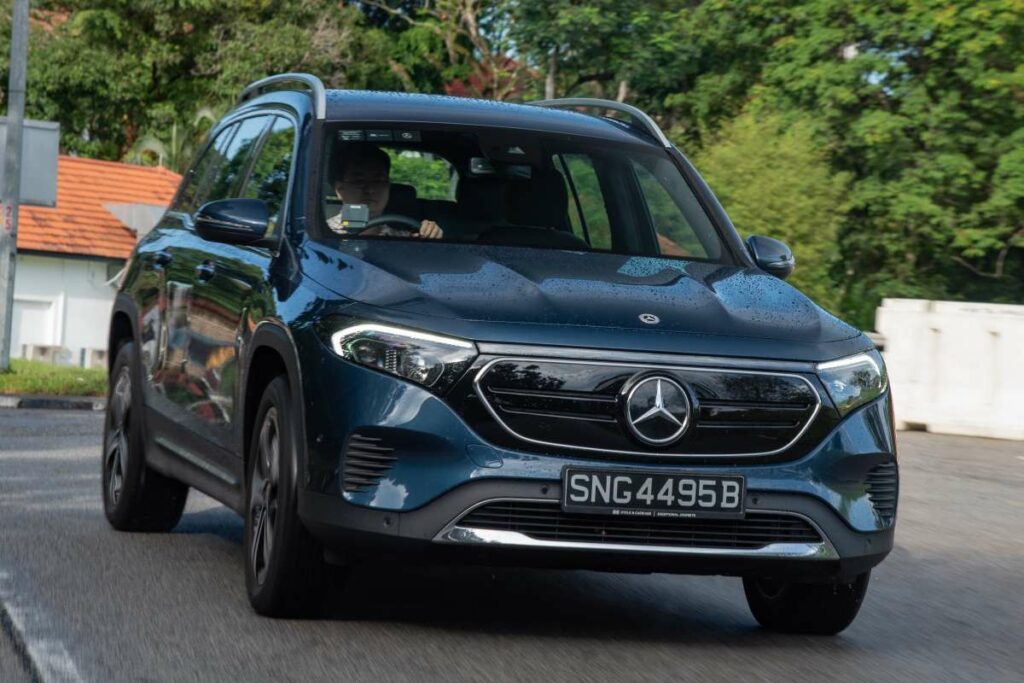
Losing the dual-motor all-wheel-drive setup doesn’t seem to have impinged on the EQB’s drivability much too. The car remains as smooth and refined as ever, and even though it drops the adaptive suspension of the more expensive model, the ride quality is pretty well-sorted, absorbing bumps in the tarmac with nary a fuss. It handles neatly too, going through corners in a reasonably effective manner. It’s not sporty by any means, but it’s nice enough to drive for a family-oriented SUV.
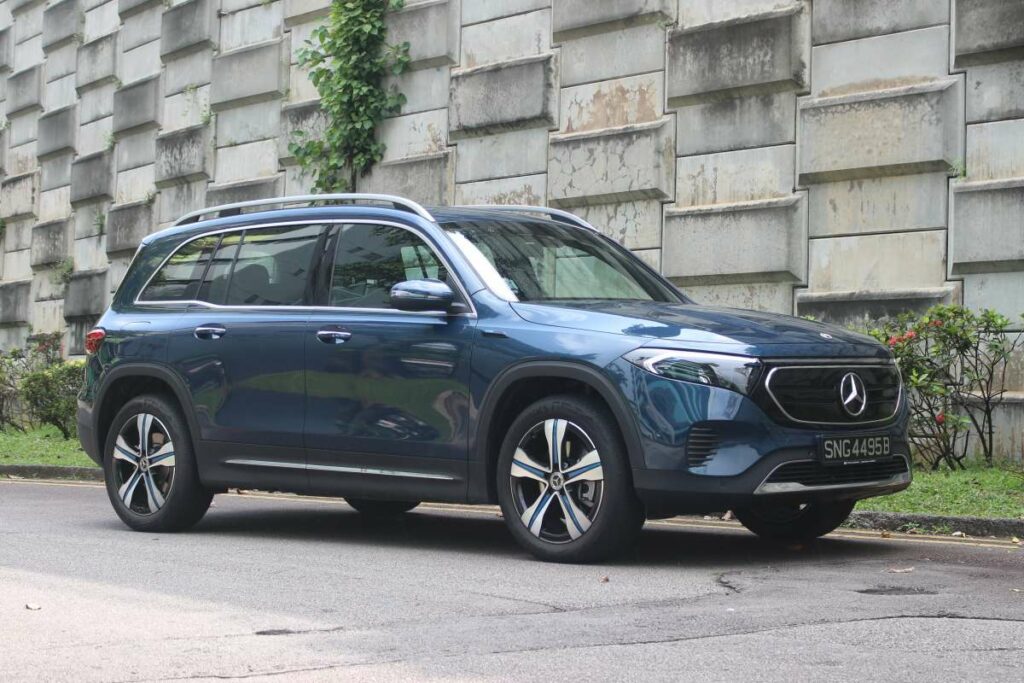
The rest of the car is as it were, and the Electric Art model here is the in-between model of the range, above the base EQB 250 Progressive, and below the EQB 350 AMG Line. Externally, that means 19-inch wheels instead of 20s on the 350, and the omission of all the AMG styling bits like the sporty front and rear apron. It’s all very minor really, but it does make the car look more regular and stand out less.
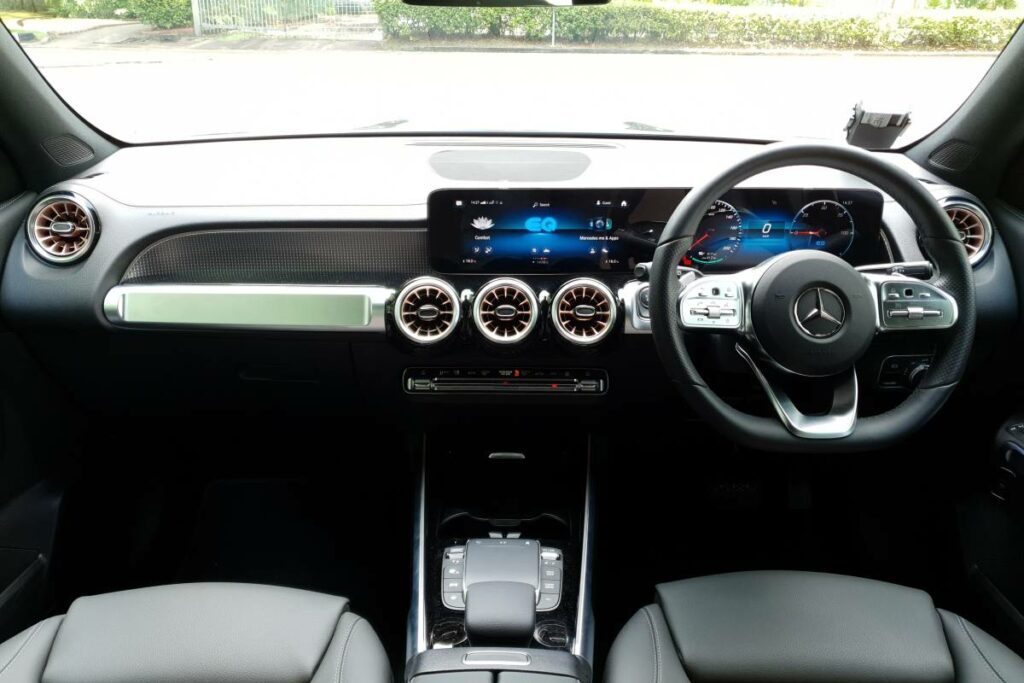
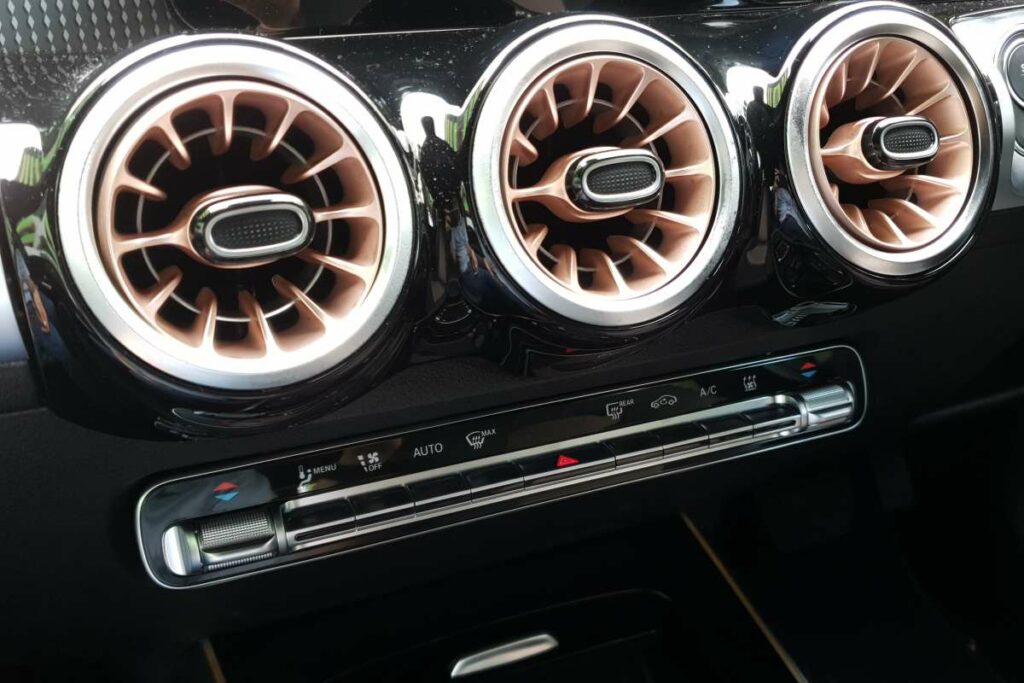
Inside, the standout element of the Electric Art are the rose gold air con vents, which gives the car a really rather cool vibe. Other than that, it’s fairly standard Mercedes, with its slick interior design that looks very fancy and tech-y, with its double 10.25-inch screens stretching across the dashboard, as well as all its lighting elements that make the cabin a colourful place to be at night. Space and packaging remains the same, with just about enough space to fit a standard-sized adult in the rear if you squeeze a bit.
So far, so excellent then, and it appears that the EQB 250 is the one you should plonk your money down for if you want one of these. That said, despite it being nearly 40 grand cheaper than the EQB 350, the EQB 250, at least in Electric Art trim, still retails for a pretty hefty S$323,888, including COE.
You can go one lower, and save a further eight grand by going for the EQB 250 Progressive at S$315,888 with COE, but it remains quite a tough ask to fork out over 300 grand for a small Merc. Nevertheless, if you must have a compact electric seven-seater SUV, then the EQB 250 would probably the one to have over its more expensive sibling in Singapore.
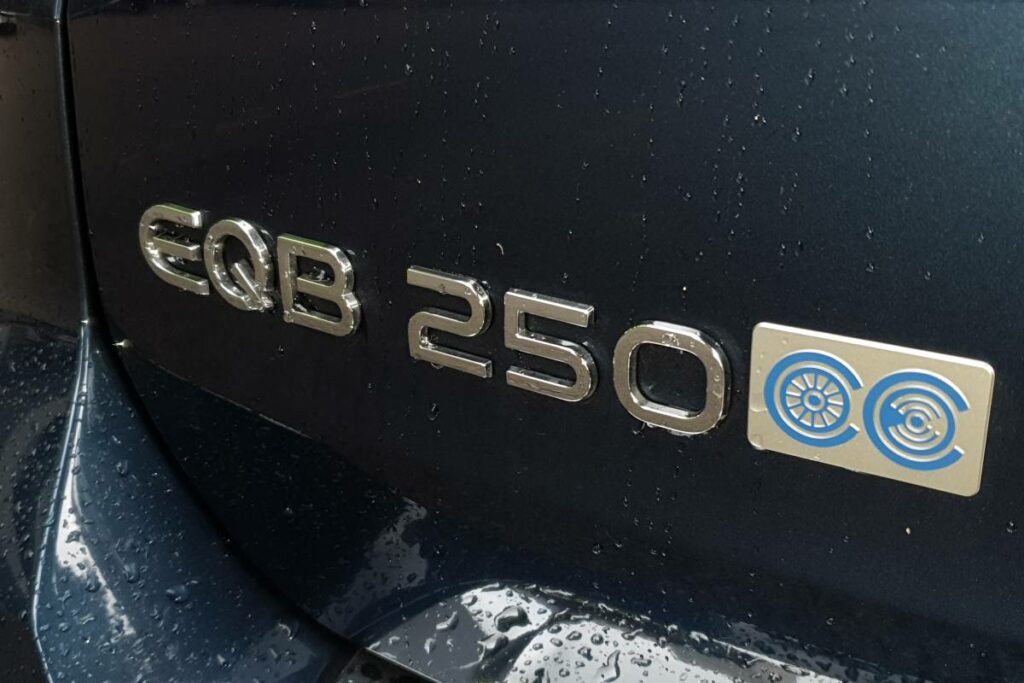
Mercedes-EQ EQB 250 Electric Art
| Drivetrain | Full electric |
| Electric Motor / Layout | Single / Front |
| Motor Power / Torque | 190hp / 385Nm |
| Battery Type / Capacity | Lithium-ion, 66.5kWh |
| Standard Charge Time / Type | 6.25 hours / 11kW AC |
| Fast Charge Time / Type | 32 minutes 10 to 80 percent / 100kW DC |
| Electric Range | 474km |
| 0-100km/h | 8.9 seconds |
| Top Speed | 160km/h (limited) |
| Efficiency | 16.5kWh/100km |
| VES Band | A1 / -S$25,000 |
| Agent | Cycle & Carriage |
| Price | S$323,888 including COE |
| Availability | Now |
| Verdict: | One motor less, but the EQB 250 offers so much more in other ways over its more expensive sibling |