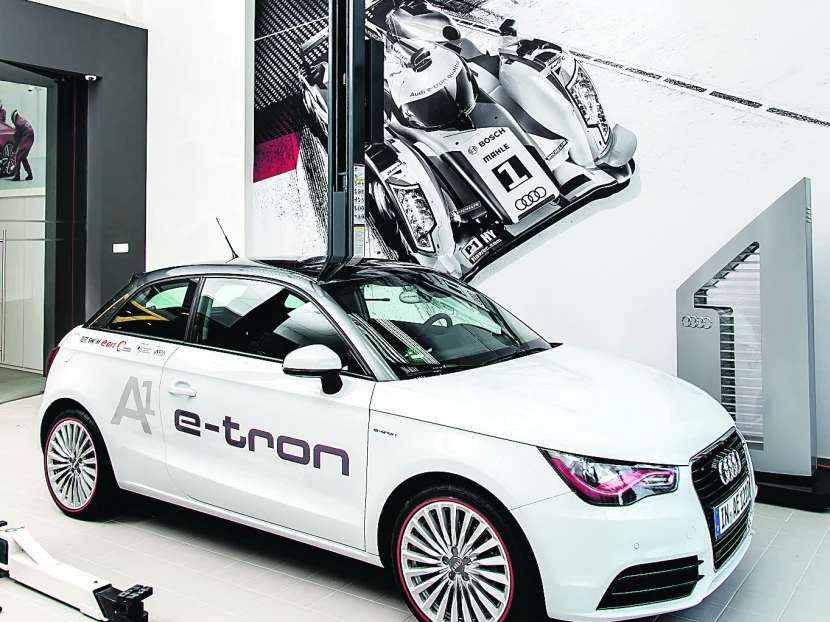
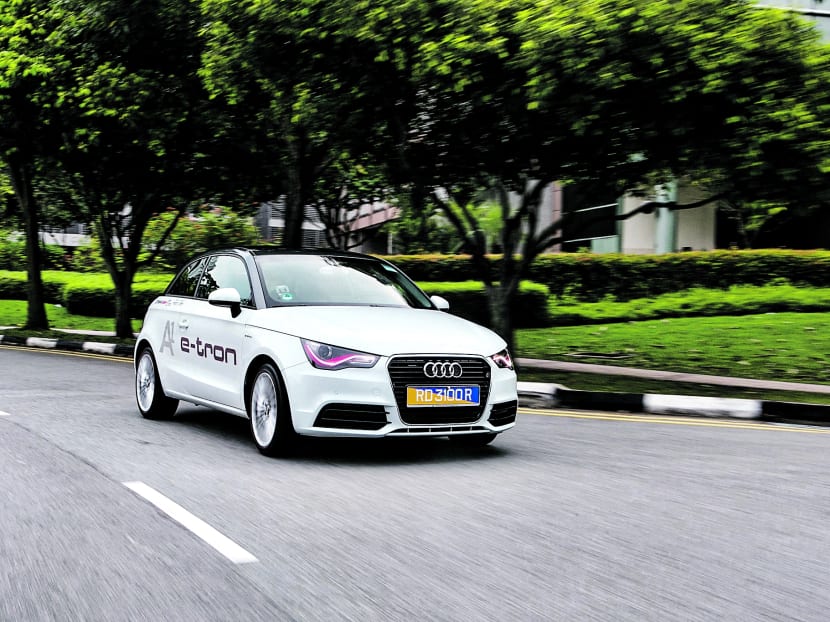
This electric variant of Audi’s supermini may look like a standard A1 with some fancy stickers down the sides, but underneath its unassuming shell lies some clever technology in the form of a range extender.
Basically, this consists of a petrol engine (in this case a tiny rotary one concealed in the boot) that doesn’t drive the car, but helps to recharge the A1 e-tron’s battery on the move.
Variations On A Theme
Audi refers to its electric car programme as “e-tron”. This tag was first attached to 2009’s R8 e-tron, an R8 coupe with its petrol heart transplanted by two electric motors and a large lithium-ion battery. It could hit 100km/h in just 4.6 seconds without emitting a gramme of carbon dioxide, and was a sexy way to present electric mobility. Alas, Audi elected not to build it.
But next year the company will be selling the less flashy Audi A3 e-tron, a more conventional plug-in hybrid. It has large batteries to give it an electrically-driven range of 50km, but also uses a 1.4-litre turbocharged petrol engine to give it the range and performance of the cars we’re used to today.
It’s clear that some of this best-of-both-worlds thinking originated in the A1 e-tron.
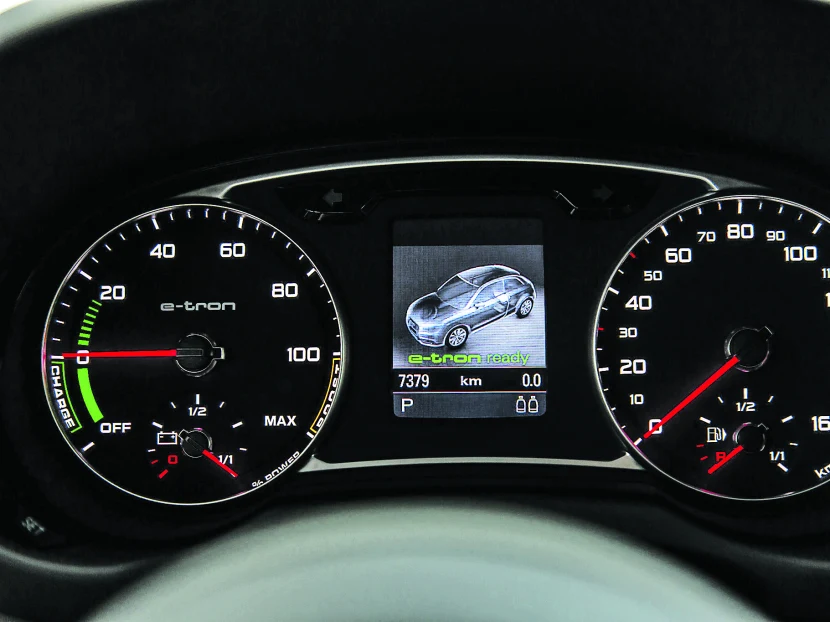
On its own, the A1 e-tron’s electric motor produces 102hp and offers a usable range of 50km, just about enough for most Singaporean drivers. The Land Transport Authority says that local motorists average 52.3km per day.
But when the range extender’s 254cc engine recharges the batteries, the A1 e-tron travels up to 200km, according to Audi. That’s nearly enough to drive to Malacca before refuelling.
Although the electric A1 is only a prototype, e-tron technology figures greatly in Audi’s future plans. “We want our line-up to have an e-tron model in every segment by 2020, and preferably to achieve six-figure sales volumes (globally) with this fleet,” said Heinz Hollerweger, the head of vehicle development at Audi.
Unplugged
The lack of charging infrastructure may have been an obstacle to the widespread adoption of electric vehicles here, but that hasn’t stopped car manufacturers from pushing through with their initiatives for electric mobility.
Daimler, Nissan and Renault have electric cars on the road here as part of a test programme, and last September, Audi opened a Technical Centre in Jurong that provides a research base to study the viability of electric mobility for the Asia-Pacific region.
There’s no intention to sell the A1 e-tron — it’s here as a research and development vehicle for Audi to collect data and gather feedback before pushing its e-tron programme further.
Yet, Audi claims that the A1 e-tron’s biggest selling point in theory is that it makes the switch to electric power almost painlessly convenient.
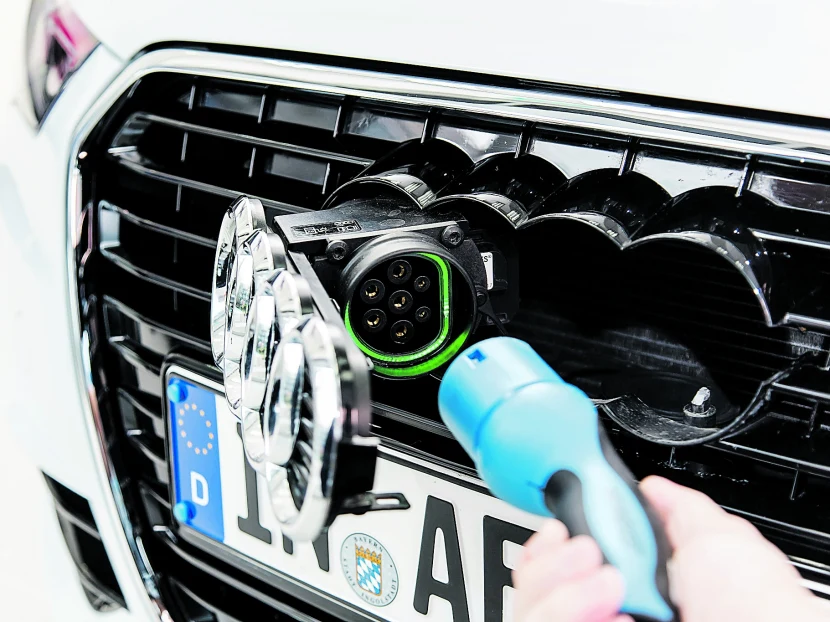
It is most efficient and clean if you charge it from the power grid, which takes up to three hours through a 380V power socket, but the range extender means that you’re unlikely to need a tow truck if you simply have to drive further than the batteries could otherwise manage.
The A1 e-tron is fuss-free to drive. You get in, start the car, and drive off, like any other car. If nothing else, the little Audi shows that the transition to electric mobility need not be frustrating or complicated.