At the turn of the twentieth century, Sigmund Freud, Carl Jung, and Alfred Adler — celebrated as the founders of depth psychology — parted ways because they reached different answers to the question of what factors influence human growth and behavior, especially behavior that was not "normal" or violent. Freud's position was that our psychological responses have roots in the repressed sexual desires of our childhood that we unknowingly (or unconsciously, as he insisted on calling it) bring out in our adult life. He adamantly stuck to this thesis throughout his professional life despite evidence to the contrary. Jung disagreed with him unequivocally. He argued, instead, that it is the myths and archetypes we inherit from collective human culture that shape and channel our life as we mature. We carry in our minds (or psyche) seeds of our collective past, and out of that past, we shape our individuality depending on the circumstances of our growth and upbringing.
Among the three, Adler was the most practical of the lot. He looked for answers for aggressive behavior in a completely different direction. He reasoned that, as children, we are pulled less by Freudian libido or Jungian archetypes than by the fear of being small, weak, and looked down on. Children are helpless, dependent on parents and society for their growth and validation as a person. When a child's efforts to express themselves are repeatedly thwarted or ridiculed, they develop a tendency to protest in aggressive ways. Adler called this state an inferiority complex and the effort to get over it the masculine protest. It applies equally to both genders. Adler used the term masculinity to refer to specific aggressive traits. Sometimes as part of this protest, children could end up creating fictional goals they would like to live up to — and these goals grow directly out of their complexes. They act as a facade, a means of compensating for their inferiority complex, in a form acceptable in the eyes of the world.
History has several examples of great kings who validate Adler's hypotheses. Just to name one, Frederick the Great of Prussia, as a young boy, loved music, especially playing the flute. His strict father, wanting his son to cultivate soldierly traits, considered his interest in music effeminate, and severely beat and ridiculed him in public whenever he heard the young boy playing the flute. When Frederick tried to flee Prussia in 1730, his father had his closest friend, Hans Hermann von Katte, beheaded in front of him. Still, Frederick continued to play in secret, and in time he became genuinely accomplished at it. But the skill was not the important thing. What mattered was that he never stopped. Later on, as the king of Prussia, he was extraordinary. One of the finest monarchs ever. However, the private Frederick who loved music never disappeared. As a monarch, people had no choice but to listen to his music. No one could ask him to stop, as his father did.
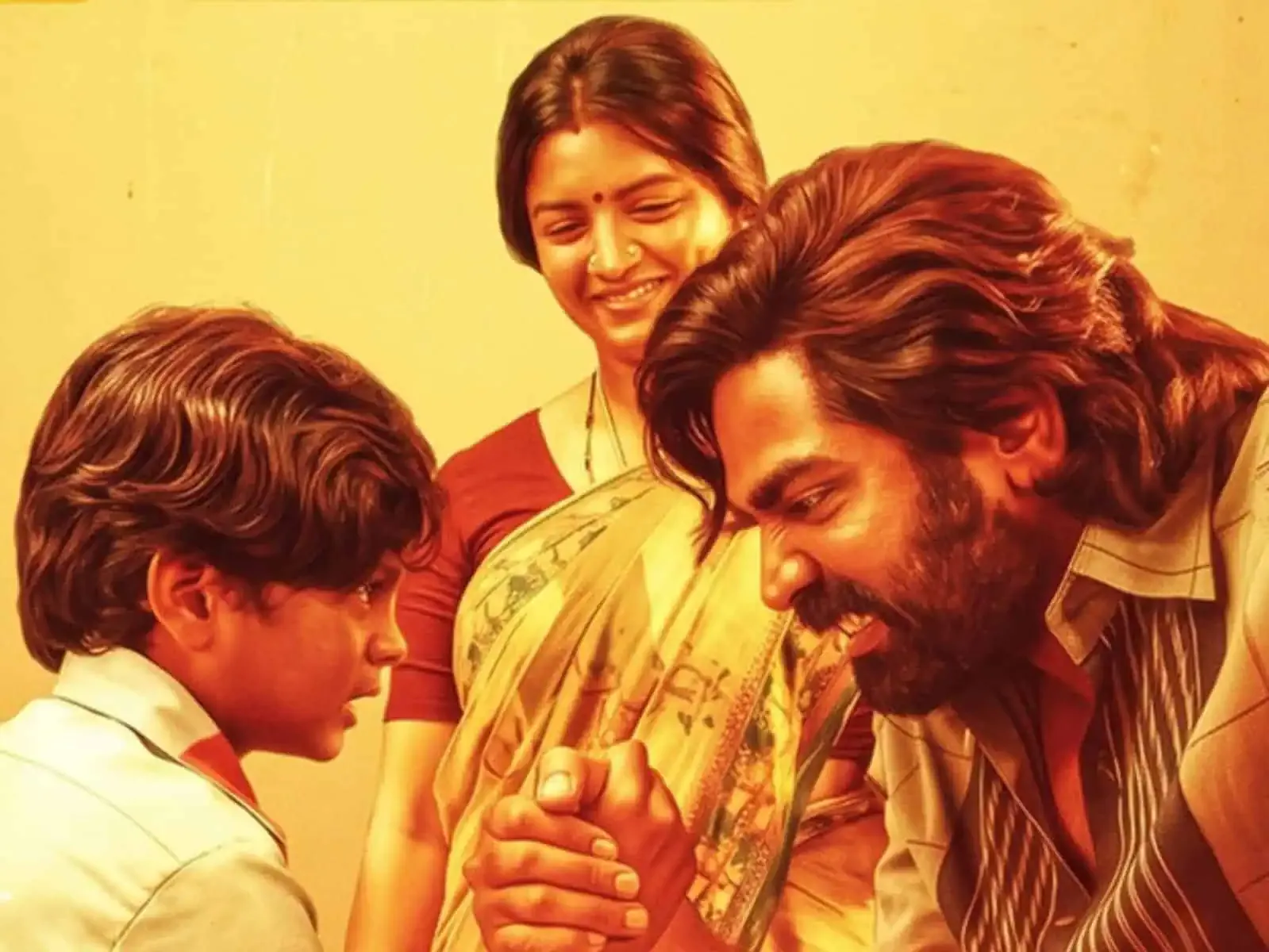
Balaji Tharaneetharan's "Baththa" is a beautiful exploration of Adler's view. It is a film about a violent and irreverent man, who is feared and respected in society, but inwardly, his aggression turns out to be a compensation for an unfulfilled childhood desire. In a remarkable way, the film that starts with an exhibition of ruthless violence is deftly transformed into a story that is less about violence than about masks men wear to hide their inner wounds and how aggression becomes a mere facade that falls away once those repressed emotions and needs are met headlong. The story and screenplay are pitch-perfect and so is Balaji's clean and uncomplicated direction. The beautiful evocation of 1980s Madras and the local dialect spoken by all the characters adds to the charm of this gem of a movie. The signature of a good film is that everyone in the movie gets to play roles that are relevant and meaningful, even if the character makes only a brief appearance on the screen. In Baththa, even a small tea-shop owner is given space to make an impact. All the supporting artists have given splendid performances. Like a well-chiseled sculpture in which every dent and curve enhances the beauty of the piece, every frame in Baththa is thoughtfully constructed and executed with conviction. There is hardly a misstep in Balaji's execution. Music by Sai Abhyankar is not bad. At times, it is unnecessarily intrusive, but for the most part, it sustains the emotional current of the film. In a strange way, the movie is about singing. The movie climaxes with a song. Baththa takes to the stage to sing for his daughter. He sings the full song, and when done, he has exorcised his ghosts.
I admire actor Vijay Sethupathi for several reasons. Mostly for his willingness to try out different roles and not get caught in the rat race of commercial stardom. He is not handsome in the conventional sense, he is quiet about his work, and he doesn't carry an actor's aura around him. In Baththa, his sensitive portrayal of a violent man pushed into intense soul-searching by an accident of circumstance, and then coming out of that ordeal, transformed both individually and socially — is a study for young aspiring actors. There are tragic and comic elements to his role, which he pulls off equally well. Master Sai Prithviraj, who plays Sabari, a young boy with a pivotal role in the film, is a revelation. We have seen great performances by child artists in many Indian films. But this one by Prithviraj must rank among the finest. Both Vijay Sethupathi and the boy share excellent onscreen chemistry. They are the backbone of the movie, and even if one of them had faltered, even by a slight margin, the movie wouldn't have landed well.
There is a scene towards the end of the movie when Sabari and Baththa have a conversation sitting on a stone slab by the wayside eating slices of fresh coconut. It is a lengthy and important scene and the camera is focused on the boy's face. He is afraid of the consequences of what he will end up saying to Baththa, yet he is resolved to get the truth off his chest. Sabari's eyes tear up, his voice breaks, and he sputters out his story, the true version that he always wanted to recount, but couldn't until now. Baththa listens intently to him, perplexed, ashamed and relieved at the same time, and finally grabs and holds him close to his chest. It is a cathartic moment in the film. This moment of bonding between a violent man coming to terms with his shameful behavior that has affected a young heart, and a frightened boy who musters the courage to do the right thing no matter what is worth the whole movie. The origins of violence and fear, as Adler would say, are in the fictional goals Baththa and Sabari created for themselves, and when that illusion is broken, psychological balance is restored.
Roger Ebert, the great film critic, wrote, "Of all the arts, movies are the most powerful aid to empathy, and good ones make us into better people." He was absolutely right. A good movie should capture a slice of human life. Movies are the closest one can get to living an alternate life, at least for the duration of the movie. Great literature can produce this effect too, but it is not for everyone. Cinema has the power to bring to life the deepest emotions and human conflicts. A wholesome film can sweep you away into another world, and when you return to reality, you have a changed perspective. You have vicariously experienced different emotions and a different reality.
Films like Baththa need to be celebrated. I am glad that Tamil cinema continues to have space for such gems. Thanks, Balaji.