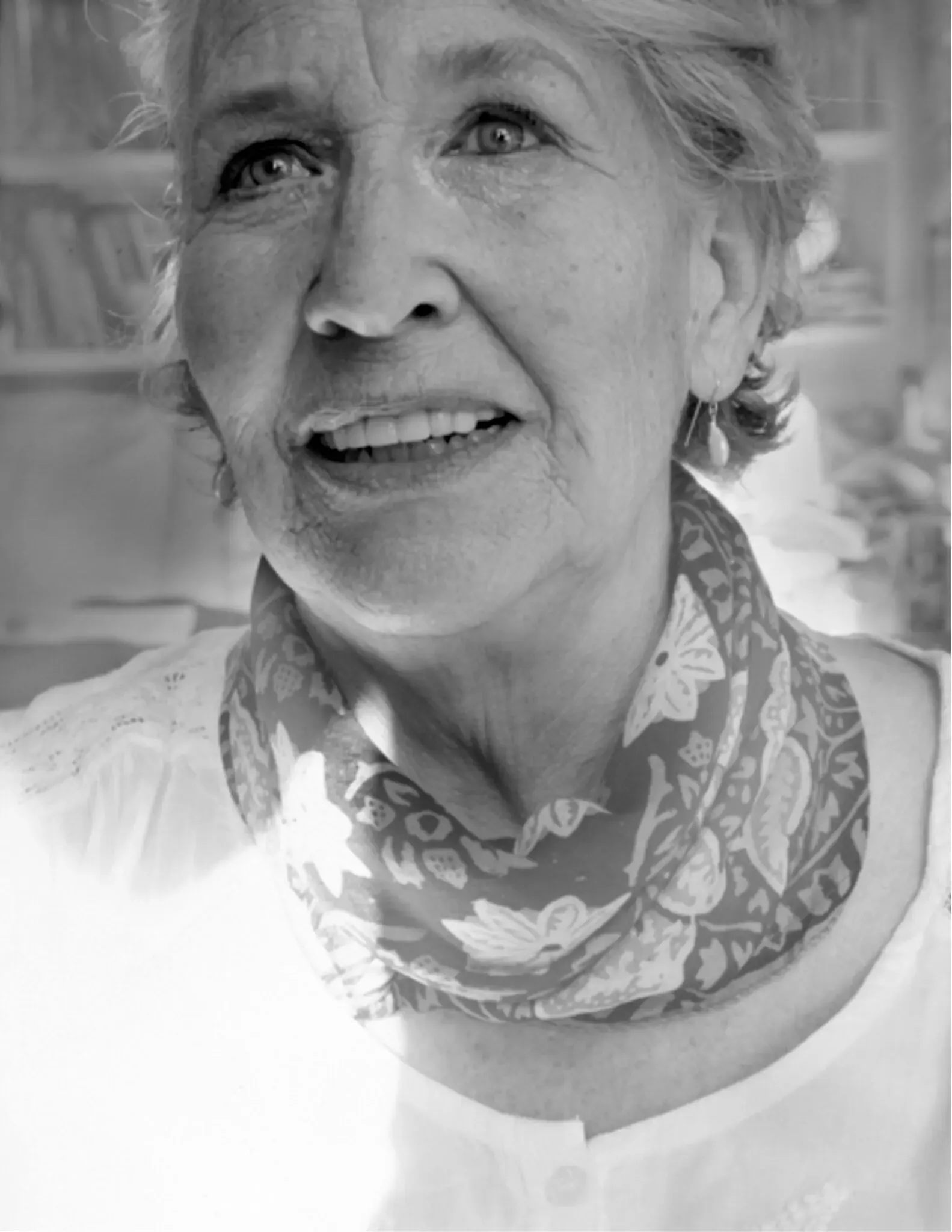
Annie Dillard passed away a few days ago at eightly-one. In her short 1989 book, The Writing Life - a book that every writer should read and should pass on to the next generation of writers - Annie Dillard quotes a conversation a student had with his English professor. The student waylaid his teacher walking down a narrow path and asked him, "Can I learn how to write?" The professor paused, looked at the young man in his eyes, and returned his question with a counter: "Do you like sentences?" The young man was taken aback wondering why that was important - and that was Annie Dillard's point: if you want to write, you should be in love with sentences. Only if you love sentences can you build paragraphs, pages, and books. If you don't, then it doesn't matter whether you want to be a writer or not, because you can’t. If you have read Dillard, you will no doubt know that she was fatally in love with language. She wrote about life, consciousness, nature, theology, mysticism and people with such intensity and passion, that if words had a physical embodiment and their say, they would have raised their hand in praise to Dillard for using them so beautifully, so caringly, so innovatively and so poetically in prose.
Annie Dillard was, is and will remain one of the greatest prose writers ever to come out of the Americas. When I first started collecting books, one of the first books that I bought was a secondhand copy of Annie Dillard's 1974 Pulitzer-winning book, Pilgrim at Tinker Creek. She spent a year near Tinker Creek in Virginia, observing, paying attention to nature, following her mentor Henry Thoreau, whose Walden was Annie’s inspiration for this way of life.. She wrote it when she was twenty-nine. While Thoreau had a larger social agenda to his writing, Dillard’s Pilgrim at Tinker Creek is just simply unadulterated, non-judgmental, brutal, and precise attention to life. She didn't like to be called a nature writer because she wasn't one. In nature writing, one tends to be objective and journalistic, but what you find in Pilgrimage at Tinker Creek is not objectivity. It is one being recognizing another being. One consciousness reflecting another.
I still have that copy that I bought at a thrift store for three dollars and, like a religious ritual, I re-read a chapter or two every month. God knows how many times I would have read those fifteen chapters, but each time I read it, I am lifted; I glimpse for a fraction of a second into something immeasurable and deep when a Dillard sentence dissolves into pure perception, the veil of words drops and you are suddenly face to face with something wordless, profound and . Each time I read a chapter, the texture of understanding feels different, just as a diamond pendant will always reflect light differently each time you look at it because of the play of light and your spatial position is ever so slightly different. There is not a sentence, not a word, not a comma or a semicolon that is superfluous. Take away one symbol, and the whole edifice falls down like a pack of dominoes. Such tight integrity in writing, like Virginia Woolf's, is rare. It cannot be taught or acquired. It is simply genius burning at high flame.
Among many brilliant passages in the book, there is one particular paragraph in Pilgrim at Tinker Creek that appears at the beginning of the book that haunts you forever. Dillard writes about how walking along the creek, she witnessed a waterbug sucking the life out of a frog and deflating it. It's an eerie scene. Imagine the moments in your mind's eye: a frog at the rim of a pond, puffed up, immovable, staring at you with blank eyes, and then, all of a sudden, it slowly starts shrinking for no reason. Its skin sags, its eyes drop, and it becomes smaller and smaller without knowing why - all within a matter of minutes. What remains of that fat living frog a few moments ago is now a sheath of skin lying on the edge of a pond, enfolded and crumpled before it is sucked into the water. You don't realize what happened, and then Dillard behind this tragic cruelty: a waterbug was just finishing up its nourishing meal. That’s nature, in her elements, oblivious to our sense of morality and judgements.
Dillard crafts this paragraph explaining the fate of the frog, with an unsentimental eye, in sharp, tingling and breathtaking prose . You don’t just read, you watch the scene unfolding if you are a careful reader. It is one of the finest passages, the acme of prose one can ever achieve. The brushstrokes of her pen and the lucidity of language, along with her poetic precision makes one shudder. Historian Barbara Tuchman once confessed that it took eight hours to write her celebrated opening paragraph of chapter one in “Guns of August. She was chronicling the funeral possession of Edward VII, the beginning of what would end as the first world war. Tuchman had to get the words right for that moment to ring true, to signal a change in epoch and to make the reader feel the start of something momentous.. Nothing less than perfection will do in such a paragraph. Similarly, every sentence that Dillard ever wrote was perfect, pointed, visceral, and pulls the reader into a deep dialogue. You linger over her words like rolling a spoon of ice cream in your mouth, until it touches every cell of your tongue before it slides into your throat. You cannot read Dillard if you are not enamoured by what a well-written sentence can do. You should be ready to be consumed by it.
Annie Tillard was born in Pittsburgh, Pennsylvania, to a very affluent family. In fact, her father was as much a maverick as she was. He quit his job once to sail down the river just for the fun of it. She recounts this incident in her 1987 memoir, An American Childhood. Not surprisingly, the young Annie loved books. She spent hours in the public libraries for books on geology, entomology, and natural history. More importantly, whatever she read, she digested and poured it out in the form of paintings, sketches, and poems. Poetry refined her language. She learned how to stream her thoughts and write with precision, and her poetic slant overflowed into her prose. There was a rebellious streak in her. She was never the straight-jacketed, ladylike figure that society expected her to be. She smoked. She went around with unapproved boyfriends. She was suspended from school for not conforming to their standards and structure, but all that, in hindsight, was a building ground, a melting pot for a profound and pathbreaking life as an observer, thinker and writer..
She completed her higher education at Hollins College in Roanoke, Virginia, now called Hollins University, where she studied English, theology, and creative writing: three dimensions of her writing life. In 1967, she wrote a graduate thesis, not surprisingly, again, on Thoreau's Walden. In 1974, when she published The Pilgrim at Tinker Creek, it came as no surprise that she would follow in the footsteps of a mentor. What really came as a surprise was her ability to blend nature and religion and theology and close observation of the natural world and connect all these dots together in startlingly meaningful ways. That set her first book apart. She continued to write for four decades producing a stream of books of poetry, fiction and essays. No form was alien to her. Observation was her primary vocation and then a writer; fortunately for us, whatever she wrote bore the imprint of her inimitable style and substance.
It has been half a century since the publication of Pilgrim at Tinker Creek. The book is still a bestseller. It is still in print, and there are readers who go back to that book again and again and again and find that, with each reading, a new layer of meaning is excavated. The modern generation of readers may not be acquainted with Annie Dillard. One of the reasons I wrote this tribute is to introduce her to a few more readers who may find deep value and beauty in her writing.
The question that is often asked of great writers who have left a significant body of work is: How do they endure ? How is it that, after decades, we still find their writing timeless and relevant? Annie Dillard has endured because of the beauty of her language and her absolute honesty. She paid close attention to nature, observed it with clinical objectivity, and never anthropomorphized what she perceived. She perceived the world as it was: cruel and loving; ugly and beautiful, full of contrasts and indifferent to human existence. The other important thing about Dillard’s writing is that, as a writer, she trusted your intelligence. She trusts that you will follow her through a difficult paragraph about an insect larvae, for instance, because she knows that her knowledge, her language has the power and the beauty to make it visible and come alive to you. She didn't dumb anything down, however abstract or scientific the material was. She believed in the reader.
Great writers know the audience and they converse with them knowing that there is a meeting of minds in every sentence, even if the process is not easy. Henry James's novels are long, laborious, stretched out and exquisitely detailed, or Proust's "Lost Time” for that matter, where reams of pages are filled with descriptions of the smell of a flower or the intricacies of a stray glance from a lover. They're all intense reads, but the authors trusted the reader's ability to follow them along if they had the patience, the time, and the inclination. Reading is two-way traffic. This is often forgotten in these crazy times of twitter and instagrams. It demands as much of the reader as it does of the writer. And in Dillard's case, the readers have to raise their ante. They should read her books like a scripture, lest they miss an important semi-colon that would entirely change the meaning of the narrative or misread a particular sentence structure. Do we have time or the capacity for such deep attention these days? It is sad, if we have lost it.
The librarian and book lover Alberto Manguel wrote about his experience packing his library in France. I have often thought about it myself. If there ever comes a time that I have to pack my library or shrink it down to move it to another place, what are the few books that I would carry with me, and which ones would I reluctantly leave behind? Each time I draw up a list, Annie Dillard's Pilgrim at Tinker Creek and The writing life are among the first few books on that list. These two books need to be with me at all times. Whenever I feel drowned in drab writing and shallow thinking, I like to dip into a few paragraphs, or a chapter from these volumes. It does something to me. I can't explain what or why. It sharpens my perception, improves my sensitivity, and fills me with great optimism. How many books can do that?
If you're new to Annie Dillard, and if I were to dare to give you a reading sequence of Dillard, it'll be as follows: Start with The Pilgrim at Tinker Creek, not because that's her first book, but because that is the book in which Annie Dillard manifests her full force. Move on to The Writing Life or An American Childhood. Either of these books would be a beautiful follow-up after the force of The Pilgrim at Tinker Creek. Don't forget to read her essay on a solar eclipse in her essay collection "Teaching a Stone to Talk,". It is impossible to read this essay without a shiver coursing through your spine at the sheer beauty of what she witnessed and how she transformed that experience on the page.
Once you have read these, you are free to pick any other Dillard book, and you will be left wondering how she sustained, over a period of 50 to 60 years, that creative vitality, or the élan vital, as the philosopher Henry Bergson called it, over so many decades. The answer is simple: Annie Dillard was a tremendous and rare force of nature. Hers was truly the writing life, if ever there was one. In her own words, "How we spend our days, of course, is how we spend our lives" and her life and writing was a resounding testament and a validation of this observation.