Attempts to address homelessness in
Colorado and the U.S. are held up by
under-resourced programs
Homelessness has grown rapidly across the United States, according to the national Point in Time (PIT) count, as high rents continue to displace people, especially those in low-income earning households. At the same time service providers face staffing and funding shortages.
The PIT count is a measure that attempts to chart the total number of homeless individuals in the country. However, activists and service workers alike have long criticized the measure for insufficiency.
Katie Acheson is the transitional housing specialist for the Asian Association of Utah- a large non-profit housing and anti-trafficking services provider.
Acheson explained that the way the count works is a group of workers and/or volunteers (usually volunteers) are marshaled to measure all the homelessness in a given city once per year, becoming the “point in time”. But, the actual methods vary in accuracy and implementation and are entirely dependent on if municipalities have enough funding for labor and volunteers. “It’s a guess, not an exact number. It is not 100% accurate- there is no way to capture every homeless person in one count- anywhere,” says Acheson.
As far as she is aware, the PIT count is “the most official way” to demonstrate ongoing need to funders and government officials. “The grants are based on what the need is, and the need is determined by what housing workers can identify as who is homeless,” Acheson said.
“The PIT cannot capture people outside of the areas where people who are homeless are expected to be found.”
“We have a major housing crisis. My agency has 200 to 300 people we’re working with who still need housing. These individuals are specifically affected by human trafficking and when they flee their trafficking situation they generally lose their housing situation.”
“All of these agencies, we’re all vying for the same funding – I need to prove my client is in more need than someone else’s client,” Acheson added.
Acheson said that programs and resources to address both homelessness and affordable housing are “absolutely not sufficient,” which also forces “artificial competition” within agencies and from agency to agency – organizations nationwide are fighting for the same sliver of a too-small pie.
Family homelessness increased 39% last year.
Family homelessness is a “major, major, major issue,” Acheson added “When I’m talking about resources and competition, this is federal grants that go to multiple agencies. Families don’t get the same funding, and funding doesn’t account for undocumented individuals or families without formal court custody agreements.”
“For trans women, very few shelters will accommodate them at all.” Acheson continued, “And there’s a gap for men with children. These resources technically exist but they’re even more limited and competitive.”
Homelessness increased 32% over the last two years as measured by the national PIT count. More than 771,000 people experience homelessness on any given night.
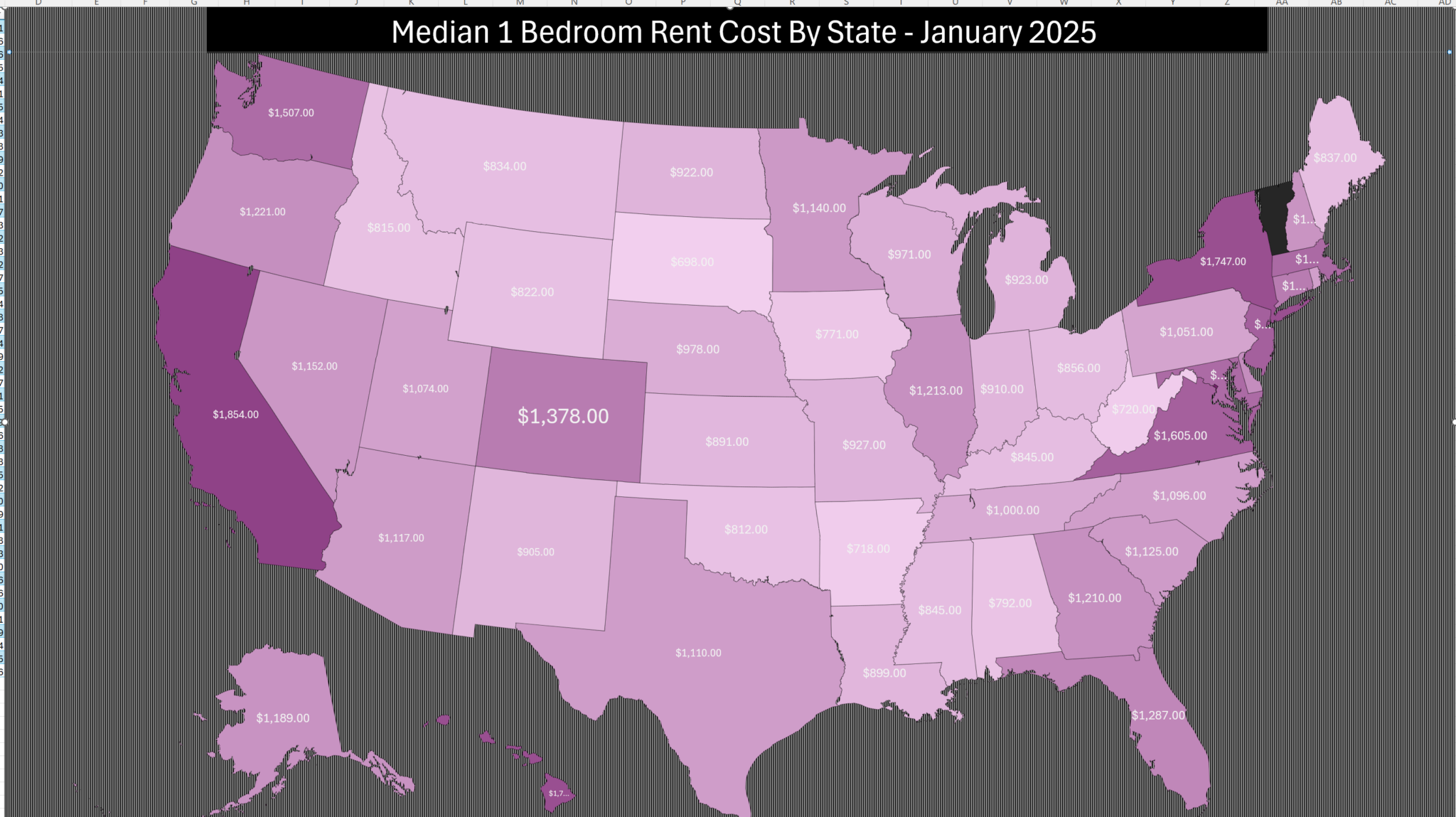
One reason for this increase is crushing rent costs.
According to the Government Accountability Office, every $100 increase in median rents results in a 9% increase in homelessness. Meanwhile, there is a shortage of 7.3 million units of affordable and available rental homes in the country, according to the National Low Income Housing Coalition.
When rents go up, you must move or pay more. But, moving is an expensive proposition. And, unlike many European countries and some Asian countries, the United States is still a wild west of federally unregulated rental markets – at the federal policy level the U.S. doesn’t have rent ceilings, regulatory limits to rent hikes, or any other factors to mitigate rising housing costs at the federal level.
France, for example, has laws that implement rent control policies on a national level, providing a standardized framework for if and by how much rent can increase. The current scheme limits rent hikes at 20% or less and in some cases mandate rent reductions by up to 30%.
In Germany, there are prohibitions on “usury”, or undue price hikes in the rental market as well a ban on rent hikes in stressed housing markets. Rents must also remain unchanged for at least one year from when they were last changed.
Ireland has rent pressure zones wherein rent increases are capped. These started out at a 4% cap, and now they’re tied to a 2% or inflation-based cap- whichever is lower. Scotland is currently under a temporary 3% rent increase cap since Sep. 2022. Singapore has their Rent Control Act, which limits rent hikes to no more than 8% per year for renters who have been in their units since it last took effect in 1989.
Such mandates provide attempts to stabilize the housing market that isn’t seen in the United States.
Olivia Williams, a recent MSU Denver graduate, has applied for a master’s level program in public health and wants to focus on “addiction and executive function for kids.” She first became a member of the campus community back in 2003 as a student at CU Denver. However, the lack of housing available on campus then played a part in derailing her ability to complete her studies.
“I grew up in a really violent neighborhood and I was the first of my mom’s four kids to graduate high school.” here was a lot of drugs, a lot of violence, a lot of alcohol, a lot of gangs,” Williams said about her environment growing up and during her first attempt at attending college. She said she spent some time homeless as part of the fallout of an abusive relationship.
“I did end up having a couple of kids, getting married and stuff, and then towards the end of everything I found myself in another violent relationship,” Williams said. “I was drinking pretty heavily at that point in time and ended up in a coma from getting beat up. And so when I woke up, I decided to just change everything about my life. I lost my apartment because I was in that coma.”
Williams made it clear that the only reason she could return to university and complete her studies was affordable housing. “I ended up getting Section 8 and that was the reason I could go back to school… that was the reason I was able to finish my degree because I got a Section 8 apartment and now that’s where I live.”
The Metropolitan also spoke to another MSU Denver student, Lou Seals-Williams, about housing and its importance. Seals-Williams works on campus for the Community College of Denver in housing assistance. She described her work as “supporting students facing housing and food insecurity.”
“I helped maintain our office’s housing scholarship, would process applications and award those to students. I would also meet with students and provide housing resources to students,” said Seals-Williams.
When asked about MSU Denver’s efforts to become a landlord by building housing on campus, Seals-Williams said, “I have heard about them building housing. I think that it’s a great idea, but I doubt it will be affordable to students or faculty and staff. I also doubt that it would be accessible to our students who are justice-involved, non-traditional students with children, or even for those with disabilities or those who have the bare minimum accommodations.”
On the topic of the importance of housing, Seals-Williams stated, “Housing is a big deal. It’s the very bottom of the needs pyramid. You need housing to find a job, to sleep, eat, for general security. When you don’t have a home, you are constantly in a state of fight or flight. Students without stable housing, who are homeless or at risk of becoming homeless are more likely to fall behind in their classes as well.”
When asked about MSU Denver’s creation of an affordable housing program, with a certificate and coursework, she said, “I think offering coursework with the theme of affordable housing is definitely a step in the right direction.”
However, Seals-Williams also stressed the limits of the affordable housing framework. “The thing about affordable housing is that it all sounds great on paper, but did you know that unless you have children or a disability, students are specifically excluded from the qualifications of affordable housing?”
Andy Proctor, a lecturer in the MSU Denver finance department is also the director of the Affordable Housing Institute. Proctor has been “doing housing” in Colorado across the public, non-profit, and private sectors for 27 years.
He ultimately positioned the Affordable Housing Institute as a workforce development program. “You have an industry that’s really needing people with experience and you people try to get experience – they don’t have a channel. We try and match up the two of those needs.”
Proctor shared that this semester the institute has two course offerings through MSU Denver but that “we have a growing body of courses.” He stressed that, “it’s a brand new program. We’re building the plane while we’re flying it.”
To clarify the institute’s role, Proctor stated, “We’re not an affordable housing provider. We don’t develop buildings or anything like that. Future efforts can include much more research, panels, and think-tanking about ‘Here’s this affordable housing crisis and here’s innovative solutions to it.’”

Artemis T. Douglas
Crafting Success
Your email address will not be published. Required fields are marked *