Aerospace is full of firsts. Some bloody, others peaceful, but all visionary.
Sept. 6, 1944, Nazi Germany claims the first of the space firsts- the first modern rocket mission. The payload-a bomb, the destination- Paris. The Nazi V-2 is the first successful rocket in history, and it was used to destroy life. Every modern rocket since, has used an iteration on the design of the Nazis. The V-2 is the shared common ancestor for every rocket.
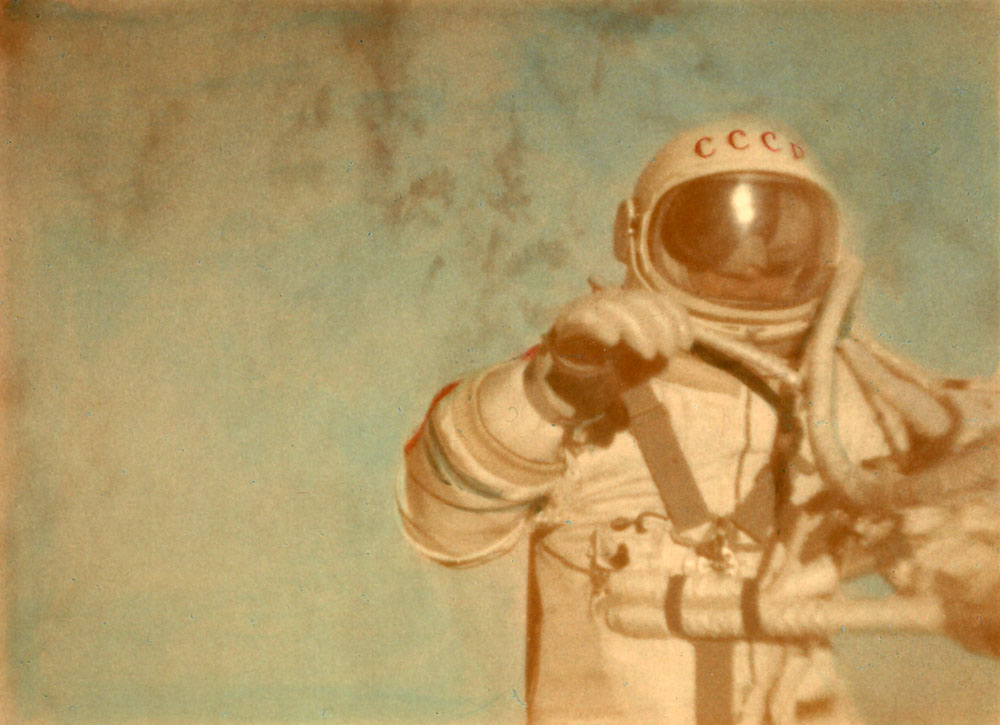
March 18, 1965, the Soviet Union claimed an aerospace first- the first spacewalk. Soviet cosmonaut Alexei Leonov spent 12 minutes, 9 seconds, in space alone, tethered only by a cable from his capsule. In that moment of utter risk and loneliness, Leonov accomplished something utterly beneficial and collective. He showed humanity, he proved, that we can reach for the stars- that we can walk among them for a time. That our ingenuity, our tenacity, our need to explore and discover transcends economics, politics, and ideology.
More recently, on March 31, the privately-funded Fram2 mission launched by SpaceX with the goal of the first manned space mission to orbit the Earth’s poles. Aboard the space capsule was a payload of four astronauts and equipment to conduct 22 different experiments.
However, that need and drive are subordinate to the system in which they exist. Right now, 53% of employment within aerospace is directly for purposes of war, often called “defense.” The other 47% belongs to commercial missions, which may or may not be involved in what we call defense and national security. The structure of the aerospace industry is such that it is often called “the aerospace and defense industry.”
Things don’t have to be set up this way. There is hope in the stars, in the peaceful uses of outer space. It isn’t all horror and munitions. In fact, the UN has a special committee for peaceful space missions.
It’s called, quite creatively perhaps, The Committee on the Peaceful Uses of Outer Space (COPUOS). According to the UN website, COPUOS “was set up by the General Assembly in 1959 to govern the exploration and use of space for the benefit of all humanity: for peace, security, and development.”
Security doesn’t need to mean war and sabre-rattling. How secure are you, right now, in your life? Did the war between Russia and Ukraine, or the occupation of Gaza by Israel, lead to cheaper eggs? Do these conflicts and pointless wastes of life increase your kids’ chances of a future? Do they increase your own ability to care for yourself and your community?
Does the bleak vision of a war-torn, climate-ravaged world where people fight for increasingly small scraps and our space capabilities used for surveillance and aiming weapons of mass destruction at our only planet make you feel secure?
The vision that we invest in, that we prioritize, that we fight for, matters.
Do we fight for the vision of an ever-more prosperous and knowledgeable society for all, one where insights, resources, and experiences, only possible through space exploration, are all used to advance humankind and promote human flourishing? Or, do we continue on the trajectory we’re on now, where space is seen as just another domain of war, of fighting, of making this planet harder to live on for the vast majority?
As Malcolm X once said: “If violence is wrong in America, violence is wrong abroad. If it is wrong to be violent defending black women and black children and black babies and black men, then it is wrong for America to draft us, and make us violent abroad in defense of her. And if it is right for America to draft us, and teach us how to be violent in defense of her, then it is right for you and me to do whatever is necessary to defend our own people right here in this country.”
We, the people, have to decide. Not just through elections, but through the harder work of our daily actions and opinions. Is it right to use the potential and power of space exploration to further war, or is it wrong? It’s not enough to diversify identity in aerospace, we need diversity in ideology. For now, we need those who won’t work on projects of war to be as valued for their skills and ambitions as those who will.
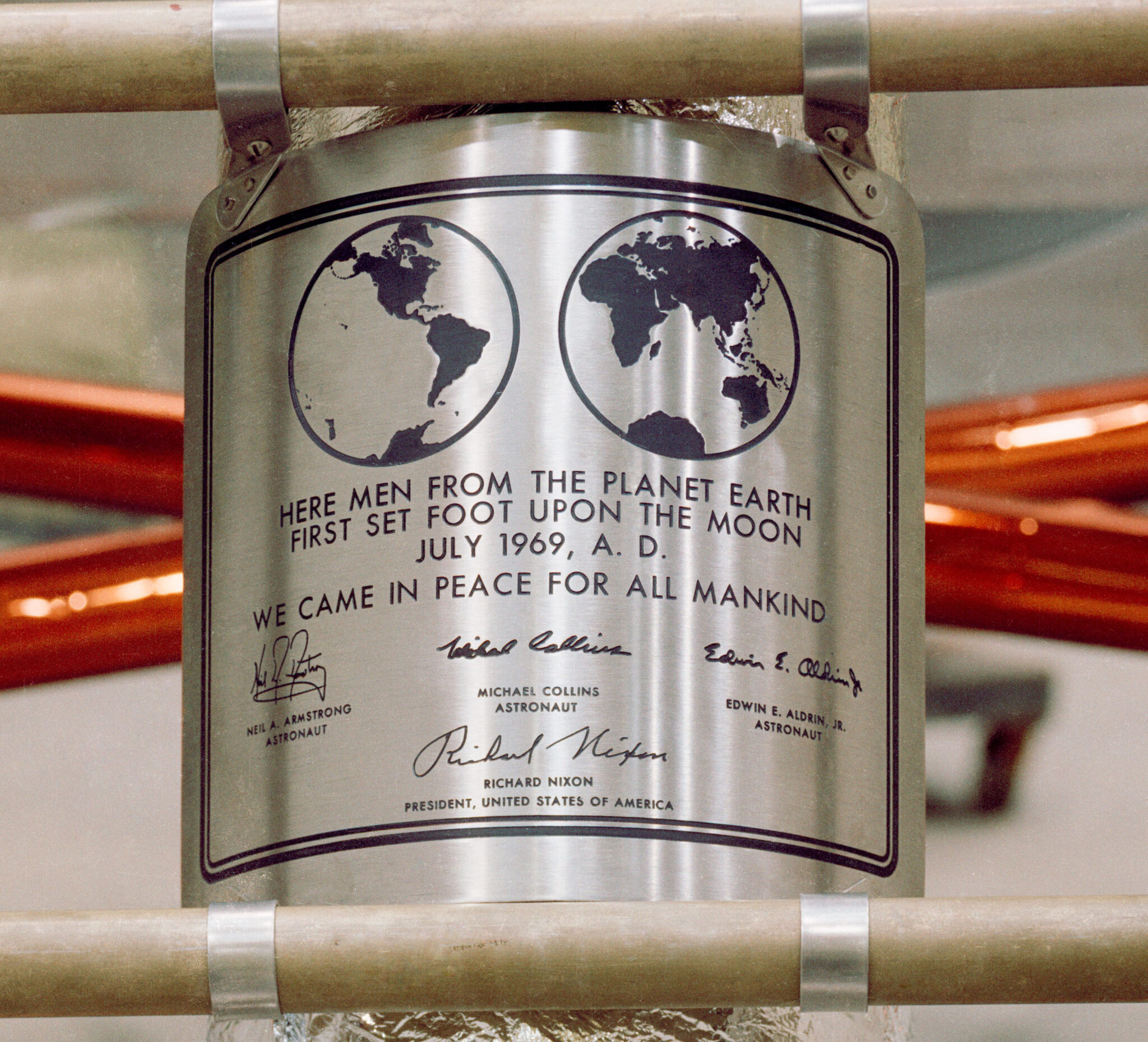
Peace only wins if we make it win. Those famous words by Neil Armstrong, the first man on the moon, “That’s one small step for man, one giant leap for mankind,” were followed by the less-famous words by Buzz Aldrin, the second man on the moon, “Beautiful, beautiful. Magnificent desolation.” Do we want to see Earth, our origin and our only viable home for the foreseeable and unforeseeable future, become “Magnificent desolation,” like the moon- pretty, stark, devoid of life? Or will we choose to come back from the brink of global conflict and the ever-present threat of total nuclear annihilation and instead live up to the hopes and ambitions of those before us, including Armstrong, who said, “We came in peace for all mankind.”