From not voting at all to not voting for either major presidential candidate, electoral dissent exists on Auraria — for reasons that include U.S. foreign policy and performative candidates, spurring some Auraria Campus students to consider voting uncommitted.
Frances Gerard, a 26-year-old MSU Denver senior, was born in Asia, moved to the U.S. at 12 and is now an English major graduating this fall.
Gerard expressed her skepticism about the electoral process and said she views it as a popularity contest rather than a genuine effort to improve lives.
She has never voted and said she never will, citing a lack of trust in politicians and a belief that politics prioritizes money over people. “I would like to hear some good things for once. And someone who’s genuine and is not in it for the popularity or for the money.”


Gerard said, “It’s kind of hard to just vote on one thing when there’s so many other things that need to be voted on that are totally being ignored.”
Gerard isn’t the only one who criticizes this year’s candidates.
“I will not be voting red or blue in the federal election,” Cornelius Hecker, a CU Denver student, said. He continued, “During the debate, it read as (Harris) and Trump arguing over who loves Israel more, meanwhile tens of thousands of children have died brutally.”
Hecker’s decision to not vote for either major party presidential candidate also stems from President Biden’s handling of the ongoing pandemic, including what he described as his loved ones’ exclusion from public life due to the removal of public health mechanisms.
Hecker said he sees a potential president Harris as an extension of the policy decisions of President Biden, “Harris has only continued with Biden’s horrific abandonment of high-risk people. Trump, obviously, is a risk to the rights of marginalized groups. Harris has proven herself to also be a risk to marginalized groups…It is clear to me that both Trump and Harris plan to move us toward depravity and violence. I’d rather get off the bus.”
In March, NPR reported that uncommitted voters hoped to use their primary votes as dissenting leverage to create foreign policy change. Specifically, they wanted Biden to commit policy shifts to ensure a lasting ceasefire in the Palestinian territories — such as withholding weapons from Israel.
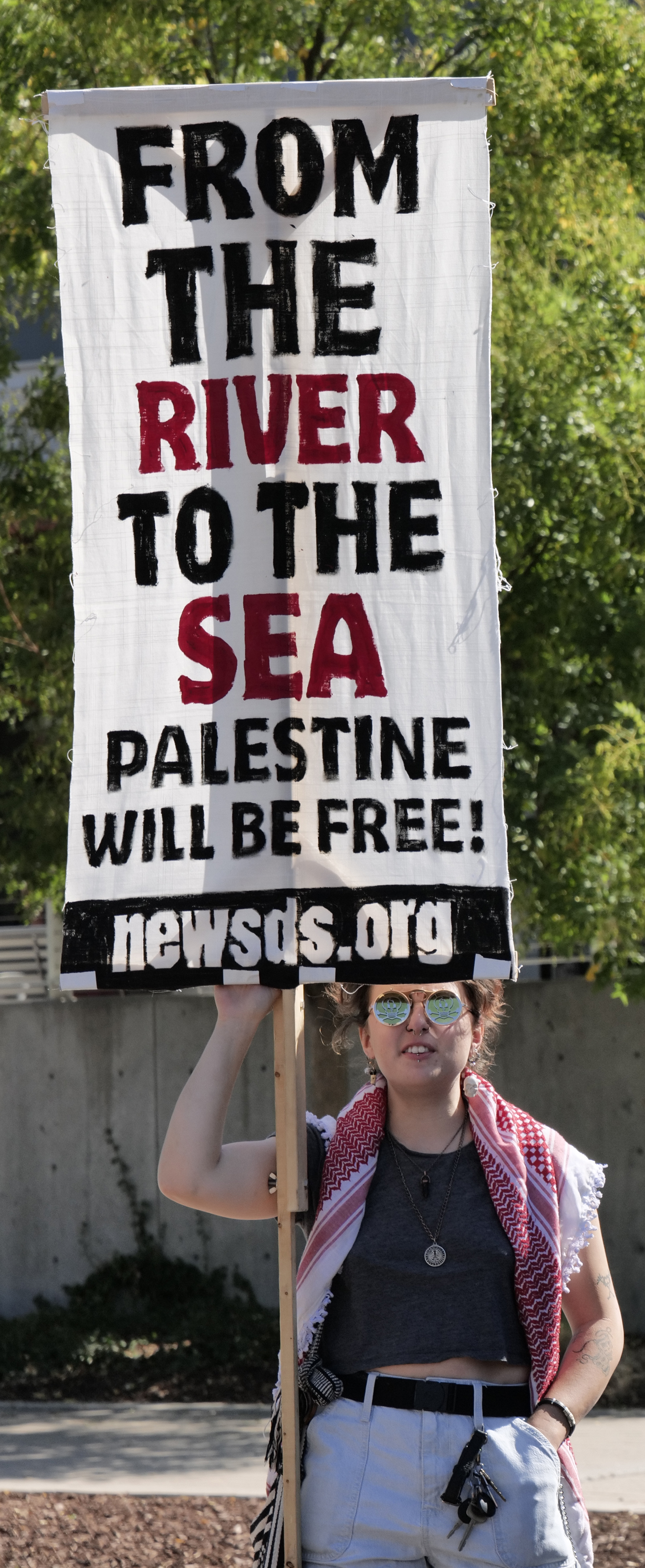
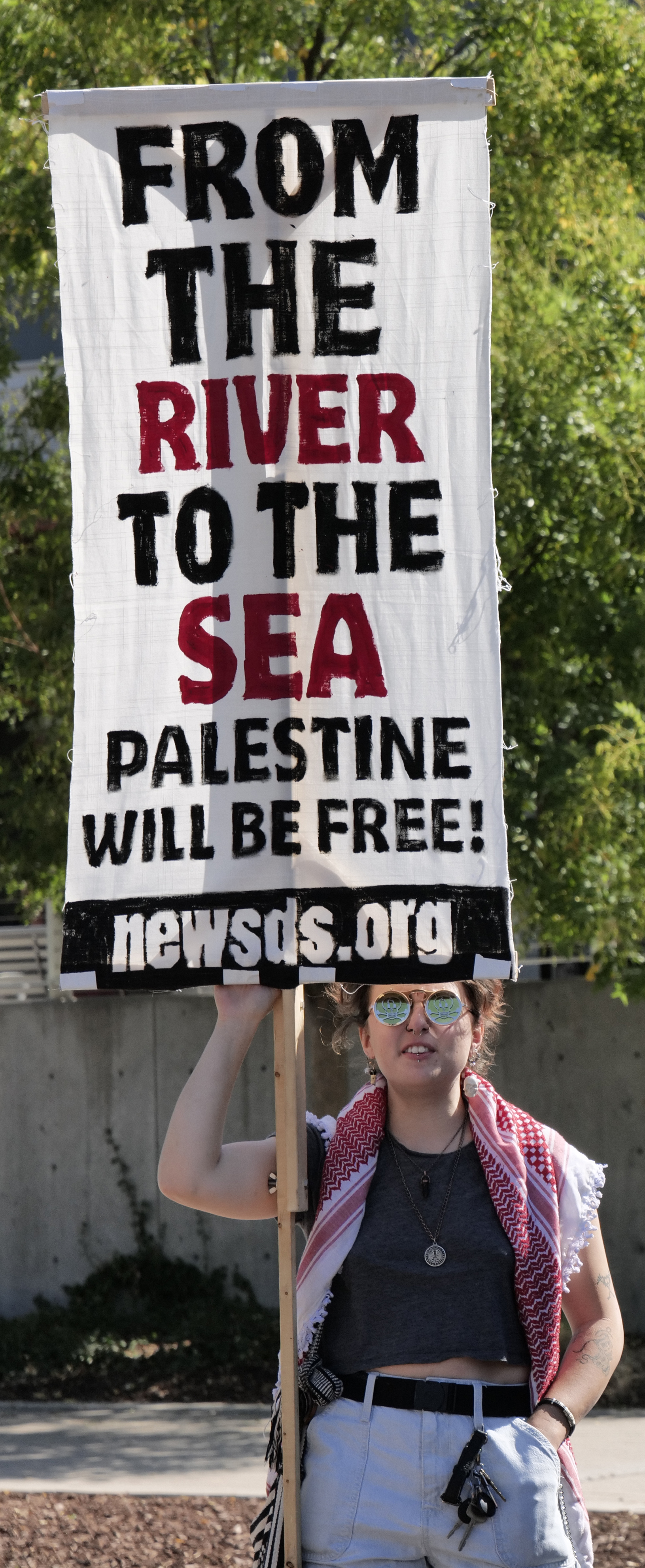
Leaders of the uncommitted movement released a statement via the social platform X on Sept. 19 that said, “Vice President Harris’s unwillingness to shift on unconditional weapons policy or to even make a clear campaign statement in support of upholding existing U.S. and international human rights law has made it impossible for us to endorse her.”
It is now 111 days after a U.N. office released a report of the ongoing escalations in Gaza estimating roughly 1.7 million, or 75% of Gazans had been internally displaced between Oct. 7 2023, and June 19.
Patrick Dillon of Longmont is the deputy field director for the Stein presidential campaign. He said, “I think that we’ve gamified politics so much that the people who are not engaging are not wrong when they say that they’re not being listened to.”
Regarding Israel and the Palestinian territories, Dillon said, “The unique and devastating reality is that we are witnessing a genocide on our cell phones every day.”
In the context of Auraria and the student encampment, he said, “Every opportunity that Americans and anyone who calls Colorado home has to be that voice of reason through opposition, they should take it. They should own it.”
Dillon continued, “What we have seen, not just at (Auraria) campus, but all across the nation, is a reminder that there is still a conscience in America that cannot be bought.”
On Jan. 26, the International Court of Justice ruled that Israel’s military escalations in Gaza were a “plausible” genocide. The world court ordered that “The State of Israel shall immediately suspend its military operations in and against Gaza.”
Israel’s operations “against Gaza” have led to a health system “on the edge of collapse,” according to Doctors Without Borders (MSF).
Ximena Guzman, a junior at MSU Denver studying political science and legal studies is the secretary of a student club working to see the Harris-Walz ticket elected.
Guzman described the foreign policy and military positions of Harris-Walz as “incredibly infuriating.” In her view, those positions are “something I struggle to comprehend as someone who has very basic human empathy, and as someone who has seen the disaster that Israel has caused to the people of Palestine.”
An Oct. 2 MSF statement stated options for care in Gaza are shrinking while medical needs are growing due to attacks from Israeli forces.
Guzman believes with enough pressure, the Democrats will eventually have to answer to the amount of aid the U.S. provides to Israel.
A lack of policy-focused presidential candidates and U.S. foreign policy has raised domestic dissent, potentially influencing the outcome of the election. Perspectives from Auraria Campus reveal that some voters disengage electorally due to the lack of commitment by politicians to improving domestic and foreign conditions.

