

The research
I’m a writer who frequently covers topics around accessibility, aging, and health. I’ve reviewed products like medical alerts, shower mats, and toilet seat risers for Wirecutter. I was also raised partly by my grandmother, who wore dentures for as long as I can remember. Throughout the years, I saw the challenges she faced with them and the impact an adhesive’s performance had on her confidence.
For this guide:
- I researched 23 adhesives across four different application formats and identified 16 that were worth testing.
- I worked with a panel of eight testers who wear dentures and collected their feedback on each adhesive. While testing, the name of each adhesive was concealed to minimize preexisting bias for a favorite brand.
- I interviewed four dental professionals, including three practicing dentists and a professor of dental medicine.
- Like all Wirecutter journalists, I review and test products with complete editorial independence. I’m never made aware of any business implications of my editorial recommendations. Read more about our editorial standards.
Who this is for
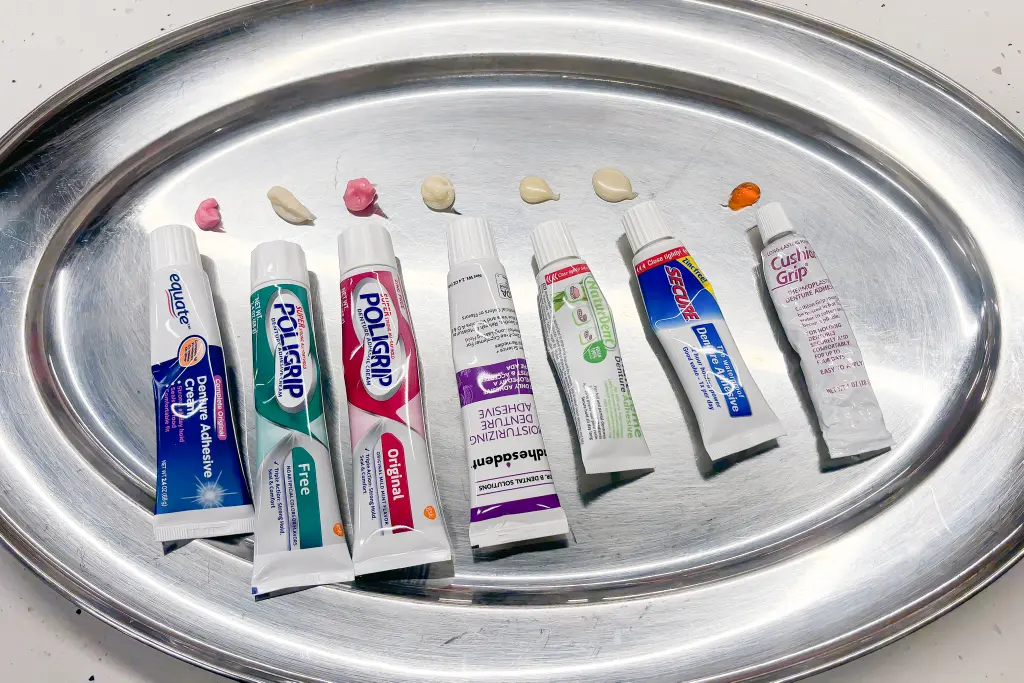
Denture adhesives — and the need for them at all — was a polarizing topic among the experts we spoke with. The ideal, dentists told us, is to have high-quality, customized dentures that stay put in your mouth without an adhesive.
“A denture that is well made should adapt to the gum structure with suction, and you really should not need an adhesive for it at all,” explained dentist Sandip Sachar, DDS. “However, as we get older, our bone shrinks in size, and when the bone shrinks in size, the denture that was made when we were younger is going to become loose, and that’s when people start to use an adhesive.”
When this begins to happen, Sachar noted that it’s important to get your dentures relined or replaced. When this isn’t an option, whether for financial reasons (new dentures can cost thousands of dollars) or something else, denture adhesives can literally fill the gap.
Even when a denture does fit well, adding an adhesive can simply help someone feel more confident that it will stay put throughout a typical day; it can be especially useful when someone is speaking, singing, or eating tough food. Dentist Whitney White, DDS, recommends trying one when you begin to notice your denture moving in your mouth, especially if it’s causing rubbing, lifting, or discomfort.
“Denture adhesive is a great option for patients who want to feel more secure in their denture — period,” White said.
Suparna Mahalaha, DDS, a professor at Case Western Reserve University School of Dental Medicine, noted that poorly fitting dentures can cause red and painful gums, sores, and bleeding. Mahalaha said that if any of these symptoms are present, it’s vital not to use adhesive or wear dentures until your mouth has had time to heal.
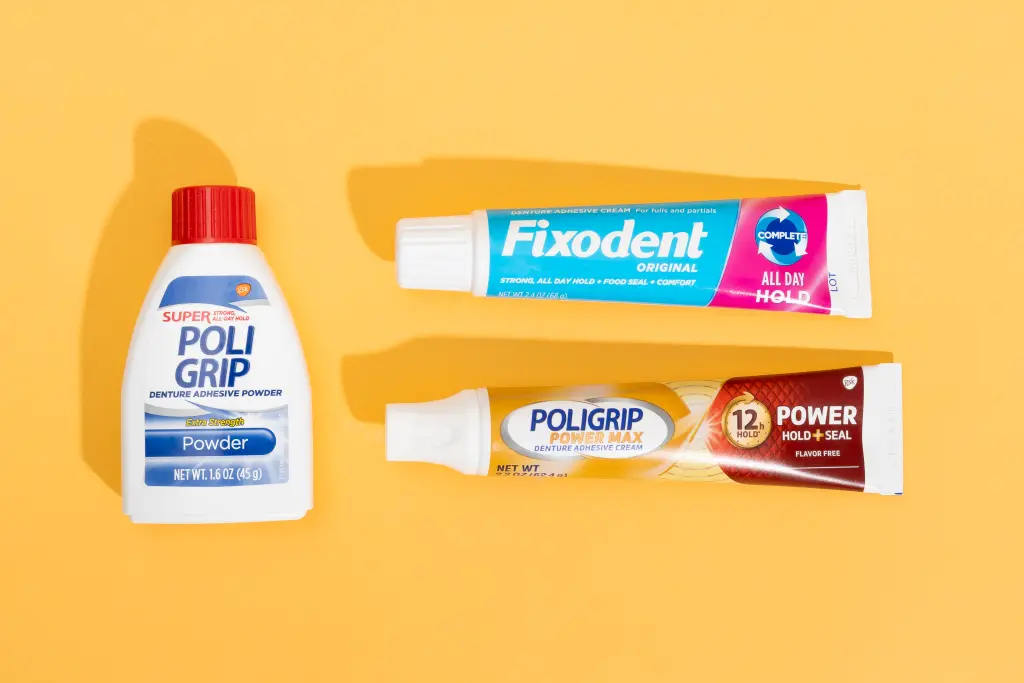
In addition to ensuring that we tested a variety of application formats (including creams, powders, adhesive strips, and thermoplastics), we prioritized the following criteria:
- Secure hold: The other factors don’t really matter if the adhesive can’t do its job and keep dentures from shifting around. We gave higher marks to adhesives that required few to no reapplications throughout the day.
- Easy to apply and remove: We factored in how difficult each application method was, including the mess involved and how much dexterity was required.
- Straightforward to clean: Keeping dentures clean is vital to supporting gum and mouth health, as well as maintaining a good denture fit. When an adhesive is difficult or time-consuming to remove from the denture, we know it’s less likely to get fully cleaned the way it needs to be.
- Inoffensive to the senses: Though most adhesives that we tested were colorless, tasteless, and scentless, we noted any that had unpleasant qualities.
- Affordable price: The average denture adhesive that you might find in your local pharmacy costs between $5 to $8 for a standard 2.4-ounce tube. While some store brands can run as low as about $4, smaller brands can climb up to $15 per tube or box.
As part of the American Dental Association’s Seal of Acceptance program, the makers of oral-care products, such as denture adhesives, can choose to submit data for an ADA-associated panel to review. Not all companies seek this certification for their products, so we consider it nice to have but not necessary.
I started by following each adhesive’s directions and applying the specified amount to a pair of sample dentures. While doing so, I kept notes about any application difficulties, such as messiness or confusing directions, and I also compared the amount of hand strength and dexterity required.
While waiting for the adhesives to solidify, I smelled the denture from different distances to see how intrusive the scent was after application. I also tasted a very small amount of each — which, to be clear, I very much do not recommend. I also noted how long it took each adhesive to solidify (and if it ever did, in some cases). Then, I followed directions for cleaning the adhesives off of the dentures and paid attention to which were especially difficult to remove.
After I spoke with multiple dental experts, it became clear that there was no reliable way to test the hold of the denture adhesives in a simulated environment, so we sent between 12 and 16 adhesives to each member of a panel of eight testers and asked them to use each adhesive for at least two days, eating and going about their lives as they usually do.
Our testing panel included men and women ages 57 to 81. All of our testers use dentures daily, and two have extra difficulty with the fit of the lower dentures because of the shape of their jaw bones and gums. One of our testers also has both neuropathy and arthritis.
I also shared the samples with my 89-year-old grandmother, who had severe arthritis in her hands and low vision. Though she didn’t directly test the products, I had her walk me through which application methods were easier or more difficult for her to manage with these extra difficulties.
Of our eight testers, only half tested adhesives that contain zinc. Because of this, our runner-up, the Fixodent Complete Original Denture Adhesive Cream, received half as many reviews from testers compared with the others.
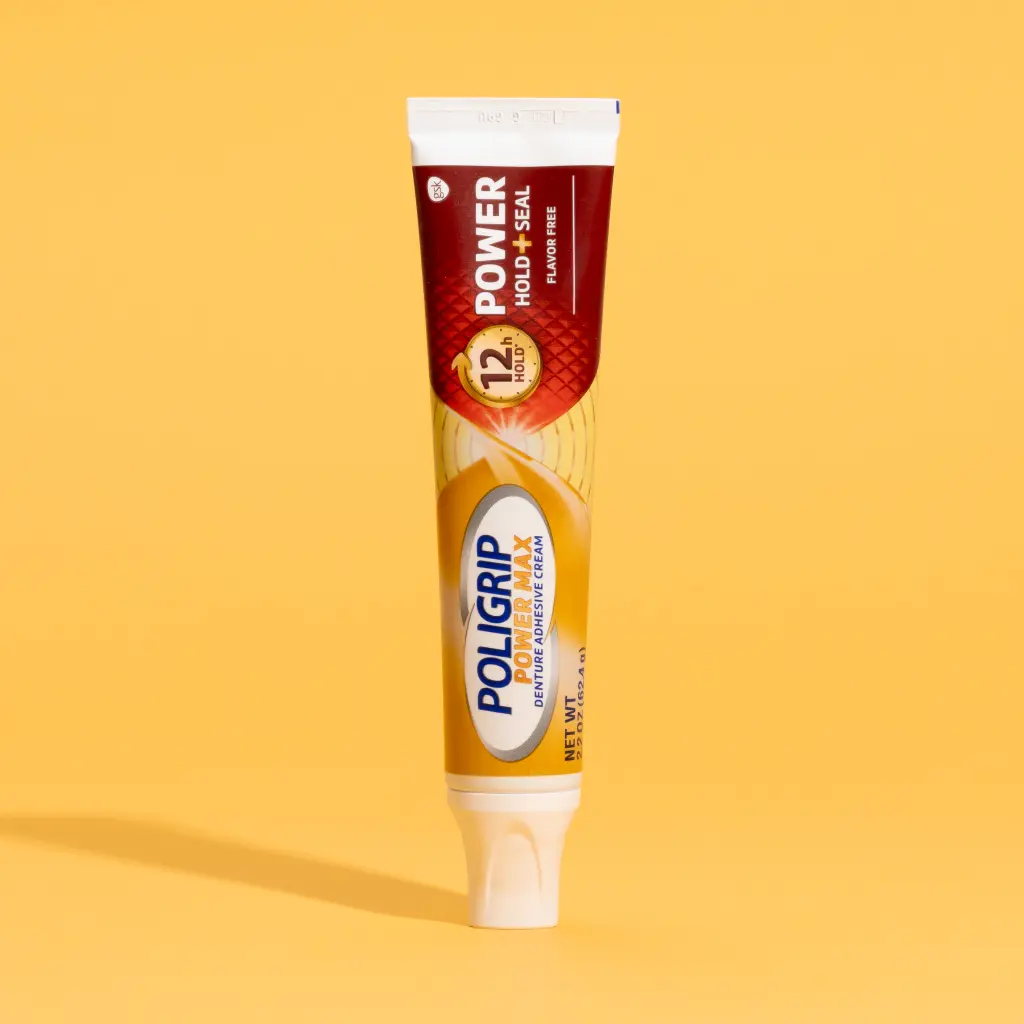
For as long as I can remember, my grandmother used Poligrip Power Hold+Seal Denture Adhesive Cream for her dentures. It turns out, she had a pretty good reason for that. Our testers said the paste was easy to apply and clean off, and most found that it held well throughout the day with one or no reapplication needed.
This cream adhesive holds well. The biggest question when trying a new denture adhesive is whether it will keep dentures in place. In this case, the answer is (mostly) yes. While none of the 16 adhesives we tested successfully made it through every day for every single tester, the Poligrip Power Hold+Seal cream had one of the lowest rates of needing to be reapplied. It also held dentures in place while testers ate tricky food, like steak, an apple, and crunchy snacks and cereal.
It’s zinc-free. For some denture wearers, including a few of our testers (and my own grandmother), using more than the prescribed amount of adhesive is the only way to feel secure in dentures all day. In my grandmother’s case, because her 20-year-old dentures fit poorly (and she refused to get them relined or replaced), she applied much more adhesive than is recommended. If you tend to use a lot of adhesive or you want the freedom to reapply multiple times a day, this adhesive is a safer choice than an adhesive with zinc.
It’s the easiest to apply and is mess-free. The applicator tip is a good size and shape to allow for precise lines without getting a ton of excess, and even though the tube is a little stiff (as most cream adhesive tubes tend to be), our testers found it the easiest cream adhesive to apply. In fact, despite the severe arthritis in my grandmother’s hands, she used this product for years and never needed help with its application, even when she reached a point where she needed help with many other common tasks.
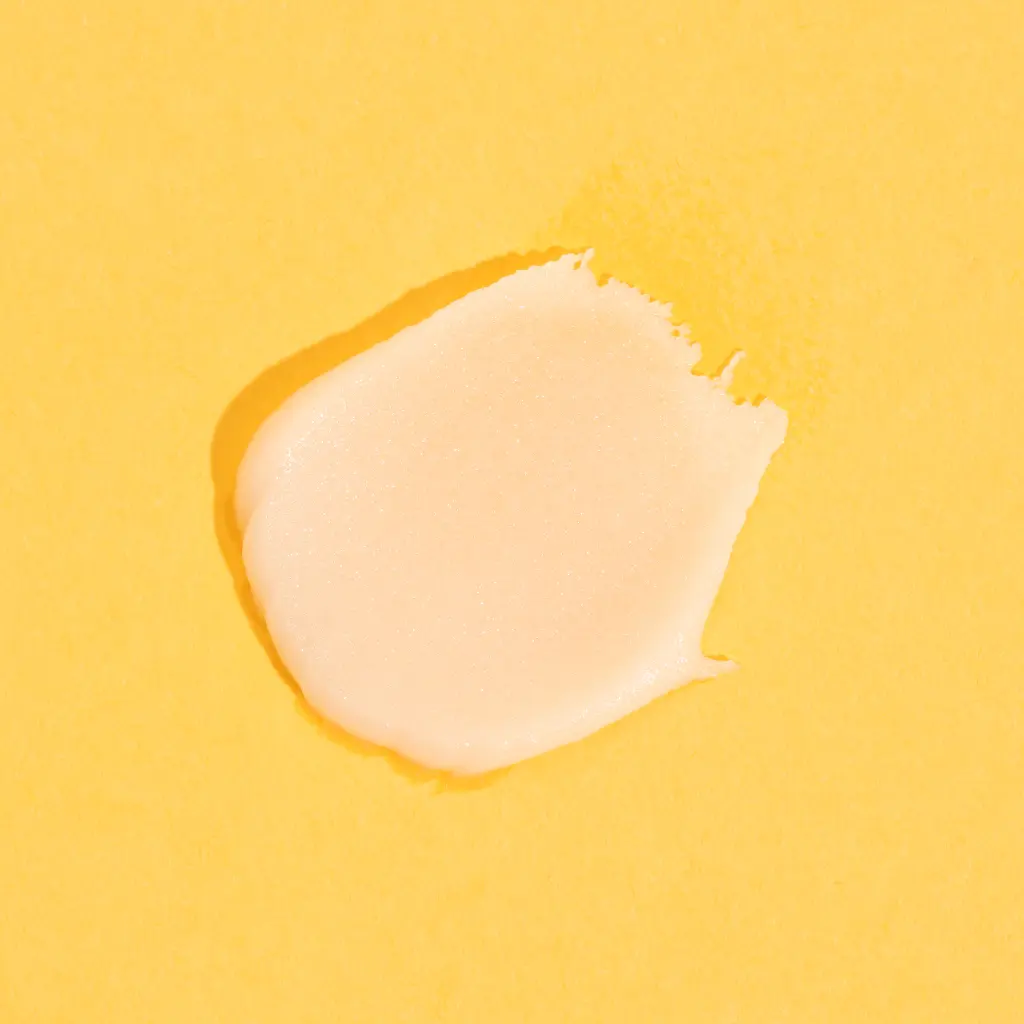
It’s easy to remove and clean off dentures. Our testers found that this adhesive was straightforward to remove from their gums and just as simple to clean off their dentures. “Removal and cleanup was ridiculously easy; hardly any remnants of adhesive remained,” one tester said. Unlike some of the others we tested, it also didn’t leave a slimy feeling on the hands.
Flaws but not dealbreakers
Its hold strength varies. While most of our testers found this cream’s hold to be strong, two individuals did have to reapply the adhesive after a few hours. This variability is common with denture adhesives, and it’s why we recommend trying a few to see if one works better for you than another.
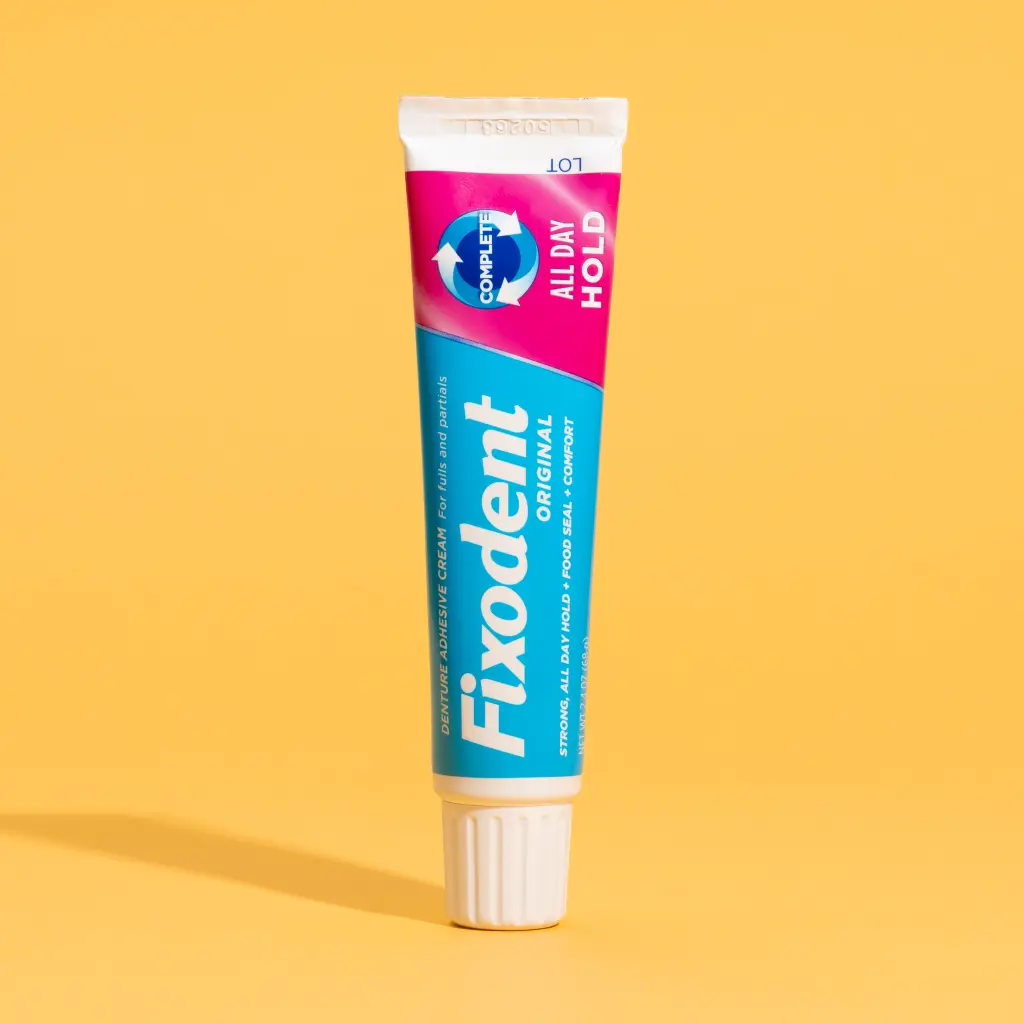
After our top pick, Fixodent Complete Original Denture Adhesive Cream offers the best hold, as well as the easiest application and cleanup of any adhesive we tested. It was more than one tester’s overall favorite adhesive. But importantly, it’s not for people who can’t or won’t follow instructions, as too much zinc can be a very bad thing. (Some of our testers were surprised to learn that they’d been using too much adhesive for years.)
It rarely has to be reapplied throughout the day. Two of our four testers had to reapply it during the day, a similar rate to our top pick. While only one tester ate a challenging food (corn on the cob), they all found Fixodent Original had a strong hold and seal that gave them confidence to go about their day.
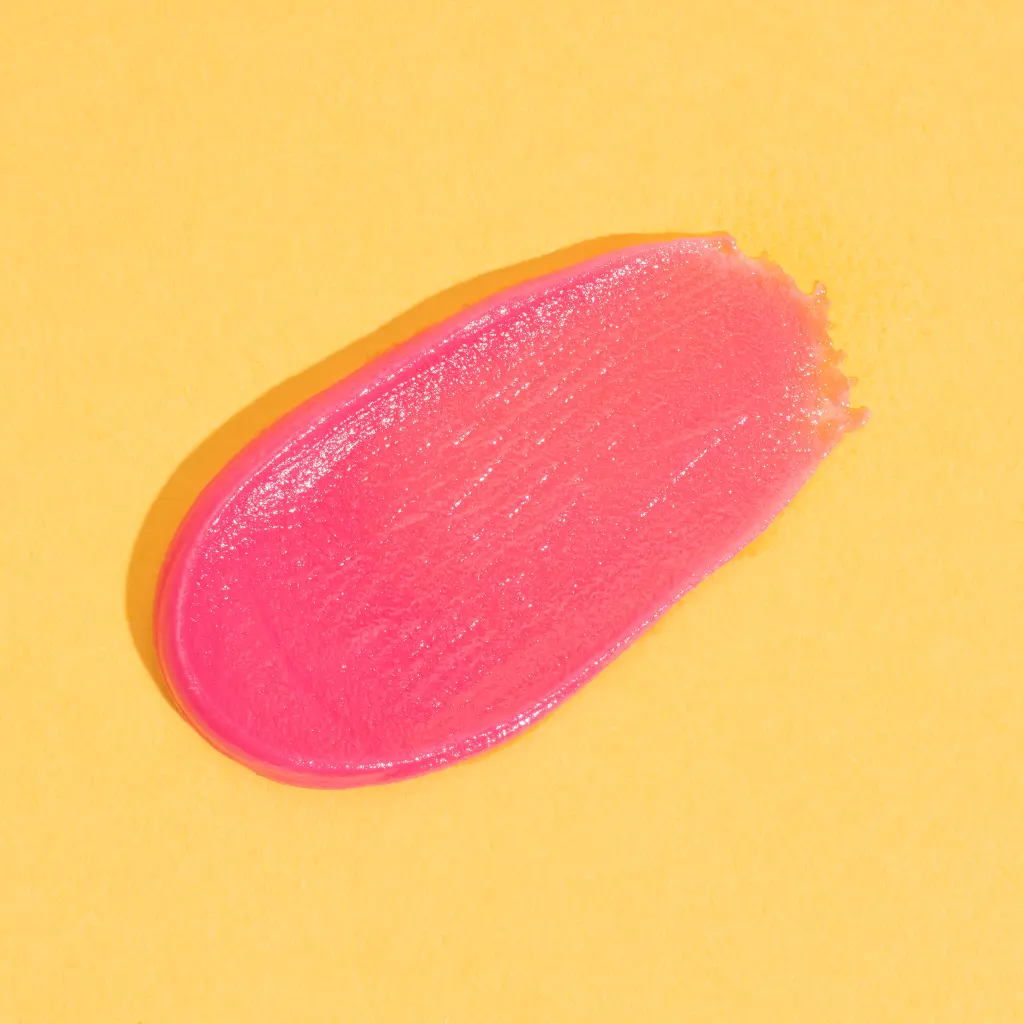
It has the ADA Seal of Acceptance. We feel reassured that the ADA gave Fixodent Original adhesive its Seal of Acceptance, particularly given its zinc content. This means that the ADA found the adhesive meets its rigorous standards in safety and effectiveness.
Flaws but not dealbreakers
Its active ingredients include zinc, which can pose health risks when overused. Because Fixodent Original contains zinc, three of our eight testers were not willing to try this adhesive. Zinc is added to improve the cream’s adhesion to dentures and gums; while the dentists we spoke with assured us that Fixodent adhesives are safe when used as directed, all of them also emphasized that if you have any doubt you can properly apply the adhesive, you should use a different product. And for those who use adhesives to compensate for ill-fitting dentures (which experts don’t recommend), it’s likely that far too much is being used. In cases like these, it’s best to avoid adhesives with zinc content.
It’s harder to remove. One tester found that this cream made it difficult to remove their dentures at the end of the day because it stuck to the roof of their mouth. While they saw this as a plus since it meant the seal was strong, it also could pose challenges to people with grip strength or dexterity challenges.
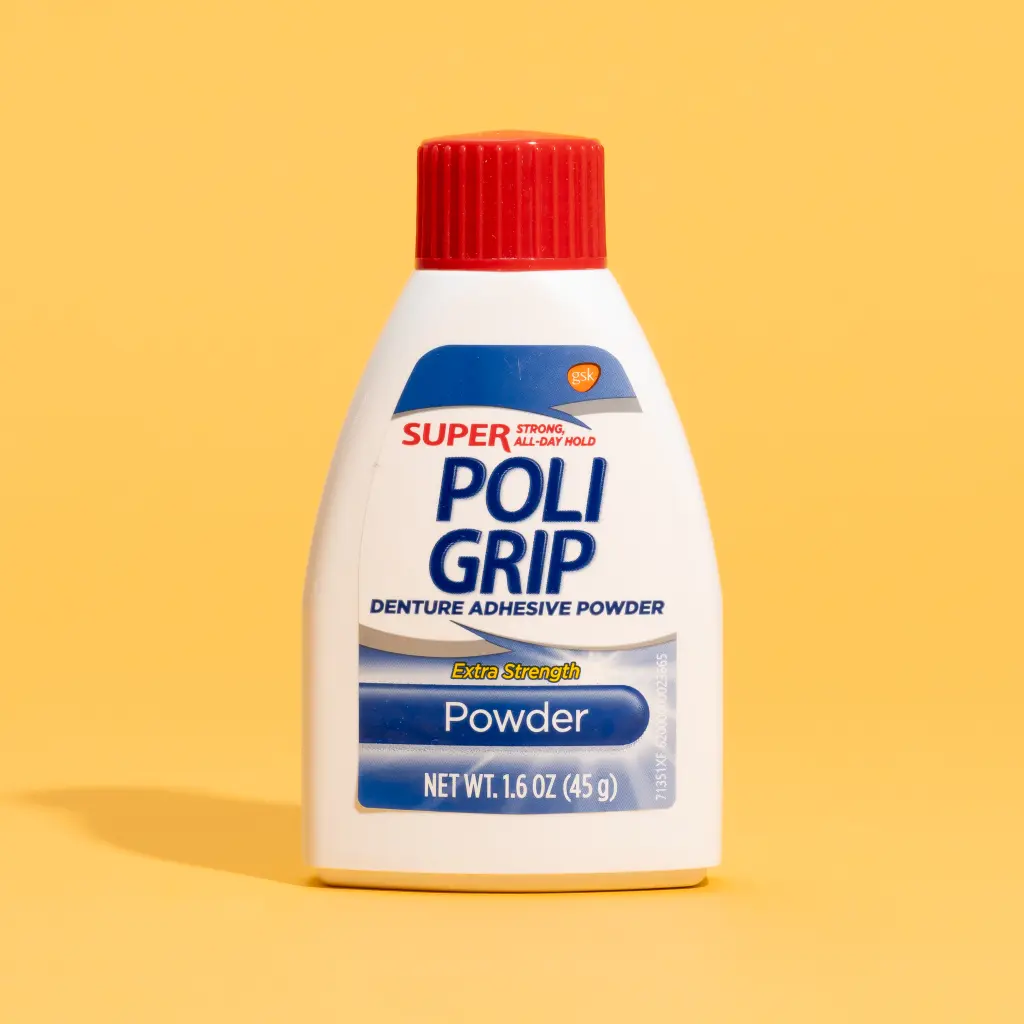
While most of our testers preferred cream adhesives, the Super Poligrip Extra Strength Denture Adhesive Powder is a solid alternative for those who don’t like or can’t use a cream. Unlike with creams, using a powder doesn’t require squeezing a paste out of a tube, so it can be easier to use for people with arthritis and grip strength challenges. Both of the powders we tested were a little messy, but our testers much preferred them over adhesive strips, which they found time-consuming and frustrating.
It doesn’t require any grip strength to apply. To use the powder, you first make the denture damp and then gently pour the powder onto the denture. The fine tip helps keep the talcum-like powder contained surprisingly well (though it’s inherently messier than creams), and the lack of squeezing is a help for sore joints.
It has a good hold but isn’t as secure as our other picks. The adhesive is strong while it lasts, but in general the powders we tested didn’t consistently stay put for the whole day the way cream adhesives did. Almost all our testers had to reapply the Super Poligrip powder at least once throughout the day — even one tester who regularly uses it — so it’s important that the adhesive is zinc-free. That said, dentures felt secure while the adhesive was holding, and our testers were able to try tough foods without their dentures coming loose.
Flaws but not dealbreakers
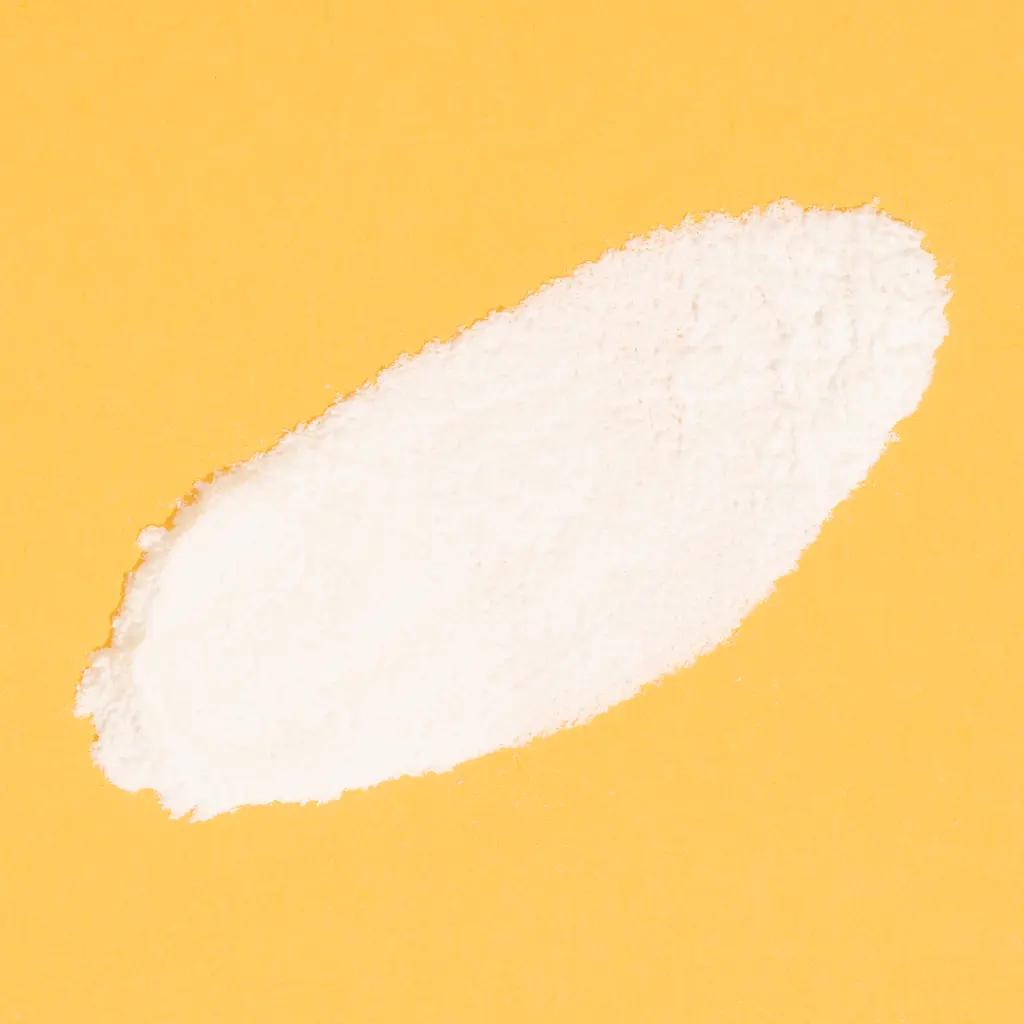
Applying the powder can get pretty messy. With practice, the powder can be applied with minimal mess, but there’s definitely a learning curve. Because it’s designed to stick to anything wet, applying it in a bathroom (as many do) can prove a bit of a challenge. It’s also more likely to stick to your hands since you have to dampen the denture before applying the powder.
It requires fine motor skills. Although this powder is a great option for people with poor grip strength, it will prove especially challenging to anyone who has dexterity challenges, such as tremors or less-precise hand movements. It’s easy to drop too much powder at once, and getting the amount even just a little off means the teeth of the dentures could become sticky rather than just the part that suctions to the gums.
In recent years, most denture adhesives manufacturers have moved to zinc-free formulas. That’s because although the mineral is necessary for good immune function and proper healing (and enhances the adhesion between dentures and gums), too much zinc in the body can result in nerve damage, tingling, and numbness in the extremities, said dentist Alice Hoang, DMD.
However, Fixodent, which makes one of our picks, still uses zinc in all of its denture adhesives (including Fixodent Complete Free Denture Adhesive Cream, which doesn’t have artificial flavors, colors, and sweeteners, but does contain zinc).
Though experts at the American College of Prosthodontists recommend avoiding zinc as a precautionary measure, both the US Food and Drug Administration and ADA say that as long as adhesives containing zinc are used as directed, they are safe. The dentists we spoke with had a similar range to their recommendations, with some saying that they encourage people to use whatever works (as long as they’re using the adhesive as directed) and others recommending avoiding adhesives that use zinc just to be safe.
When using an adhesive that includes zinc, be sure that you’re reading and following directions to the letter. They should specify how much adhesive to apply, and they often also include how many times it can safely be applied within a 24-hour period. (Fixodent Complete Original Denture Adhesive Cream, for instance, should be applied only once per day.) A standard 2.4-ounce tube should last seven to eight weeks when used correctly, according to the FDA.
If you are taking zinc supplements, have naturally high zinc levels, or use more adhesive than recommended, you should not use any product that contains zinc.
If you need to (very occasionally) wear your dentures overnight: Cushion Grip Thermoplastic Denture Adhesive makes that possible. Experts recommend that you always remove your dentures at night to give your gums room to breathe and to allow time to fully clean your dentures. That said, we know that there are times when taking your dentures out at night may feel embarrassing, such as when staying overnight with a friend or romantic partner. Because Cushion Grip adhesive is made of a putty-like thermoplastic material, it becomes pliable when it’s heated and hardens when it cools, creating a waterproof seal between gums and denture. However, the process to apply it is rather complex, and despite Cushion Grip’s claims, it should not be used for multiple days at a time on a regular basis.
If you want something free of artificial colors, tastes, and smells: Super Poligrip Free Denture Adhesive Cream is mostly flavorless and scentless. While many adhesives are flavored like minty toothpaste to try to make the mouth feel fresher, Super Poligrip Free does its job well without the bells and whistles.
If you prefer a strong mint taste: Fixodent Ultra Max Hold Plus Scope Denture Adhesive Cream, which also has a narrow tip on the applicator for extra precision, may be for you. But it’s a little more expensive than our top Fixodent pick, and its strong minty flavor proved polarizing in testing.
The competition
The Fixodent Extra Hold Denture Adhesive Powder functions very similarly to Poligrip’s powder. The biggest difference between them is that Fixodent relies on zinc while Poligrip does not, and since the powders were more likely to need to be reapplied during testing, this is more of a concern.
Though the Super Poligrip Denture Adhesive Strips and Sea-Bond Denture Adhesive Seals offer a nice alternative to creams and powders, our testers found it tedious and tricky to get both strips sized correctly to their denture. While about half of our testers did find that the strips held well throughout their day, the Poligrip strips in particular were difficult to clean after wearing.
Overall, we found that Dr. B Dental Solutions Moisturizing Denture Adhesive had one of the strongest holds and lasted throughout the day for most of our testers. It was also recommended to us by one of the dentists we spoke with. However, the price is significantly higher than our picks, and the quality of the hold wasn’t enough of an improvement over our picks to justify the extra expense. Plus, when it came time to remove and clean the dentures, this proved one of the most difficult to fully and properly clean.
While we liked that NaturDent Haftcreme Denture Adhesive advertised dietary-restriction-friendly ingredients, ultimately, we didn’t find it to be worth its hefty price tag. As we looked closer, we found that the ingredient list, packaging, and tube and applicator are very similar to Secure Waterproof Denture Adhesive, which is about half the price.
The low prices of Walmart’s Equate Complete Original Denture Adhesive and Equate Super Hold Denture Adhesive Cream are nice, but not worth the low quality you get in return. Our testers found that both had to be reapplied often, were difficult to clean, and were ultimately not worth the few bucks they’d save.
While similar in many respects to our cream picks, Fixodent Ultra Max Hold Denture Adhesive and Super Poligrip Original Denture Adhesive Cream were noticeably worse at providing a consistent, strong hold compared with the brands’ other products.
This article was edited by Claire Perlman and Kalee Thompson.
Sources
Alice Hoang, DMD, dentist and founding partner of Brooklyn Mint Dental, email interview, October 4, 2024
Sandip Sachar, DDS, founder and owner of Sachar Dental NYC, phone interview, July 9, 2025
Suparna Mahalaha, DDS, associate professor at Case Western Reserve University School of Dental Medicine, Department of Community Dentistry/Geriatrics, phone interview, July 10, 2025
Whitney White, DDS, dentist and practice owner of Aspen Dental, email interview, July 17, 2025
Meet your guide
Anna Wenner is a freelance writer. Though Anna’s writing spans everything from fandoms to fashion, she especially loves accessibility and LGBTQ+ topics. Previously Anna created cards at Hallmark, documented graves at a cemetery, and photographed everything from the NCAA tournament to President Barack Obama.