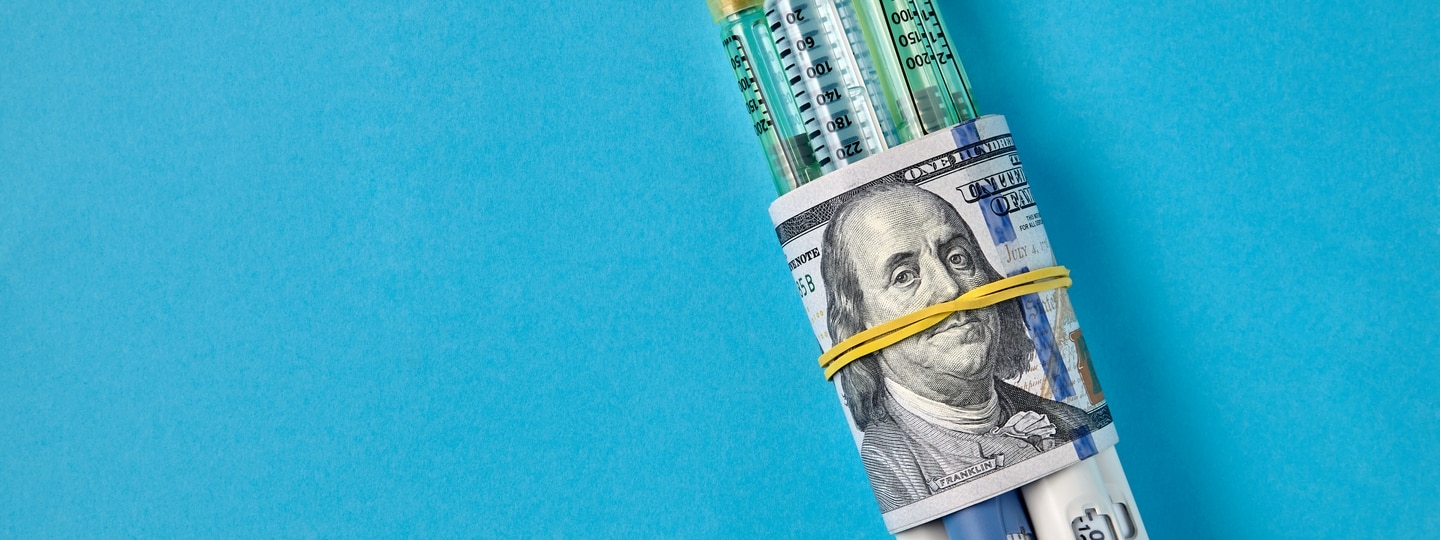
No other country comes close to spending as much on insulin as the U.S.
Pharmaceutical company Eli Lilly’s announcement Wednesday that it plans to cut the price of its most commonly prescribed insulin by 70 percent underscores the meteoric rise in the price of the medicine in the United States and a growing political debate over how to address drug pricing.
Millions of Americans with diabetes depend on the lifesaving drug insulin. But the cost of its four most popular formulations has tripled over the past decade, according to the American Diabetes Association, making the drug unaffordable for many patients who depend on it. Many Americans — as many as 1.3 million, or 16.5 percent of those who use insulin, according to a study published last fall in the Annals of Internal Medicine — have resorted to rationing it, which can result in severe or even fatal complications.
Even as more effective types of the medicine have been released to market, as our colleague Science Editor Lauren Morello reported Wednesday, the research underlying them is a century old. And those advances haven’t brought down the price. If anything, they’ve made this lifesaving product significantly more expensive, at least in the U.S.
No other country comes close to spending as much on insulin as the U.S., according to an analysis by the Rand Corporation. In 2018, the average price of insulin in the U.S. was $100 per vial, five to 10 times more than 33 other countries. Chile, the next biggest spender, paid just $21.48. Many Americans end up paying much less than this, after insurance and other discounts, but prices still remain much higher than elsewhere.
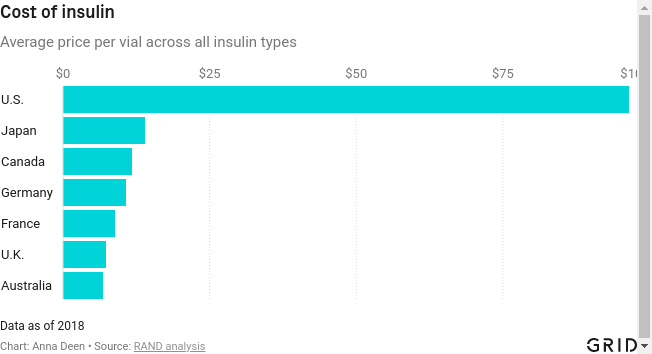
Many factors contribute to this large gap. The U.S. relies more on newer, more expensive forms of insulin, and the regulatory environment in some other countries helps keep prices lower. Countries with single-payer systems, like the United Kingdom and Canada, can use their negotiating power to keep prices down too.
The current situation is a far cry from what the inventors of insulin envisioned over a century ago. After selling their patent for the drug for $1, one co-inventor declared “insulin belongs to the world.” Even with Eli Lilly’s recent move, the drug will remain hard to reach for many Americans.
Thanks to Lillian Barkley for copy editing this article.