The Time Traveller’s Guide to Medieval England: A Handbook for Visitors to the Fourteenth Century
By Ian Mortimer
The Bodley Head £20
FT Bookshop price: £16
Ancient Athens on Five Drachmas a Day
By Philip Matyszak
Thames & Hudson £12.95
FT Bookshop price: £10.39
I Believe in Yesterday: My Adventures in Living History
By Tim Moore
Jonathan Cape £12.99
FT Bookshop price: £10.39
Though few modern readers are familiar with LP Hartley’s novel The Go-Between, many will know the novel’s often quoted opening line: “The past is a foreign country: they do things differently there.”
In Hartley’s novel, published in 1953, the remark indicates the distance that separates an elderly narrator from the dramatic events of his youth. But the phrase has since been gleefully adopted by historians hoping to dramatise the gulf between present and bygone ages.
This remoteness makes the past both alluring and incomprehensible. It is the natural hurdle all historians must overcome to shed light on earlier times. Since the days of Herodotus, it has had them scrambling for new ways to acquaint today’s audiences with yesterday’s events.
Amid the current mass of works of popular historical non-fiction, the question of how to bring history to life seems more pressing than ever. There are as many solutions as there are historians. Three recently published books set out to illuminate and enliven the past – and do so with mixed results.
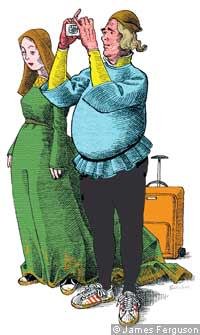
Some historians, such as Ian Mortimer, take a literal approach: if the past is a foreign country, then a foreigner’s guidebook might help. Mortimer has even used Hartley’s quote as the epigraph to The Time Traveller’s Guide to Medieval England, which in its subtitle advertises itself as “A Handbook for Visitors to the Fourteenth Century”.
“As soon as you start to think of the past happening (as opposed to it having happened), a new way of conceiving history becomes possible,” Mortimer writes. His aim is to forego the strictures of conventional narrative history and offer instead “an investigation into the sensations of being alive in different times”.
Mortimer, a historian of medicine and biographer of medieval grandees, has focused on the 14th century because it epitomises popular notions of the Middle Ages as a time of wars, famine, sieges, cathedral building, plague, crusades and peasants’ revolts. He admits, however, that a visit to England in the early 14th century would have been very different from a visit at the century’s end.
Making use of an impressive variety of sources, Mortimer sets out to capture daily life in a virtual tour of medieval England. “To visit an English town in the late 14th century is a bewildering and extreme sensory experience,” he tells us, recording the smell of excrement near the city walls. “You will see rats everywhere.”
Sticking loosely to the guidebook format, he advises readers on “What to Wear”, “Where to Stay”, “What to Eat and Drink” and “What to Do”. This allows him to comment on aspects of medieval English society ranging from religiosity (“you will find the depth of religious feeling in daily life quite astonishing”) to family life (“Teenage pregnancies are positively encouraged”).
There are stern warnings. A time traveller, Mortimer writes, “would be crazy to think [he] could engage a 14th-century man in combat and have a chance of surviving”. And though we might think of medieval society as “dirty, violent and uncouth”, politeness and etiquette are paramount. “Do not pick your nose, teeth or nails, or spit indoors” is his advice.
Helpfully, the guide lists 10 sites to visit in 14th-century London. The compilation is remarkably similar to a list of modern-day attractions – London Bridge, St Paul’s Cathedral, the Tower of London, Westminster Abbey – though 21st-century visitors to Southwark are more likely to be visiting Tate Modern than patronising the bath houses run by Flemish prostitutes.
The resulting portrait of the era is as lively as it is informative. His work of speculative social history is eminently entertaining but this doesn’t detract from the serious and thorough research involved. Given the considerable claims Mortimer makes for what he calls “free history”, however, it is worth considering his claims about his own approach.
“In traditional history, what we can say about the past is dictated by the selection and interpretation of evidence.” It would be foolish, however, to suppose that Mortimer’s own text has not relied on this kind of selection and interpretation. How, then, is this method of writing history any different?
Mortimer presents events as if they were unfolding: “It does not make the facts themselves less true to put them in the present rather than the past.” Yet putting those facts in the present tense makes for awkward storytelling. The illusion of first-hand historical experience is shattered the moment we are thrown 50 years backwards or forwards in order to provide context. Mortimer’s refusal to commit to a temporal point of view undermines the immediacy he attempts to convey.
This problem is common, also, to Philip Matyszak’s Ancient Athens on Five Drachmas a Day, which purports to be a budget travel guide for the 5th century BC – a follow-up to his Ancient Rome on Five Denarii a Day. Matyszak cannot resist referring to future events and characters. We are informed about the road to Delphi, for example, that “the writer Pausanias, travelling this way over half a millennium hence, will complain that ‘it’s rough going’”.
Unlike Mortimer, Matyszak does not claim to tread new historiographical ground. His more modest aim is to inform and amuse – and in this he succeeds. It is interesting, for instance, to find out that in 431BC Athens, “the usual place to stash enough money for a quick morning’s shopping is in the mouth”.
Though he doesn’t ever actually explain how to survive on those five drachmas a day, Matyszak embraces the guidebook format wholeheartedly – the double columned pages, the boxes of interesting facts, and even a “Useful Phrases” section that allows travellers to master such useful utterances as “Persians go home!” in ancient Greek.
The light-hearted approach pays off, though it occasionally descends into juvenile (and anachronistic) humour. Oedipus is referred to as “he of the complex”. The phrasebook teaches users to say, “Indeed, I assure you that Homer’s family name was Simpson.” A segment on the Greek alphabet recommends that anyone finding it too confusing should “head for the nearest bakery and eta beta pi”. This raises the question of what readership the book is really aimed at.
Matyszak’s approach, like Mortimer’s, succeeds only partially in breathing new life into history. As with regular tourist information, the problem with time-travellers’ guides is that they often say more about the people who wrote them than about the people they describe.
Mortimer’s avowal that “climate change is another factor affecting the landscape” in 14th-century England reflects concerns more modern than medieval. While Matyszak’s assertion that it “is a common misconception among visitors that the Acropolis is the Parthenon” sounds more like a complaint about the ignorance of today’s tourists.
“Understanding the past is a matter of experience as well as knowledge,” Mortimer declares. This may well be the manifesto for those who, not satisfied with virtual tours of history, take history into their own hands. Living historians, or historical re-enactors, provide the most literal interpretation of history as experience. If the past is a foreign country, they are the ones who relish dressing in foreign costume.
Two questions are often asked about living historians. The first is why they do it. The second is what they can possibly learn from it. Humorist Tim Moore set out to answer both in I Believe in Yesterday.
His romps in living history begin at an unconvincing Iron Age village in the Forest of Dean. In Denmark, he takes part in the daily drubbings imparted (and received) by a French group of Roman Legionnaires. In Leicestershire, he joins a band of punch-drunk Vikings.
In Berne, Switzerland, he suffers in the name of “utter authenticity” during the restaged siege of Grandson, circa 1474. He joins a Tudor extravaganza at “Britain’s most venerable large scale, long-term historical re-enactment”.
Moore then flies to the US where, in 1961, centennial civil war re-enactors kick-started the living history movement. He joins latter-day frontiersman, Gerry Barker, in one of his “living-history experiments”. Finally, he endures a stint of “relentless and uncompromising immersion with re-enactment’s seasoned elite”, revisiting 1864’s battle of Red River in which Confederate troops trounced the Union army.
With some 450,000 dedicated practitioners, Moore learns, living history is the fastest growing hobby in Britain. But why, he wonders, are ordinary men and women prepared to trade their 21st-century comforts, even temporarily, for life in “historical conditions”? It’s for that “period rush”, replies one Iron Age enthusiast. Moore’s own “quest for my inner ancient” is fuelled by his anxieties about our modern inability to deploy the skills that came naturally to our ancestors.
More often, he finds, it is a “refreshingly simple impulse to get away from it all” that gets people into period attire. Many civil war re-enactors seek redress: “History is written by the winners but re-enactment gives the losers a belated chance to scribble in the margins.” A Viking aficionado is more blunt: “It’s the fighting”. In the end, Moore says, what drives most living historians is “a simple and truly heart-warming quest for gregarious community”.
But can anything of lasting value be learnt from “first person interpretation”? Does re-enactment bring history back to life or does it simply turn history into an elaborate form of fancy dress role playing?
Gerry Barker refers to his solo re-enactments as “controlled living history projects, experiments that start with a question” – for instance, can a man make a log cabin out a patch of forest in three months using only 18th-century tools? This may be the closest we can get to Mortimer’s ideal of what history should be: “A striving to make spiritual, emotional, poetic, dramatic and inspirational connections with our forebears”.
In the end, Moore admits, even if such forms of historical interpretation may not teach us much about other periods, we are likely to learn “a little about ours”. Mortimer quotes the poet WH Auden, who remarked that to understand your own country it helps to have lived in at least two others. Perhaps the same applies to historical eras. The central question, for popular historians and historical re-enactors alike, is not how to animate the past but how to make it relevant to us today.