After Photography
By Fred Ritchin
WW Norton & Co $29.95, 199 pages
FT Bookshop price: £13.59
Why Photography Matters as Art as Never Before
By Michael Fried
Yale University Press £30, 409 pages
Brought to Light: Photography and the Invisible, 1840-1900
By Corey Keller (editor)
Yale University Press £35, 216 pages
Annie Leibovitz at Work
By Annie Leibovitz and Sharon DeLano
Jonathan Cape £25, 237 pages
FT Bookshop price: £20
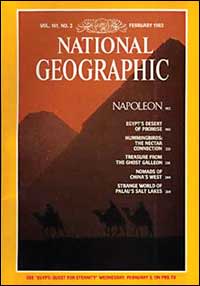
In 1982, National Geographic magazine used a photograph of the pyramids at Giza on the cover of its February issue. The horizontal picture showed camels walking by the monuments at sunset. Editors at the magazine decided to compress the background and foreground the better to fit the cover’s vertical format. The age of the digitally manipulated image had arrived.
The digital age has transformed and enlivened the medium of photography. But it has also provoked a crisis, bringing into question the medium’s relationship to reality and its role as a documentary and artistic tool.
How can we accurately assess the impact of digital photography? One hundred and seventy years after photography was invented, four books invite us to put into context the effects of digital technology and the debates surrounding it. Above all, these volumes reveal that our anxieties about photographs being modified and edited – no longer truly depicting “reality” – are as old as the history of the medium itself.
“Photography is generally perceived as resolving ambiguities …rather than promoting them,” says Fred Ritchin in After Photography. Ritchin, former picture editor at The New York Times Magazine and now professor of photography at New York University, cites the famous anecdote of Eadweard Muybridge, who in 1878 rigged a battery of cameras and tripwires to prove that a galloping horse was briefly suspended in mid-air.
As Muybridge’s story shows, photography in its infancy was a process to register the world with an objectivity and fidelity that humans lacked. Ritchin says: “Knowing that a horse gallops with all four legs off the ground at one time means that we live in a world that is less mysterious, less intuitive, in which the camera, not people, becomes the arbiter.”
The basic association of photography with reality remains mostly unchallenged. Critic Susan Sontag articulated this assumption in her influential monograph, On Photography (1977): “A photograph is not only an image (as a painting is an image), an interpretation of the real; it is also a trace, something directly stencilled off the real, like a footprint or a death mask.”
Ritchin is protective of photography’s role of transcribing the real. For him, the digital era, and its accompanying potential to manipulate reality, represents a threat. To underpin his warning about the “dangers” of digital photography he amasses some telling facts. More than 90 per cent of cameras sold today are digital, he says. Nearly a billion camera-phones are in use. Some 250bn digital photos were made in 2007. By 2010, he adds, “it is expected that we will be producing half-a-trillion photographs annually”. Of course, not everyone who owns a digital camera will manipulate their images but, as Ritchin notes, the potential is there.
What Ritchin ignores is that this “threat” has always existed. In the traditional photographic process, developing photographs in a dark room, the photo or negative may also be just an “initial recording”. It is no less subject to modification. One has only to think of American landscape photographer Ansel Adams, who spent months, even years, in the darkroom “perfecting” a photographic print through successive iterations of the same image.
Of particular concern to Ritchin is the manipulation of documentary photography. He cites the case of Brian Walski, a Los Angeles Times photographer who in 2003 merged two photographs taken in Iraq to create a “better” picture. Walski was dismissed.
Yet to blame such events on technology is to disregard the history of a medium. Photos have always been subject to manipulation – through montage and darkroom wizardry.
From photography’s inception, there was an inbuilt tension between its recording function and its more creative applications. This is made clear in Brought to Light. Corey Keller, the volume’s editor, explains that photography was born into a scientific culture: “Seeing and knowing were understood to be inextricably linked.” The relationship became more complicated, however, with “rapidly accumulating evidence of the limitations of the human eye and of forces operating below the threshold of perception”.
Photography was originally appreciated for its ability to represent the real. Wilhelm Röntgen’s discovery of X-rays in 1895, however, “completely unhinged” the photograph’s relationship to vision. These snapped incontestable traces of a reality imperceptible even through magnification. It wasn’t a huge leap, then, to believe that photography could move from taking images of the unseen body, to taking images of the unseen soul. A fascinating chapter in this exquisite book records the popular use of early photography to fabricate “spirit photographs”.
Early specimens were the result of dark-room accidents that created mysterious “presences” on photographic plates. Followers of spiritualism seized on these as evidence of the existence of ghosts. The phenomenon was not unlike the fad for pictures of “fairies” in Victorian England. Along with the new medium, a new niche industry for enterprising con artists was born.
Extrapolating from photography’s early days, Keller concludes: “The faith once placed in the human eye has today been replaced by a near-total dependence on technologically inflected vision, resulting in a disconnect between seeing and knowing so pervasive that it goes almost entirely unacknowledged.”
Such comments chime with Ritchin’s protestations about how digital technology “destabilises the photograph as a faithful recording of the visible”. Yet that “destabilisation” began at the dawn of photography. Even Ritchin’s claim that digital cameras have democratised the medium is not original. Brought to Light explains that even in the early years of photography, amateurs were valued for their role in advancing scientific knowledge. In 1888, George Eastman pushed the medium decisively towards amateurism: “You push the button, we do the rest” was the principle behind his new Kodak camera. Today, it is the media’s picture editors who make contributors out of anyone carrying a camera-phone.
At the other end of the scale from snaps taken by the general public is photography’s relationship to art. In 1859, French poet Charles Baudelaire, horrified by the threat photos posed to painting, pleaded that photography should be no more than a “humble handmaid” of the arts. This debate still rages.
You might expect some discussion of this idea in a book called Why Photography Matters as Art as Never Before. Rather than engage with the archaic question about whether photography is an art or not, the book focuses on a handful of modern practitioners who have conceived works expressly for gallery and museum spaces. The book’s author, art historian Michael Fried, explains that photography matters because it embodies the thorny questions once central to painting – about representation, the relationship between picture and viewer. To illustrate his point he discusses Hiroshi Sugimoto’s haunting images of seascapes and empty film theatres, Thomas Struth’s intriguing series on museum audiences, and Andreas Gursky’s vast panoramas.
Contemporary German photographer Gursky is worth singling out for his clever use of digital photography to create uncannily abstract vistas. The degree of manipulation he employs varies but, says Fried, “In all cases there is a consequent loosening of the connection between the picture itself and its real-life source or origin.”
Because his intent is not documentary, Gursky does not feel tied to the real. His subtle alterations challenge our expectations of the real – and of photography. In a statement that would please Ritchin, Gurksy himself declares: “Since the photographic medium has been digitised, a fixed definition of the term ‘photography’ has become impossible.”
Annie Leibovitz, a photographer whose work is conceived primarily for the magazine spread, is equally nonchalant about defining photography. She embraced the shift to digital because it made her work easier, as she reveals in Annie Leibovitz at Work. This is a candid first-person account of some of the most interesting episodes of her career, from touring with the Rolling Stones in 1975 to photographing Barack Obama last year. It also presents her reflections on the photographer’s evolving craft.
One episode illustrates her approach to digital technology. Leibovitz wanted to photograph the Queen in Buckingham Palace’s gardens. The Queen refused to go outdoors, but agreed to a final shot, wearing a dark cloak. Leibovitz digitally over- imposed the cloaked Queen on an image of the garden. The resulting illusion is magnificent. Leibovitz employed a similar trick to produce a picture of the Queen, who posed against a grey background, standing in the palace’s White Drawing Room.
“I wanted reality,” Leibovitz says of her reason for becoming a photographer in 1967. More than four decades on, the urge is still there. So, too, in her images, are those traces “stencilled directly off the real” – albeit mediated and enhanced by new technological possibilities.
We are not living in a “post-photographic world”, as Ritchin puts it. Our world is more photographic than ever. Yet much has changed since National Geographic inaugurated the era of the digital photograph in 1982. Today, increasingly sophisticated uses of the digital image demand ever more attentive and image-literate viewers. For whatever shape digital photography takes, we can at least agree with Ritchin: stories will not be told again in the same way.