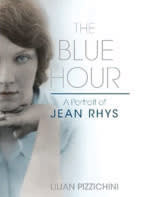
The Blue Hour: A Portrait of Jean Rhys
By Lilian Pizzichini
Bloomsbury £18.99, 322 pages
FT Bookshop price: £15.19
Reading The Blue Hour, Lilian Pizzichini’s vivid account of the life of the novelist Jean Rhys, is like watching a disaster occur in slow motion. From Rhys’s childhood on the Caribbean island of Dominica, her relocation to Edwardian England, her experiences as showgirl, artist’s model and kept woman, her three unhappy marriages, and her final descent into alcoholism, Rhys’s life was strewn with the debris of wrecked relationships.
Pizzichini offers a chronicle of this tragic life but also explains convincingly how Rhys was able to salvage beauty from her loneliness to create one of the 20th century’s finest works of literature.
The daughter of a Welshman and a white Creole woman, Rhys was born an outsider. Even in her family she was odd, “fair and delicate” where her siblings were “strong and dark”. To please her mother, she prayed that the colour of her skin would change.
Her native Dominica was lush with sights and smells and sounds, but it was also rife with hidden menace. Unable to take care of Rhys after the birth of her sixth child, her mother left her in the care of a nurse who terrified the child with tales of voodoo and black magic. Aged 12 she was seduced by a septuagenarian she found both repulsive and enrapturing; he told her love “was a tension between violence and submission”. This idea, says Pizzichini, would become “the bedrock of her sexual fantasies”.
Rhys was sent to England in preparation for her adult life. From the moment she crossed the Atlantic, she would become “a wanderer, never belonging, haunted by a sense of loss”. She boarded at a school in Cambridge. She yearned for Dominica. In England, writes Pizzichini, “she lost her sense of oneness with the colours of the world”.
She was sustained only by a vague notion of becoming an actress. Though the ambition gave her the courage to escape to London, she was never more than a chorus-line girl. But her youthful beauty did not pass unnoticed. She was quick to learn how to get what she wanted from men. In the process, she came to expect “neglect, indifference, disbelief and cruelty” from them. She alienated men who were genuinely kind to her, and felt inevitably drawn to cads.
One of those cads, writer Ford Madox Ford, encouraged her to write. And in her writing Jean found the outlet for her pain. Her novels and short stories distilled her life-long, and growing, sense of alienation. She was 76 when her masterpiece, Wide Sargasso Sea, was published. Writing it took her nine years, during which time she was in and out of hospitals and prisons; she often subsisted on a bottle of whisky a day. The novel, in turn, brims with what Pizzichini calls the “triumphant poetry of despair”.
Though scrupulously researched, The Blue Hour is not a work of scholarly ambition. Too often Pizzichini draws on scenes from Rhys’s stories and novels to fill out the gaps in her biography.
This deliberate elision of fact and fiction is titillating – though at times seems speculative. Pizzichini writes with sensuous flair. This work’s strength lies in its narrative drive. And that’s the great triumph – and flaw – of this book: it too often reads like a novel.