In his latest volume of auto-fiction, the French literary sensation narrates a ruthless quest to disown his working-class roots
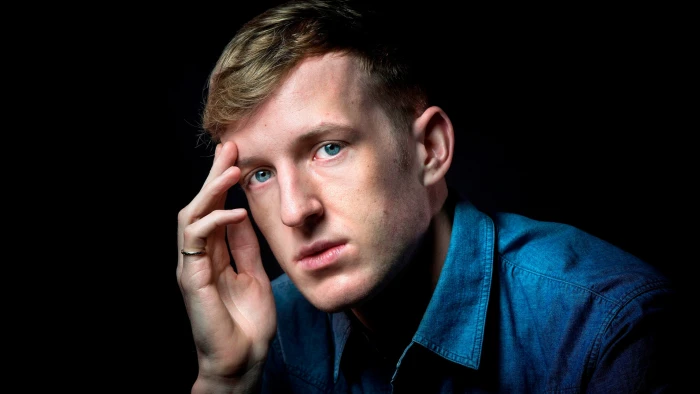
A decade ago, The End of Eddy took France’s literary scene by storm. The harrowing account of a working-class childhood in a village in northern France, it made its author Édouard Louis a literary celebrity and a poster boy for that most imprecise yet omnipresent of genres — auto-fiction.
Louis’s follow-up books further mined the seams of his personal experience. Who Killed My Father (2018) dramatised the story of Louis’s father following an industrial accident that left him unemployed; in A Woman’s Battles and Transformations (2021), he turned his attention to his mother’s travails.
The title of Louis’s latest work of autobiographical fiction is Change, which announces in the plainest possible terms the book’s animating theme: “At night I dreamed of changing, of becoming someone else, and it was perhaps in those early years of my life that the idea of change became so central to me.”
Sensitively translated by John Lambert, the tale of how Louis pursues this quest is told in imaginary conversations with his father, with his estranged friend Elena and with himself.
After years spent enduring homophobic abuse, a young Eddy (as he was still called then) discovers drama at school. Acting comes naturally, “not as an artistic vocation but simply as the continuation of my life.” It’s an interest that propels him to leave his village and head to the city of Amiens to study at a lycée, the first in his family to do so.
There he befriends a young woman called Elena, and, after being taken under the wing of her cultured family, drops the name Eddy in favour of the more sophisticated Édouard. Elena teaches him to use cutlery properly; she introduces him to books and classical music. They watch plays and films. Snobbery creeps in, as does guilt. “I felt that in appropriating her life,” Louis writes to his father, “I was putting myself above you.” The transformation he seeks is not only a form of self-improvement, but an act of revenge.
Yet soon Amiens isn’t enough. He strikes out for Paris and a place at the prestigious École Normale Supérieur, but is haunted by impostor syndrome. “Suddenly it dawned on me that if I arrived in Paris without going to this school I’d be nothing but a young man from Amiens, a marooned intruder.” He is desperate for validation, yet unsure how to get it: “I had no idea where to start, so I proceeded as I’d always done when I wanted to change: I imitated.”
Even sexual encounters are motivated by the need to obliterate his former life. “Making love with a man . . . resulted from the same will, the same process, as going to the cinema and learning to speak without a northern accent, that of escaping from the past.”
But this longed-for transformation comes at a price. Even after publishing The End of Eddy, Louis remains dissatisfied: “ . . . I regret having distanced myself from the past . . . Sometimes I think that the whole struggle was in vain, and that in escaping I fought for a happiness I never obtained.”
Whereas the Eddy of Louis’s debut book comes across as a victim of poverty, the Édouard we see in Change is arrogant, self-absorbed and intoxicated by his own process of reinvention. He expects empathy from others, but seems largely incapable of empathising with anyone who does not serve his purposes. At least he possesses the self-awareness to acknowledge it: “At each stage of this life, of this race against myself, I’ve had to break with people I loved in order to move forward.”
Yet it is difficult to sympathise with this version of Édouard, who exudes both the self-loathing of a class defector and the smugness of one who has survived misfortune: “My privilege was to have known life without privilege.” At times he appears like someone wise beyond his years, but then sounds like a man fuelled by a juvenile sense of entitlement.
The author concedes in a footnote that his relationship to the truth is occasionally determined by narrative convenience. This feels like a cop-out: we have been primed to care about the story because it really happened.
Yet even as a work of autobiographical fiction (or is it fictionalised autobiography?) this sequel feels unconvincing. Neither as artful as Annie Ernaux’s numerous works of self-fiction, nor as thorough as Karl Ove Knausgaard’s, Change lacks the attention to telling detail that made The End of Eddy so poignant. Instead, it relies on exposition, on telling rather than showing.
There is a sense of urgency to Louis’s tale of self-reinvention, but any emotional truth is blunted by repetitiveness and by the author’s relentless narcissism. “Am I doomed always to hope for another life?” Édouard asks. Readers may conclude that he is.
Change by Édouard Louis, translated by John Lambert, Harvill Secker £18.99, 288 pages