Ángel Gurría-Quintana selects his best mid-year reads
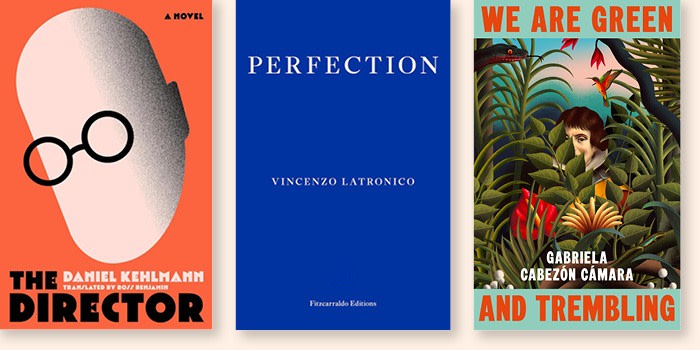
Perfection by Vincenzo Latronico, translated by Sophie Hughes (Fitzcarraldo)
Latronico’s novel, shortlisted for this year’s International Booker Prize, is a portrait of Anna and Tom, creative expats living in Berlin in the 2010s. Privileged, dissatisfied and in thrall to the material emblems of their hipster lifestyle, they struggle to find contentment in this closely observed study of gentrification, millennial angst and the growing chasm between idealised and real lives.
The Director by Daniel Kehlmann, translated by Ross Benjamin (riverrun/ Summit Books)
A darkly comic depiction of the career of Georg Wilhelm Pabst, the influential Austrian filmmaker best known for discovering Greta Garbo. Despite having escaped to Hollywood after Adolf Hitler’s ascent to power, Pabst finds himself recruited by Joseph Goebbels, making films under the Nazi regime and balancing resistance and adaptation.
We Are Green and Trembling by Gabriela Cabezón Cámara, translated by Robin Myers (Harvill Secker)
Based on the real story of Catalina de Erauso, the 17th-century Basque nun who escaped convent life, sailed to South America and became known as the conquistador Antonio de Erauso, this novel by Argentina’s International Booker-nominated author is a bold and compassionate reimagining of an extraordinary queer life.
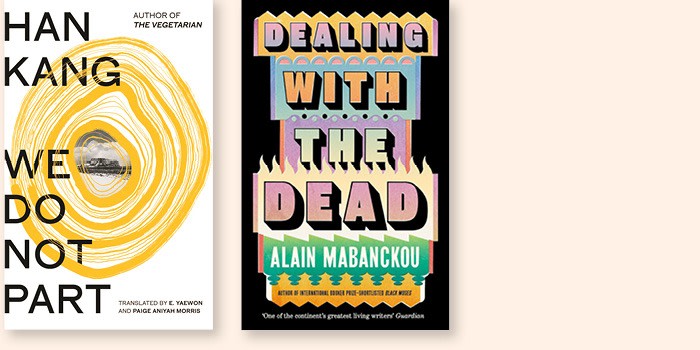
We Do Not Part by Han Kang, translated by E Yaewon and Paige Aniyah Morris (Hamish Hamilton)
The latest novel by 2024’s Nobel laureate revisits a violent chapter in South Korean history as its narrator, a Seoul-based writer, sets out on a journey to the island where an uprising and subsequent massacre took place in 1948-49. A multi-layered reflection on the impossibility of fully reckoning with past brutalities.
Dealing with the Dead by Alain Mabanckou, translated by Helen Stevenson (Serpent’s Tail)
In the Congolese port city of Pointe-Noire, the recently deceased Liwa finds himself rising stylishly from his grave, determined to find the real culprit of his death. What follows is a picaresque journey in search of closure, narrated in the second person by an author dubbed “Africa’s Samuel Beckett”.

Vanishing World by Sayaka Murata, translated by Ginny Tapley Takemori (Granta)
An unsettling take on the conventions of heterosexual relationships, set in a dystopian version of Tokyo where sex is considered unclean and artificial insemination (for both men and women) is the norm. As in earlier novels including Convenience Store Woman, Murata turns the ordinary on its head to powerful effect.
Heart Lamp: Selected Stories by Banu Mushtaq, translated by Deepa Bhasthi (And Other Stories)
Written in the Kannada language, this year’s International Booker Prize winner is a collection of short stories depicting Muslim women and girls in southern India as they grapple with joy, grief and loneliness while navigating social expectations. The judges praised Mushtaq as “an astonishing writer and observer of human nature”.
Lovers of Franz K by Burhan Sönmez, translated by Samî Hêzil (Open Borders)
West Berlin, 1968: a man is being interrogated for the murder of a student. His actual target had been the writer Max Brod, best known today for publishing the work of Franz Kafka — against Kafka’s will. Translated from Kurdish, this provocative novel confronts us with the question: who owns art?

When the Cranes Fly South by Lisa Ridzén, translated by Alice Menzies (Doubleday)
Elderly Bo lives alone in a village in northern Sweden. He is visited by carers, and occasionally by his son Hans. His only regular company is his beloved dog, Sixten. Now Hans is suggesting that Sixten be rehomed. Meditations on memory and fatherhood underpin this tender tale about a man defending his right to live independently.
The Propagandist by Cécile Desprairies, translated by Natasha Lehrer (Swift Press)
Coline, the narrator of this semi-autobiographical debut novel, grows up in 1960s Paris, observing the older women in her family bond over unspoken misfortunes. Years later she’ll understand that they were collaborators during the Nazi occupation of France. A haunting story about collective shame and coming to terms with family secrets.