
Roula Khalaf, Editor of the FT, selects her favourite stories in this weekly newsletter.
In “Woman Fish”, one of her earliest stories published in English, Dorothy Tse writes about a man whose wife turns into a fish. Waking and dream worlds collide. Outside, an unspecified and waterlogged city beckons threateningly, its streets like rivers.
There is an equally unsettling and dreamlike feeling to City Like Water, Tse’s latest offering. Originally published as part of a short-story collection, this surreal novella is set in an unnamed city that is recognisable as the prizewinning author’s native and protest-convulsed Hong Kong.
From its opening sentence — “In the place I used to live, my rusty top bunk rocked like a boat” — the sense of the city being underwater is pervasive. The young narrator, who like the city itself remains nameless, is stitching together scenes from a disrupted family life.
His recollections are impressionistic and unfocused. His memory, he confesses, is a “chaotic sea . . . some things sink forever beneath the waves while others keep bobbing to the surface”.
One of the more sharply defined vignettes concerns his mother buying lotus root to cook in a soup only to discover she was sold a cheap substitute by the market vendor. She soon finds others who were also deceived, and they gather daily at the market to complain about the outrage. After she and the other women are arrested, never to be seen again, news reports circulate about “counter-revolutionaries . . . members of a criminal gang that disguised themselves as housewives”.
This is only one of the absences that haunt this kaleidoscopic book. The narrator’s sister, too, appears to have vanished. The circumstances of her disappearance are never clarified, but recurring imagery of bodies falling out of the sky offers a hint. “I keep hearing bodies hit the ground,” the narrator says. “The thuds are like meteors.”
He remembers a letter sent to all children in his school. “None of us had the patience to read it properly. Instead, we skimmed to the reply slip at the bottom. It said: I promise that I’m happy. I promise not to kill myself.”
In this hazily drawn world, the hard edges of censorship emerge clearly. “At school I had no choice but to keep my head down . . . copying out whatever they wanted,” the narrator recalls. “I gouged the words they didn’t want into the insides of drawers, the backs of bus seats, lampposts — but even those weren’t what I actually wanted to say. What I actually wanted to say was trodden beneath the soles of my feet.”
The sense of oppression grows. Helicopters hover overhead. Armoured police fill public spaces. Again, images of water are inescapable: “We walked the same streets we had always walked, but now we felt like deep-sea explorers. Even school kids were equipped, their book bags crammed with swimming goggles, water to counteract tear gas, cling film to protect arms from toxic spray.”
Mysterious refrains emerge, echoing darkly in hushed conversations: “Cause of death not suspicious.” Or “He went out and never came back.” Is the narrator, himself, one of those who “went out and never came back”? If so, would that make his underwater city a city of ghosts?
Tse’s debut novel, Owlish (published in Natascha Bruce’s English translation in 2023), drew on the Hong Kong pro-democracy protests of 2019-20 to depict a semi-fictional city besieged by unrest. For all its undefined setting and its allegorical atmosphere, City Like Water brims with specific details — for instance, oblique references to umbrellas, emblems of political protest — reminding us that the storytelling here, too, is fuelled by rage.
In her translation, Bruce once again delivers an English version infused with both beauty and terror, showing how easily the language of dreams can become the language of nightmares.
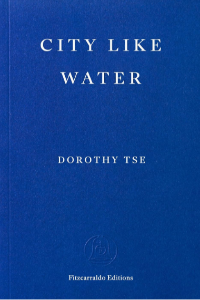
City Like Water by Dorothy Tse, translated by Natascha Bruce Fitzcarraldo Editions £12.99/Graywolf Press $16, 92 pages
Join our online book group on Facebook at FT Books Café and follow FT Weekend on Instagram, Bluesky and X