Priya Ahluwalia is moving beyond deadstock fabrics, expanding her brand into film direction, artificial intelligence, and a complete world built on inherited memory, emotional geography, and instinctual design.
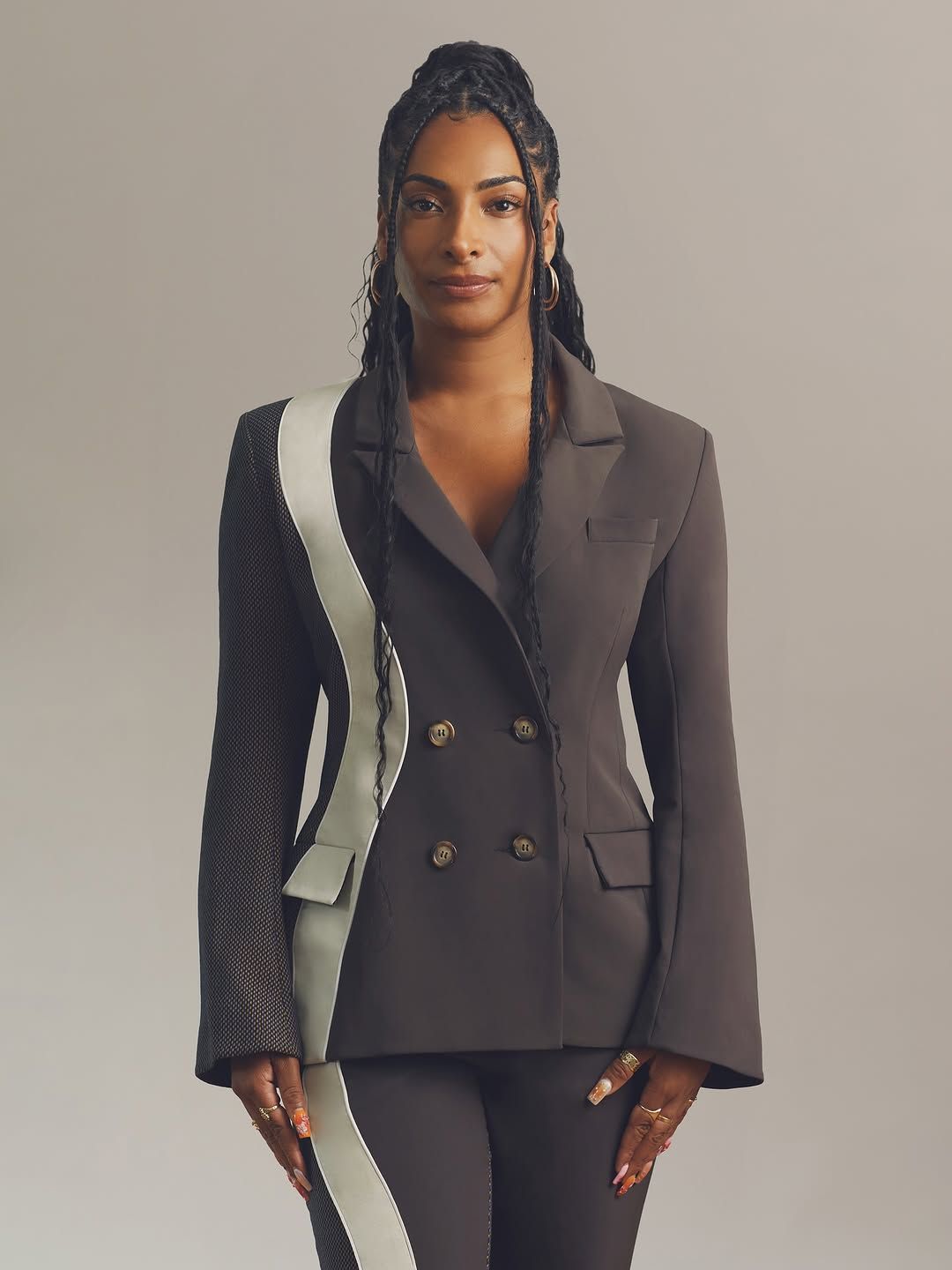
If you think you know Priya Ahluwalia, you don’t. Or rather, you’re clinging to an outdated version. Because the idea that Ahluwalia as a designer, a brand, or a woman, has ever been static is your first mistake.
What began as a fashion label built on heritage and deadstock fabrics has since grown teeth, limbs, and a narrative spine of its own. In the past year alone, Ahluwalia’s work has dressed the Met Gala, in major commercial campaigns, and been brought to life on screen under her own direction. But behind the accolades and algorithmic applause is a creative engine powered by instinct, intimacy, and an unapologetic refusal to dilute.
But the clothes are just the front door. What Ahluwalia offers is sensory, layered and grounded, arranged through music, memory and film. Experience is the medium, and fabric is just the starting point.
The story of Ahluwalia is not one of linear ascent, though on paper it can look that way. Instead, it moves in circles, back toward memory and craft, and towards the inherited know‑how that lives in grandmothers’ anecdotes, photos on the mantel, and fabric tucked inside bottom drawers.
Her Spring/Summer 2025 collection, "Home Sweet Home," debuted at London Fashion Week earlier this year. It turns on ideas of diasporic belonging, domestic memory, and what she calls emotional geography, tucking personal references into every cut and surface. Leaf prints spring from childhood photographs of her mother, taken inside her grandparents’ first British house, while beadwork repeats the rhythms of carved Nigerian doorways. Priya explains that inspiration often surfaces from recorded conversations with her grandmother, capturing emotional pulls between continents. She describes twisting and tying fabric as a translation of these invisible connections, and expressing the sensation of living both here and elsewhere at the same time.
Still, Ahluwalia resists sentimentality. “I’m not precious,” she tells me. That isn’t to say she’s indifferent. But she’s uninterested in forcing interpretation. A print might evoke Punjab or a football shirt reworked from her cousin’s wardrobe. She’s fine with both. If someone sees a beautifully cut jacket and decides to wear it without knowing its backstory, that is part of the exchange. The storytelling, for her, happens in the making. What you do with it after is yours.
It is a creative philosophy that’s helped the brand move with agility at a time when fashion’s foundations are anything but steady. As major retailers shutter and the cost of staging physical shows skyrockets, Ahluwalia made the decision to step away from the traditional runway for Fall/Winter 2025. Instead, she focused her energy on a texture-driven capsule, while strengthening the brand’s online infrastructure and business operations. This move, while quiet, was strategic. It was less about scaling back and more about future-proofing. “It’s been the busiest year of my life,” she says. “Not everything’s visible yet.”
Some of that hidden labour is unfolding in an entirely different medium. Now signed to Black Dog Films, Ahluwalia made her directorial debut with Beloved, a stylised short that pays tribute to both Nollywood and Bollywood through lush visuals and rhythmic pacing. The transition into film was a continuation of her visual storytelling, extending beyond cloth and runway into time, frame, and edit. Subsequent collaborations with Microsoft and Vogue have allowed her to explore narrative through multiple textures; Her project with Microsoft, for instance, using artificial intelligence to generate design concepts from archival images.
From print to screen to code, her process, though evolving, remains unmistakably visual. As an expansion of Ahluwalia’s practice as a creative, her approach to film is shaped by the same internal compass she uses in fashion, but adapted to a new set of rules. In the studio, moodboards sprawl in loose constellations of colour, texture, and half‑formed reference. On a film set those same instincts must be distilled into shot lists and treatments that executives can parse. “You have to be more referential,” she says. “You’re not pitching an idea to yourself. You’re writing it for someone else to sign off.” Whether she is sequencing fabric swatches or framing a close‑up, she is building a world piece by piece; the only difference is authorship. In film she works for a client, in fashion she is the client.
As the brand’s audience widens, so does Ahluwalia’s ambition. Her recent Pandora line turns narrative into metal, etching stylised hibiscus motifs and the word “Joy” in Yoruba-influenced lettering onto charms and signet rings. Dressing Olympic sprinter Gabby Thomas and actor Aimee Lou Wood for the Met Gala proved she still leads with instinct. “If I know, I know,” she shrugs with assertive clarity. Her team remains small and majority women of colour, a space where ideas can be explored without explanation. The studio, she says, is a place of shared language and mutual understanding, where storytelling starts in conversation. Through those exchanges, the collection takes shape through shared experience; ideas surface as much through touch and tone as through words. Her SS26 collection, whilst still under wraps, begins with personal grief. She told her team first. Then, she turned the feeling into a concept, and the concept into clothing.
When I ask if she’d ever design just for herself, with no buyer or audience in mind, her answer is immediate: yes. What would it look like? “I don’t know yet,” she says. “But I’ll know when it’s time.”
Ahluwalia’s vision for the future is as expansive as it is grounded. She talks about interiors, scent, film, food. “I already know what the candle would smell like,” she says, half-smiling. The idea of a person sitting in their living room, surrounded by Ahluwalia: wearing it, watching it, smelling it, perhaps even eating it, is a blueprint. This is a new kind of heritage in progress.
If you think you know Priya Ahluwalia, just wait. You’re probably about to be proven wrong again.