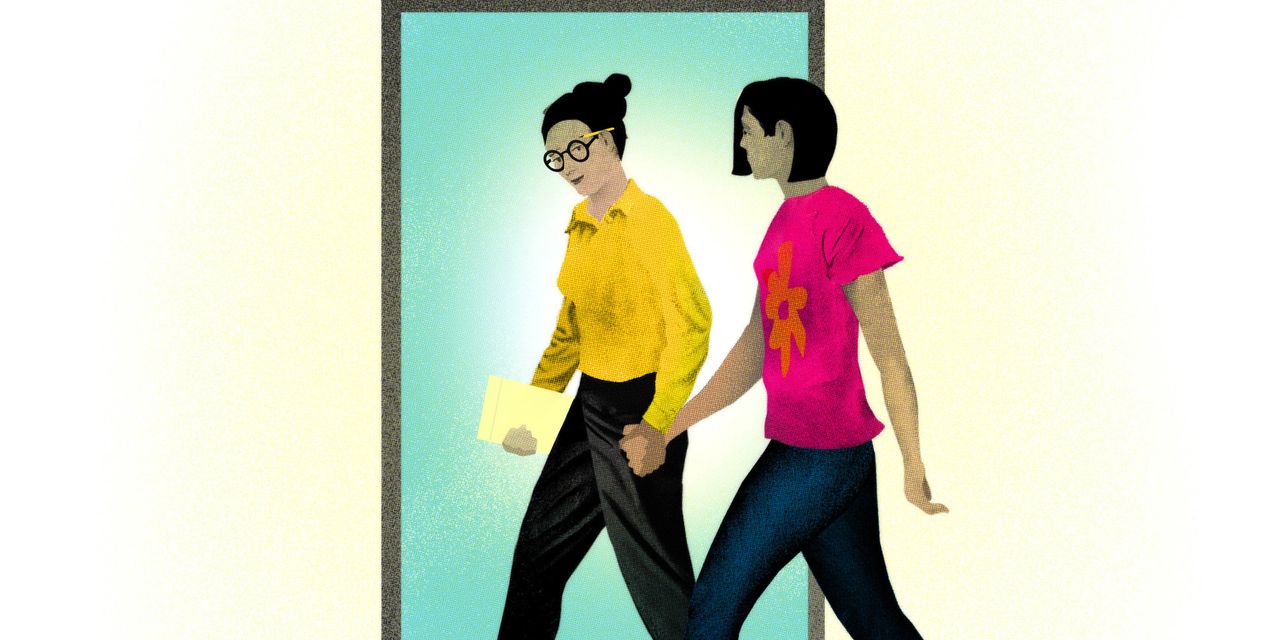
In Western medicine and conventional therapy, there’s a level of remove between doctor and patient. Our doctors are these authority figures whom we trust with our lives, and our secrets.
The past year has changed that dynamic. I’ve (virtually) entered the homes of my own doctor and therapist, and they’ve entered mine. They’ve seen my bedroom and living room, and overheard my children and barking dog. The idea that my therapist should know my world only from what I tell her is long gone.
The result is a changing doctor-patient relationship that is filled with potential gains but also fraught with potential dangers. Can the trust and confidence we have in our doctors survive if they lose the mysterious authority that comes from the veil of privacy? What will the relationship look like if it is more honest, more intimate and more open?
A quiet walk
For me, the biggest impact has been on my relationship with my therapist, whom I’ve seen off and on for nearly 15 years. Where I used to visit her office in a small medical building, I now speak with her regularly by phone, which I prefer to video calls. To get privacy from my family, I do my therapy conversations while going out for a walk. While it means that strangers occasionally see me tearing up as I pass by, I actually find it easier to be open and unselfconscious when I’m not looking my therapist in the face. And physical movement means I have a different kind of energy in my therapy sessions.
Eventually, I will want to go back to the couch—but I can see alternating in-person visits with calls, because the kinds of things that come up are so different. In person is good for digging deep into big-picture issues from my past or present family, but somehow phone is easier when it comes to discharging frustrations in my current personal or professional life. Things that feel too petty to discuss in the office feel therapist-worthy when connecting by phone.
I’ve found the same sort of conversational ease talking to my family doctor about physical issues. I’ve usually hesitated to trouble her with my prescreening anxiety before mammograms, because it doesn’t feel visit-worthy. But that has meant I’ve sometimes delayed my mammograms for months at time.
This year, however, I took advantage of video appointments to have a very short conversation about whether I really needed to do that next screening. Yes, she told me. In a world where skipping the doctor’s office can mean missing valuable preventive care or screenings, the ease of a virtual appointment could make patients like me more proactive and diligent.
Doctor deference
Virtual appointments have helped me build stronger, more collaborative relationships with my kids’ caregivers, too. I adore our pediatrician and have always found her warm and attentive. But she is half a generation my senior, with a packed office in a formal medical building. In person, I never forgot that she was The Doctor, and it created a certain kind of deference.
Now that I see her on camera, from her home, our relationship has become much warmer and more collegial, like we’re partners in looking after my son’s health. I tease her about the liquor bottles in the background of her video window; she talks frankly with me about her travails in dealing with our local pharmacy. That level of informality means we can work together more closely for my son’s well-being, and also gives me new insight into how to deal with crucial issues like navigating our sometimes complicated medical prescriptions. (When I asked our pediatrician about this, she said my observations remind her “to check, am I being sufficiently professional? We do still need that slight divide, even as we reveal more of ourselves. At least, I think I do.”)
Our relationship has also been strengthened by the logistical ease of connecting online instead of in person. While I never feel rushed when I’m in the pediatrician’s office, it’s often preceded by a long wait, and so by the time I get into her office with my son, he might be cranky and I might be frustrated or worn out. The stress often carried through to the examining room so that I was sometimes irritable with our doctor, or forgetful when it came to relaying key details. Now that the doctor’s “waiting room” is my video screen, I can get my work done while I wait for her to materialize on camera—so I’m relaxed, comfortable and focused when it’s time to talk.
Share Your Thoughts
How do you think virtual appointments have changed your relationship with your doctor? Join the conversation below.
At the same time, though, I sometimes worry that remote medicine makes me a worse patient—in ways that could damage my relationship with caregivers. A few months ago, I wanted to talk to my specialist—one who had guided me through nutritional issues—about my kid’s eating habits. Since her site had no way to book appointments for new patients, I booked the appointment as if it were for myself, even though I wanted to talk about my child. I would never book an in-person appointment but then show up with a different patient, yet the context of a virtual appointment somehow felt like license to do an end run around a deliberate no-new-patients policy.
Some of the same things that I relish about my new doctor-patient relationships have me concerned when it comes to my kids’ relationships with their doctors. My eldest child (who is nonbinary, and uses gender-neutral pronouns) is now at the age where they do their medical appointments solo, which means I no longer get to weigh in on what I think the doctor should know. With an in-person appointment, I have some confidence that a savvy doctor can read teenage body language well enough to know when something’s going unsaid, and a little questioning is required. But the screen acts as both a buffer and inhibitor: My teen says they’re less likely to share personal details with their caregivers when they’re talking over video, and I am far less sanguine about a doctor’s ability to pick up on that inhibition—much less probe for missing information—when they’re not even in the same room.
Getting close
None of this is to say that I never want to see my doctors in person again. After nine months of handling just about all our physical and mental health needs over a phone or web connection, it felt like a treat to see our doctors in person when it came time for our November flu shots. It was warmly reassuring to be next to somebody after months on a screen.
It’s all a reminder that there is no one-size-fits-all relationship, and there is no one-size-fits-one-person-all-the-time relationship. For me, both in-person conversations and remote conversations have their unique advantages and disadvantages. Sometimes, eye contact or hands-on care is just what I need to feel confident in my doctor’s diagnosis or advice. But other times, there’s nothing like leveling the playing field with video or phone chat to make everything feel a bit more intimate and safer.
One of the lessons we’ve learned from a year of remote everything is that in-person interactions have strengths that virtual conversations can’t quite match, and vice versa. Healthcare may be one more area where the future is hybrid.
Dr. Samuel is a technology researcher and the co-author of the forthcoming book “Remote, Inc.: How to Thrive at Work…Wherever You Are.” She can be reached at reports@wsj.com.
Journal Report
- Insights from The Experts
- Read more at WSJ.com/HealthReport