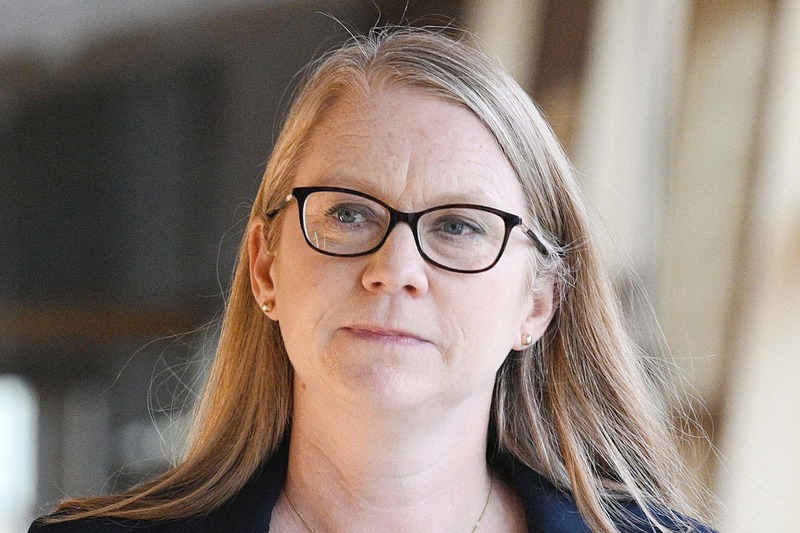
Scotland’s housing secretary and its largest trade body for registered providers have welcomed the nation’s version of Awaab’s Law coming into force this week.
Shirley-Anne Somerville, cabinet secretary for housing, said “tenants no longer need to fight to be believed”, while the Scottish Federation of Housing Associations (SFHA) said the law will give residents and social landlords “clear, consistent standards for tackling damp and mould”.
As of 6 October, the Investigation and Commencement of Repair (Scotland) Regulations 2026 requires landlords to investigate reports of damp and mould within 10 working days, provide written findings and complete necessary repairs as soon as possible.
The Scottish government issued guidance in September to help both social and private landlords comply with upcoming Awaab’s Law regulations.
It emphasised the importance of landlords and tenants working “collaboratively” to update one other on concerns and the progress of repairs.
The new legislation, named for two-year-old Awaab Ishak, who died after prolonged exposure to severe mould in a housing association home in Rochdale, mirrors Awaab’s Law in England, which was introduced in October 2025.
Ms Somerville said: “No child should ever suffer the way Awaab Ishak did, and no family in Scotland should have to live with damp or mould that’s ignored or brushed aside. That’s why, as of today, landlords have a legal duty to act within days.
“We know the overwhelming majority of rented homes in Scotland are decent, warm and dry, but for the small number where that isn’t the case, this law closes the gap. Tenants no longer need to fight to be believed, and landlords now have a clear, consistent standard to work to.”
Ms Somerville paid tribute to input into the new law from “tenants who’ve lived through these problems, and landlords who want to get this right”.
“I thank them for all their efforts in effecting this change. My message today is simple: know your rights, know your responsibilities, and let’s make sure homes across Scotland are places people can be healthy in,” she said.
Responding to the new legislation, Paul Bradley, director of external affairs at the SFHA, said: “Every case of damp or mould matters to the household living with it, and our members – who provide safe, warm and affordable homes to over 300,000 households across Scotland – treat these issues with the utmost seriousness.”
Scottish social landlords, including housing associations and councils, resolved over 40,000 cases of damp and mould during 2025-26, and in the “vast majority” there was no recurrence, according to a review published in September by the Scottish Housing Regulator (SHR).
“SFHA and its members support Awaab’s Law, which will give tenants and social landlords clear, consistent standards for tackling damp and mould,” Mr Bradley said.
“The SHR’s own data shows housing associations resolving damp and mould cases in an average of 20 days, irrespective of cause and well inside the 35-day timescale Awaab’s Law now requires.”
He said that performance “reflects sustained investment and collaboration with specialist contractors and surveyors to continuously improve how members respond to damp and mould, including modern technology to improve detection”.
“But the work is not finished, in either detection or prevention. SFHA will contribute fully to the regulator’s upcoming review of its damp and mould indicators, so the data gives a clear and accurate picture of performance across the sector,” Mr Bradley added.