The US has moved aircraft out of a second British airbase following an Iranian threat, weeks after bombers were withdrawn from another site.
The evacuation came just as Donald Trump ominously warned of another wave of strikes, threatening the nation with raids “five times bigger” than seen previously.
Speaking by phone to C-SPAN’s Washington Journal Primetime on Monday night, the president put another enormous bombardment on the table.
Meanwhile, Iran is insisting months of military pressure has failed to bring its 92 million-strong nation to heel.
The nation’s biggest powerbrokers know that the conflict has made the US very weak internally, with the recent midterms showing exactly how many of Mr Trump’s supporters have left him.
Iran's seven conditions for ending war
Iran is insisting months of military pressure has failed to bring its 92 million-strong nation to heel.
The nation’s biggest powerbrokers know that the conflict has made the US very weak internally, with the recent midterms showing exactly how many of Donald Trump’s supporters have left him.
Amid the vague peace talks frantically playing out behind the scenes, Iran has publicly outlined seven concrete conditions for ending the war.
Whether the US and Israel ever comes to the table is a different matter entirely.
The demands include ending hostilities across all fronts, particularly Lebanon; releasing frozen Iranian funds; lifting the US naval blockade and sanctions; and ending attacks on Iranian territory, interference in domestic affairs and cooperation with the regime’s opponents.
Behind the defiance is a country that has suffered enormous damage. The US-Israeli campaign killed supreme leader Ali Khamenei in February, while the blockade continues to target the oil revenues Tehran needs to sustain its economy.
But destroying military targets and forcing political surrender are very different propositions.
Iran has demonstrated its ability to disrupt the Strait of Hormuz, which carried about 20 million barrels of oil a day before the war, according to the International Energy Agency.
University of South Florida politics professor Mohsen Milani argued in September that the conflict could leave Iran more influential regionally, despite its military losses.
Writing for Chatham House, he said Tehran had demonstrated that “geography can compensate for military weakness”. Missiles, drones, mines and attacks on shipping allow it to impose costs without matching America’s conventional firepower.
International Crisis Group’s Ali Vaez made a similar argument in May, saying the US and Israel had granted Iran a “weapon of mass disruption” through its leverage over Hormuz.
In an assessment published Monday, Chatham House’s Bilal Saab argued the blockade was hurting Tehran financially but might provoke further attacks rather than concessions. Iran, he wrote, is betting that mounting economic pain will push Gulf neighbours to press Washington harder for an exit.
US evacuates base after Iran threat
The US military has reportedly moved aircraft out of a second British airbase following an Iranian threat, weeks after American bombers were withdrawn from RAF Fairford.
The evacuation came just as Donald Trump ominously warned of another wave of strikes, threatening the nation with raids “five times bigger” than seen previously.
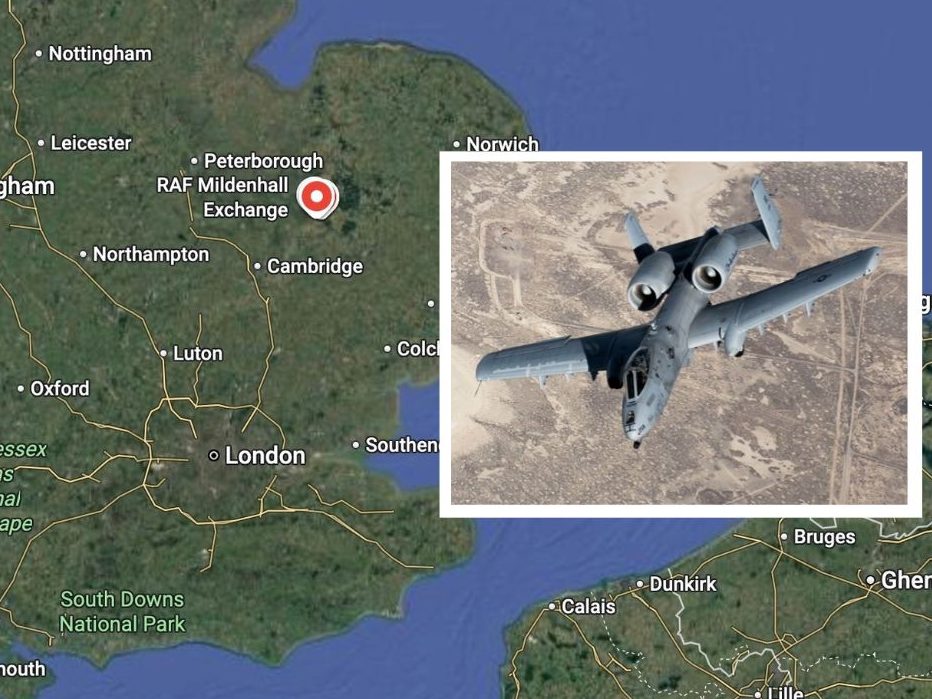
The Wall Street Journal now reports two refuelling tankers using RAF Mildenhall were diverted to Germany on Monday morning, with several others moved to Germany and other locations later that day.
A US official separately confirmed security had been increased at both Mildenhall and nearby RAF Lakenheath, without publicly explaining what prompted the change.
“Enhanced force protection measures are in effect across RAF Lakenheath and RAF Mildenhall,” the official told The War Zone.
Britain’s Ministry of Defence offered little detail.
“We do not routinely comment on the activity of other nations. Aircraft and other assets move regularly according to operational requirements,” a spokesperson said.
The movements follow the withdrawal of US B-1 bombers from Fairford after an alleged Iran-linked threat. Tehran has denied involvement in the suspected plot at that base
Hegseth to speak as impeachment vote looms
Pete Hegseth will soon appear at the Pentagon for his first press conference in six months as Republicans push to impeach the US Defence Secretary.
Republican Congressman Thomas Massie on Monday formally introduced articles of impeachment against Mr Hegseth on the House floor, accusing him of breaking the law by taking the US into war with Iran without congressional approval.
Mr Massie, a longtime critic of Donald Trump and the Iran conflict, triggered a 48-hour window for the House to deal with the measure. Politicians s can vote on it outright, send it to committee or move to shelve it.
The bid is unlikely to succeed. Impeaching a cabinet secretary is rare, and removal would require approval from both chambers of Congress, which are currently controlled by Republicans.
Mr Trump has thrown his support behind Mr Hegseth, who said on Tuesday he was “not worried” about the impeachment threat.
France blames Iran for fridge hacks
The EU said Tuesday it would look to provide a “swift and united response” after France blamed Iran for a cyberattack on hundreds of supermarket fridges.
“We acknowledge that France has attributed this to Iran. Pending discussions with member states, we, as the European Union, stand ready to come with a swift and united response,” EU spokesman Anouar El Anouni said.
France said on Monday it has opened an investigation into an Iranian cyber unit affiliated with the Islamic Revolutionary Guard Corps over cyberattacks that targeted supermarket refrigerators last month.
“A judicial investigation has been opened against the head of the Iranian group Shahid Kaveh, an offensive cyber unit affiliated with the Electronic and Cyber Center of the Islamic Revolutionary Guard Corps (IRGC-CEC), against his two deputies, and against any other individuals who may be identified,” Paris prosecutor Laure Beccuau said in a statement.
Trump threatens more Iran strikes on-air
Donald Trump has warned another US attack on Iran would be “approximately five times bigger” than the first in a new interview that went out across the US today.
Speaking by phone to C-SPAN’s Washington Journal Primetime on Monday night, the president put another enormous bombardment on the table.
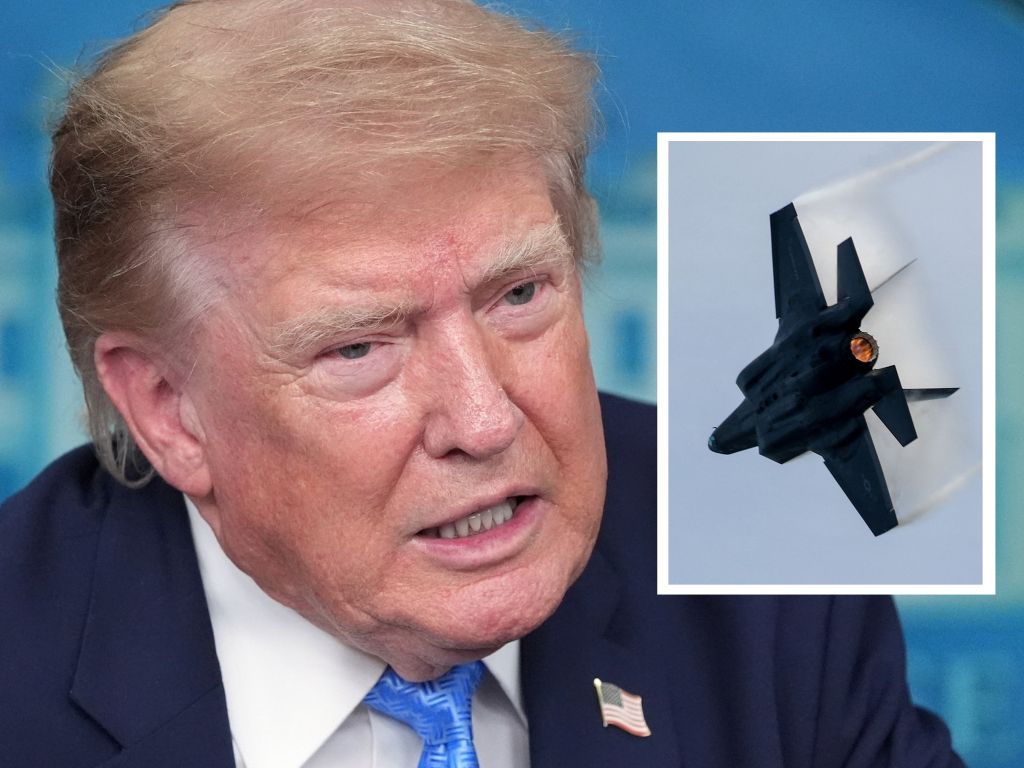
Trump claims he had spoken with Qatar, Saudi Arabia, the UAE, Bahrain and Kuwait about the approach. Those nations are scrambling for peace, with the war eating into profits as ongoing instability rattles the region’s economy.
“But in speaking to them, they’d rather do it this way rather than another hit, which would be approximately five times bigger than the first hit,” he said.
Trump then again declared victory over Iran, even as he fielded a question about how much longer the conflict would continue.
“We wiped out their Navy. We wiped out their Air Force,” he said, claiming Tehran wanted an agreement.
“They don’t say that publicly.”
He also renewed his conditional threat against Pickaxe Mountain, the underground site that has repeatedly featured in his warnings.
“We may have to hit Pickaxe Mountain if they’re going to do something. We don’t see that.”
The threat comes after Trump told CNN on Sunday that renewed attacks were “highly unlikely” if negotiations progressed, although he reserved the option of further strikes.