Welcome to our live coverage of ongoing tech outages and cyberattacks.
PlayStation players have reported login, download and purchasing problems just hours before Grand Theft Auto VI’s release in Australia.
It’s all happening smack in the middle of a hacking crisis, with global tech platforms being put under the pump.
A critical vulnerability has been discovered in Java, one of the world’s most widely used programming platforms, that could allow attackers to remotely execute code, security researchers revealed on Tuesday.
It came as a top-secret network that the US National Security Agency (NSA) uses for internal communications went down in an outage blamed on “routine maintenance”, ratcheting up fears even as the White House insisted America was not under hostile attack.
Earlier, a cyberattack hit some of the world’s most visited websites in an effort to steal financial information and infect iPhones, according to security experts.
The attackers slipped a malicious JavaScript code into a third-party website tool, Optimizely, that was being used by 178 different organisations, according to researcher Scott Helme.
Among those impacted were Zoom, HSBC, Equifax, CNN, Salesforce, Ikea and the BBC, which regularly draw in millions of visitors per week. In Australia, Vodafone Australia, ASOS, Levi’s Australia and HSBC Australia were identified as compromised.
Separate disruptions hit Gmail and Apple’s iPhone apps, such as Apple Pay and iCloud, according to thousands of users reporting problems to Downdetector.
The fresh outages come on the heels of major disruptions to US banks, a Microsoft shutdown last week that disrupted services around the world, and a nationwide flight grounding on Friday after a major technological failure hit the US Federal Aviation Administration (FAA).
GTA VI chaos as Playstation network reported down
PlayStation players have reported login, download and purchasing problems just hours before Grand Theft Auto VI’s release in Australia.
The most anticipated game this century was tipped to produce a few errors for Australia’s notoriously shaky internet, but those predictions were for after the release when everyone finally loaded in to play.
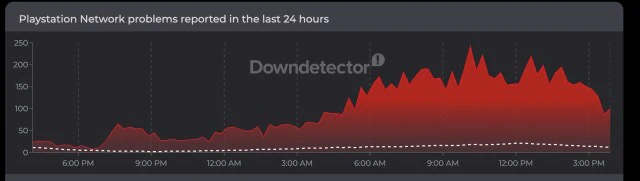
Users have described difficulties accessing accounts and downloading updates deep into Wednesday afternoon. One report submitted to monitoring site StatusGator complained that they “can’t buy GTA VI”.

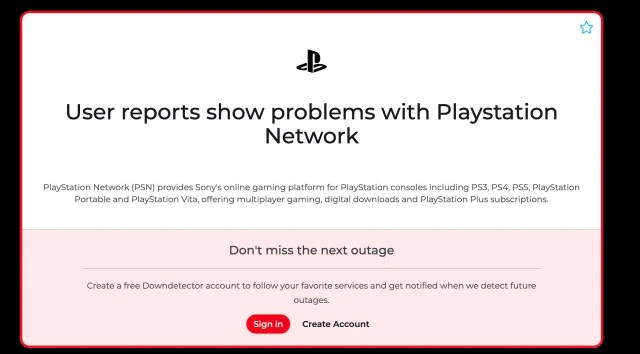
The tracker nevertheless listed PlayStation as operational, as did separate monitoring service IsDown.
DownDetector also reported users experiencing problems.
Rockstar says GTA VI unlocks at midnight local time on Thursday, November 19, on PlayStation 5 and Xbox Series X|S.
Players experiencing trouble can check PlayStation’s regional service-status page.
Critical vulnerability in Java
A critical vulnerability discovered in Java, one of the world’s most widely used programming platforms, could allow attackers to remotely execute code on enterprise applications including Atlassian’s Jira and Confluence, Keycloak and Jenkins.
The flaw in Java’s open-source implementation OpenJDK, dubbed Java4Shell, was disclosed by security researchers at Calif on Tuesday, as Java developer Oracle rolled out an urgent fix.
The US Cybersecurity and Infrastructure Security Agency (CISA) urged all organisations to immediately patch the vulnerability.
Calif, which also took credit last month for identifying a similar critical vulnerability in PHP, the programming language behind roughly 70 per cent of websites, rated Java4Shell a 9.2 out of 10 in seriousness.
“While PHP is a high-level web technology, Java sits much deeper,” Calif said in blog post. “Java is the world’s third most popular programming language, powering 90 per cent of Fortune 500 companies. It is the beating heart of the modern economy. Banking, aviation, telecommunications, nearly every critical sector runs on Java, including national security systems.”
The flaw, which affects OpenJDK’s Base64 decoder, allows malicious code to be injected using just 64 characters followed by a single equals sign.
Calif said as with the PHP vulnerability, the Java exploit was discovered with the help of AI. “It took our own Quang Luong an hour to discover the vulnerability, and two more hours to develop the first working exploit,” it said. “The total token cost was less than $US200.”
New era of hacks has arrived: Google
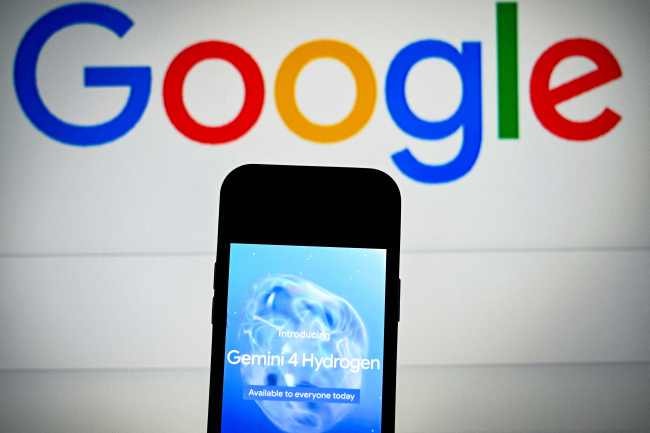
Google said on Tuesday agentic AI hacking activity had crossed a “significant threshold”, warning “the era of autonomous attacks has arrived” and that defense against “machine-speed threats at human speed” was no longer feasible.
“Imagine a hacker that doesn’t eat, sleep, or get tired, and never stops searching for a way in,” Google said in a statement. “According to the latest AI Threat Tracker report, bad actors are now using autonomous LLM frameworks to continuously scan software updates, figure out what flaw was patched, and build an attack for it – all without human involvement.”
In a major milestone in the past quarter, a Russian hacker used AI to “fully automate vulnerability discovery and exploitation without a human in the loop for the first time”, the threat report said.
“Victim telemetry on the server suggests the operator was specifically interested in targeting French websites associated with the media and entertainment industries, as well as the education sector.”
John Hultquist, chief analyst at Google Threat Intelligence Group, said, “For the most part, attackers aren’t using new groundbreaking methods to break into systems – they are still going after known, unfixed issues, just with much greater speed and scale. Instead of relying on manual effort to keep up, we will have to embrace agentic defense. Or we risk falling behind.”
Google’s response to the rising risks is its autonomous Google AI Threat Defense, which “combines Gemini and other frontier models, Wiz’s context and prioritisation, CodeMender’s automated patching, and Mandiant’s expertise to continuously find and fix flaws before attackers can exploit them”.
'Zero evidence' outages linked
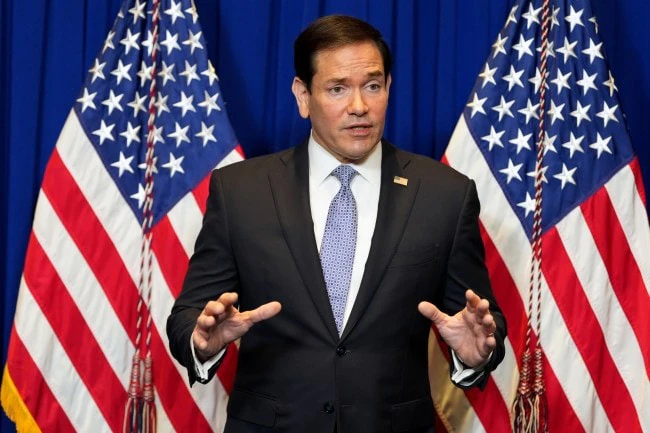
US Secretary of State Marco Rubio said on Wednesday that federal officials have found “zero evidence” linking a recent wave of technology and aviation outages to one another or to foreign cybercriminals, nation-states or other malign actors.
Addressing reporters during a morning gaggle, Mr Rubio acknowledged public anxiety following days of disruptions affecting Microsoft, the Federal Aviation Administration and major US banks, saying he wanted to offer “full transparency” on what the government knows.
“I want to make very clear is that we have zero evidence whatsoever. We have no indication, no evidence, and no reason to believe at all that any of these incidents are related to each other,” Mr Rubio said. “In essence, the Microsoft incident has nothing to do with what we saw with the FAA. The FAA has nothing to do with what we saw with the banks a few days ago.”
Mr Rubio emphasised that federal agencies remain vigilant against threats to national security and the economy, but said all available intelligence points to isolated technical failures rather than a coordinated attack. “The second is that we have zero evidence or any reason to believe that any of these isolated or individual instances have anything to do with nefarious actors, with cyber hackers, with criminals, with another nation state, with a malign actor of any kind,” he added.
Hockey federation, gas firm hacked

Norway’s $US100 billion gas company Equinor has been hit with a cyber attack against its IT systems, Reuters reports. The company said on Tuesday it was mobilising resources to neutralise attack and regain full integrity, adding it had seen no data theft or impact on operations.
Meanwhile the International Ice Hockey Federation (IIHF) said it had been targeted in a cyberattack, days after it confirmed Russia would not take part in next month’s Under-20 World Championships in Alberta, Canada, AFP reports. The IIHF’s official website was still offline late on Tuesday, hours after an image of Russian players celebrating had appeared alongside a caption which read, “Scared to face Russia? You banned the only team you can’t beat.”
The image was removed from the site, which was later declared “temporarily unavailable” due to “maintenance”.
“The International Ice Hockey Federation(IIHF) has been the target of a cyberattack,” the federation said in a statement on X. “We strongly condemn these actions and are taking all necessary steps to investigate the source of the attack and restore our systems. Our platforms will be back online as soon as we are confident they are secure. The IIHF remains committed to protecting the integrity of our organisation and safeguarding our sport.”
'We are not under attack': Mullin
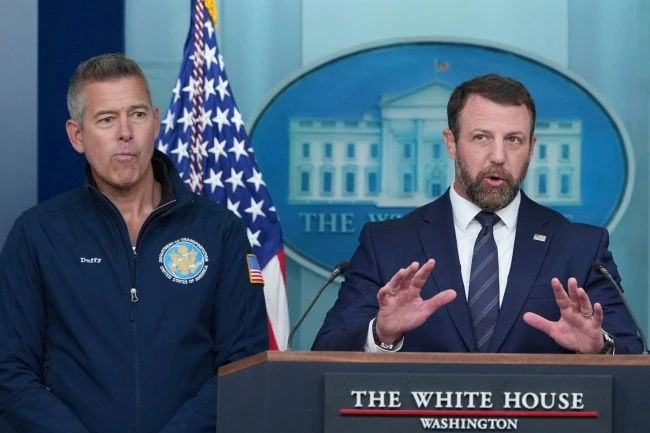
US officials have insisted “we are not under attack” and there is no evidence cyber-criminals are behind the recent wave of tech disruptions, including to the National Security Agency’s top-secret network NSANet.
“I can tell you with complete certainty that we are not under attack,” Homeland Security Secretary Markwayne Mullin insisted in an interview on CNBC. “There’s no cyber threat that’s taking place. The homeland is very secure.”
The NSA said it had experienced “temporary degradation during scheduled routine maintenance”. “While some internal systems were affected, mission-critical capabilities remain fully operational and our ability to defend national security continues,” an unnamed NSA spokesperson said in an e-mail to AFP.
CNN cited six people familiar with the outage and said that so far there is no evidence of a cyberattack, in the latest technical snafu to plague America in a matter of just days. The Wall Street Journal quoted a person familiar with the NSA incident as saying the outage stemmed from software update work and there was no evidence of hacking.
Director of National Intelligence Jay Clayton also told Fox Business all the recent tech outages are likely not due to cyberattacks.
“Everybody recognises it’s time to upgrade their systems, and as they upgrade them, they’re not coming back as expected in all cases,” Mr Clayton said. “And in some cases, systems have to hand off to other systems, and those handoffs are not coming back as expected. Looking very diligently across the landscape, we are not seeing this as a cyber attack incident.”
No 90-day blackout after FEMA test
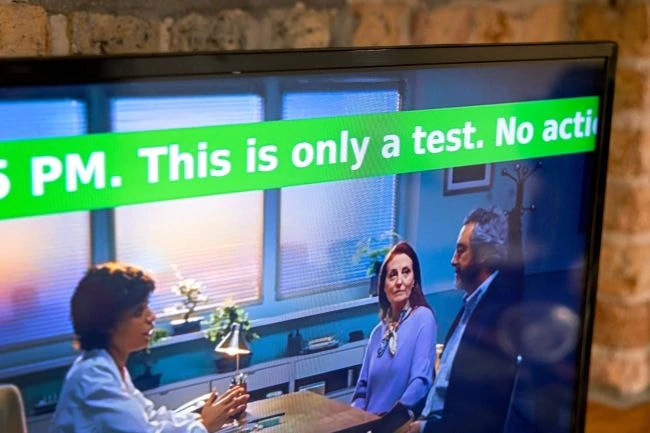
The US Federal Emergency Management Agency (FEMA) sent a scheduled test of its Emergency Alert System on Tuesday at 2.20pm eastern time – failing to trigger a 90-day blackout as had been claimed by viral online conspiracy theories.
Under federal law, FEMA must test the system at least once every three years to make ensure the system is effective before it’s needed in an actual emergency.
“We’ve heard a lot of rumours about tomorrow’s EAS test,” FEMA wrote in a social media post on Monday. “Let’s clear things up. It lasts 1 minute, and no action is required. No blackouts, no secret emergencies. Just our legally mandated, routine test on TV and radio at approximately 2.20 PM ET.”
Australians were treated to a similar test of the nationwide AusAlert system back in July.
Theory NSA outage prelude to 'attack'
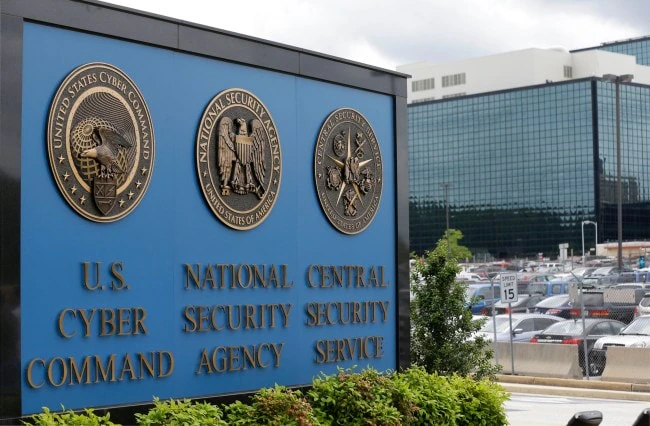
Laura Loomer, a controversial conspiracy theorist but nonetheless a close ally of President Donald Trump and one of the most influential figures in MAGA world, has weighed in on the outage of the NSA’s classified internal messaging system, NSANet.
“Employees at the NSA who are currently unable to access the highly classified NSA Net have reportedly been SENT HOME,” Loomer wrote on X.
“Source tells me the NSA system being down in conjunction with all of the other outages last week and over the weekend is what the Intel community calls ‘signaling’, which is a way for foreign adversaries and hackers to ‘signal’ what they are capable of doing as a pre-warning before a major hack or debilitating cyber attack.
“Source told me this is likely the work of Iran with assistance from China and or Russia, whose hackers they tell me are more sophisticated than the Iranians.”
'Be prepared for everything': Vance
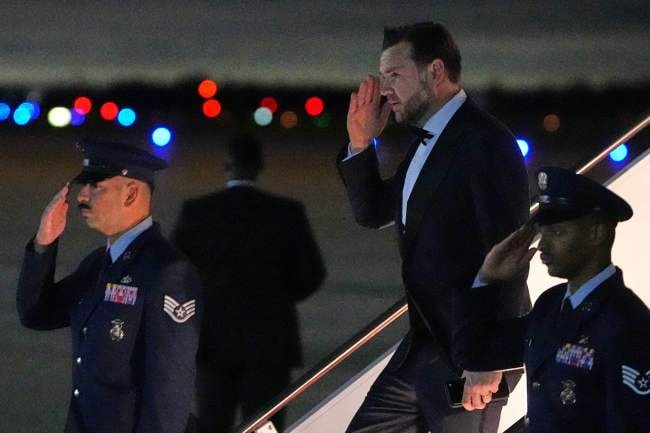
US Vice President JD Vance has downplayed the need to panic-buy but still warned Americans should “be prepared for everything”.
“A lot of my friends have reached out asking if they should prepare to build a bunker or stock up on food and water,” Mr Vance told Fox News host Laura Ingraham on Monday.
“My answer to that is no. We don’t see a crisis coming down. But you have to be prepared for everything. We want to make sure we prevent the worst outcomes, but we’re also prepared for the worst outcomes.”
President Donald Trump, at the APEC summit in Manila on Tuesday, brushed off a reporter as she asked if he was concerned about repeated tech outages. “No,” he said, interrupting the question. “It’s life. It’s life. When you’re big and powerful, and you have all the money, things like that happen. It’s fine.”
FAA denies AI link to shutdown
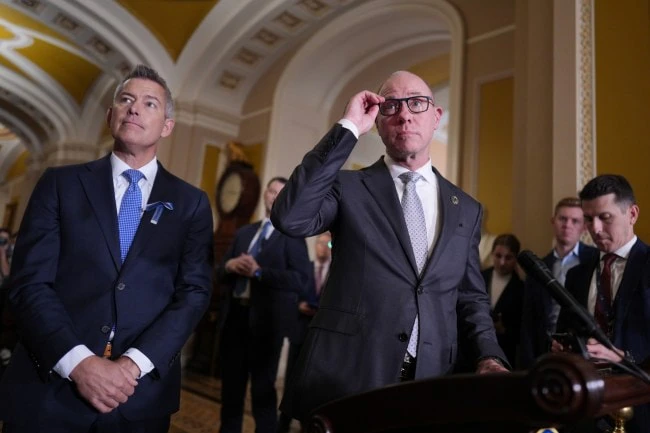
US Federal Aviation Administration (FAA) officials on Tuesday dismissed rumors that artificial intelligence triggered last week’s nationwide airspace shutdown, while Transportation Secretary Sean Duffy acknowledged it took longer than he would have liked to identify the faulty router and put network contractor L3Harris on notice.
Speaking on Capitol Hill after briefing Senate Republicans, FAA administrator Bryan Bedford said speculation linking the disruption to AI is “completely unfounded”, noting that the agency has disabled the remaining 68 routers nationwide after a malfunctioning unit forced a ground stop.
Mr Duffy said he asked FBI Director Kash Patel to send a team to help examine a malfunctioning router that triggered the shutdown, though intelligence officials say the disruption was not a cyberattack. Mr Duffy said the 69th installation of the router overloaded the network, prompting officials to halt flights after radar feeds showed issues.
“We’ve been able to recreate what happened in El Dorado. But the root cause of what happened, we don’t have clarity yet,” Mr Duffy said, adding that the FAA, L3Harris, HP, Cisco and the FBI are analyzing the hardware in Florida. Calling for funds to modernize mid-1990s air traffic software and copper wiring, Mr Duffy said, “Our system is old. It’s showing its age.”