The court-appointed monitor overseeing Trump’s business empire added new intrigue on Friday to the Chicago loan amid disputes over its size, the parties to the agreement, or whether it even exists
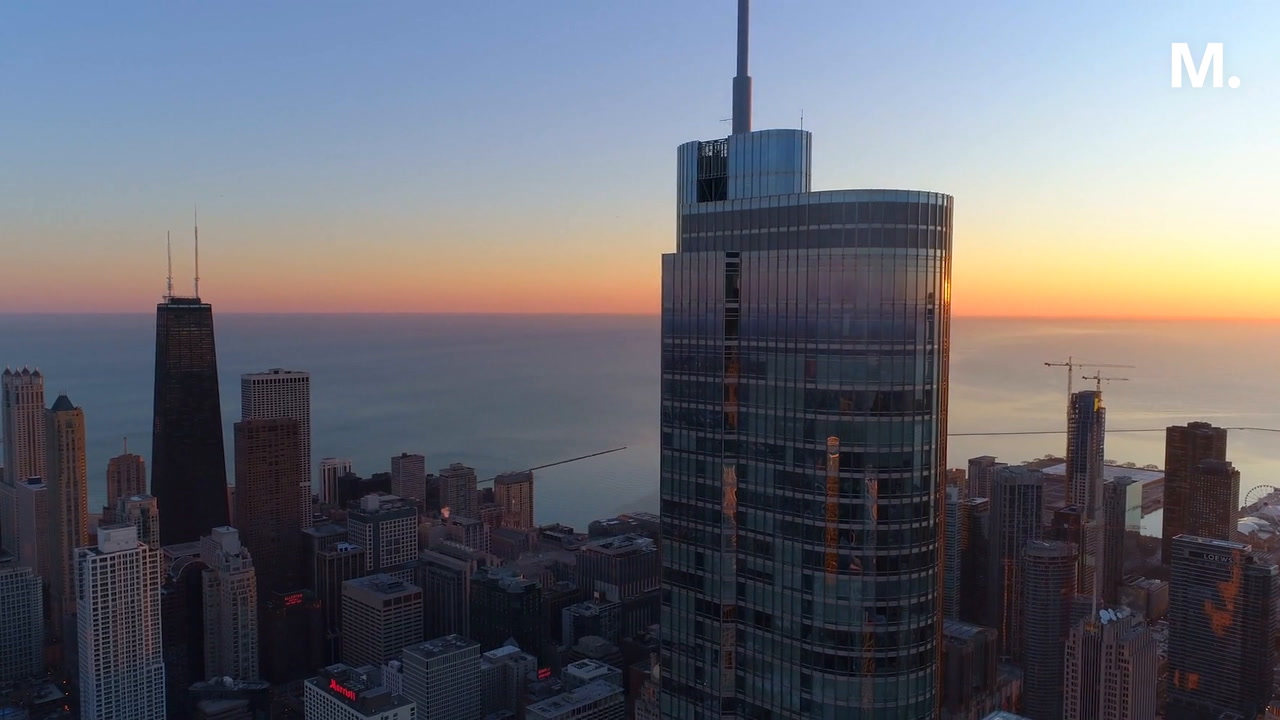
The mystery surrounding a purported eight-figure loan involving an entity tied to Donald Trump's Chicago skyscraper merits criminal investigation, despite the explanation provided by the former president's attorney, three legal experts tell The Messenger.
For nearly a decade, financial journalists have puzzled over a loan between Trump and an entity Chicago Unit Acquisition LLC, linked to the former president’s 92-story Chicago tower. Trump disclosed the loan annually while president on sworn documents to the federal government’s Office of Government Ethics (OGE), indicating that he owed upwards of $50 million to his own limited liability company.
In the latest development of the former president’s civil fraud case, everything about the Chicago loan remains in dispute — including its size, the parties to the agreement, or whether it even exists.
On Friday, the court-appointed monitor overseeing Trump’s business empire contended the longstanding controversy may amount to little more than a mirage.
In a footnote of a 12-page report summarizing years of oversight of The Trump Organization, former federal judge Barbara Jones said she was informed that the loan “never existed” and there are “no loan agreements that memorialize” it.
After Jones' report went public, The Daily Beast quoted legal experts arguing that the apparent discrepancy appears to show evidence that Trump was lying on sworn statements — and could support a previously reported theory of “tax evasion.” Fortress, one of the financial firms backing Trump’s Chicago Hotel and Tower, agreed to cancel roughly half of a $100 million loan to him in 2012, two sources previously told Mother Jones. If so, the canceled funds would have been reportable, taxable income.
The Daily Beast suggested that Trump may have avoided having to pay by making it appear as if that loan had been purchased rather than canceled, citing Trump's remarks to The New York Times that he bought the loan back from a group of banks.
- Ex-Trump Org CFO Allen Weisselberg Dealt Directly With His Son on Trump Tower and 40 Wall Street Loans
- A Small Bank Loaned Trump the $225 Million He Needed to Run for President in 2024: Report
- Trump Org’s Fraudulent Statements Cost Banks $168 Million in Interest, AG’s Financial Expert Testifies
- Trump Political and Financial Links Abound Behind Line-Up of His Defense Experts
- Trump Org’s Ex-CFO Allen Weisselberg Testified It’s a ‘Coincidence’ His $2 Million Severance Exactly Matches His Criminal Penalty
- Trump Defamatory Statements Influence Nearly 25 Million People, Expert Witness Testifies
In the civil fraud case, the court-appointed monitor’s suggestion that the loan “never existed” fanned these suspicions.
The Trump family’s lawyer Clifford Robert said the monitor’s contention was a “demonstrable falsehood,” and that the monitor was informed that the loan did exist.
As evidence, Robert pointed to an internal Trump Organization memorandum that he claimed the company provided the monitor, reflecting a $48 million “springing loan” — lent on unfavorable terms to the borrower — from Chicago Unit Acquisition LLC to 401 Mezz Venture LLC. The memo cites a lower figure for the loan than Trump put on official records, and it does not suggest that the former president was a part of it.
Three legal experts told The Messenger that the explanation by Trump’s legal team shed more uncertainty than light.
Jordan Libowitz, a spokesperson for the advocacy group Citizens for Responsibility and Ethics in Washington (CREW), recapped the evolving explanations for the loans in a text message.
First, Trump claimed on OGE documents to have loaned the money to the Chicago tower-affiliated LLC, and then, his company’s general counsel Alan Garten told The Daily Beast that the LLC actually owes that amount to the former president.
“Now they put out a one-line memo that nothing is owed on a $48 million loan between Chicago Unite Acquisition and 401 Mezz LLC, nothing about Trump personally,” Libowitz told The Messenger. “They are doing nothing to address—and may be even supporting the case—that Trump knowingly filed untrue claims in his personal financial disclosures, something punishable by both civil and criminal penalties.”
CREW represents the Colorado voters seeking to disqualify Trump from the ballot under the 14th Amendment’s disqualification clause, an effort set to be argued on Feb. 8 before the U.S. Supreme Court.
Former federal prosecutor Mitchell Epner likened the Trump legal team’s position to a famous principle of quantum mechanics.
“They are trying to make this like Schrodinger's cat, which is both alive, dead and not dead at the same time,” quipped Epner, who is now a partner at Rottenberg Lipman Rich PC. “If the loan is dead, then Donald Trump had to pay $30 million in taxes,” providing his estimate for what Trump may have owed the federal government for such loan forgiveness.
“If the loan is not dead, then there should be documents showing he still owes on it,” Epner noted.
Asked whether Trump’s explanation dispelled suspicions of criminal wrongdoing, Epner replied: “It looks like there needs to be an explanation as to why it is not tax evasion and this letter does not provide that explanation.”
If that explanation didn’t pass muster, Trump could face exposure from many corners depending on the timing any loan had been forgiven.
“If this loan forgiveness occurred while he was still a New York resident, he would not just have potentially federal income tax issues, he would have New York state income tax issues,” Epner said. “And the powers that be in New York have shown themselves more than willing to pursue him aggressively, both civilly and criminally.”
Attorney Renato Mariotti, who prosecuted federal white-collar cases in the Northern District of Illinois, said it would be “unusual and highly questionable” if Trump did not memorialize a loan of that size. The court-appointed monitor asserted that Trump did not, and his attorney did not dispute that fact.
“That's a matter that merits some investigation,” Mariotti said, adding that such an investigation would more likely occur in New York than in Illinois.
In 2016, Mariotti had been part of the prosecutorial team that scored a jury conviction of wealthy real estate executive Laurence Freed on fraud charges relating to a $105 million line of credit for Chicago-area city and suburban properties.
“One of the charges is that he took money that [Freed] and a business partner were splitting 50-50,” Mariotti recounted. “And [Freed] put in false records — false statements in business records — that there were loans, but they weren't actual loans because there were no loan documents.”
Turning to Trump’s loan, Mariotti said: “It’s possible that this is part of a fraud, but we just don’t know,” adding that the former president’s defense against such accusations could be intent.
The Trump Organization did not immediately respond to a request for comment. Asked to clarify the parties to and timing of the purported loan, Robert also did not respond to an email requesting comment.
The controversy flared up on the heels of an anticipated ruling in Trump's civil fraud trial, which Manhattan Supreme Court Judge Arthur Engoron indicated he would try to release by Wednesday. New York Attorney General Letitia James asked Engoron to hand Trump a lifetime ban from the New York real estate industry and make him pay roughly $370 million in "ill-gotten gains."