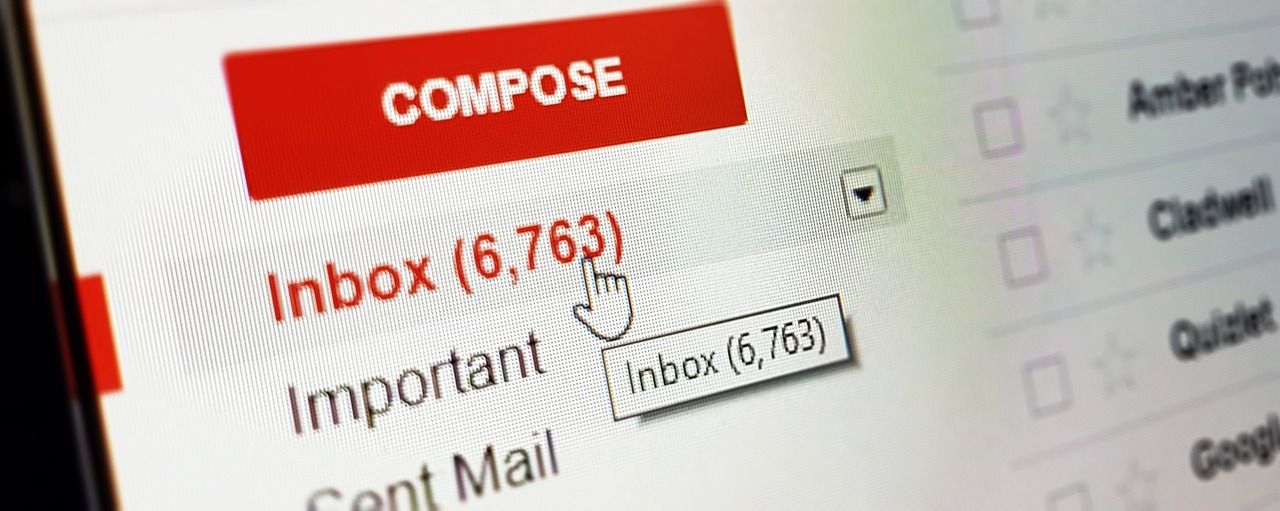
In a digital world saturated with marketing messages, our inboxes have become a battleground.
Once reserved for professional correspondence and personal notes, the email inbox is now a persistent marketplace—an always-open shopping mall whispering (or shouting) that you’re missing out, running out of time, or falling behind.
What was once “fear of missing out” (FOMO) has mutated into something more pervasive and psychologically taxing: Inbox Anxiety.
Coined here to describe the subtle, chronic stress caused by the constant presence of promotional emails, Inbox Anxiety captures the psychological toll of a marketing strategy that has evolved far beyond FOMO. It’s no longer just about what you might miss—it's about reinforcing an always-on mentality of spending, upgrading, and participating in a consumer culture that never sleeps.
The Ubiquity of Promotional Email
The numbers tell a staggering story. As of 2025, over 347 billion emails are sent and received every day, with a significant portion of these being marketing-related. According to Statista, promotional emails make up over 85% of all email traffic to consumers (Statista, 2025). That includes everything from flash sales and abandoned cart nudges to loyalty program updates and new product alerts.
These messages are not random. They’re the result of finely tuned algorithms and psychological profiling. “Email marketing is one of the most cost-effective and trackable ways for companies to drive sales,” explains Dr. Monica Wren, a behavioral economist at UCLA. “But it’s also incredibly invasive. It doesn’t just nudge—it chips away at consumer autonomy by conditioning constant consumption.”
From FOMO to Inbox Anxiety
FOMO—fear of missing out—has long been a core strategy for marketers. Limited-time offers, countdown clocks, and phrases like “only 3 left in stock” are now familiar tactics. But Inbox Anxiety is a more profound, more sustained psychological effect.
It’s the anxiety that comes not from missing a single deal, but from the accumulation of pressure. Multiple retailers email daily. Promotions with ever-shifting deadlines. Loyalty programs that gamify spending. The shopper’s mind becomes a scoreboard, and email is the scoreboard operator.
Dr. Jenny Schultz, a clinical psychologist and researcher on digital stress, elaborates: “With email, there’s no reprieve. You might delete one sales email, but five more are coming tomorrow. It creates a subconscious loop where you feel the need to stay on top of shopping opportunities, not because you need anything, but because you might regret not engaging.”
Are Our Brains Wired to Want Things?
At the heart of Inbox Anxiety lies a deeper question: Are humans neurologically programmed to desire? According to neuroscientists, the answer is a resounding yes. “Our brains are hardwired to seek novelty and rewards,” explains Dr. Kentaro Yamashita, a neuropsychologist at Stanford University. “Dopamine, the neurotransmitter linked to motivation and pleasure, spikes when we anticipate a reward, not when we get it. That anticipation is what keeps us clicking.”
This evolutionary trait, once essential for survival and exploration, has been cleverly repurposed by marketers. Today, every promotional email becomes a potential trigger for dopamine release. The subject line alone—“Just Dropped,” “Today Only,” “We Picked These Just for You”—can initiate the brain’s reward-seeking loop. “It’s not so much about the product itself,” Yamashita says. “It’s about the possibility that it might enhance our lives, solve a problem, or change how we feel.”
This innate drive to acquire and upgrade, combined with a hyper-optimized marketing environment, makes resisting the call to consume extraordinarily difficult. It also helps explain why inboxes full of promotional emails feel overwhelming: they’re not just messages—they’re temptations.
Psychological Mechanisms at Work
Intermittent Reinforcement
The inbox operates on a slot machine principle—most emails are irrelevant, but occasionally, there’s a great deal. Behavioral psychologists call this intermittent reinforcement. “It’s the same tactic that is used in gambling apps,” says Dr. Wren. “You never know which message contains the jackpot, so you keep checking—and marketers know this.”
Digital Clutter as Cognitive Load
Studies show that the average person has over 1,200 unread emails, and promotional messages make up a significant chunk. A cluttered inbox adds to cognitive load, which affects our decision-making.
A 2023 study by MIT Sloan Management Review found that participants exposed to high volumes of promotional emails were 23% more likely to make impulsive purchases, citing “decision fatigue.”
Artificial Urgency and Scarcity
Urgency is often manufactured. Unsurprisingly, the “24-hour sale” mysteriously extends another day.
“Artificial scarcity exploits our brain’s loss aversion,” explains Schultz. “It’s not about getting something—it’s about not losing something you didn’t even want an hour ago.”
The Economic Impact Of Our Invox
Email marketing is big business. According to the Data & Marketing Association, every $1 spent on email marketing in 2024 yielded an average return of $36, making it one of the most efficient marketing channels (DMA, 2024). Retailers know this. That’s why consumers often receive upwards of 20 promotional emails per week from a single brand after one interaction.
It’s not just big box stores. Luxury brands, boutique services, and even nonprofits participate in the email arms race. “The line between communication and manipulation is blurred,” says consumer rights advocate Helena Park, founder of the Inbox Free Project. “When you're told you're part of an ‘exclusive VIP list,’ it’s not about exclusivity—it's about converting you into a regular spender.”
Real People, Real Stress
Consumers are starting to notice. “Every time I open my inbox, it feels like a to-do list of things to buy,” says Sandra Moreno, a freelance photographer in Brooklyn. “I unsubscribe from one brand, and another replaces it. It’s like whack-a-mole.”
In a 2024 survey by Pew Research Center, 62% of respondents said they feel "pressured" by promotional emails, with 45% reporting that they’ve made at least one regretful purchase directly linked to a marketing email in the past year.
Regulation and Resistance
So far, regulatory bodies have taken a relatively light-touch approach. CAN-SPAM laws in the U.S. require marketers to include unsubscribe links and accurate sender info, but they don’t limit the number of emails a company can send. In contrast, the European Union’s GDPR offers more robust protections, including opt-in consent and data minimization principles.
Some companies are starting to dial it back. The outdoor brand Patagonia famously scaled back its promotional frequency and emphasized content over sales. “Our relationship with customers isn’t just transactional,” the company wrote in a 2023 statement. “Less email. More meaning.”
But these are exceptions. Most brands are doing the opposite—adding SMS marketing to the mix and using AI to predict the “perfect moment” to ping your inbox.
Coping with Inbox Anxiety
Experts offer several strategies for consumers:
- Set inbox filters to route promotional emails to a separate folder automatically.
- Use a shopping-specific email address to segregate marketing messages.
- Unsubscribe aggressively, using tools like Unroll.me or Clean Email.
- Wait 24 hours before acting on any promotional email.
But perhaps the most important tip? Recognize that you are not the problem. The system is designed to provoke urgency, insecurity, and overspending.
“Consumers shouldn’t have to arm themselves against their inbox,” says Park. “We need a cultural shift in how we view constant advertising—not as benign background noise, but as a form of psychological warfare.”
The Subtle Art of Reclaiming the Inbox
Inbox Anxiety may be a modern malady, but it’s rooted in timeless psychological principles: reward, fear, and identity. As inboxes evolve from communication tools into commercial pressure chambers, it’s time to ask: at what cost?