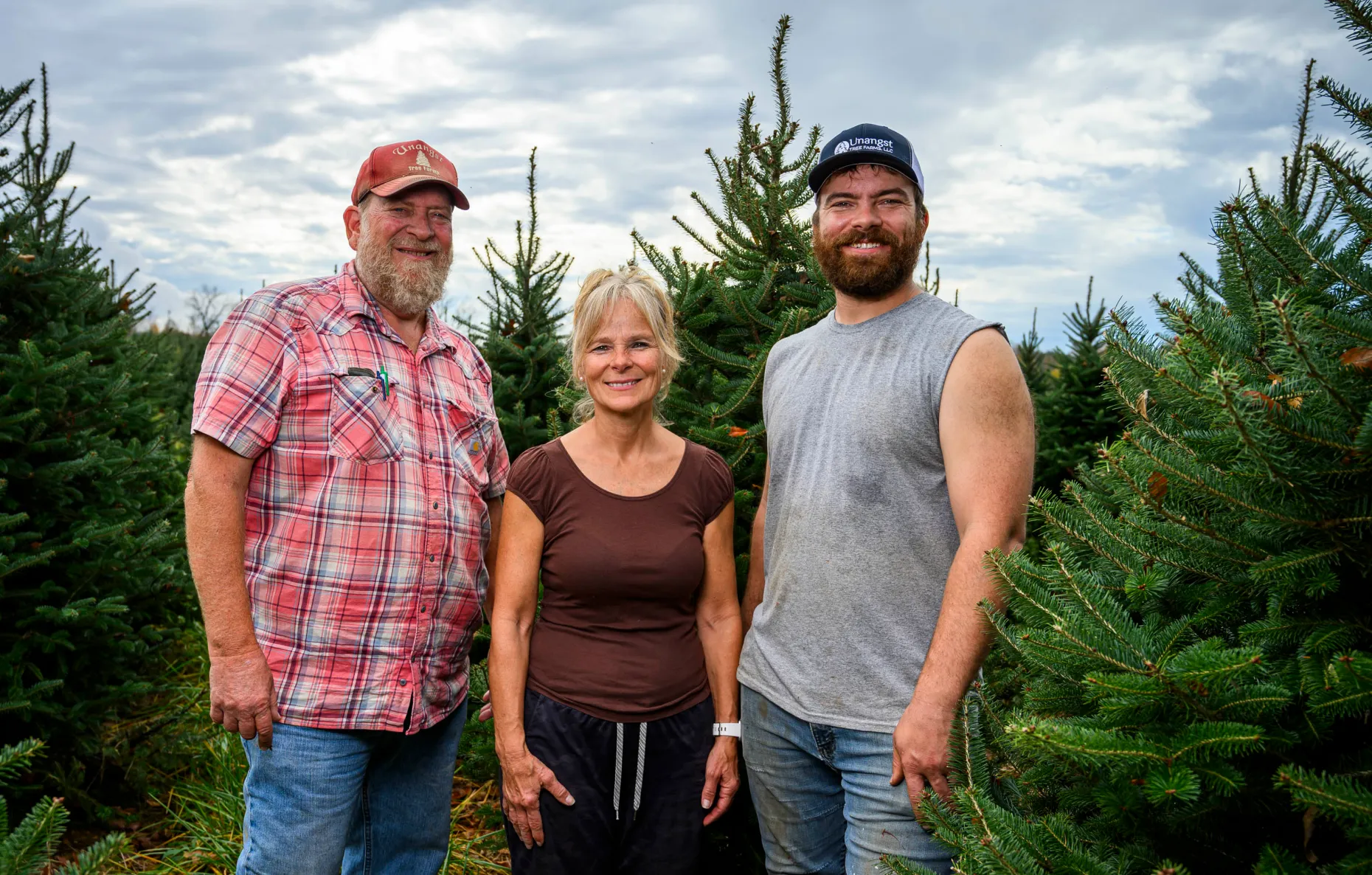
It takes eight years for the Unangst Tree Farm to grow one of its Christmas trees to a height ready for sale. It took the family five years to grow its preserved farmland holdings from 97 acres to 233 acres.
The Unangsts rank among the dozens of Lehigh Valley farming families who’ve recently relied on conservation programs to stay competitive as development pressure pushes up land prices, making it more expensive for farmers to expand and leading others to choose to sell.
Lehigh and Northampton County programs that compensate farmers for preserving land have helped local producers to expand while recouping costs, but rising demand from housing, warehousing and data center developers means farmers face tougher choices when deciding whether to cash out or buy more of an increasingly scarce and pricey resource.
“It’s almost impossible to buy farmland without the knowledge that you’re going to be preserving it, which will give you a chunk of money back,” said Roger Unangst, a 61-year-old fifth generation farmer who co-owns Unangst Tree Farm with his 58-year-old wife Trudy.
Even though compensation for preserving land held down the total costs the Unangsts bear for their recent expansions, they found it’s becoming harder to have the means to submit a bid in the first place.
For the first of their two recent land purchases in East Allen Township, the Unangsts made a deal with the owner of a shuttered dairy farm whose desire to limit potential buyers to active farmers held down the price. An adjacent plot faced more open competition, and Roger Unangst said that pushed the price up an additional $14,000 an acre compared with the prior purchase.
Prices for farmland in general have steadily been on the rise.
The average per-acre value of farmland in Lehigh County rose from $7,849 in 2017 to $9,925 in 2022, according to the data from the federal census of agriculture, which is conducted every five years. In Northampton County, the average per-acre value of farmland rose from $7,504 to $11,794 in the same time period.
The value of unpreserved farmland more recently reached an average of $14,000 per acre in Lehigh County and $19,000 in Northampton County, according to sales data reported in the 2026 “Farm to Community: The Lehigh Valley Food System” study from Buy Fresh Buy Local-Greater Lehigh Valley.
Farmers who preserve land don’t receive the same kind of checks they could earn on the open market, since conservation programs assess the value of the land knowing that its development potential will be limited.
But the program has kept the Unangsts going through the generations. Preservation of the initial 97-acre home farm created retirement funds for Roger’s mother, and the newly preserved expansion plots will create opportunities for his son, Kody, who is scheduled to take over as primary business owner in five years.
Kody and his wife, Kaitlin, both 33, have three daughters. If more than one is interested in continuing with the business, it’s now big enough to support multiple families, Kody Unangst said.
Looking at the decision to preserve farmland through a farmer’s eyes means focusing on the long-term view, Roger Unangst said, adding that it’s sometimes hard to explain to people who don’t farm why a family wouldn’t just cash out for the highest price available.
“A farmer’s eyes means legacy, and generations, and land is the absolute most important part,” said Roger, who serves on the Northampton County Farmland Preservation Board.
A history of conservation
Farmers apply through their county Farmland Preservation Board to participate in the state’s Agricultural Conservation Easement Purchase Program, which dates to 1988 and has preserved 6,781 farms and 671,082 acres across 58 counties.
Lehigh and Northampton rank fourth and sixth in the state for the number of preserved farms. Lehigh has preserved 430 farms covering more than 29,202 acres; Northampton has preserved 283 farms covering 20,435 acres.
The program combines state, county and municipal funds and is often described as buying the property’s development rights, although WeConservePA says a conservation easement is better thought of as purchasing the right to block development. Farmers receive a one-time payment for restricting their land in perpetuity to agricultural use although they retain other ownership rights, such as the right to sell.
The popular program has a waiting list, and qualifying land undergoes an appraisal process that assesses value based on criteria such as soil quality, proximity to other preserved land and the threat of development.
“It’s important to note that the farmers often take below-market value, and in many cases a fraction of what a developer would pay for the land,” Department of Agriculture spokesperson Shannon Powers said in an email.
The Buy Fresh Buy Local study found the most recent average price per acre paid through county preservation programs was $5,617 in Lehigh, which reported prices from 2021-24, and $8,301 in Northampton, which reported prices from 2023-24.
A system under strain
Compensation from the conservation easement program has allowed smaller landowners to compete in the land market, but the system has come under strain postpandemic, according to Jeff Brewer, a 58-year-old fourth generation dairy farmer.
The Brewer family farms 1,400 acres and owns 500 preserved acres in Lower Mount Bethel, Washington, Plainfield and Forks townships. They were able to buy three farms using the money they received from preserving other plots, but had to borrow money for their last two land purchases as it became more difficult to find suitable nearby tracts.
Having sale agreements on those latest plots set before the pandemic hit proved lucky, Brewer said, as competition and costs rose as interest spiked in land outside the city.
Signing away development rights means the price of preserved farmland is typically lower than unpreserved plots, but preserved land holds its value and is also becoming more difficult for farmers to buy as prices reach a level Brewer termed “crazy, nuts.”
Compensation rates for those who choose to preserve their farmland will need to rise to keep that choice viable as development prices continue to increase, he added.
“If they want to truly preserve this ground at a higher rate, they need to up their ante,” Brewer said.
Northampton County has been able to pay 100% of the appraised value for farms that go through its preservation program, said Ryan Shaw, Northampton’s farmland preservation administrator, adding that the state’s law limits the maximum purchase price for an easement to the value in the appraisal report, which is itself governed by national real estate standards called the Uniform Standards of Professional Appraisal Practice.
Skyrocketing development prices are making it more difficult for farm families to settle for the prices offered through preservation programs, fourth generation crop farmer Brad Weinhofer, 39, said.
Land that might have fetched $10,000 an acre a decade ago now sees offers ranging from $50,000 to $100,000 an acre from warehouse and housing developers, Weinhofer said.
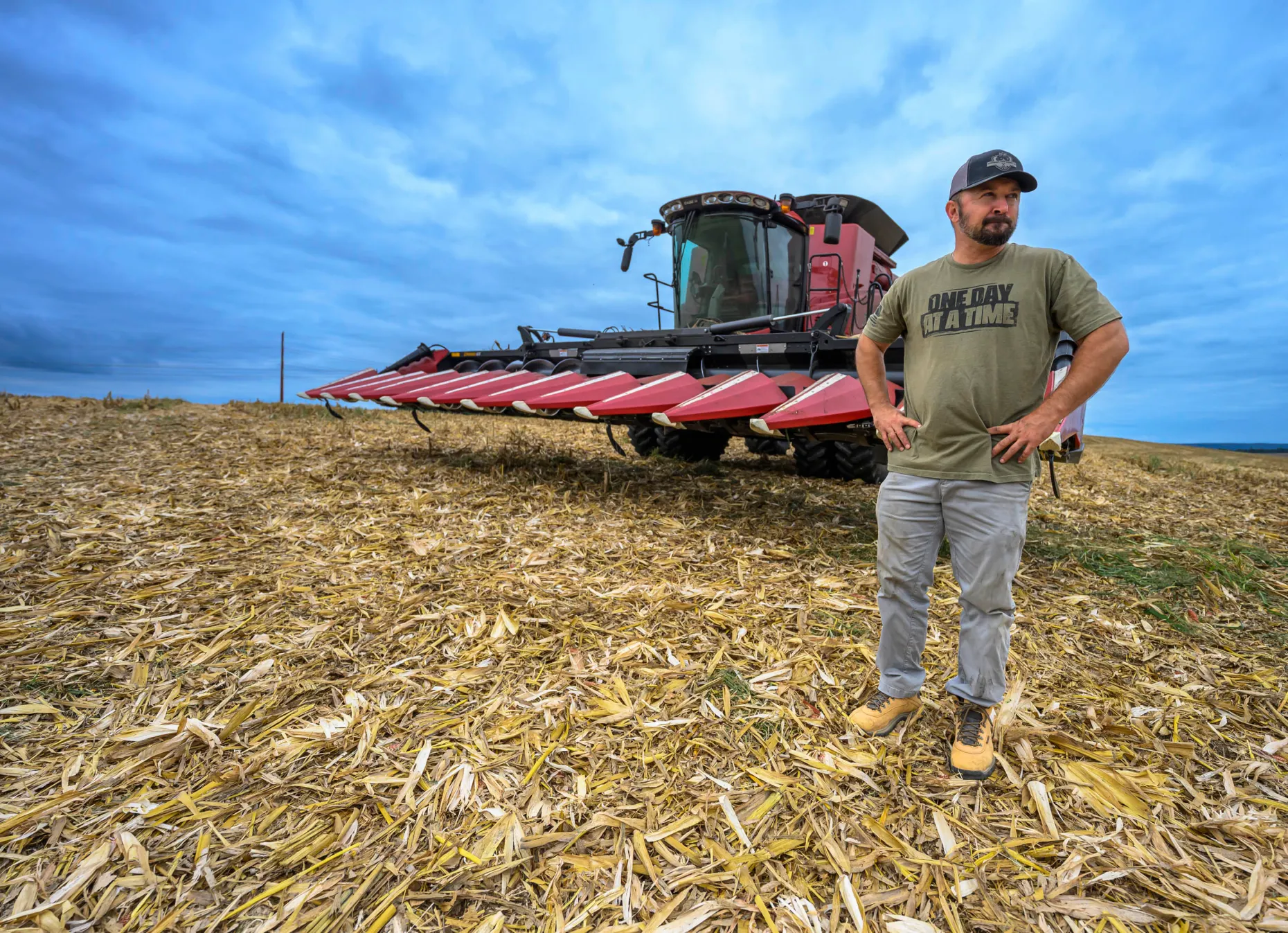
Ron Beitler, Lehigh County commissioner and chair of the county’s Farmland Preservation Board, said he doesn’t doubt that those development prices have been hit in the county, noting that underlying zoning has pushed prices much higher than that for the fastest-growing areas.
The farmland preservation program is “hitting the delta” as it competes with private entities and developers, Beitler said.
“We’re the No. 1 program in the state in terms of land preserved per our size, and that amount of raw land is diminishing, so the prices are naturally going up,” Beitler said.
The Weinhofer family farms 2,200 acres spread across Whitehall Township in Lehigh County and Allen and East Allen townships in Northampton County. The family, which owns about 400 acres, has preserved six plots, one in Lehigh County and five in Northampton County.
Lehigh County’s $6,000 cap on per-acre compensation levels for preserved farms pushed the family to seek additional funds from Whitehall Township to make the decision financially feasible, Weinhofer said.
Municipal matches have been “a huge winner” for Lehigh’s preservation program, allowing the county to stretch further for properties whose value exceed the county’s cap and also win additional matching funds from the state, Beitler said.
Lehigh is looking at 11-13 farms for its 2027 preservation selections, and that won’t wipe out the wait list, Beitler said, “so there’s still a demand for the program.”
Noting the number of friends and neighbors who hunt, fish and take walks on the Weinhofers’ property, Brad Weinhofer said preservation “just felt like we were doing it for not only us, but the rest of the community, and just hopefully trying to leave some open space for the future.”
Assessing future options
Some municipal efforts to lessen development pressure have had complicated consequences. For the McEwen family, farmland preservation offered a chance to expand their holdings and provide opportunities for younger generations, but local zoning rules also brought additional restrictions to navigate.
In Lower Mount Bethel Township, zoning rules allow development on only 10% of land on an agriculturally zoned tract. That prevented the McEwen family from building an additional house on their home farm for 25-year-old Brayden. The family instead bought a neighboring plot and used the money from preserving the land to hold down the cost of the new mortgage.
Since the payment Northampton County offers farmers for preserving their land is based on a formula that is connected to the development price of the land, such zoning both restricts development and lowers the price farmers can receive through the preservation program.
Brayden’s father, Kevin, has been vocal at recent township meetings in which officials have discussed how the 90-10 zoning has affected local farmers and considered how the township might provide compensation to lessen the gap between what preserved farmland is worth under its ordinance and what farmers might otherwise qualify to receive.
“It’s truly a taking of your land,” Brayden McEwen said.
Lower Mount Bethel Supervisor John Mauser said the board voted Oct. 12 to advance a plan to run dual appraisals on township farms — one that would assess the preservation value under 90-10 and one that would assess the value using an adjacent municipality’s zoning for similar land — and then use funds from the township’s earned income tax revenue to make up the difference.
He added that two applicants are already undergoing assessments following the new plan.
“I’m excited about that,” Mauser said. “I think it’s the right way to go.”
For McEwen, working with his father always seemed like the right thing, even as rising costs on necessities like seed, fertilizer and fuel have made it more difficult to sustain a farm business. Brayden is the sixth generation of a farming family whose holdings date to 1854.
Ultimately, the decision to pursue preservation needs to be based on more than money, he said.
“I think your heart should do it because that’s what you want to see: farmland,” McEwen said.
Decades after agricultural land is preserved, future generations can end up thankful the land is still farmed but unsure of their long-term business prospects.
Jason Koehler, a 50-year-old, fifth-generation dairy farmer, works the land his grandfather preserved three decades ago in Lower Mount Bethel Township. The deed on the main farmhouse dates to 1860.
Expansion doesn’t feel like an option, with other preserved farms on the borders of the 155 acres that the family farms, Koehler said.
That acreage is enough to grow the feed for their 70 cows, but isn’t enough to profitably convert to crop farming, leaving Koehler concerned about what options he’d have left if a hyperscale data center proposed for the land that abuts his fields gets built and its operations affect the health of his herd.
“This is my livelihood,” Koehler said.