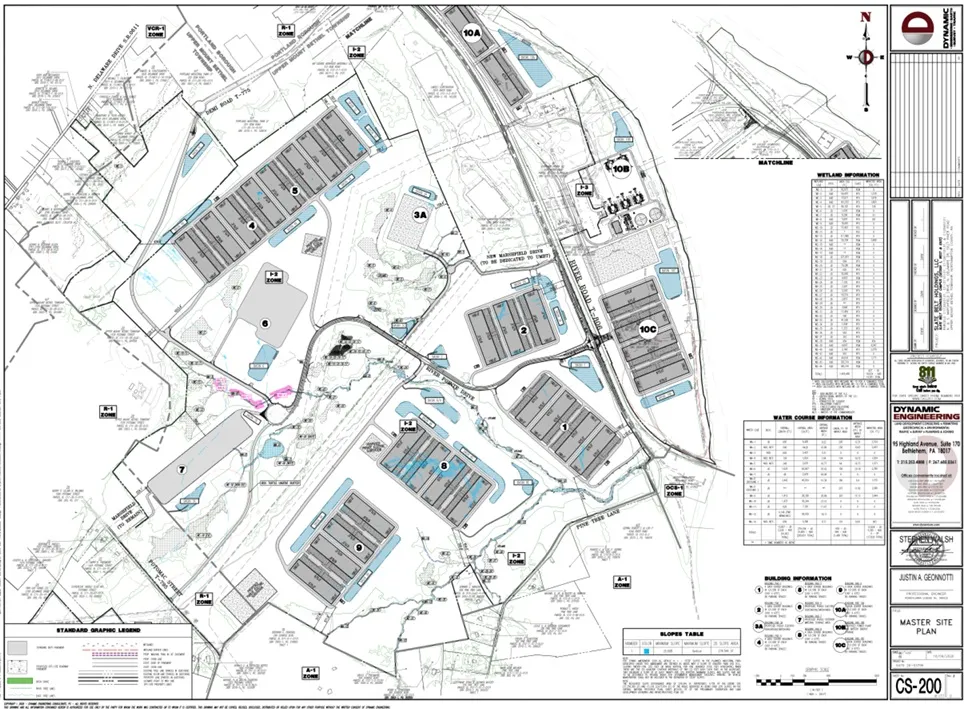
Designs for a 2.1-gigawatt data center campus in Upper Mount Bethel Township don’t answer pressing questions about how such an operation would affect the electric grid and the surrounding environment, say regional planners, who are calling for clarity.
Figuring out how to provide that amount of electricity — and the water needed to generate it — is an “infrastructure problem of biblical proportions,” Lehigh Valley Planning Commissioner Chris Amato said Tuesday as he led a discussion of the concerns raised by developers’ plans.
The commission considered two designs submitted by Slate Belt Holdings, a partnership between River Pointe Logistics and Talen Energy. Planners’ first question was whether the two proposals, which cover more than 900 acres spread on both sides of River Road, are meant to be considered as separate, alternate designs for the site, or as two phases of the same project.
Although the first design plan includes 29 data center buildings totaling 3.5 million square feet and the second design plan includes six data center buildings totaling nearly 1.5 million square feet, the electrical demand for both plans is listed at 2.1 gigawatts, leaving regional planners confused about the project’s total scope.
A spokesperson for the development team told The Morning Call the designs provide two visions for the site. Each would need to be constructed in phases to achieve full buildout, the spokesperson said, but the plans are not meant to be added together.
Asked to clarify why the two designs have different building footprints but the same total electrical demand — and to address planners’ concerns that FirstEnergy has only committed to providing half the electricity the project calls for — Slate Belt Holdings sent the following statement:
“The proposed data center campus would be developed in phases, allowing power needs to grow in a responsible way. Because the campus will be connected to the PJM grid, this phased development approach also allows for new electricity generation sources to come online to support reliability throughout PJM.
“Before any project could move forward, it would be subject to a comprehensive, independent review by grid operators and energy regulators to ensure reliability, adequacy of supply, and compliance with all applicable standards. Any infrastructure upgrades identified as necessary through that process would be funded by the project developers, not by residential or business ratepayers.
“As a result, we are confident the campus can secure the power it needs without shifting costs onto existing electric customers.”
A presentation developers are scheduled to give at the Upper Mount Bethel Planning Commission on Wednesday should provide more information, the spokesperson said.
Amato emphasized that rising power generation needs will mean rising water demands, saying total water use will go far beyond what is used to cool equipment.
“We talk about water consumption through cooling of the data center facility itself, but where do we address the water consumption to actually power the units?” Amato asked.
The designs call for a connection to Portland’s public water and wastewater systems, raising questions about capacity, Amato added.
The LVPC review asks for further information on necessary electrical infrastructure upgrades, an updated environmental impact assessment identifying measures to avoid disturbing sensitive habitats, visualizations to show how different building heights would affect public viewpoints, consideration of trail connections, and traffic evaluations.
Planners also called for more detailed emergency response coordination, specifically to address concerns about the fire risk of proposed lithium battery storage on-site, and noise studies.
Following Tuesday’s discussion, LVPC commissioners also determined that the final version of their review will include the need to recognize the site’s significance to the Lenape Nation. Chief Adam Waterbear said the project could mean a “severe cultural impact in this area for our people, who have been the stewards of the Delaware River since time immemorial.”