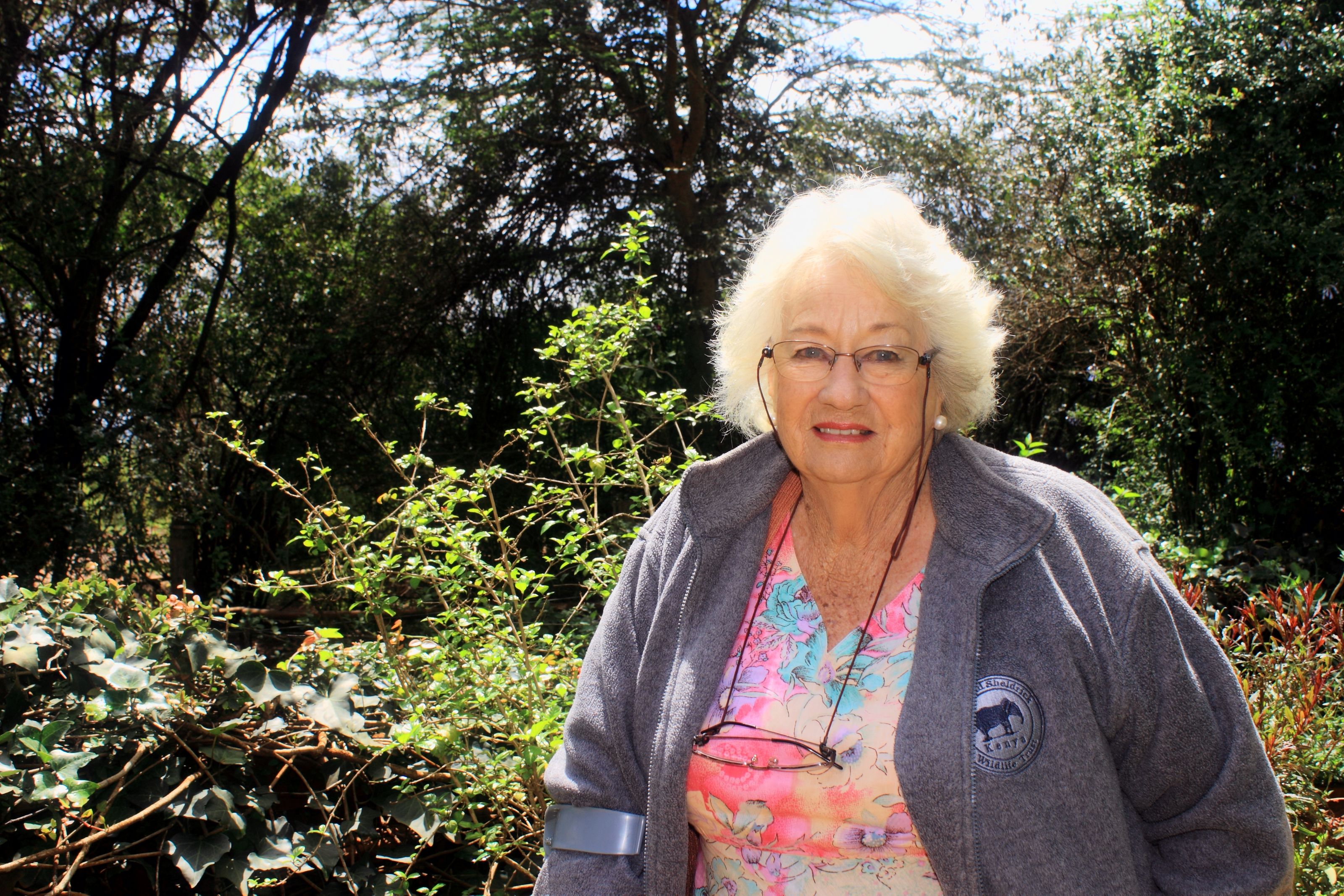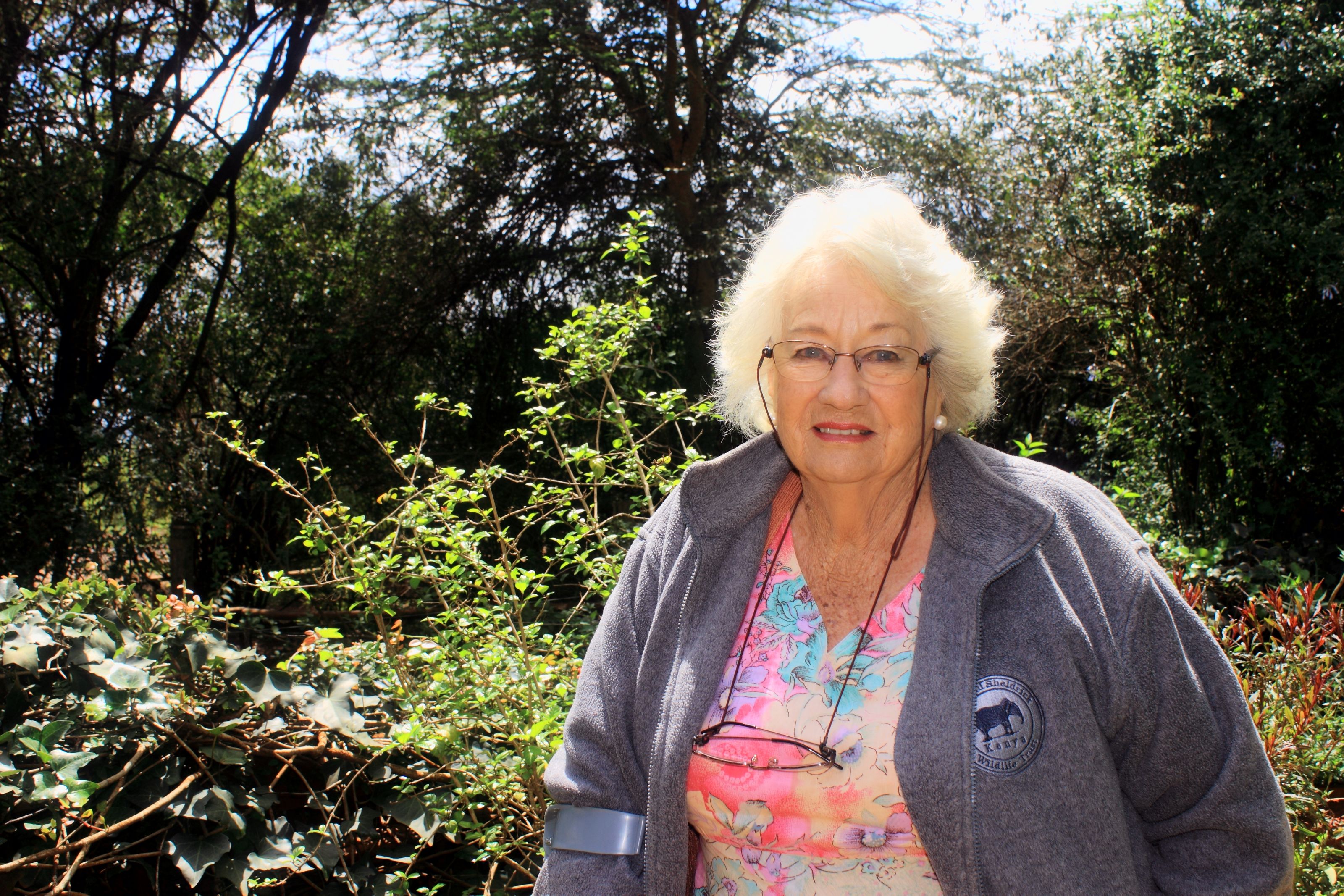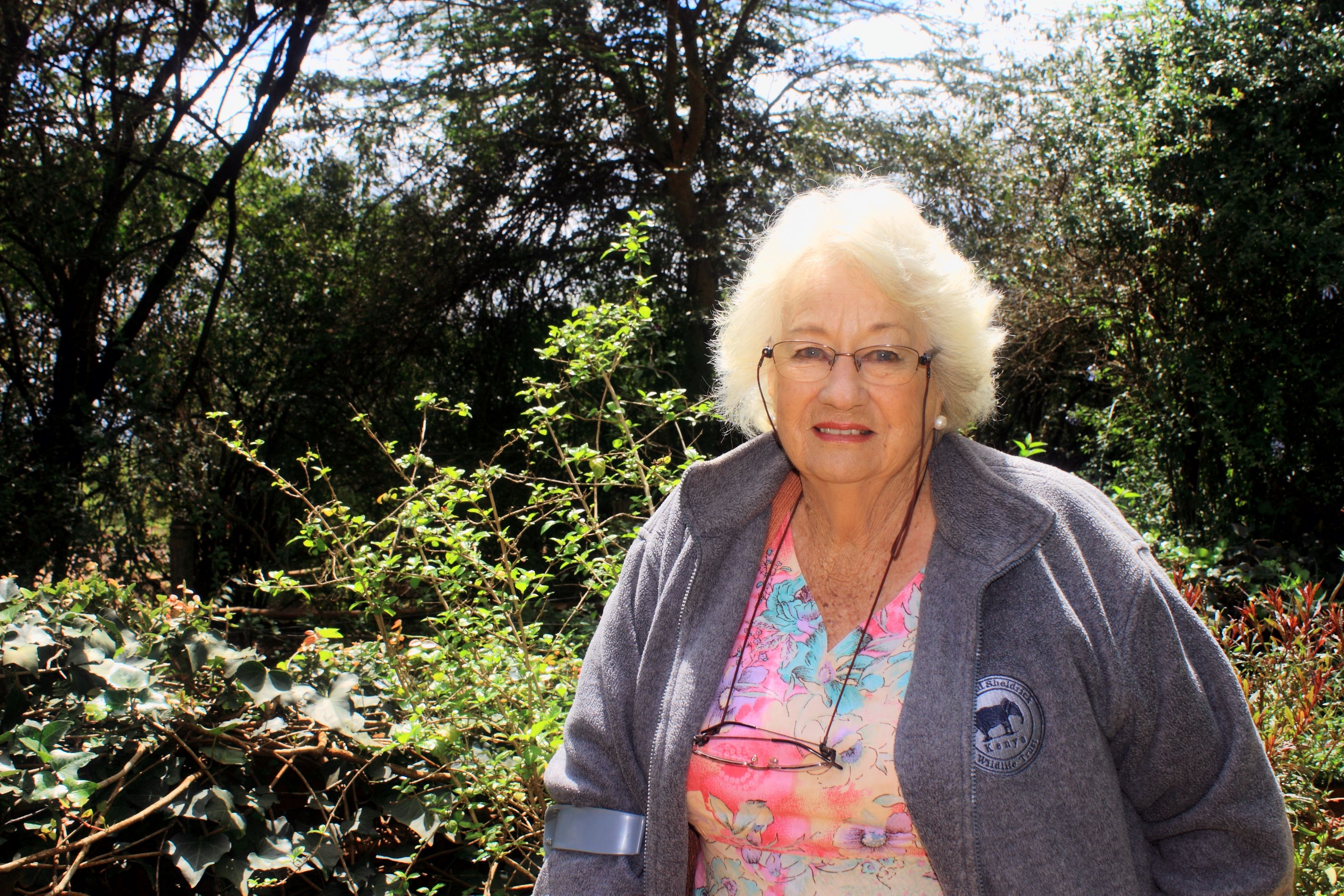
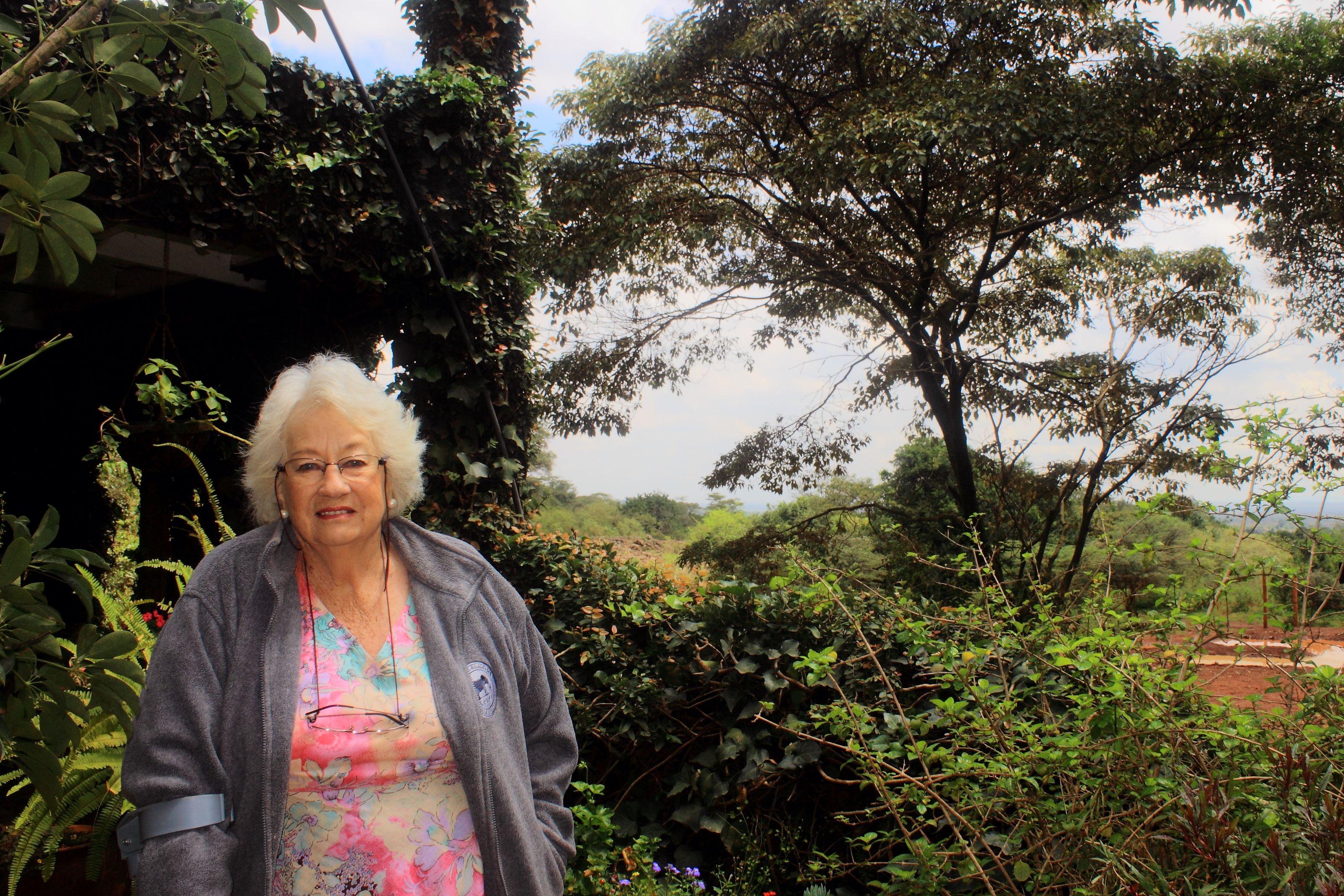
Since creating a National Park as the founding co-warden of Tsavo in 1955 and hand-rearing over 200 wild orphan elephants from 1977, her firebrand spirit is still burning bright. In under an hour, 81-year-old founder of the David Sheldrick Wildlife Trust (DSWT) delivers a lesson in Kenya’s conservation history, and acquaints us with the delicate biology of the elephants that have passed through the Orphan’s Project.
Sitting on her porch of her home in the Nairobi National Park, she can see the elephant mud bath. In a few minutes, visitors will be clamouring to watch the calves trotting down for their scheduled feed and a quick dip in the shallow waters. This routine activity at the Nairobi Nursery Unit is the highlight of my entire week, but Sheldrick won’t attend. “I can see it from my bedroom window,” she says casually, “but I’ve been seeing them for the last fifty years.”
Unlike many of the visitors – who have probably never seen wild elephants so close or so young – Sheldrick has lived amongst them since her husband David Leslie William Sheldrick MBE took up his post in untouched Tsavo. “It was just called the Taru Desert. And [David] went down with six labourers and one lorry and was told to create a national park.”
For two years, he surveyed the area on foot. He found that elephants were being killed by the Waliangulu and the Kamba, so he spearheaded a national campaign involving the national police and the CID. “Trying to get control of the poaching situation has been going on since the early fifties in Tsavo,” considers Sheldrick, but she admits that the activity wasn’t so sophisticated then.
Where coastal tribes were using spears and poison arrows to kill elephants, there are now international poaching operatives armed and funded to make their work as brutally efficient as possible. The demand has also shifted drastically from a few Arab traders to millions in China.
Citing a recent investigation by the National Geographic that traced the trade route of an artificial elephant tusk embedded with a GPS tracking system, it has been proven that ivory is fuelling terrorist activity: “ISIS will buy it with Chinese money, swap it with the Chinese for guns,” Sheldrick says matter-of-factly.
But she compounds the twisted dynamic even further: “The more elephants become rare the more they tend to horde the ivory because it’s going to become more valuable, they think.”
The irony that wildlife within China is protected fiercely makes her voice rise slightly. Death penalties are awarded to people who kill pandas but the exceptional cultural value of ivory renders elephant tusks a kind of “white gold”. Sheldrick quips, “Everyone wants to own a piece of the biggest mammal on earth because they feel that that will help them to feel the same.”
This mammal’s teeth are considered a commodity, but Sheldrick knows that their wealth lies much deeper within. Even before she learnt the intricacies of elephant behaviour, she never subscribed to the idea that humans are above other species in the animal kingdom. She serves a quick reminder: “We are all animals. We belong in nature otherwise we wouldn’t be here.” But the scientific community is only starting to realize this now. “They have always had this anthropomorphic block: ‘You mustn’t think about animals in a human way.’”
The same “block” justifies the destruction of habitats for human economic development. Often in the shape of mines, roads, skyscrapers and shopping malls, our brute force won’t continue unchecked. She remembers her husband who believed that humans are, in fact, the most endangered species. “They’ve stepped out of nature and in the long term nature will take them out,” quotes Sheldrick.
This is not an anecdote but a harsh truth: the Earth will evolve without humans. For many who seem to have forgotten that humans are indeed members of the animal kingdom, it’s a terrifying idea. But if we stop looking at human characteristics as unique to our species only, we’ll find that nature repeats the same pattern in many animals.
Elephants are like humans but better
Dolphins and whales are being accepted as anthropomorphic; they behave like humans do. But according to Sheldrick, “There are some [animals] that are better than us and amongst those are the elephants who are much more caring, much more compassionate and they’re not corrupted by money as humans are.”
These are lessons that can only be learned after many years of observing wild herds and treating them with respect. In Tsavo, the Sheldricks rescued and rehabilitated orphaned elephants. “The first two were called Samson and Fatuma - we learnt a lot from them,” she mulls before explaining that since they had passed their fragile milk-dependent infancy, they were stable enough to be handled and accompanied on walks to study their eating habits and behaviour.
“An elephant can’t live without [its mother’s] milk under the age of three, and is partially milk dependent until the age of five, which is a long time if the milk’s not right,” says Sheldrick. It took 28 years to perfect the milk formula, but along the way she also became intimately attuned to the qualities shared by humans and elephants.
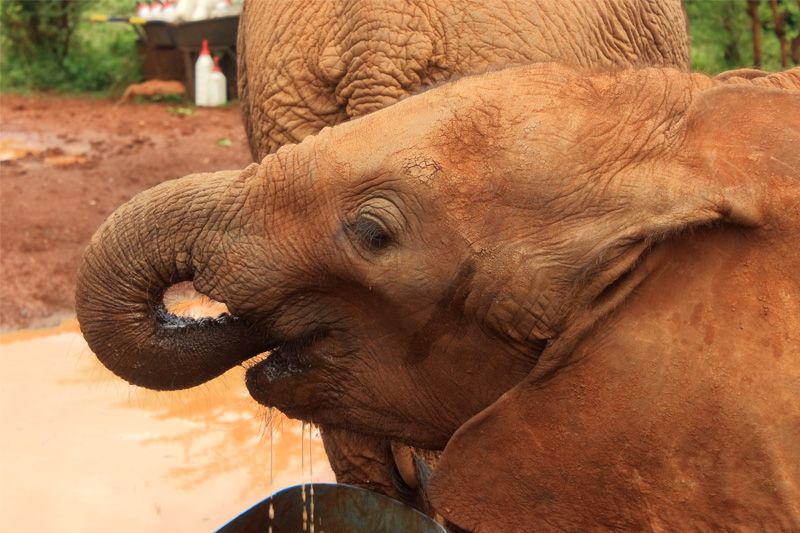
Now that she has also hand-reared baby elephants only a few weeks old, she can confirm that the two species display similar emotions. The rescued orphans join the Nairobi Nursery Unit having survived the violent loss of their wild elephant family members, who all play a part in cuddling and pampering the baby in its earliest months. “We see a lot of compassion and a lot of caring amongst even infant elephants, which you don’t get amongst infant humans!” she notes.
There is also a strict disciplinary code for the young ones, especially the bullies. Sheldrick describes the protocol: “They prod them a little bit with the tusk or give them a slap with the truck or they drive them out of the herd.” A ‘Time Out’ trait is interesting to share with elephants, but she points out how different the circumstances are in the wild. “There are lions out there and all sorts of dangers. For an animal which relies on the protection of the herd, it’s a very tough punishment.”
Having lost this vital support system, the rescued orphans are in a state of deep grief when they arrive at the Nursery. Like humans, they suffer post-traumatic stress disorders, wanting to spend time alone or, in severe cases, becoming agitated and disruptive. With every new arrival, the elephants who’ve been at the Nursery for a few months greet and comfort the newcomer to make the transition easier.
Elephants possess a communication system far more nuanced than ours, reveals Sheldrick. Apart from the body language and the sounds used by elephants, they also rely on “unspoken” means to keep in touch over long distances – infrasound and telepathy. The low-frequency sound cannot be perceived by humans, and although some humans have the remnants of telepathy, the thought-connections between elephants are yet beyond our understanding.
However, their conduct points to high capacity for affection. An elephant with a tracking collar in Samburu is known to bound over 600 miles to the east every year. “She streaks through human settlement at night to meet another family member that lives near the coast,” Sheldrick smiles. “They have very strong friendships that last for life.”
Loyal, lifelong friendships are something humans can only aspire to. So is the elephant’s intelligence and memory. According to Sheldrick, the 2-year-old orphans at the Nursery are much smarter than a human infant of the same age. “They know the routine; they know what the Keepers are saying to them.”
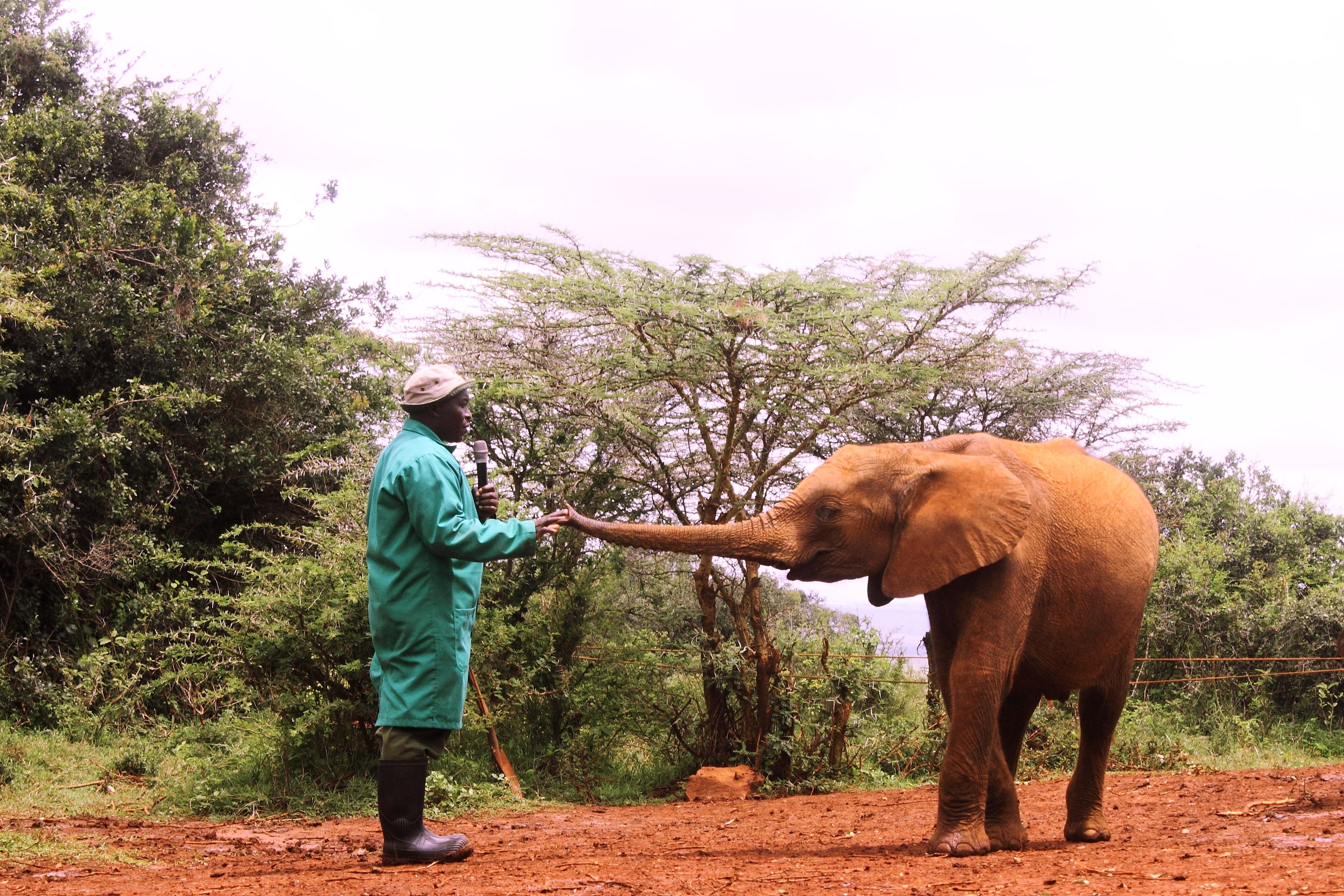
With careful exposure to wild situations, their inherited knowledge kicks in. They are not taught by their Keepers what to eat; they simply know. Other vital information is imprinted in their genetic memory, such as submissive gestures used during contestations and ancient migratory routes.
Having replaced their elephant family, the Keepers are treasured by the orphans. Even decades after successfully living in the wild, ex-orphans look out for Keepers they met in Nairobi. An adult elephant in Voi wandered on to a camp near the DSWT reintegration unit in Tsavo East National Park. It immediately recognized the voice of the Keeper who raised him at the Nursery.
The bull was identified as Ndume, who had been rescued in the Imenti Forest in 1989 when he was just two weeks old. To remember and greet the man who aided his return to the wild: “That’s absolutely phenomenal after 26 years!” exclaims Sheldrick.
Not an easy job
Sometimes ex-orphans come back to the rehabilitation stockades to introduce their wild-born calves to their human friends at DSWT, while others bring wild elephants for medical treatment if they’ve been struck by poison arrows. The wild companions stay calm, says Sheldrick. “The ex-orphan has told them, ‘Listen, these humans here are my friends, don’t mess with them.’”
The strong bonds formed between elephants and their human family at DSWT depend on the sincerity of the Keepers. Apart from being tactile with the elephants, they have to be emotionally attached. It’s the elephant that chooses the Keeper. “They can read your heart,” says Sheldrick. “So if an elephant dislikes a certain man, he loses his job.”
Some recruits probably haven’t ever seen an elephant before. Regardless, the DSWT teaches them basic husbandry, how to handle the animal, how to mix the milk and how to manage the stables. Keepers don’t even carry sticks when dealing with the infants; any cruelty at this formative stage is remembered and returns as psychotic behaviour. “When we expose them to a wild situation, the wild elephants won’t want to take on a problem,” warns Sheldrick.
But if the rehabilitation in Nairobi is successful, then reintegration at the Voi and Ithumba Units in Tsavo East National Park or Umani Springs Unit is automatic. “You don’t have to have a PhD to do this work,” says Sheldrick, and because scientists are trained to view the animals without an anthropomorphic lens, “it’s better if you don’t.”
But rehabilitation at the Nursery is not always successful. According to Head Keeper, Edwin Lusichi*, no matter how carefully the Keepers try, a newcomer might refuse to adjust to life at the orphanage. The most difficult issues to contend with have been dietary – from refusing to feed to nutritional deficiencies. “That’s been a long learning curve for us and they’ve been very difficult to raise; very fragile in early infancy,” admits Sheldrick.
There are some elephant behaviours and ailments that baffle the entire team. Just a few days ago, a baby elephant suddenly ran into the stockades and the next morning his legs were paralyzed. As veterinarians try to get to the bottom of the issue, a physiotherapist is helping the elephant to correct the damage. “Very little is known about the diseases of elephants, except that they do suffer from the same sort of things that we do,” laments Sheldrick.
At the forefront of elephant study, the DSWT has invested in high-profile diagnostic machine to test the elephants’ blood. They have the same machine at Nairobi Hospital, Sheldrick tells us. When I ask her which body of work she drew on when she made her foray into elephant husbandry, she laughs, “We’re the researchers! Nobody else has raised the elephants and knows them intimately like we do.”
It’s been a great privilege to have saved so many elephants, holds Sheldrick, but it hasn’t come without an emotional toll. “It’s not a fun job raising the elephants,” she concedes. Nonetheless, the painstaking work of the DSWT – not only through the Orphan’s Project but their global anti-poaching initiatives and mobile veterinary units – continues to blaze a trail in wildlife and habitat conservation.
“In a perfect world,” ponders Sheldrick, “elephants wouldn’t have any enemies. The only enemy is man [but] nature hasn’t built into their system a way to protect them from guns and arrows and the things that humans use to get their teeth.”